 The Empress of Hearts was originally published in 1928 and was one of several historical novels written by E. Barrington (a pseudonym of Elizabeth Louisa Moresby, who also wrote under the name Lily Adams Beck). It is described on the cover as “a romance of Marie Antoinette”, but I think that description is slightly misleading. Marie Antoinette does appear in the novel as a major character, but the focus is really on the scandal known as The Affair of the Diamond Necklace which was thought to be a factor leading to the French Revolution.
The story centres around a diamond necklace created by the Parisian jewellers Boehmer and Bassenge, commissioned by Louis XV of France in 1772 as a gift for his mistress, Madame du Barry. However, by the time the necklace is ready to be sold to the King, Louis has died and du Barry has been sent away from court. Boehmer and Bassenge hope the new Queen, Marie Antoinette, will wear it instead, but when her husband, Louis XVI, offers to buy it for her, she refuses, unwilling to appear extravagant and frivolous when the money could be better spent on other things. Enter Jeanne de la Motte, an ambitious young woman who sees an opportunity to make herself rich and acquire the necklace for herself in the Queen’s name. The ensuing scandal will damage Marie Antoinette’s reputation and discredit the French monarchy in the eyes of the public:
Marie Antoinette rose from her chair and moved toward the inner room, holding herself together with an effort so tense that for the moment grace was dead and she moved with stiff, short steps like an old woman. At the door she turned: “Did I not tell you that there would be no need for poison? They will kill me with calumny.”
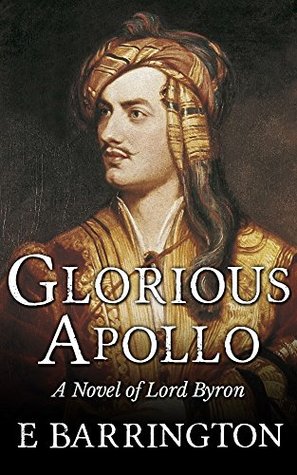
As you would expect with a book from the 1920s, the writing style is rather different from most modern historical fiction novels; it is more formal and more detailed but, unfortunately, it is also quite dry. Although I had heard of the Diamond Necklace Affair before, I hadn’t read about it in any depth, so I found The Empress of Hearts an interesting read from that perspective, but as a work of fiction it is less effective – like the other novel I’ve read by Barrington, Glorious Apollo, it would probably have worked better as non-fiction. We are given large amounts of factual information and as a result the plot moves very slowly and lacks the drama, excitement and tension that should have been present given the subject of the story.
The characters are not the most vibrant and life-like either, although they had the potential to be fascinating, particularly Jeanne, as the villain of the novel, and Cardinal de Rohan, another prominent figure implicated in the plot. I was intrigued by the role the Italian occultist Alessandro Cagliostro plays in the story – in reality, it seems that although he was arrested and questioned, it’s uncertain how much involvement he actually had in the Affair – but again, I think there were missed opportunities here.
I’m aware that Alexandre Dumas also wrote a novel about the Affair of the Diamond Necklace – The Queen’s Necklace. As a fan of Dumas, I’m looking forward to reading it and seeing how he approaches the same subject.
 She Reads Novels