Mrs England by Stacey Halls

Mrs England is one of the books longlisted for the 2022 Walter Scott Prize for Historical Fiction. Although I hadn’t even heard of a lot of the titles on this year’s longlist, this particular book is one that I had been planning to read anyway. I enjoyed both of Stacey Halls’ previous novels, The Foundling and The Familiars, and was just waiting for the right moment to start reading this one.

The novel opens in 1904 with Ruby May, a trained children’s nurse from the prestigious Norland College, discovering that the family she works for are preparing to emigrate. Ruby is invited to accompany them, but turns down the opportunity, saying that she can’t be too far away from her younger sister and brothers. Instead, she finds a new position looking after the four children of Charles and Lilian England, a wealthy couple who own a cotton mill in the West Riding of Yorkshire.

On arriving at the Englands’ home, Hardcastle House, Ruby quickly senses that something is not right. Although Mr England is charming and friendly, Mrs England seems distant and withdrawn, showing very little interest in her children’s lives and leaving the running of the household to her husband. The other servants also make Ruby feel unwelcome, but she finds the four England children delightful and immerses herself in her work. As the days and weeks go by, Ruby becomes increasingly aware of the dark undercurrents within the household and wishes there was something she could do to help. However, there are mysteries lurking in Ruby’s own past and she has problems of her own to deal with. Why does she refuse to open letters from her father? Why is she so afraid of having her photograph taken? And what is the real reason for her reluctance to leave the country?

I think this is my favourite of the three books I’ve read by Stacey Halls. Although it’s quite a slow-paced novel, with most of the drama and revelations coming near the end, I was drawn completely into Ruby’s story from the beginning. As the novel’s narrator, Ruby is a genuinely nice person and I liked her immediately. It takes a long time for her back story to unfold and in the meantime I’d formed a few theories about what must have happened with her father – however, I wasn’t quite right! In her author’s note, Stacey Halls states that she based Ruby May’s story on a real person and incident that occurred in the late 19th century, but don’t be tempted to look at this until you’ve finished the book. The story that unfolds within the walls of Hardcastle House is even more intriguing and, again, I thought I knew what was going on only to find that, although I did guess some of it correctly, I was still missing some parts of the overall picture.

The descriptions of the Yorkshire scenery are very well done, particularly the parts of the book set in the Hardcastle Crags, as are the descriptions of the Englands’ cotton mill, the blacksmith’s forge and all the other locations Ruby and the children visit throughout the story. I also found it interesting to read about the Norland Nurses – the kind of training they received and the standards they were expected to conform to.

I enjoyed this book very much, but to be honest, I’m surprised it’s on the Walter Scott Prize longlist as it doesn’t seem quite as ‘literary’ as the books the judges usually go for. I hope it progresses to the shortlist next month, but we’ll have to wait and see.

This is book 14/50 read for the Historical Fiction Reading Challenge 2022.
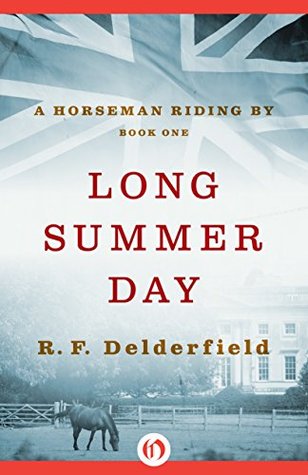
Long Summer Day by RF Delderfield

Long Summer Day was a long summer read, but I enjoyed every minute of it! First published in 1966, this is the first part of RF Delderfield’s A Horseman Riding By trilogy (originally just two books rather than three, as this one and Post of Honour were intended to form one huge volume; the final book, The Green Gauntlet, came a few years later).

Long Summer Day begins in 1902, early in the reign of King Edward VII, and ends in 1911, shortly after the coronation of his successor, George V. The novel takes its title from the fact that this period of history, coming just before the horrors of the First World War, came to be looked back on with nostalgia and described as the ‘Long Edwardian Summer’. Set in rural Devon, it follows the story of Paul Craddock, a young man who is injured during the Boer War and, with his military career at an end, decides to use his inheritance from his father to buy an estate in the countryside.

At first the inhabitants of the Sorrel Valley are suspicious of their new Squire, but through his efforts to befriend and understand them, Paul quickly earns their respect and acceptance. As he gets to know each of the families who live in and around the valley, we, the reader, have a chance to get to know them all too. It’s a very large cast and at first it’s hard to keep track of who’s who, but eventually each character, however minor, becomes a fully formed human being and is given a storyline of his or her own.

I can’t mention all of the characters here, but some that I found particularly memorable include Ikey Palfrey, the stableboy Paul informally adopts and sends to school; Will Codsall and Elinor Willoughby, a young couple whose marriage forms one of the novel’s first small dramas; the agent John Rudd who manages the estate and provides Paul with both advice and friendship; and Hazel Potter, the wild youngest daughter of one of the valley’s most notorious families. In such a tight-knit community, the stories of each of these characters and many more are closely intertwined so that the actions of one may have repercussions on the lives of the others.

As an eligible young bachelor, Paul attracts the attention of several of his female neighbours almost from the moment he arrives in Devon, but only two come to play an important role in his life. One of them is Claire Derwent, daughter of one of his tenant farmers, and the other is Grace Lovell, a cousin of the family who previously owned Shallowford, Paul’s estate. Grace is a fiercely independent person, a feminist who believes passionately in women’s suffrage. I felt that I should like her, but although I did admire her strength and courage, her prickly nature made it difficult for me to warm to her. Claire, though, I loved from the start – and my opinion of her never changed. Although she has little interest in politics and keeps herself busy with more domestic tasks, it’s clear that she is happy with this and that it’s her choice. I found her sensible, down-to-earth, kind-hearted and a strong person too, although not in the same way as Grace. To discover which of these women Paul chooses, you’ll have to read the book for yourself!

The personal stories of the characters are played out against a backdrop of events from Edwardian history: Edward VII’s illness and delayed coronation, the political conflict between the Conservative and Liberal parties (it’s plain to see where the author’s own political sympathies lie) and the beginnings of the suffragette movement. We also find out how the characters react when change and progress finally makes its way to the Devon countryside and they see their first ‘horseless carriage’.

Long Summer Day is one of my books of the year so far, without a doubt. It’s written in the sort of warm, comforting, old-fashioned style that I love, and despite its length I felt that the pages were going by very quickly because I was so absorbed in the lives of Paul and his friends – it’s one of those books where you truly feel as though you’ve escaped into another world for a little while!

A Horseman Riding By was adapted by the BBC in the 1970s, with Nigel Havers as Paul Craddock. Has anyone seen it?

This is book 6/20 for my 20 Books of Summer challenge.

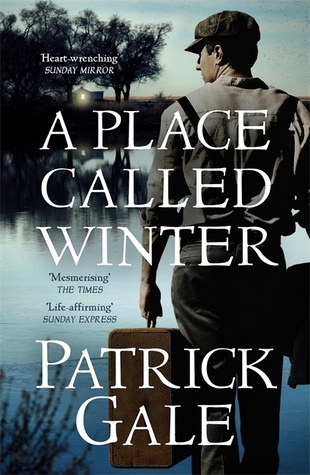
A Place Called Winter by Patrick Gale

A Place Called Winter There really is a place called Winter; it’s in Saskatchewan, Canada, and at the time when Patrick Gale’s novel is set, it’s a small, newly-established settlement just off the Grand Trunk Pacific Railway. Winter is home to the fictional Harry Cane, a character based on the author’s own great-grandfather, but how did such a quiet, gentle and seemingly conventional Englishman end up in so harsh and remote a place? A Place Called Winter is Harry’s story, explaining exactly what the circumstances were which brought him to Canada, and what happened to him after he arrived there.

At the beginning of the novel, Harry is a shy, stammering young man living in Edwardian London. Doing what is expected of him, he gets married, and although he has no real love or passion for his wife, it’s not an unhappy marriage and they have a child together. Things start to go wrong for Harry when he falls in love with a man and is forced to leave the country to escape the resulting scandal. Given the opportunity to farm some land in Canada, Harry begins to build a new life for himself alone in a place called Winter.

Harry’s experiences in Canada are a mixture of good and bad. The challenging environment in which he finds himself requires skills he doesn’t possess and must learn quickly if he is to survive in the wilderness. With the help of some new friends, Harry starts to grow in strength and knowledge, but not everyone he meets is quite so pleasant and the behaviour of the villainous Troels Munck poses an obstacle which must be overcome before he has a chance of finding true happiness.

I found this a very moving and poignant novel, as well as a beautifully written one. I couldn’t help comparing it to Damon Galgut’s Arctic Summer which I had read just a few weeks earlier. The two books have some similar themes, most notably a man trying to come to terms with his sexuality within the confines of early 20th century society, but I thought this novel had a warmth which the other lacked; Gale really engaged my emotions and made me care about his characters in a way that Galgut didn’t.

A Place Called Winter is my first book read from this year’s Walter Scott Prize shortlist and I hope the others on the list will be as good as this one. I haven’t read any of Patrick Gale’s other novels and I understand that he doesn’t usually write historical fiction, but I was very impressed with his writing and would be interested in trying more of his work.

The Children’s Book by A.S. Byatt

Since The Children’s Book was published in 2009 I’ve picked it up a few times but have been put off by the length (over 600 pages of small print in the paperback edition) and also by the very mixed reviews. It seems that people have either loved this book or have found it almost impossible to get through. After I read my first A.S. Byatt book, Possession, earlier this year and found it easier to read than I had expected, I decided it was time I stopped feeling intimidated and tried this one too. I enjoyed it but now that I’ve read it I can understand why it might be a love it/hate it type of book. If you’re not interested in the historical and cultural events of the Victorian and Edwardian periods, if you don’t like reading fairy tales, if you prefer books with more action and less description, then this may not be the right book for you. It’s such a complex novel with so many layers I would find it impossible to write a summary of the plot, but I’ll do my best to give you an idea of what the book is about.

In The Children’s Book, Byatt tells the story of the Wellwood family and their friends and neighbours in the context of the larger social changes taking place in the world around them. As you can probably tell, despite the title, this is not a book for children. However, many of the characters are children at the beginning of the book and we watch them grow up over the years and begin to follow their own paths in life. As the children become adults they make some surprising discoveries and find that nothing is quite as it seems.

The book begins in the late Victorian period and ends just after World War I, so all kinds of important historical moments and events are covered, from the Exposition Universelle de Paris to the death of Queen Victoria and the Boer War. Some of the characters become involved with groups and movements such as the Fabians, anarchists and Suffragettes. There are also lots of descriptions of the Arts and Crafts movement, pottery and ceramics, puppet shows, summer crafts camps, making lanterns etc. And from the world of literature there are references to authors including Oscar Wilde, the Brothers Grimm, J.M. Barrie and Kenneth Grahame.

One of the main characters, Olive Wellwood, is a famous writer of fairy tales and she creates a special book for each of her children, Tom, Dorothy, Phyllis, Hedda and Florian. Inside each child’s book is a personalised story Olive has written for them. We are given the chance to read extracts from some of these stories and this was one of my favourite aspects of the novel. I know not everyone will be as enthusiastic about the fairy tales as I was, but I did really enjoy them.

In addition to the Wellwood family, there are literally dozens of other characters, each of them with an interesting story of his or her own. As the book progresses the relationships between the various characters become very complex and intricately linked. Considering the length and scope of the book, I think having a character list to refer to would have been very useful! Of all the characters in the novel, I think Dorothy Wellwood was my favourite. I was interested in her attempts to study medicine and become a doctor, something very rare and difficult for a woman at the beginning of the 20th century. In Dorothy and a couple of the other young female characters who also consider going to university, we see how women often felt that they had to make a choice between marriage and a career and couldn’t have both.

Something I probably haven’t made clear yet is how dark and moving this book is at times with its portrayal of the loss of childhood innocence and with the number of devastating family secrets that are revealed. A.S. Byatt has said that she wanted to explore the effects of writing children’s books on an author’s real children, and one of the saddest parts of the novel for me was the storyline involving Olive Wellwood’s eldest son, Tom. I won’t tell you what happens to him but I thought it was heartbreaking.

The only thing that disappointed me slightly was that towards the end it seemed as if Byatt was trying to squeeze as much as possible into the final pages of the novel. After the slow, steady pace of the rest of the book, I thought the ending was very rushed and the story seemed to disappear under an overwhelming amount of historical facts and dates. Apart from that, I loved this book.

Have you read The Children’s Book? What did you think of it?