Sinners by Elizabeth Fremantle

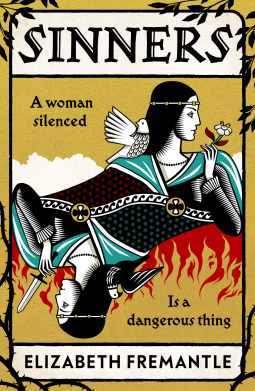
Elizabeth Fremantle is an author I’ve been following since her first book, Queen’s Gambit, was published in 2013. I’ve enjoyed all of her novels, to varying degrees, but I think her latest one, Sinners, is the best so far. It’s the story of the Italian noblewoman, Beatrice Cenci, and is a very dark and powerful read.

The book begins in Rome in 1598 with Beatrice discovering the dead body of her brother Rocco, a victim of one of her father’s long-running feuds. To avoid any further retaliations, the family flee to La Rocca, a hunting lodge in the mountains, but this proves not to be a place of safety for Beatrice as her father, Francesco Cenci, becomes increasingly cruel and unpredictable, abusing her physically, verbally and sexually. Her stepmother, Lucrezia, and younger half-brother, Bernardo, are also targets for his brutal violence and abuse, while her other brother, Giacomo, who is gay, remains estranged from the family, forced to communicate with Beatrice in secret.

As life behind the walls of La Rocca becomes more and more unbearable, Beatrice finds some solace in her growing friendship with Olimpio Calvetti, one of her father’s servants. When she becomes pregnant with Olimpio’s child, Beatrice fears for their lives if her father learns the truth – especially if he also learns that Beatrice has been reporting him to the authorities for his abusive behaviour! And so Beatrice comes up with a plan which, if it works, could set them all free, but if it fails could leave them in even more danger than before.

As you’ll be able to tell, Sinners is not an easy or comfortable book to read. Francesco Cenci is one of the most wicked, depraved characters you’re likely to come across in fiction and the way he treats his wife and children is unimaginably cruel. Knowing that he was a real person and that his family really did suffer at his hands makes it even more horrible to read about. It also makes it easy for the reader to have sympathy for Beatrice when she decides to take action, although Fremantle explains in her author’s note that her intention in writing the book was to portray Beatrice as a complex woman who is both innocent and guilty, saint and sinner, something which I think she achieves.

Fremantle also uses her author’s note to clarify where the book sticks to historical fact and where she uses her imagination to produce a compelling work of fiction. I found it particularly fascinating to read about the famous portrait of Beatrice Cenci, attributed to Guido Reni, which is now thought to be by Ginevra Cantofoli and maybe not even a portrait of Beatrice at all. Fremantle works the painting of the portrait into the plot in an interesting way, showing how it was used to evoke sympathy for Beatrice from the public.

I love the way Fremantle recreates the feel of late-16th century Italy and although it’s set a decade or two earlier, Sinners makes a good companion novel to Disobedient, her book about Artemisia Gentileschi. Artemisia’s story even overlaps with Beatrice’s in the first chapter. I’m looking forward to seeing who and what Fremantle decides to write about next!

Thanks to Michael Joseph for providing a copy of this book for review via NetGalley.

Book 13/20 for 20 Books of Summer 2025.
Disobedient by Elizabeth Fremantle

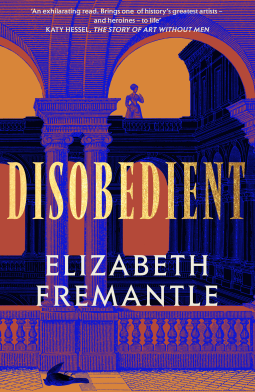
Elizabeth Fremantle is an author I always look forward to reading and I have enjoyed all six of her previous novels, including her two historical thrillers published under the name E.C. Fremantle. This seventh novel takes us to 17th century Italy and tells the story of Artemisia Gentileschi, one of the most important and accomplished female painters of her time.

Artemisia grows up in Rome, the daughter of the painter Orazio Gentileschi. Having lost her mother while still a child, Artemisia is raised by her father, spending time in his workshop learning to draw and paint. Orazio is a talented artist, heavily influenced by the more famous Caravaggio, but it quickly becomes obvious even to him that his daughter’s work is better than his own.

In 1611, the painter Agostino Tassi enters Artemisia’s life, first as her tutor and then as her intended husband. However, Tassi’s arrival leads to a terrible experience for Artemisia – something I won’t go into here because I think any reader who has come to this book with little or no knowledge of Artemisia’s life will probably prefer to discover her story for themselves. The second half of the book becomes quite dramatic as the repercussions of this incident become clear, so if you don’t already know all the details in advance, which I didn’t, it’s interesting just to watch it all unfold.

Artemisia is a great subject for historical fiction, being a strong, ambitious, determined woman whose work has left a lasting impact. Although we can’t know her true thoughts and feelings, Fremantle does a good job of getting inside Artemisia’s head and showing us what may have provided the inspiration for some of her paintings, such as Susanna and the Elders and Judith Slaying Holofernes. You’ll probably find yourself wanting to look up the paintings online as you read. As well as Artemisia, there are other characters in the novel who are equally well drawn; I’ve already mentioned Tassi and Artemisia’s father Orazio, but there’s also Zita, who becomes a model and chaperone for Artemisia, and Piero, Orazio’s assistant.

Disobedient covers only the earlier part of Artemisia’s life and the novel ends with a lot of her story still untold, but after reading Fremantle’s author’s note where she explains her personal reasons for wanting to write this book, I can see why she chose this period to focus on and I appreciate the courage it has taken for her to do so. I don’t think it’s my favourite of her novels, simply because some of the other settings and historical figures she has written about have interested me more, but I still enjoyed this book and am pleased to have had the opportunity to add to my knowledge of this fascinating artist.

Thanks to Penguin Random House/Michael Joseph for providing a copy of this book for review via NetGalley.

This is book 8/20 of my 20 Books of Summer 2023

This is book 29/50 for the 2023 Historical Fiction Reading Challenge.

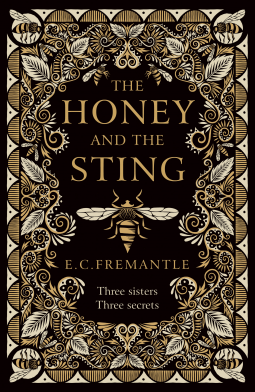
The Honey and the Sting by EC Fremantle

After 2018’s The Poison Bed, a Jacobean thriller based on a real life murder scandal, EC Fremantle has returned to the same period – the early seventeenth century – with another historical thriller, this time one which is only partly inspired by a true story.

Hester, Melis and Hope are three sisters who live together in a cottage in Iffley, Oxfordshire. With no male relative in the household, apart from Hester’s little boy Rafe, their living arrangements are unusual for the time – not quite respectable, some would say. Yet all three women have their reasons for avoiding outsiders and keeping themselves to themselves. Hester’s secret is perhaps the most scandalous: the father of her son is George Villiers, the powerful Duke of Buckingham and the King’s favourite. The beautiful, eccentric Melis experiences visions and premonitions which have an unsettling habit of coming true. And Hope’s African heritage makes her stand out from the other girls in Iffley, while also making her the target of unwelcome attention from men.

When we first meet the sisters, they are leading quiet lives at Orchard Cottage, filling their days with cooking, gardening, needlework and tending the bees in their hives. This will all change when George Villiers decides that the time has come to claim his son – something Hester refuses to contemplate as the Duke had cruelly cast her aside and left her to raise Rafe alone. In order to keep Rafe out of his hands, the three women are forced to go on the run, fleeing to an isolated house in the woods. But even here it seems there’s no guarantee of safety and they must decide who can and cannot be trusted.

Hester and her sisters are fictional, but their story is entwined with a sequence of real historical events involving George Villiers, Duke of Buckingham. I won’t say too much here, but if you know anything about Buckingham then as soon as a certain character appears in the novel you will be able to guess what is ultimately going to happen. Knowing this didn’t spoil the story for me, though; I found this particular character and the motivations for their actions very intriguing and their inclusion made the book much more compelling than it would otherwise have been.

The novel is written in present tense, never my favourite but I didn’t find it as annoying as I often do because it somehow suited the pace of the story and gave it a sense of urgency and danger. Some of the chapters are told from Hester’s perspective and these are written in the first person, but others are from Hope’s perspective, in the third person. I didn’t really understand the reason for this and would have preferred one style or the other. We don’t hear from Melis at all, only seeing her through the eyes of the other characters, but this is quite effective and adds to the aura of mystery that surrounds her. I think she was probably the sister I found most interesting; Hester and Hope both frustrated me with the number of poor decisions they made!

The only other thing that bothered me slightly was the way Hester refers to Buckingham throughout the novel as ‘George’. I felt that, as she had been a servant in Buckingham’s household when he seduced her, she would have spoken of him as ‘the Duke’ or ‘Buckingham’ or ‘His Grace’. A servant calling a nobleman by his first name in the seventeenth century just didn’t seem right to me, but maybe I’m just being pedantic. Overall, this was an enjoyable novel, even if it wasn’t one of my favourites by Fremantle.

Thanks to Penguin Michael Joseph for providing a copy of this book for review via NetGalley

This is book 10/20 of my 20 Books of Summer.

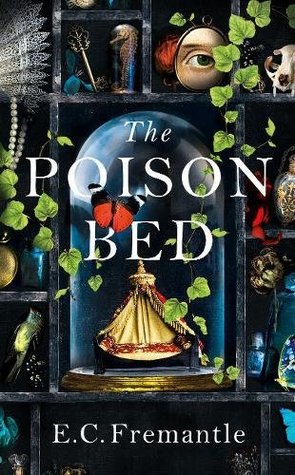
The Poison Bed by E. C. Fremantle

The Poison Bed is a slight change of direction for Elizabeth Fremantle. She has previously written four conventional historical fiction novels set in the Tudor and Elizabethan periods, telling the stories of Katherine Parr (Queen’s Gambit), Katherine and Mary Grey (Sisters of Treason), Penelope Devereux (Watch the Lady) and Arbella Stuart and Aemilia Lanyer (The Girl in the Glass Tower). This, her latest novel, also features the story of a strong and fascinating woman, but includes additional elements of mystery and suspense which give the book the feel of a psychological thriller at times. It’s not entirely different from her other books, but different enough that she obviously felt a slight change in name was appropriate.

The novel opens in 1615 with Frances Howard and her husband Robert Carr imprisoned in the Tower of London, accused of the murder of Thomas Overbury. Overbury had been a friend of Robert’s, but was opposed to his marriage to Frances – is this why he had to die, or could there be another reason? There is certainly plenty of evidence to link both Frances and Robert with his poisoning, but in order to discover the truth, we must go back to the beginning of their relationship and follow the chain of events that led to Overbury’s death.

Robert and Frances take turns to tell their side of the story in alternating chapters headed ‘Him’ and ‘Her’. Robert’s is written as a straightforward first person narrative, while Frances relates her story to a young wet nurse who is sharing her room in the Tower to help take care of her newborn baby. In this way we get to know both main characters, as well as their friends, family members and rivals – but it’s important to remember that at the court of King James I, nobody is ever exactly as they seem.

As one of the ambitious and powerful Howard family, Frances could be seen as a pawn, pushed into making one advantageous marriage after another – first to Robert Devereux, Earl of Essex, and then to Robert Carr. Yet Frances is an intelligent young woman with a mind of her own; she is prepared to do what is necessary to take control of her destiny…but would this include murder?

Robert Carr is the king’s favourite – some would say the king’s lover – and this has enabled him to rise to a much higher position at court than he could otherwise have hoped to achieve. Robert (at least as he is depicted by Fremantle) does not really have the strength of character to take advantage of this, but others, such as Frances’s scheming great-uncle, see getting close to Robert as a way of wielding influence over the king. Robert denies any involvement in Thomas Overbury’s murder, but is he telling the truth?

While Robert and Frances, as our narrators and protagonists, are always at the heart of the novel, there are other interesting characters to get to know too. I particularly liked the portrayal of James I and his relationship with Robert, but I also enjoyed the elements of black magic in the story and the roles played by the astrologer Simon Forman and the physician’s widow Anne Turner. There’s a lot going on in this novel, which makes it quite a gripping read. I found the first half more enjoyable than the second, which is when the thriller aspect becomes more dominant, but that’s just my personal preference.

The Poison Bed, in case you’re wondering, is based on a true story – you can find plenty of information on the Overbury Scandal online – but the interpretation of the characters and their motives is Fremantle’s own. If all of this is new to you, I would recommend not looking up any of the facts until after you’ve finished the novel as it’s a story packed with twists, turns and surprises. I have read about the same events before, in Marjorie Bowen’s The King’s Favourite from 1938, but this is a very different book, with a fresh and different approach. I love the cover too!

It seems that the author is currently writing another historical crime novel under the E.C. Fremantle name called The Honey and the Sting. I’m curious to see what it is about.

This is book 3/20 of my 20 Books of Summer.

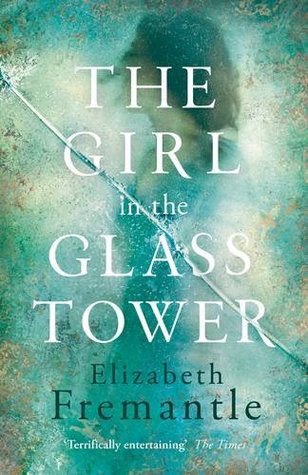
The Girl in the Glass Tower by Elizabeth Fremantle

the-girl-in-the-glass-tower One of the things I like about Elizabeth Fremantle’s historical novels is that they deal with women whose stories aren’t told very often: Penelope Devereux in Watch the Lady, Katherine and Mary Grey in Sisters of Treason and Katherine Parr in Queen’s Gambit. In this, her fourth novel, she writes about two more – Arbella Stuart and Aemilia Lanyer.

The Girl in the Glass Tower is set towards the end of the Elizabethan period, with England waiting anxiously for Elizabeth I, growing old with no children of her own, to name her heir. Born in 1575, Lady Arbella Stuart is the granddaughter of Margaret Douglas, Henry VIII’s niece, and therefore a possible claimant to the throne. Her other grandmother, the formidable and ambitious Bess of Hardwick, Countess of Shrewsbury, is determined to make this possibility a reality – and so Arbella grows up in isolation at Hardwick Hall, sheltered and protected from those who might try to plot against her.

Being close to the throne, however, doesn’t bring Arbella happiness and when her cousin, James VI of Scotland, is finally named as Elizabeth’s successor, she feels that her whole life has been wasted waiting for something that now looks unlikely to happen. Sadly, though, there is still more trouble ahead and when she makes the decision to marry William Seymour, who himself has Tudor blood, Arbella finds herself imprisoned again, this time in the Tower of London.

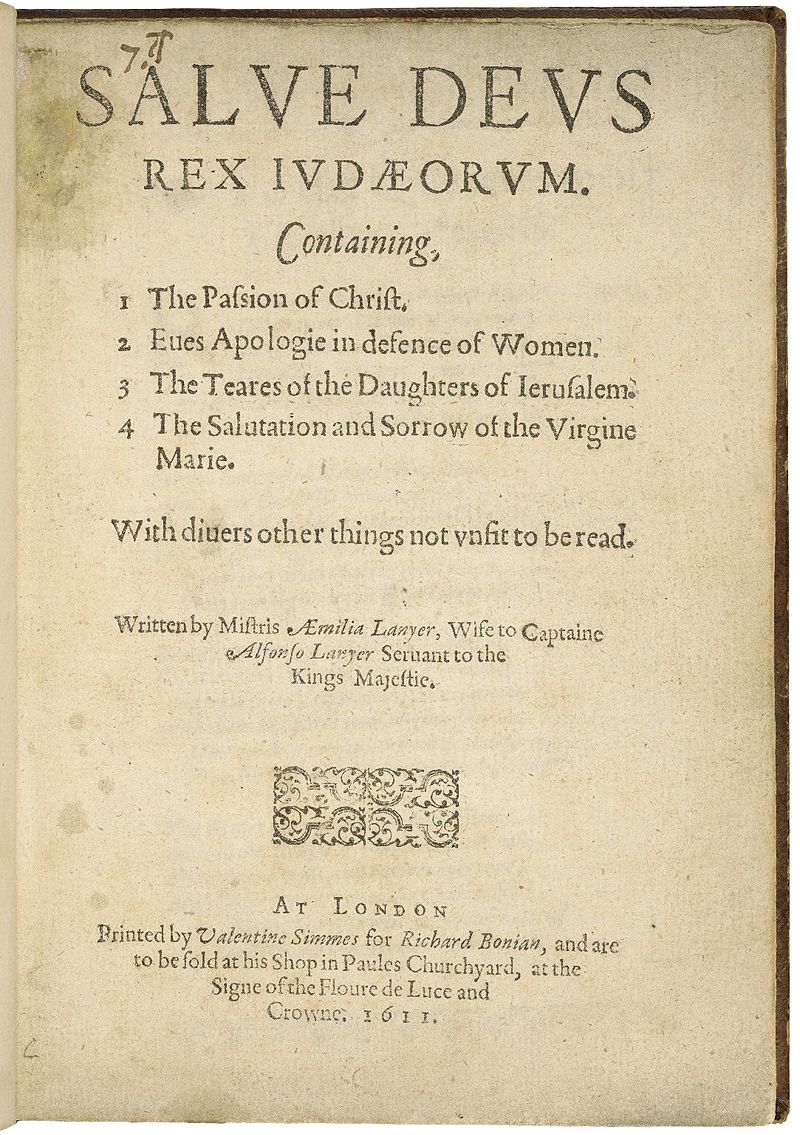
Arbella’s story alternates with the story of the poet Aemilia Lanyer, author of the poetry collection Salve Deus Rex Judaeorum. Aemilia (whom I have read about previously in Dark Aemilia by Sally O’Reilly) is sometimes considered to have been the ‘Dark Lady’ of Shakespeare’s sonnets, but this theory is not the focus of this novel, which concentrates on other aspects of Aemilia’s life instead: how she coped financially after the end of her affair with her rich lover, Lord Hunsdon, and the death of her husband, Alfonso; her work as a poet and as a teacher; and her relationship with her son, Henry.

For both women’s stories, Elizabeth Fremantle sticks to the known historical facts as far as possible, but where details are not known – particularly where Aemilia is concerned – she takes the opportunity to use her imagination. There is no evidence that the two women were friends, for example (although they would probably have been at court at the same time and Aemilia did dedicate one of her poems to Arbella), but Fremantle imagines that they were and that their lives became closely linked.

I loved following Arbella’s story – I’d only read about her once before, in Maureen Peters’ The Queenmaker, which is written from Bess of Hardwick’s perspective, so it was interesting to see things from another point of view, with Bess almost as a villain, controlling and manipulating her granddaughter’s life. I found Aemilia’s sections of the book slightly less absorbing, maybe because I didn’t like the device Fremantle uses of having Aemilia looking back on her relationship with Arbella from a point several years into the future. Still, I thought her story worked well alongside Arbella’s and provided an interesting contrast; unlike Arbella, whose destiny is always in the hands of other people, Aemilia has a much greater degree of freedom, her own struggle being mainly for financial independence and the respect of her son.

I also appreciated the way Fremantle pulls aspects of her previous novels together in this one – Penelope Devereux, the Earl of Essex’s sister from Watch the Lady, has a role to play, and the memory of Katherine Grey from Sisters of Treason is a strong presence in Arbella’s life. The Girl in the Glass Tower is a sad novel, but one that I enjoyed reading – and now I’m wondering who Elizabeth Fremantle will choose to write about next.

My Commonplace Book: November 2016

A summary of this month’s reading, in words and pictures.

commonplace book
Definition:
noun
a notebook in which quotations, poems, remarks, etc, that catch the owner’s attention are entered

Collins English Dictionary

~

tensyoin

“Barbarians,” she murmured in tones of disbelief. “Barbarians.” Perhaps if she said the word often enough she could defuse the threat. “But in that case…we’re finished. We’re all dead.” It was just as Lord Nariakira had warned. These were not gentle Hollanders. These were other beings, those nameless hordes who’d rampaged across China. Barbarians like those didn’t come in peace. They threatened their lives, their world, everything they knew.

Things were spinning around her. The world was turning upside down. But she couldn’t help feeling curious as well. She wished she could catch a glimpse of these exotic creatures with her own eyes.

The Shogun’s Queen by Lesley Downer (2016)

~

“And then do ye wait and see more; there’ll be plenty of opportunity. Time enough to cry when you know ’tis a crying matter; and ’tis bad to meet troubles half-way.”

The Woodlanders by Thomas Hardy (1887)

~

My family were not readers, but Xavier Mountstuart’s writings had inspired and transported me. I had devoured The Courage of the Bruce and The Black Prince, then graduated to the Indian writings: The Lion of the Punjab, of course, and the tales of bandits and rebels in the foothills of Nepal. I had read of white forts and marble palaces and maharajas’ emeralds; of zenanas and nautch girls in the Deccan; of the sieges and jangals. I had even read a short tract about Hindooism, vegetarianism and republicanism, which had left me a little confused. Mountstuart seemed to me the very acme of Byronic manhood. It was not simply that he was a poet and writer of genius, but that he had lived his writings.

The Strangler Vine by MJ Carter (2014)

~

highwayman

“Now, what mean you by that?”

“Just that I am a common highwayman, Miss Betty.”

She stared at him for a moment, and then resumed her work.

“You look it.”

John cast a startled glance down his slim person.

“Is that so, madam? And I rather flattered myself I did not!”

The Black Moth by Georgette Heyer (1921)

~

“No, I don’t care for novels,” she said, shaking her head. “I’ve never really understood them, if I’m honest.”

“In what way?” I asked, confused by how the concept of the novel could be a difficult one to understand. There were some writers, of course, who told their stories in the most convoluted way possible — many of whom seemed to send their unsolicited manuscripts to the Whisby Press, for instance — but there were others, such as Jack London, who offered their readers such a respite from the miserable horror of existence that their books were like gifts from the gods.

The Absolutist by John Boyne (2011)

~

britannia

Frances struck an attitude, sitting upright with head poised high and left hand outstretched as though she grasped an invisible weapon. “Of course, when I am really posing for Roettier, the engraver, I shall wear a helmet and hold a trident and I shall have flowing, Grecian robes. It was altogether the King’s idea, but James of York thought it should be called Britannia. To represent the nation’s might.”

Lady on the Coin by Margaret Campbell Barnes (1963)

~

“My thoughts are my own,” I answered: “and though you keep my person prisoner, these are beyond your control.”

Redgauntlet by Sir Walter Scott (1824)

~

“Not to my knowledge, sir,” said the Viscount.

“I’m glad to hear it! But if you had agreed to the marriage I planned for you a son of yours might have been sitting on my knee at this moment!”

“I hesitate to contradict you, sir, but I find myself quite unable to believe that any grandchild attempting — at this moment — to sit on your knee would have met with anything but a severe rebuff.”

Charity Girl by Georgette Heyer (1970)

~

aemilia-lanyer-poetry

She has a soft spot for little Peter; he had asked why he needed to learn to read when he first arrived.

“Because without reading you only have half a life,” she’d said, watching his puzzled face. “Reading will open doors for you to new worlds.” He had looked at her in wonder then.

“Like the men who sail to the Americas?”

“Yes, something like that.”

The Girl in the Glass Tower by Elizabeth Fremantle (2016)

~

Favourite books this month: The Woodlanders and The Strangler Vine

Watch the Lady by Elizabeth Fremantle

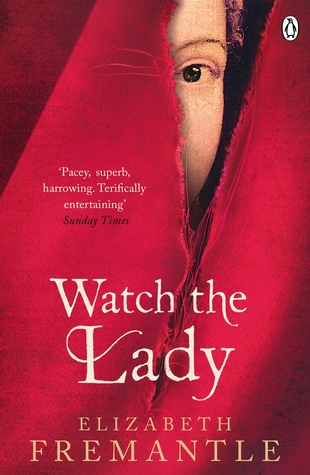
watch-the-lady I’ve fallen behind with Elizabeth Fremantle’s books; having read Queen’s Gambit and Sisters of Treason shortly after they came out, the publication of her next book – Watch the Lady – seemed to escape my notice and now there’s also a fourth novel, The Girl in the Glass Tower. I discovered that my library had both and decided that Watch the Lady, her novel about the 16th century noblewoman Penelope Devereux, would be the next one I read.

Penelope’s story is one that is not often told; she has appeared as a minor character in other books I’ve read set during the Elizabethan period, such as Elizabeth I by Margaret George, but this is the first novel I’ve come across in which she is the main character.

Penelope is related to Elizabeth I through her mother, Lettice Knollys, a granddaughter of Mary Boleyn, Elizabeth’s aunt. Lettice has incurred the Queen’s displeasure by secretly marrying Robert Dudley, the man said to be Elizabeth’s own love interest, and has been exiled from court. Lettice’s children, however, are still welcome and Penelope’s handsome, dashing brother, Robert Devereux, Earl of Essex, has become a particular favourite of Elizabeth’s. As Essex rises higher and higher in the Queen’s favour, his enemies plot to pull him down and Penelope must do everything in her power to protect her brother and keep the family’s ambitions alive.

While Essex’s turbulent career, which is marked by military defeats, trials and banishments and ends in the Essex Rebellion of 1601, is followed in detail, Penelope herself is the real focus of the novel. Penelope is considered to be one of the beauties of the Elizabethan court and the inspiration for the poet Philip Sidney’s Astrophil and Stella sonnet sequence. The real nature of her relationship with Sidney is uncertain, but Fremantle gives one interpretation here. Penelope’s unhappy marriage to Lord Rich and her later love for Charles Blount are also described, but I was less interested in these parts of the story and I don’t think the balance between the romance and the politics in this book was quite right for me.

I did like the way Penelope is portrayed – a strong, intelligent and ambitious woman, but one who is still convincing as an Elizabethan woman, rather than feeling like a modern day character dropped into a historical setting – and Essex, if not very likeable, is always interesting to read about. Elizabeth’s adviser, Robert Cecil, however, is very much the villain of the novel; there are several chapters written from his perspective and from the beginning he is shown to be working against Essex and his family, acting on his father’s advice that people need someone to hate and that if he can learn to be that hated person he will be indispensable. I think Cecil does a good job of making himself hated, and it wasn’t until near the end of the book that I began to have some sympathy for him.

I enjoyed reading Watch the Lady and getting to know Penelope Devereux, but this is not my favourite of the three Elizabeth Fremantle novels I’ve read so far, partly because, as I’ve mentioned, Penelope’s love life didn’t interest me all that much, and also because I prefer the periods of Tudor history covered in Queen’s Gambit and Sisters of Treason. I’ve now moved on to The Girl in the Glass Tower and am finding it a much stronger novel; my full thoughts on that one should be coming soon.