My Commonplace Book: October 2016

A summary of last month’s reading, in words and pictures.
commonplace book
Definition:
noun
a notebook in which quotations, poems, remarks, etc, that catch the owner’s attention are entered

Collins English Dictionary

~

“Most people only want a quiet life,” I said. “Even those of us who were once radicals.” I smiled wryly at Roger. He nodded in acknowledgement.

“Fanatics on both sides,” old Ryprose said gloomily. “And all we poor ordinary folk in the middle. Sometimes I fear they will bring death to us all.”

Revelation by CJ Sansom (2008)

~
edward-lear-book-of-nonsense

“Books,” the driver resumed. “I’m a great reader. I am. Not poetry. Love stories and murder books. I joined one o’ them” – he heaved a long sigh; with vast effort his mind laboured and brought forth – “circulatin’ libraries”. He brooded darkly. “But I’m sick of it now. I’ve read all that’s any good in it.”

The Moving Toyshop by Edmund Crispin (1946)

~

“We shall wait upon tomorrow,” he said.

“But – what if tomorrow is worse than today?”

“Then we shall wait upon the day after tomorrow.”

“And so forth?” I asked.

“And so forth,” Dogger said.

The Dead in Their Vaulted Arches by Alan Bradley (2014)

~

In his masterwork, The Landscape of Criminal Investigation, Atticus Pünd had written: ‘One can think of the truth as eine vertiefung – a sort of deep valley which may not be visible from a distance but which will come upon you quite suddenly. There are many ways to arrive there. A line of questioning that turns out to be irrelevant still has the power to bring you nearer to your goal. There are no wasted journeys in the detection of a crime.’

Magpie Murders by Anthony Horowitz (2016)

~

“But seriously Poirot, what a hobby! Compare that to -” his voice sank to an appreciative purr – “an easy chair in front of a wood fire in a long low room lined with books – must be a long room – not a square one. Books all round one. A glass of port – and a book open in your hand. Time rolls back as you read.”

The Labours of Hercules by Agatha Christie (1947)

~
robert-cecil

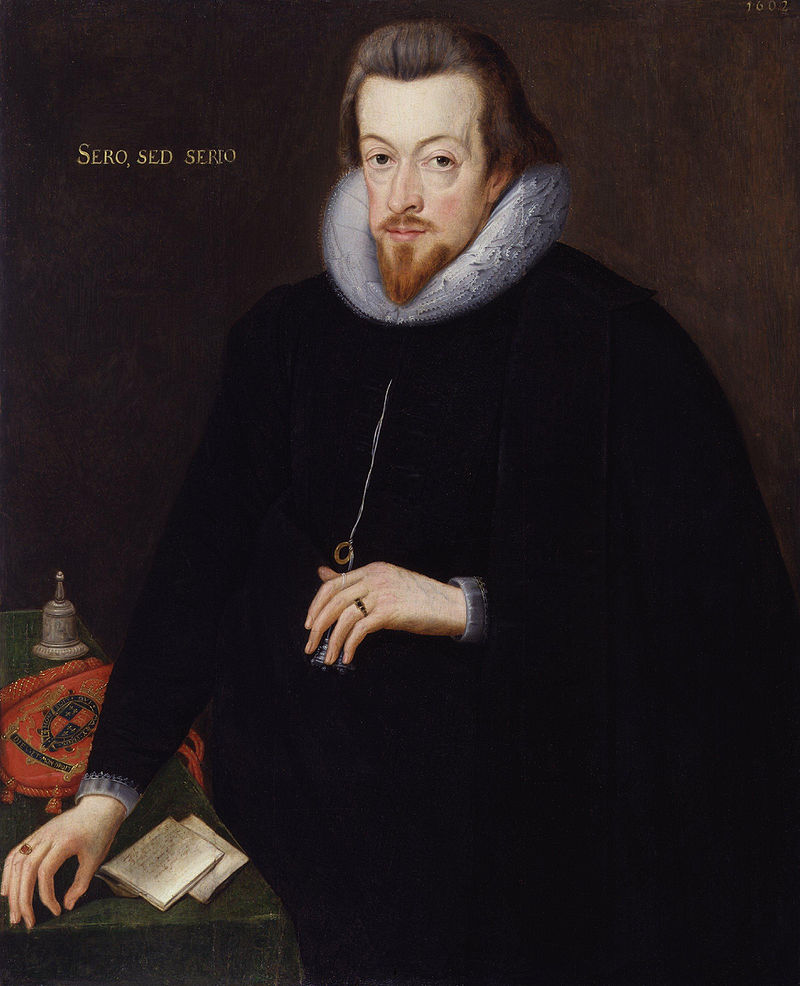
“Watch and wait,” says Burghley. “You have a valuable nugget of information, but that is all it is at this stage. Watch the lady; watch and wait.” Cecil is reminded of being fleeced by a card trickster once, who had said the very same thing – watch the lady. He lost all the gold buttons from his doublet. That was a lesson learned.

Watch the Lady by Elizabeth Fremantle (2015)

~

Sometimes I would like to cry. I close my eyes. Why weren’t we designed so that we can close our ears as well? (Perhaps because we would never open them.) Is there some way that I could accelerate my evolution and develop earlids?

Behind the Scenes at the Museum by Kate Atkinson (1995)

~

Why the Egyptian, Arabic, Abyssinian, Choctaw? Well, what tongue does the wind talk? What nationality is a storm? What country do rains come from? What color is lightning? Where does thunder go when it dies?

Something Wicked This Way Comes by Ray Bradbury (1962)

~
lantern-clock

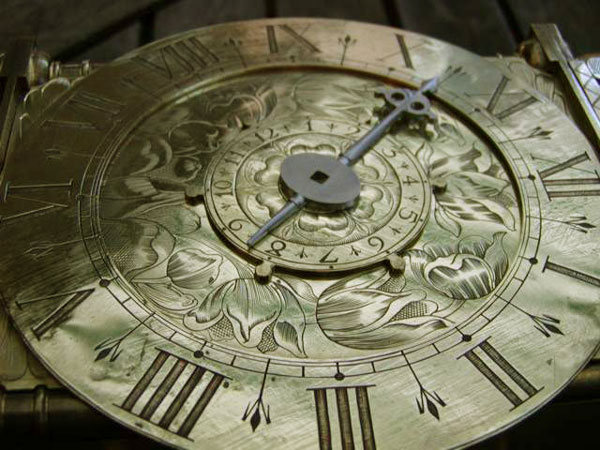
And as the seconds and minutes moved on, I pondered Man’s efforts at the representation or ‘capture’ of Time, and I thought how, for Clockmakers like Hollers, the very Commodity with which they were trying to work was a heartless and capricious Enemy, who stole from them all the while and never rested.

Merivel: A Man of His Time by Rose Tremain (2013)

~

A Gothic gate, richly ornamented with fret-work, which opened into the main body of the edifice, but which was now obstructed with brush-wood, remained entire. Above the vast and magnificent portal of this gate arose a window of the same order, whose pointed arches still exhibited fragments of stained glass, once the pride of monkish devotion. La Motte, thinking it possible it might yet shelter some human being, advanced to the gate and lifted a mossy knocker. The hollow sounds rung through the emptiness of the place. After waiting a few minutes, he forced back the gate, which was heavy with iron work, and creaked harshly on its hinges…

The Romance of the Forest by Ann Radcliffe (1791)

~

I could not possibly go home, I reflected, and add as a serious contribution to the study of women and fiction that women have less hair on their bodies than men, or that the age of puberty among the South Sea Islanders is nine — or is it ninety? — even the handwriting had become in its distraction indecipherable. It was disgraceful to have nothing more weighty or respectable to show after a whole morning’s work.

A Room of One’s Own by Virginia Woolf (1929)

~

sappho

Not everyone can write as legibly as I; Father made me spend hours at my tablets, saying that my poems must be written down by me as I myself have composed them, so they will not be distorted in later years by other singers. “For you have great gifts from the Muses,” he said. “I would not have them lost to the world that comes after.”

Burning Sappho by Martha Rofheart (1974)

~

“I ain’t in the habit of picking other folks’ roses without leave,” said she.

As Rebecca spoke she started violently and lost sight of her resentment, for something singular happened. Suddenly the rosebush was agitated violently as if by a gust of wind, yet it was a remarkably still day. Not a leaf of the hydrangea standing on the terrace close to the rose trembled.

“What on earth -” began Rebecca; then she stopped with a gasp at the sight of the other woman’s face. Although a face, it gave somehow the impression of a desperately clutched hand of secrecy.

Small and Spooky edited by M.R. Nelson (2016)

~

Time was not something then we thought of as an item that possessed an ending, but something that would go on forever, all rested and stopped in that moment. Hard to say what I mean by that. You look back at all the endless years when you never had that thought. I am doing that now as I write these words in Tennessee. I am thinking of the days without end of my life.

Days Without End by Sebastian Barry (2016)

~

“You don’t think there’ll really be a war, do you?” she asked anxiously, as her work was for the maimed wrecks of men left by the 1914-18 war – and I could understand her horror of another. But when I looked at the Green Cat I was not sure and I did not reply.

A Chelsea Concerto by Frances Faviell (1959)

~

Favourite books read in October: Revelation, The Moving Toyshop and Magpie Murders
Sisters of Treason by Elizabeth Fremantle

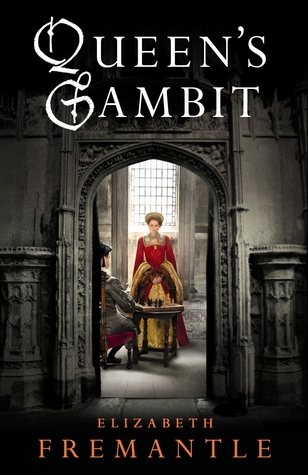
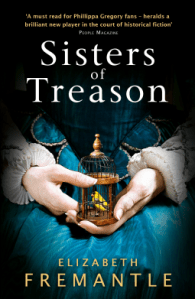
Sisters of Treason This is Elizabeth Fremantle’s second historical fiction novel. I read her first book, Queen’s Gambit, last year and was quite impressed by it, so I’ve been looking forward to reading this one. It didn’t disappoint me – I actually found it a more compelling and enjoyable book than the first. Although Fremantle’s books are set in Tudor England, a very popular choice with historical fiction authors, it would seem that she’s trying to write about some of the lesser known female figures of the period, which is very refreshing. Queen’s Gambit was the story of Henry VIII’s sixth wife, Katherine Parr, who is usually given less attention than some of the other wives, while her next novel – due to be published next year – is going to be about Penelope Devereux and should be really fascinating.

This book, Sisters of Treason, is the story of Katherine and Mary Grey – the two younger sisters of Lady Jane Grey, the ‘nine-day queen’. The novel opens in 1554 with Jane being beheaded, having been deposed by her cousin, Mary Tudor, after only nine days on the throne of England. Jane is dead before our story really begins but she remains a constant presence in the lives of both Katherine and Mary Grey who are unable to escape the taint of treason. Under the reigns of first Queen Mary and then Queen Elizabeth I – neither of whom have a child of their own to name as heir – the Grey sisters have a strong claim to the throne, which means they will never be allowed to live their lives in peace.

Following Jane’s execution, the family of Katherine’s husband, Henry Herbert, decide to distance themselves from the Greys. Katherine is heartbroken when her marriage to Henry is annulled but she does find love again with Edward Seymour, the brother of her best friend Jane (referred to in the novel as Juno to distinguish her from the other Janes in the story). Queen Elizabeth is furious when she learns of their relationship and Katherine soon discovers just how difficult life can be for those who go against the Queen’s wishes.

The youngest Grey sister, Mary, was born with a form of spinal curvature which has affected her growth and as she is unlikely to be able to have children she is seen as less of a threat than Katherine. However, she is forced to undergo degrading experiences such as sitting on Queen Mary’s knee and being treated as a sort of pet or baby. Later, when Elizabeth takes the throne, although Mary is not in as much danger as Katherine, she still finds that the Elizabethan court is not a pleasant place to be.

Sisters of Treason is narrated by both Katherine and Mary (my favourite character) in first person present tense. This is something I don’t usually like but I thought it worked well here. There’s also a third viewpoint character – Levina Teerlinc, a friend of Frances Grey, the girls’ mother. In her position as a portrait painter who produces miniatures of various important court figures, Levina gives us a different perspective on some of the things that happen in the book.

As well as being the story of the Grey sisters, the novel also takes us through some of the major events of Queen Mary’s and Queen Elizabeth’s reigns. While both Queens can be cruel and treat their Grey cousins very badly, they are not just portrayed as complete monsters with no depth to their characters. Instead, the author tries to give some possible reasons for their behaviour and shows us the pressures they are under as female rulers in a male-dominated society.

They sit in silence for a moment, and something occurs to Levina that she had not fully realized until she articulated it – that for Elizabeth politics come before everything. That is how it must be if you are Queen regnant, your passions shut away in a box buried deep beneath the ground. It makes her think of her predecessor Mary Tudor, who struggled so with that concept, and she surprises herself with a pinch of sympathy for these women who have to fashion a cold, hard face to show to the world.

I have read a few other novels about the Grey sisters (The Nine Day Queen by Ella March Chase and Alison Weir’s Innocent Traitor and A Dangerous Inheritance) but I still don’t think they get a lot of coverage in historical fiction compared to other figures from the Tudor period. Many people will have heard of Lady Jane Grey but may not be aware that she had two sisters and something that I liked about this book is that by beginning with Jane’s execution, Elizabeth Fremantle avoids re-telling Jane’s more famous story and instead concentrates on the other Grey sisters. However, Katherine and Mary never forget what happened to Jane and her influence on their lives is still very strong; Katherine inherits Jane’s Greek New Testament in which she has written “it shall teach you to live and learn you to die” and Mary often asks herself what Jane would do in certain situations. As Mary says to Levina near the end of the novel:

“In the scheme of a life, it is not the duration of something but its impact that is important.”

Thanks to the publisher for providing a review copy via NetGalley.

Queen’s Gambit by Elizabeth Fremantle

Queen's Gambit So many novels have been written about the six wives of Henry VIII I wasn’t sure if I really wanted to read another one. Queen’s Gambit seemed to be getting such good reviews, though, so I thought I would give it a chance. I was intrigued by the comparisons to both Philippa Gregory and Hilary Mantel, two very different authors, (though now that I’ve read it, I can tell you I found it more similar to the former than the latter) and I also liked the fact that, at least with this edition, the publisher has avoided the usual front cover image of a ‘headless/faceless woman in a pretty dress’ which most recent Tudor court novels seem to have.

Queen’s Gambit tells the story of Katherine Parr. If you’re familiar with the rhyme used to remember the fates of Henry VIII’s six wives (Divorced, beheaded, died; divorced, beheaded, survived), Katherine Parr was the sixth and final wife – the one who ‘survived’. While Katherine’s story may not have been covered in historical fiction as often as some of the other wives, particularly Anne Boleyn, I have read about her before so already knew the basic facts about her life.

Katherine comes to the court of Henry VIII after her husband Lord Latimer dies leaving her a widow for the second time at the age of thirty-one. Soon after her arrival, she falls in love with Thomas Seymour, one of the brothers of the late queen, Jane Seymour. However, Katherine has also caught the eye of the King, who plans to make her his sixth wife. By this stage of his life, Henry is no longer the handsome prince he once was: he has grown fat, he’s suffering from an ulcerated leg, and added to the fact that his previous wives have met such unhappy fates, Katherine has no desire to marry him. She doesn’t dare defy the King’s wishes and accepts his proposal of marriage, but during the years that follow she is unable to forget Thomas Seymour, even after he is sent away from court on a diplomatic mission. Meanwhile, life at court is growing increasingly dangerous for Katherine and as she becomes more deeply involved in the reformed religion she realises that she needs to be very careful if she’s going to survive.

This story is told from two very different perspectives: one is Katherine’s and the other is Dorothy Fownten’s. Katherine is a dignified, mature and intelligent person which makes her easy to like and sympathise with as she learns to cope with life in the treacherous, unpredictable Tudor court, never being sure who can and cannot be trusted, and knowing that two of her predecessors have already lost their heads. Dorothy, known as Dot, is Katherine’s maid and while Katherine moves in the innermost circles at court, Dot is on the outside and can take a more observant and unbiased view of things. I liked both women but I found Dot a more engaging character. Having read a few books about Katherine now, I don’t think she’s really a great subject for historical fiction – there are a lot of other queens’ lives that are much more dramatic and interesting to read about – so some of my favourite parts of the book were actually those that concentrated on Dot’s personal story rather than Katherine’s. When I read the author’s note at the end I was surprised to discover that there really was a maid of that name who served Katherine Parr, though the way she is portrayed in the book is largely fictional.

Another character I enjoyed reading about was Dr Robert Huicke, the King’s physician who becomes a good friend of Katherine’s. Through Huicke we also meet Nicholas Udall, the playwright most famous for writing one of the first English comedies, Ralph Roister Doister. Huicke’s relationship with Udall, as well as his friendship with Katherine, adds another interesting angle to the story.

As I mentioned at the start of this post, I thought this book felt more like a Philippa Gregory novel than a Hilary Mantel and I don’t think the comparisons with Wolf Hall are justified, but I did still enjoy it. Queen’s Gambit is apparently the first in a Tudor trilogy – the second one will explore the lives of Lady Jane Grey’s two sisters, Catherine and Mary, and the third is going to be set in the Elizabethan court. I’m looking forward to reading both.

I received a copy of this book through Netgalley for review.