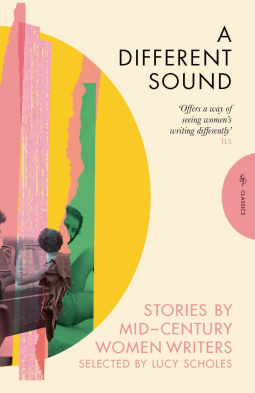
 This is a fascinating collection of short stories, all written by women and originally published in the 1940s and 50s. When I saw the list of authors included in the book, there were several I’d already read, others I’d heard of but never read, and a few that were completely new to me. There are eleven stories in total and as always when writing about collections like this, I’ll have more to say about some of them than others!
There’s only one story in this collection that I’ve read before – and that’s The Birds by Daphne du Maurier. As she’s one of my favourite authors, I decided to read it again and found it just as wonderful and atmospheric as I did the first time. Rather than discuss it again here, I’ll direct you to my previous review and will just add that even if you’ve seen the Hitchcock film, I would still recommend reading the story which is quite different in several ways.
Elizabeth Jane Howard is an author I’m familiar with through her Cazalet Chronicles (I’ve read the first two books in the series and am planning to read the others) and she is represented here with Three Miles Up, an eerie story in which two men are taking a trip through the countryside on a canal boat when they encounter a young woman called Sharon. Once Sharon joins them on the boat, things begin to go wrong and they find themselves sailing up a canal that doesn’t appear on any maps. I loved this one, although I wasn’t aware that Howard wrote ghost stories so it wasn’t what I’d expected at all.
The other two authors I’ve read previously are Stella Gibbons and Elizabeth Taylor. The Gibbons story, Listen to the Magnolias, is set during the war and involves an elderly widow nervously awaiting the arrival of five American soldiers who will be billeted in her home, while Taylor’s The Thames Spread Out follows a woman who is trapped upstairs in her house during a flood while swans swim at the bottom of her staircase. I liked both of these, particularly the second.
Apart from The Birds, my favourite story in the book turned out to be The Skylight by Penelope Mortimer, in which a woman and her young son rent a house in a remote area of France but arrive to find the doors all locked and no sign of the owners. The only point of access is an open skylight in the roof and the mother makes a decision she quickly comes to regret. Mortimer creates a real sense of fear and tension in this story and I couldn’t wait to reach the end to find out if everything was going to be okay!
Considering the publication dates, the Second World War naturally plays a part in many of these stories – I’ve already mentioned the Stella Gibbons, but another is Diana Gardner’s wonderful story, The Land Girl, about a young woman placed on a farm as a Land Girl who takes an instant dislike to the woman whose home she is staying in and decides, out of spite and jealousy, to cause trouble for her.
The stories above are the ones that really stood out for me in this collection, but I enjoyed all of them to some extent, apart from maybe Elizabeth Bowen’s Summer Night which I found well written but confusing due to the structure and changing perpectives. I was also slightly disappointed by Sylvia Townsend Warner’s Scorched Earth Policy about an elderly couple preparing for a wartime invasion, simply because it was too short for any real plot or character development. It was nice to discover some authors I’d never come across before, though: Frances Bellerby, who in The Cut Finger tells the story of a little girl learning some important lessons about the world; Inez Holden whose Shocking Weather, Isn’t It? follows a woman who visits her cousin in various different places over the years; and Attia Hosain who explores the feelings of a newly married woman struggling to fit in with her husband’s friends in The First Party.
I can definitely recommend this collection; I found something to interest me in every story, even the ones I didn’t enjoy as much. I also now have a list of authors I need to explore further!
Thanks to Pushkin Press Classics for providing a copy of this book for review via NetGalley.
 She Reads Novels