Review: Alice I Have Been by Melanie Benjamin

I had been reading so many good reviews of Alice I Have Been that when I won a copy from The Book Whisperer I couldn’t wait to read it and see if it deserved its reputation. I’m happy to say that it did.

Before I read this book, I knew Alice Liddell was the girl who inspired Alice’s Adventures in Wonderland, but that was all I knew about her. I also knew that Lewis Carroll’s real name was Charles Lutwidge Dodgson and that he was an Oxford mathematics professor, but that was all I knew about him. Alice I Have Been is the story of how Alice’s relationship with Dodgson and the book he wrote changed her life forever.

The 19th century is one of my favourite historical periods and it was interesting to read about Alice’s life as the daughter of the Dean of Christ Church, mixing with the upper classes of Victorian society. Mr Dodgson was a friend of the Liddell family, who enjoyed visiting the three little girls – Ina, Alice and Edith – and taking photographs of them. The relationship between Alice and Dodgson was slightly disturbing, but the overall impression I got of him was of a shy, lonely man who felt more comfortable with children than with adults – and didn’t want those children to grow up. When Alice was eleven, an incident occurred that caused a rift between Dodgson and the Liddells – in real life, this is a mystery that has never been solved. Melanie Benjamin gives one possible explanation but states in her author’s note that this is her own interpretation and not necessarily the truth, leaving us to wonder exactly what really did happen.

I had no idea Alice Liddell had such an eventful adult life or that she was romantically involved (though maybe not to the extent the book suggests) with Queen Victoria’s youngest son, Prince Leopold – until hints of the scandal in her past came back to haunt her.

This book is a clever mixture of fact and fiction. I always think a sign of a good historical fiction novel is when it inspires you to find out more about the people you’ve been reading about. There’s a lot of information about Charles Dodgson available online, including some of his photographs (a few of which are reproduced in the book). It was interesting to read about seven year-old Alice posing for Dodgson as a gypsy girl, then being able to look at the actual picture itself. I also wanted to find out more about John Ruskin, who is portrayed quite negatively in the book.

Now I want to go and read Alice in Wonderland again to see if I feel differently about it now that I know the story behind it.

Recommended

Genre: Historical Fiction/Pages: 345/Publisher: Random House/Year: 2010/Source: Won in giveaway

Review: The Tenant of Wildfell Hall by Anne Bronte

Although Emily Bronte’s Wuthering Heights and Charlotte Bronte’s Jane Eyre have always been two of my favourite Victorian classics, this is the first time I’ve read anything by the youngest Bronte sister, Anne. I feel a bit guilty that it has taken me so long to get round to reading one of Anne’s books, especially as I enjoyed it almost as much as the other two books I’ve just mentioned.

Anne’s writing style is not the same as Charlotte’s or Emily’s – there’s less dramatic romanticism and poetic imagery, although she still writes with a lot of passion. She has quite a sharp style that is probably more similar to Jane Austen than to either of her sisters.

I won’t go into the plot in too much detail but The Tenant of Wildfell Hall is the story of Helen Huntingdon, a young woman who leaves her alcoholic husband and goes into hiding with her five year-old son, Arthur. Not long after arriving at Wildfell Hall she meets local farmer, Gilbert Markham, who falls in love with her. When Gilbert questions her about the rumours circulating about her in the village, she allows him to read her diary in which she had recorded the details of her unhappy marriage.

The book has an interesting structure – it’s told partly in the form of letters from Gilbert Markham to his brother-in-law Jack Halford, and partly as extracts from Helen Huntingdon’s diary. I loved the first section from Gilbert’s point of view, describing the arrival of the mysterious woman at Wildfell Hall with everyone wondering who she was and where she came from. The story probably wouldn’t have worked had it not been set in the 19th century. Today there’s nothing unusual in a single mother living alone with her little boy, but in 1828 when The Tenant of Wildfell Hall takes place, it makes her the target of gossip and scandal.

When Helen’s diary began it took me a while to get used to the change of voice and the change of pace but it soon developed into the most powerful section of the book. I didn’t particularly like Helen as I thought she was just a little bit too saintly and perfect, but she was a very strong person who defied convention to do what she thought was best for herself and her child. Her diary entries are filled with descriptions of some really despicable characters and describe scenes of drunkenness, violence, verbal and physical abuse, and adultery, which I can imagine readers in the 19th century would have been shocked by. Apparently after Anne’s death, re-publication of The Tenant of Wildfell Hall was prevented by Charlotte, who considered the choice of subject to be a big mistake. However, I would have no hesitation recommending this book to anyone who has enjoyed Emily and Charlotte’s work, as well as those of you who have never read any other Bronte books.

Note: This book counts towards the Women Unbound Reading Challenge because it portrays a woman who has the strength to leave her abusive husband and build a new life, working as an artist to support herself and her son – almost unheard of in the 19th century.

Highly Recommended

Genre: Classics/Page: 401/Publisher: Wordsworth Classics/Year: 1996 – first published 1848/Source: My own copy bought new

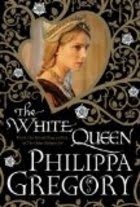
Review: The White Queen by Philippa Gregory

Philippa Gregory is best known for her Tudor court novels, but with The White Queen she moves further back in time to the Plantagenets and the Wars of the Roses.

Elizabeth Woodville is twenty seven when she meets and falls in love with King Edward IV. Following a private wedding, Elizabeth becomes Queen of England and finds herself caught up in the ongoing battles between the House of Lancaster and the House of York. Amidst all the politics, intrigue and betrayal, Elizabeth’s concern is for the future of her children – in particular her two royal sons who will become the famous ‘Princes in the Tower’, a mystery which remains unsolved to this day.

The book is written in the first person present tense which I found slightly irritating, though not enough to stop me from enjoying the book. The use of present tense does help the reader to feel as if they are experiencing events along with Elizabeth, so it works in that sense, but my personal preference is definitely for past tense. There are a few passages where the viewpoint temporarily changes to the third person in order to describe battles which Elizabeth doesn’t witness but which are an important part of the storyline. I often find battle scenes boring, but these are well written and go into just the right amount of detail.

I found the story itself quite suspenseful and exciting – it probably helped that although I read a lot of historical fiction novels, I haven’t read many about the War of the Roses, so only had a vague idea of what was going to happen. Of course, this meant that I wasn’t sure exactly which parts of the book were based on fact and which parts were the invention of the author. In her note at the end of the book, Gregory mentions that there’s not much information available about the period, therefore there are some areas where she felt free to use her imagination.

If you’re not very familiar with the historical background, you’ll need to concentrate to be able to keep track of all the battles, changes of allegiances and numerous claimants to the throne. The family tree provided at the front of the book is not very helpful – it’s incomplete and really needed to show at least one more generation, as it ends before some of the important characters in the story were even born.

I found it difficult to warm to the character of Elizabeth but could feel sympathy for her, especially towards the end of the book. Richard III was also portrayed quite sympathetically – nothing like the evil hunchback in Shakespeare’s play! I would have liked to have seen his relationship with Elizabeth more thoroughly explored in the book – there was no real explanation for why she distrusts him so much, other than that she’s had dreams and premonitions that something bad will happen to her sons in the Tower. On the subject of the Princes in the Tower, the book explores an interesting theory, which may or may not be true – it would be nice to think that it was.

Interspersed with the main story is the tale of Melusina, the water goddess, from whom Elizabeth and the female members of her family are said to have descended and from whom they claim to have inherited magical powers.
Magic and mythology are recurring themes throughout the book. Elizabeth and her mother Jacquetta’s witchcraft skills are used as an explanation for several key historical events – for example, they whistle up storms to defeat their enemies at sea. This aspect of the story became quite repetitive and just didn’t appeal to me much. Sometimes it felt as if there were references to Melusina, water, rivers, the sea etc on almost every page!

The book ends abruptly, but that’s not surprising since The White Queen is the first in a trilogy called The Cousins’ War and will be followed by The Red Queen and The White Princess which will focus on Margaret Beaufort and Elizabeth of York respectively.

I would recommend The White Queen if, like me, you don’t have much knowledge of the Wars of the Roses and are looking for an enjoyable and relatively easy to understand introduction to the period. For those of you with a lot of background knowledge, I think there should still be enough new ideas to keep you interested.

Recommended

Genre: Historical Fiction/Pages: 417/Publisher: Simon & Schuster/Year: 2009/Source: My own copy bought new

Review: A Christmas Carol by Charles Dickens

“Men’s courses will foreshadow certain ends, to which, if perservered in, they must lead,” said Scrooge. “But if the courses be departed from, the ends will change…”

A Christmas Carol is the one classic that almost everyone knows, even if they’ve never read the book. It’s the story of an old, money-obsessed miser called Ebenezer Scrooge who is given the chance of redemption one Christmas Eve when he is visited by the ghost of his deceased business partner, Jacob Marley. Marley warns Scrooge that unless he changes his ways, he will end up like Marley himself, doomed to wander the earth bound by heavy chains of his own making. During the night Scrooge is visited by three more spirits – the Ghosts of Christmas Past, Christmas Present and Christmas Yet to Come – who help him to understand that there are more important things in life than money: things such as generosity, compassion and kindness. The scenes Scrooge witnesses that Christmas Eve are to change his life forever and transform him into a different person.

A Christmas Carol is shorter and easier to read than most of Dickens’ other books and really is suitable for people of all ages. I loved it as a child and after re-reading it this week for the first time in years, I loved it as an adult too. No matter how many movies, cartoons or TV adaptations you may have seen, it’s still worth reading the book for the richness and humour of Dickens’ writing and for his wonderful descriptions and imagery. For example when describing the location of Scrooge’s home, hidden away in a gloomy yard, he says:

 “…one could scarcely help fancying it must have run there when it was a young house, playing at hide-and-seek with other houses, and have forgotten the way out again”.

There are great lines like this one throughout the entire book. I also loved his portrayal of a Victorian Christmas in 19th century London.

Although some readers might find it too sentimental at times, it’s easy to see why this book has become a timeless classic, as it is everything a good Christmas story should be – heartwarming, inspirational and with an important message for us all.

Recommended

Genre: Classics/Pages: 147/Publisher: Chancellor Press/Year: 1985 (originally published 1843)/Illustrations by Arthur Rackham/Source: My own copy

Review: Molly’s Millions by Victoria Connelly

What would you do if you won £4.2m on the lottery? Would you tell your Scrooge-like family and risk them taking the money away from you…or would you try to keep it a secret and have some fun? That’s the decision faced by struggling florist Molly Bailey – and it doesn’t take her long to make up her mind!

Knowing she can’t hide her win from the Bailey family forever, Molly decides to dispose of it as quickly as possible. With only her dog for company, she sets off on a journey around Britain, distributing money to those in need.
Victoria Connelly writes with a lot of warmth and humour, making this a lovely, inspiring story with characters that the reader can really identify with and care about.

It would be impossible not to like Molly Bailey, as she’s such a generous, kind-hearted person. She truly doesn’t seem to realise how unusual it is for someone to behave so selflessly and can’t understand why her actions are making her a media phenomenon. I also liked Tom, despite the trouble he was causing for Molly, and I loved Flora, his daughter. I was torn between cheering Molly on, and wanting Tom to catch her!
This isn’t the kind of book I would usually choose to read but Molly’s Millions, with its pretty pink cover, caught my attention. It was a light, enjoyable, fun read and I’m glad I decided to give it a chance!

Journalist Tom Mackenzie is looking for a big story to save his career. Accompanied by his ten year-old daughter, Flora, Tom chases Molly up and down the country, determined to discover the identity of this modern-day Robin Hood. Molly must use her wits if she is to avoid being caught by Tom and the Bailey men and continue spreading goodwill to the nation.

Recommended

Genre: Chick Lit/Pages: 352/Publisher: Allison & Busby/Year: 2009/Source: Library book

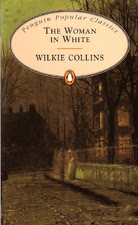
Review: The Woman in White by Wilkie Collins

There, in the middle of the broad bright high-road – there, as if it had that moment sprung out of the earth or dropped from the heaven – stood the figure of a solitary Woman, dressed from head to foot in white garments, her face bent in grave inquiry on mine, her hand pointing to the dark cloud over London, as I faced her.

I first read The Woman in White in 2006 – it was the first Wilkie Collins book I ever read and the one that turned me into a huge fan of his work. I just wish I had discovered him sooner!

The Woman in White was the most popular book of the 1860s; when it was originally serialised in Charles Dickens’ periodical All The Year Round large crowds gathered outside the newspaper offices every time the latest edition went on sale; you could buy Woman in White perfume, bonnets and shawls and dance the Woman in White waltz…and all of this was 150 years before Harry Potter!

So what is it about? I won’t go into the plot in too much detail, as I don’t want to spoil the fun for those of you who haven’t read it yet. The story begins with drawing master Walter Hartright’s meeting on a lonely London road with a mysterious woman dressed all in white who has escaped from an Asylum. The next day Walter takes up a teaching position at Limmeridge House in Cumberland where he finds that one of his students, Laura Fairlie, bears a striking resemblance to the woman in white…

The novel follows an epistolary style, meaning it is narrated by several different characters in turn, sometimes in the form of journal entries or letters. I love the way Collins gives each of his narrators a unique ‘voice’ – he really makes the characters come alive. Another thing I love about Wilkie Collins’ writing is his sense of humour…some of the scenes involving Laura’s hypochondriac uncle Mr Fairlie are hilarious!

Marian Halcombe, Laura Fairlie’s sister, is one of my favourite female characters in literature. Contrary to the usual portrayal of 19th century women, she is a brave, intelligent, courageous person who on several occasions puts herself in danger in order to protect her sister Laura. Another great character is Count Fosco. One of the most unusual and memorable villains I’ve ever encountered in any book, he’s an old, fat, opera-loving Italian completely devoted to his pet canaries and white mice. I remember being surprised when I first read the description of Fosco, as he wasn’t what I had been expecting at all!

The Woman in White is an example of the genre known as sensation fiction – including elements such as forgery, identity theft and insanity. Although it was written in the 19th century it’s as exciting and gripping as a modern day thriller – even when reading the book for the second time and knowing what was going to happen! It’s a long book (569 pages in my Penguin Popular Classics version) but there’s enough tension and suspense to keep the reader interested right through to the end.

There are some classics that are a struggle to read but you persevere with them simply because they’re classics and you feel as if you should. The Woman in White does not fall into that category – yes, it’s a classic but it’s also one of the most readable and enjoyable books I’ve ever read.

If you liked this book I would recommend you read The Moonstone, Armadale or No Name next. As I mentioned at the start of this review, I am a big fan of Wilkie Collins so you can expect to see more of my reviews of his work coming soon!

Highly Recommended

Genre: Classics – Sensation Fiction/Pages: 576 pages/Publisher: Penguin Popular Classics/Year: Originally published 1859/Source: Purchased new from Amazon.co.uk

This review is part of my Great Books series.

Review: Testament of Youth by Vera Brittain

I chose to read this book as part of the Women Unbound Reading Challenge. I selected this book for Women Unbound because it is the memoirs of a woman who lived through World War I and it’s considered an important example of feminist literature.

I don’t read many non-fiction books or biographies/autobiographies so this was something different for me.

Vera Brittain was born in 1893 and grew up in Buxton, Derbyshire. Her father was the owner of a paper mill, therefore she had a comfortable, privileged childhood. Vera was well-educated and ambitious and longed to break away from what she frequently refers to as her ‘provincial’ life in Buxton. She already considered herself to be a feminist and wanted more out of life than just to leave school and get married like most of the other girls she knew. Her father finally agreed that she could go to Oxford University, but just as she was beginning her studies, war broke out in Europe. With her fiance Roland, brother Edward, and two close friends fighting on the front line, she was unable to concentrate on her studies and decided to enlist as a V.A.D. nurse.

It was fascinating to read a personal account of the effects the war had on one woman’s life and on society as a whole. Reading this book made me realise how little I actually knew about World War I. A lot of the places and events mentioned in the book were unfamiliar to me and left me wanting to find out more.

Rather than just relying on her memory, Brittain uses a number of different sources, including her private diaries and correspondence and verses from poems, some of which were written by Roland or Vera herself. As I read about all the pain and sorrow she was forced to endure, I became completely absorbed in Vera Brittain’s story. I found it very inspirational that despite having her entire world torn apart by the war, she was still able to go on to build a successful career for herself as a novelist, feminist and pacifist.

Although Testament of Youth was a long, demanding and often heartbreaking book, I’m glad I read it and I feel I learned a lot from it.

Highly Recommended

Genre: Non-Fiction (Autobiography)/Pages: 640/Publisher: Virago/Year: 1933/Source: borrowed a copy