The Misbegotten by Katherine Webb

The Misbegotten I really enjoyed The Misbegotten; I don’t normally choose books depending on the season (unless for a specific event such as the R.I.P. challenge) but this was a perfect October book! A big, thick novel with an atmospheric nineteenth century setting, a dark and gothic feel, and a mystery at its heart: ideal for this time of year.

In 1803, a little girl known only as Starling is found wandering in the marshes and is taken in by Alice Beckwith, a loving, kind-hearted young woman with a mysterious past of her own. Having grown up with only an elderly servant for company – except for the occasional visit from her guardian, Lord Faukes, and his grandson, Jonathan Alleyn – Alice is delighted to have Starling living with them and they soon come to think of each other as sisters. The only threat to their relationship, as far as Starling is concerned, is Alice’s love for Jonathan.

In 1821, we meet Starling again, now working as a maid in the household of Jonathan Alleyn, who has been left mentally disturbed after returning from the Peninsular War. We learn that Alice disappeared several years earlier and that Starling believes Jonathan may have killed her.

Into the Alleyn home comes another young woman, Rachel Crofton, who has recently left her position as a governess to marry the wine merchant Richard Weekes. Married life isn’t quite what Rachel had hoped it would be and when Jonathan’s mother asks her to become a companion to her reclusive son, Rachel agrees. Soon she finds herself spending more and more time at the Alleyns’ house and as she gets to know both Jonathan and Starling better, she becomes determined to uncover the truth behind Alice’s disappearance.

The Misbegotten is a story of secrets: secrets between family members, between husbands and wives, between parents and children, between friends. As the story unfolds, we see the consequences of these secrets and how they lead to lies, to devastating tragedies and to the destruction of relationships. The suspense builds as Rachel and Starling come closer to discovering what really happened to Alice and the plot takes some unexpected twists and turns. I was reminded of one of my favourite Victorian authors, Wilkie Collins, whose novels also include similar elements – and I was also reminded of Jane Austen, because most of the action takes place in the city of Bath.

The characters are interesting and well developed and I found that I cared about them all. I cared about Rachel, trapped in an unhappy marriage and doing all she can to help another unhappy family. I cared about the gentle, loving Alice who had vanished without trace. I cared about Jonathan, struggling to cope with his wartime experiences and the loss of the woman he claims to have loved. And I cared about Starling, who is not at all easy to like but who is doing what she believes is right.

This is a long and complex novel and sometimes there are details, subplots or conversations that seem irrelevant – but as the various threads of the story come together we find that everything that happens is significant after all. The only time I began to get impatient was towards the end, when there are some lengthy passages describing Jonathan’s adventures in the Peninsular War. Although these are very well written (and again, very relevant) I was so caught up in the main plot by that point that I resented being pulled away from it even for a few pages!

This is the first Katherine Webb book I’ve read, but based on this one she seems to be just the sort of author I love. I’m sure I’ll be reading more!
The Remains of the Day by Kazuo Ishiguro

The Remains of the Day The Remains of the Day tells the story of Stevens, an elderly butler who worked for many years in the service of Lord Darlington of Darlington Hall. After his master’s death, Stevens has continued to serve the house’s new American owner, Mr Farraday. Given a week’s holiday – and the use of Mr Farraday’s car – Stevens decides to take a drive through the English countryside to visit Miss Kenton, Darlington Hall’s former housekeeper. During the journey, he reminisces about the past, about his relationship with Miss Kenton, and about what makes a butler ‘great’.

I loved this book; it’s definitely one of my favourites of the year. It’s a gentle, slow-paced novel but completely compelling and, despite the lack of drama, I found it difficult to put down. I’m aware that my description above probably doesn’t make the story sound very interesting but I can promise you that it really is! Stevens’ trip through the South West of England (which takes place in 1956) and his memories of the past (the 1920s and 1930s) give the author a chance to explore lots of different topics from the daily duties of a butler and the running of an English country house to the political situation in Europe between the two world wars. Most of all, though, this is a story about loss and regret, misplaced loyalties and missed opportunities.

One of the things I found most impressive about this book was the authenticity of Stevens’ narrative voice. Ishiguro gets it completely right; the language is formal, emotionally restrained and perfectly suited to what we learn of Stevens’ personality. I could almost have believed that I really was reading the memoirs of an elderly British butler! The edition that I read (a library book) was from Faber and Faber’s ‘Secrets and Lies’ series of modern classics, which immediately made me wonder what secrets Stevens was keeping from us and what lies were being told. However, it’s not as simple as that. Unlike some unreliable narrators, Stevens is not intentionally trying to mislead the reader; he is actually lying to himself. He knows, for example, that Lord Darlington’s views are not always entirely right, but he wouldn’t dream of questioning them and manages to convince himself that there’s nothing to worry about.

Stevens spends a lot of time thinking about the qualities that make a great butler and he decides that the most important of these qualities is ‘dignity’. Sadly, Stevens has devoted so much of his life to maintaining his dignity that he has missed out on things like love and friendship and has denied himself the right to form opinions of his own. He never allows himself to experience pleasure or enjoyment and never displays any emotion, even when faced with personal tragedy. His story is such a sad one, though not without any humour – the book is quite funny in places, especially when Stevens describes his unsuccessful attempts at ‘bantering’. The ending is perfect too; the book’s final chapter is poignant and moving but does leave both the reader and Stevens with some hope and optimism.

The only other book I’ve read by Kazuo Ishiguro is Never Let Me Go, which I enjoyed but didn’t love as much as this one, although it’s difficult to compare the two as they’re so completely different. Now I’m wondering which of his books I should read next.

The Midnight Rose by Lucinda Riley

The Midnight Rose Anahita (Anni) Chavan’s whole family are gathering at her hill-top bungalow in Darjeeling to celebrate her one-hundredth birthday, but even surrounded by her children, grandchildren and great-grandchildren, there is still one person missing. This is Moh, her beloved son, whom she has not seen since he was a small child. Everyone believes him to be dead…everyone except Anni who is sure that he is still alive somewhere in the world. A year later Anni herself has died, but before her death she had written down her story and entrusted it to her favourite great-grandson, Ari Malik, in the hope that he would try to find out what happened to her missing son.

Anni’s story leads Ari to Astbury Hall in England, where filming is currently taking place for a new period drama set in the 1920s starring the beautiful young American actress, Rebecca Bradley. When Lord Astbury invites her to stay at the Hall for the duration of the filming as a safe haven away from the world’s press, Rebecca gratefully accepts, hoping that the peace and quiet will give her a chance to decide what to do about her equally famous actor boyfriend, Jack, who has just proposed to her.

Soon Rebecca is drawn into Ari’s search for the truth about Anahita’s past and as her tragic story unfolds, we are taken back to India in 1911, where as a young girl Anni becomes friendly with Princess Indira, the daughter of the Maharaja and Maharani of Cooch Behar. She and Indira are sent to school in England just before the beginning of the Great War, and while staying with family friends at Astbury Hall in Devon the relationship Anni forms with Donald Astbury changes her life forever.

This is the third Lucinda Riley novel I’ve read (the other two were The Girl on the Cliff and The Light Behind the Window – I still need to read Hothouse Flower) and it’s my favourite of the three. Although there were times when I found the plot easy to predict and a few coincidences that felt too implausible, there were enough unexpected twists to keep me in suspense wondering what was going to happen next. I particularly loved the parts of the book set in India during the British Raj and also the insights into what life was like for a young woman trying to find a place for herself in a new and unfamiliar country.

Sometimes when a book is set in multiple time periods, the different threads of the story can feel disjointed and unconnected, but that was not the case here. They came together perfectly, with the secrets of Astbury Hall being slowly revealed as Ari and Rebecca discover them. As usual, though, I found myself enjoying the historical sections of the book more than the contemporary ones. The modern day characters do have storylines of their own – Rebecca’s troubled relationship with her boyfriend and Ari’s struggle to find the right balance between his work and his personal life – but they didn’t interest me as much as Anni’s. I thought Lucinda Riley’s writing really came alive in the sections about Anni – the dialogue felt vibrant and the characters were strong and memorable, especially Anni herself, her best friend Indira, and Donald’s cruel and manipulative mother, Maud Astbury, the villain of the book.

The Midnight Rose is a long novel (650 pages – and it’s one of those books that is physically big and heavy too) but once I became swept up into the story I stopped thinking about the number of pages and concentrated on enjoying Anahita Chavan’s fascinating tale.

I received a copy of this book from Pan Macmillan for review

Coming Up for Air by George Orwell

Coming Up for Air I think I need to start this post with an apology to George Orwell because like many people, I read Animal Farm and Nineteen Eighty-Four as a teenager and assumed I’d read everything by Orwell that was worth reading. I was obviously wrong because Coming Up for Air is a great book, though very different from his two most famous novels. In a way, though, I’m glad I’ve waited until now to read it because I’m not sure I would have appreciated it as much when I was younger.

Coming Up for Air was published in 1939 and tells the story of George Bowling, a forty-five-year-old insurance salesman who is bored with his dreary, middle-class existence. Married with two children, George’s biggest worries are his mortgage, his weight and the risk of losing his job, but with Europe on the brink of war he knows that the monotony of his life could be about to change. On the day that he receives a new set of false teeth, George takes a trip into London where he sees a poster that triggers memories of his childhood and Lower Binfield, the small, peaceful town where he grew up. George is tempted to return to Lower Binfield for the first time in years, but if he goes back now, what will he find?

Based on the other two books I’ve read, this is not really the type of book I would have expected from George Orwell. However, there are some similarities with Nineteen Eighty-Four in Orwell’s surprisingly accurate predictions of the future. Reading this book gave me an eerie feeling, knowing that it was being written just before the beginning of the Second World War, when the author could have had no real knowledge of what was to come, yet anticipating the changes that would soon be upon the nation.

“I can feel it happening. I can see the war that’s coming and I can see the after-war, the food-queues and the secret police and the loudspeakers telling you what to think. And I’m not even exceptional in this. There are millions of others like me.”

My favourite part of the book was the long section in the middle where George looks back on his childhood in Lower Binfield at the turn of the century. This whole section is a lovely nostalgic portrait of an England that is now gone forever…that had already gone by 1939, destroyed by the First World War.

“1913! My God! 1913! The stillness, the green water, the rushing of the weir! It’ll never come again. I don’t mean that 1913 will never come again. I mean the feeling inside you, the feeling of not being in a hurry and not being frightened, the feeling you’ve either had and don’t need to be told about, or haven’t had and won’t ever have the chance to learn.”

The novel doesn’t have a lot of plot, but that wasn’t a problem; I didn’t find it slow at all. There’s not much dialogue either, as we spend the whole book inside George’s head with his thoughts and memories. Despite this, I found the book completely engrossing. The only time I got bored was with George’s long and enthusiastic description of fishing, his favourite hobby until the age of fifteen. But even this was steeped in nostalgia:

“The very idea of sitting all day under a willow tree beside a quiet pool — and being able to find a quiet pool to sit beside — belongs to the time before the war, before the radio, before aeroplanes, before Hitler.”

George’s actions and opinions are not always very admirable and his views on the women in his life leave a lot to be desired, but despite his flaws, I couldn’t actually dislike him. He’s so ordinary; not a hero, but a real human being with good points and bad points. He has a wryly funny, self-deprecating narrative style which saves the book from becoming too depressing, though overall I found this a sad and poignant story rather than a humorous one. I don’t know much about Orwell’s own life, but I’m sure this book must have been autobiographical to some extent.

I loved Coming Up for Air and will certainly consider trying another of Orwell’s books.

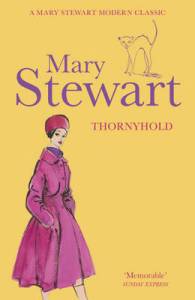
Thornyhold by Mary Stewart

Thornyhold After reading all the reviews and posts during Anbolyn’s recent Mary Stewart Reading Week, I had almost decided that the next Stewart books I read would be her Merlin series, but instead I found myself picking up this one from the library shelf.

Thornyhold starts off differently from the other Mary Stewart books I’ve read. Instead of getting straight into the action, our narrator, Geillis (Gilly) Ramsey, spends the first few chapters looking back on her childhood. As the daughter of a vicar and his cold, distant wife, bullied at school and feeling lonely and isolated, it was not a very happy childhood for Gilly and the one bright spot in her life was her relationship with her mother’s cousin, another Geillis.

Several years go by and both of Gilly’s parents die, leaving her an orphan in her early twenties. Just as she’s wondering what to do with her life, she hears that Geillis has also died, leaving her cottage in the countryside to Gilly. The name of the cottage is Thornyhold and it comes complete with an overgrown garden, a black cat called Hodge and a collection of dusty books of magic spells and herbal remedies. Could Gilly’s cousin Geillis have been a witch? With the help of William, a ten-year-old boy who shares her love of nature, Gilly begins to uncover some of the secrets of Thornyhold.

Thornyhold is one of Mary Stewart’s most recent books, published in 1988 (only Stormy Petrel and Rose Cottage came after that) and I’ve found that these final three books have a different feel from her earlier ones, being a lot gentler with less of the suspense and adventure that are usually associated with her work. In this book, although there are a few mysteries for Gilly to solve and one or two people who try to cause trouble for her (including the housekeeper Agnes Trapp, who seems desperate to get her hands on one of cousin Geillis’ herbology books), I never felt that I needed to worry about Gilly or that there was any danger of there not being a happy ending. But while I do prefer the more exciting, suspenseful books such as Nine Coaches Waiting and The Moonspinners, I enjoyed this one too, for different reasons.

This book may not have the exotic setting that many of her others have, but that doesn’t mean the descriptions aren’t still beautiful. It was a pleasure to watch Gilly exploring her new home, settling into the cottage and discovering the natural beauty of her surroundings. The story is set in the 1940s and has a lovely nostalgic feel with references to rationing and other details of post-war life. I also liked the characters, especially Gilly herself, who blossoms from a lonely child into a confident young woman with a lot to offer in terms of friendship and love (yes, there’s a love story too). Although this hasn’t become a favourite Stewart novel, it was a nice, relaxing read with a magical atmosphere and just what I was in the mood for!

The Midwich Cuckoos by John Wyndham

The Midwich Cuckoos The Midwich Cuckoos begins as our narrator, Richard Gayford, and his wife, Janet, attempt to return to their home in the quiet English village of Midwich after a trip to London to celebrate Richard’s birthday. As they approach the village they discover that the road has been closed by the police; something very strange is happening in Midwich, a place where, as Richard tells us, things just did not happen. That night, Monday 26th September, everyone within the boundaries of Midwich has fallen asleep and anyone who tries to enter the village also loses consciousness.

The next day this phenomenon, which becomes known as the ‘Dayout’, disappears as suddenly as it arrived – the invisible barrier is lifted and people begin to wake up. At first it seems that most of the villagers have been completely unharmed by the ‘Dayout’, but a few months later they make a shocking discovery. Something did happen during their twenty-four hours of unconsciousness and it’s going to have a big effect on the lives of everyone in Midwich.

I’ve decided to end my summary of the plot here rather than tell you exactly what happened to the people of Midwich. I’m sure some of you will already know (maybe you’ve seen the film based on the book, Village of the Damned, or maybe the title of the book and the cover of my old Penguin edition pictured here have given you some clues) but I don’t really want to spoil things for anyone new to the story so I won’t go into any more details. All I will say is that I thoroughly enjoyed this book from beginning to end!

I don’t often choose to read science fiction (looking back through my blog archives I can only see five or six that I’ve read since 2009) and I wasn’t sure what to expect from this book, but The Midwich Cuckoos was probably the perfect type of science fiction for me – instead of being filled with too much action or violence, it’s a subtle, thought provoking portrayal of a small, seemingly normal community trying to cope with something that is threatening their way of life. I think it was the ordinariness of the setting that made the story so effective; this, combined with Wyndham’s thoughtful, undramatic writing style, made it possible to almost believe in what happened in Midwich, while also creating quite an eerie atmosphere.

The only problem I had with this book was that I didn’t feel any connection with the characters. The narrator himself doesn’t have a big part to play and is actually absent from the village for long periods of time, leaving large portions of the story to be told through second-hand accounts, particularly through the philosophical musings of one of the Midwich residents, Gordon Zellaby. It was also disappointing that despite the women of Midwich having such an important role in the story, we never really get to know any of them and they are rarely given a chance to participate in any of the discussions or decisions being made by the men. But although there were a few aspects of the book that I thought could have been better, I did love my first John Wyndham book and am now wondering which one I should read next.

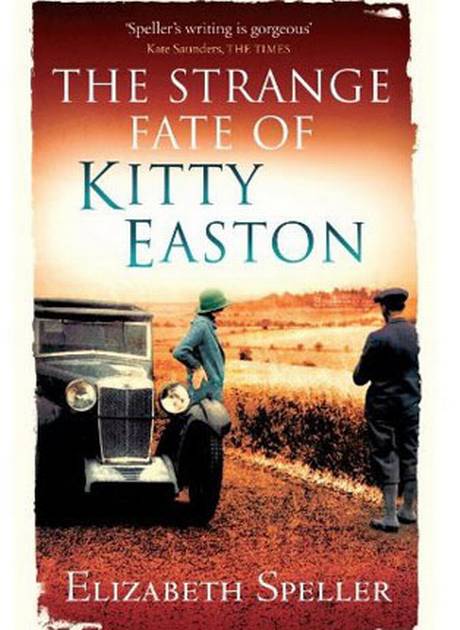
The Strange Fate of Kitty Easton by Elizabeth Speller

Kitty Easton I first met Laurence Bartram two years ago when I read The Return of Captain John Emmett, a mystery novel set in 1920s England. The Strange Fate of Kitty Easton is the sequel. In this book, Laurence’s friend William Bolitho, an architect, has asked Laurence to join him in the village of Easton Deadall. Easton Deadall lost many of its young men in the First World War and William has agreed to design a memorial window for the small church at Easton Hall. As an expert on churches and their renovations, Laurence’s help and advice is needed.

During the journey to Easton Deadall, Laurence learns about the disappearance of Digby and Lydia Easton’s five-year-old daughter, Kitty, several years earlier. Kitty went missing from her bed one night but her body was never found and her fate is still unknown. Since Kitty’s disappearance, the Easton family have continued to suffer; Digby was killed in the war, Lydia has become seriously ill and the relationship between Digby’s two surviving brothers, Julian and Patrick, is strained and tense.

After a slow start in which Elizabeth Speller introduces us to the characters, describes their tragic history and paints a portrait of a small English village trying to recover from the devastation of war, a mystery begins to develop. Another child disappears on a family trip to London to see the British Empire Exhibition and when a murder is committed in Easton Deadall, Laurence is sure both of these incidents are connected to the disappearance of Kitty Easton all those years ago.

I enjoyed this book almost as much as the previous one. The plot was well constructed with some interesting twists and lots of family secrets that are slowly revealed to the reader, but although I’ve referred to the book as a ‘mystery novel’ once or twice in this post, and in many ways it is a mystery novel, it’s also much more than that. The fate of Kitty Easton really only forms a small part of the story.

While reading both of the Laurence Bartram books, I have been impressed by the amazing sense of time and place the author creates. These books don’t just feel like pieces of historical fiction written in the modern day and set in the past – they almost feel as if they could really have been written in the 1920s. As with The Return of Captain John Emmett, my favourite thing about this book was the way it explores so many different aspects of the Great War and reminds us that although the war may have ended in 1918, its consequences were still being felt all over the world for many years afterwards.

There are lots of interesting characters to get to know too (I was particularly intrigued by the story of the youngest Easton brother, Patrick, resented by his family for abandoning them during the war after being excused from fighting on health grounds). The only thing that disappointed me slightly was that until we reach the final chapters of the book, Laurence seems to be on the outside watching and observing rather than taking an active role in the story. I do like Laurence but as the central character of a series I find him a bit bland and it would be nice to see his own personality coming through more strongly.

The way this book ended leaves plenty of scope for a third in the series and I hope there is going to be another one, though I notice that Elizabeth Speller has a new book due out in November with different characters, set during the Battle of the Somme.