Review: The Glass of Time by Michael Cox

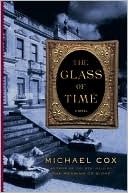
This is the sequel to Michael Cox’s The Meaning of Night, which I read earlier in the year. Although I don’t think it’s absolutely necessary to read the books in the correct order, it would make sense to do so. You’ll definitely get the most out of this book if you’ve read the previous novel first and are already familiar with the plot and the characters.

The way The Meaning of Night ended had left me feeling dissatisfied, but The Glass of Time provides the perfect continuation to the story. Our narrator is Esperanza Gorst, an orphan who has been raised in France by her father’s friend Madame L’Orme and her tutor Mr Thornhaugh. When she is nineteen years old, she is sent by her guardians to the beautiful estate of Evenwood in England, where she will work as lady’s maid to Emily Carteret, the 26th Baroness Tansor. At first Esperanza doesn’t know why she has been sent to Evenwood and is told only that it is part of Madame L’Orme’s ‘Great Task’. As she learns more about her mission, however, Esperanza begins to unravel the mysteries of both her own past and Lady Tansor’s.

I enjoyed The Meaning of Night but I loved The Glass of Time even more. I thought Esperanza was a more likeable character than Edward Glyver (the narrator of The Meaning of Night), and the story also seemed to move at a faster pace. I literally didn’t want to put this book down and finished it in two days (considering it’s over 500 pages long that should indicate how much I was enjoying it).

While I was reading this book there were times when I could almost have believed it really had been written in the 19th century, as the setting, atmosphere and language are all flawlessly ‘Victorian’. Charles Dickens was clearly one of Cox’s biggest influences. In my review of The Meaning of Night I mentioned the Dickensian names Cox gave his characters, and there are more of them in The Glass of Time, from Armitage Vyse and Billy Yapp to Perseus Duport and Sukie Prout. But this time I also noticed lots of similarities to Dickens’ Bleak House: the young orphan searching for the truth of her parentage; the noblewoman with a dark secret; the way the story moves between an idyllic country house and the dark, dangerous streets of Victorian London; the intricate plot and the cleverly interlocking storylines.

I could also recognise elements of various Wilkie Collins novels including Armadale and No Name (Esperanza Gorst is even seen reading No Name at one point). In both writing style and structure this book does feel very like one of Collins’ sensation novels, filled with cliffhangers and plot twists – and with parts of the mystery being revealed through letters, diary entries and newspaper clippings. I did find some of the twists very predictable but that didn’t matter to me, because it was actually fun to be one step ahead of Esperanza, waiting for her to discover what I had already guessed.

It’s so sad that there won’t be any more books from Michael Cox, as he died of cancer in 2009, but together these two novels are the best examples of neo-Victorian fiction I’ve read: complex, atmospheric and beautifully written.

Highly Recommended

Review: Never Let Me Go by Kazuo Ishiguro

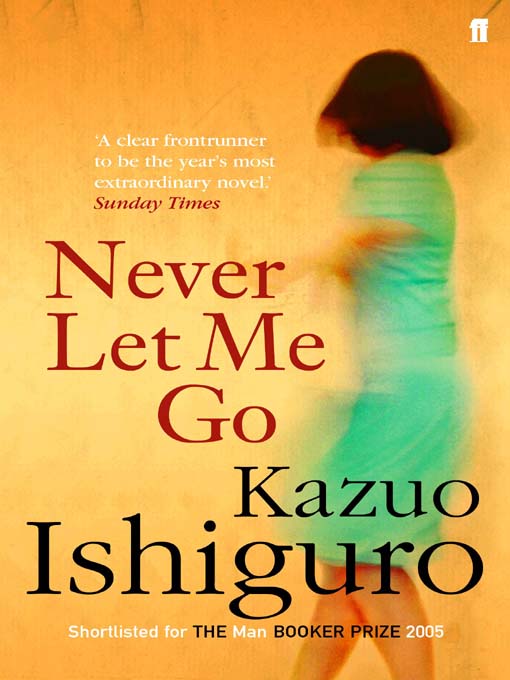
There seems to have been a big resurgence of interest in this book recently, coinciding with the release of the film (in the US now and the UK in January – I’m not sure of the release dates in other countries). I’ve seen a few other reviews this week, and I’m going to add one more.

This was a difficult review to write, because it’s almost impossible to discuss this book without spoiling it. When I started reading it I had no idea what it was about, so I think it probably made more of an impact on me than it would have if I’d known what to expect. I’m sure you could still enjoy it if you did know though, because there’s so much more to this book than the ‘mystery’ – and you may be able to work out what’s happening quite early in the book anyway, particularly if you read a lot of dystopian fiction.

The story is narrated by thirty-one year old Kathy, who is working as a carer, but I can’t tell you who she is caring for or why. In a series of memories and flashbacks, Kathy remembers her childhood at Hailsham School. Right from the beginning it’s obvious to the reader that Hailsham is not your average English boarding school – there’s something very unusual about both the school and its students…

Kathy’s narrative has an interesting structure. She’ll start to tell us something, then go off on a tangent and talk about something else for a few pages, then return to the original story she was telling – and she does this throughout the entire book, which means the plot moves forward very slowly. The whole truth about Hailsham and the fate of the students is revealed very gradually over the course of the novel. And yet, despite the slow pace, I never got bored or lost interest.

After finishing this book I know that I liked it, but I’m not sure how much. This is one of those times when I’m glad I stopped using star ratings on my blog! I found it difficult to care about the three main characters (especially Kathy’s ‘best friend’ Ruth, who I really disliked) or to feel emotionally involved in their story, apart from the final couple of chapters which were very moving. For me the attraction of this book is the range of fascinating questions and issues it raises. I would have liked the book to have explored some of these issues in more detail, but on the other hand I appreciate being left to think about them for myself. And I know I’m going to be thinking about them for a long time.

Recommended

Review: The Little Stranger by Sarah Waters

This is the third Sarah Waters book I’ve read this year, the other two being Affinity and Fingersmith, and I think this one is my favourite. I seem to be in the minority though, as I’ve seen some very mixed reviews of this book.

The Little Stranger is set in Warwickshire just after the end of World War II. When Dr Faraday is called to Hundreds Hall, home of the Ayres family, to treat their young maid, he can’t help noticing that the house has deteriorated since he was last there as a boy. Striking up a friendship with Mrs Ayres and her daughter Caroline, Dr Faraday begins to spend more and more time at Hundreds – and becomes involved in a series of increasingly strange and terrifying events.

This is a typical haunted house story, yet it was psychologically fascinating, very suspenseful – and genuinely spooky. I always find poltergeist-type phenomena very disturbing to read about and there’s plenty of that in this book, from moving furniture and inexplicable fires, to tapping noises, ringing telephones and mysterious handwriting that appears on the walls. I had to avoid reading this book late at night because I knew it would scare me if I did!

I have said before that I think one area where Sarah Waters really excels is in creating believable and vivid settings for her stories. She has done this to perfection in the two Victorian novels that I’ve read, and does it again here with her portrayal of life in post-war Britain – the class system, the economy, housing, medical care and the introduction of the NHS.

Another thing I loved about this book is that it’s not immediately obvious what’s going on, which allows the reader to be a detective. Is Hundreds Hall really haunted? Is there a rational explanation for the supernatural occurrences? Or is someone playing a cruel trick? And if it is a trick, who is responsible for it? I think I suspected every character at some point in the novel! Then there’s Hundreds itself, which is almost a character in its own right – perhaps the most important ‘character’ in the book. It seems to be symbolic that as the house falls further into neglect and disrepair, the Ayres family themselves begin to fall apart one by one.

I was hoping that by the end of the story everything would become clear. However, after finishing the book I am still no closer to knowing exactly what had happened at Hundreds than I was at the beginning. The final few chapters of the book are very ambiguous and leave the story open to interpretation. It was slightly frustrating not to be given all the answers, but in the end it didn’t really matter because the story was wonderful anyway – and even a few days later I’m still thinking about it and wondering whether I’ve interpreted things correctly.

Unless you really don’t like ghost stories, I would recommend The Little Stranger as a great, spooky read, perfect for the RIP challenge or for Halloween.

Review: The Sweetness at the Bottom of the Pie by Alan Bradley

After hearing so many good things about Alan Bradley’s Flavia de Luce mysteries, I had high hopes for this book – and I wasn’t disappointed. It was every bit as enjoyable and delightful as I had been told it was.

Eleven year old Flavia de Luce, who wears her hair in pigtails and rides a bike called Gladys, most be one of the most unusual detectives in fiction. Her biggest passion is for chemistry – and more specifically, for poisons. She loves nothing more than spending time conducting experiments in her own fully equipped laboratory and her heroes include famous chemists such as Marie Paulze Lavoisier, Robert Bunsen and Henry Cavendish.

When a dead bird with a rare stamp impaled on its beak is found on the de Luces’ doorstep, Flavia is puzzled by the effect the discovery has on her father. Later, Flavia finds something much more sinister in the cucumber patch and when her father is accused of murder, she becomes determined to clear his name.

Although this wasn’t a particularly complex mystery, it was an interesting one, involving magic tricks, a sheet of Penny Black stamps and a slice of custard pie. There were parts of it that I could figure out quite easily but others that took me by surprise. I don’t often read mysteries anymore, but this book reminded me of exactly why I used to love them! However, the mystery itself is only one element of this book. I think due to the characters and the setting (which includes all the little period details that place the story firmly in 1950 and perfectly capture a small village atmosphere), this series could appeal even to non-mystery lovers.

The main reason I enjoyed this book so much was Flavia herself. She really is a wonderful character, innocent and lovable one minute, ruthless and vengeful the next (at the beginning of the book she runs away in tears when her sisters Ophelia and Daphne taunt her by pretending she’s adopted – and then proceeds to inject poison ivy into Ophelia’s lipstick). The chemistry aspect of the book particularly interested me as I have a degree in chemistry myself – although I was never as passionate as Flavia about the subject! She seems to have a PhD level grasp of the subject already. And her sphere of knowledge also encompasses literature, history, film and music. She’s so incredibly clever and independent that it’s easy to forget she’s only supposed to be eleven. There’s no way you would expect a real child of that age to speak or behave the way Flavia does – and yet somehow, in a strange way, I was able to overlook the fact that she’s so unrealistic and could accept her as a plausible character.

I’ve seen comparisons with Nancy Drew and Harriet the Spy, but while I was reading this book I was also reminded of Enid Blyton’s Five Find-Outers series, which was also set in a small English village in the 1940s/50s and featured a group of children who always solved the mystery before the village policeman. I have no idea if Alan Bradley would have been inspired by those books at all, but there are definitely some similarities.

I loved this book and now I can’t wait to read The Weed that Strings the Hangman’s Bag!

Readalong: Middlemarch by George Eliot

I have had two previous attempts at reading George Eliot’s Middlemarch but both times abandoned the book after a few chapters. When I saw that Nymeth was planning a readalong this summer, I thought this might give me the motivation to persevere and actually finish the book. I think part of the problem with my past attempts was that I found the book so long and slow-moving it didn’t hold my attention and I ended up being tempted by other books on my shelf. This time round I decided to do things differently. I started reading the book at the end of June alongside other books (something I don’t usually do – I prefer to concentrate on one book at a time) and worked slowly through it, interspersing it with an occasional shorter book. As it turned out, this was the perfect way for me to read Middlemarch, as it meant I could take my time and give it the attention it deserved. And this is a book that really benefits from being read slowly.

The plot is so layered, every sentence filled with so much meaning, that I’m sure there are a lot of things that I’ve missed and will have to pick up on a subsequent reading. It certainly is a book that you need to concentrate on. There are so many characters, who all seem to be related by marriage in some way, that I had to make notes as I was reading and would never have kept all the characters straight otherwise.  I highly recommend you do the same as I found my amateurish family trees became invaluable as I progressed through the book!

So what is Middlemarch about? Well, even after finishing the book I don’t really know how to describe the plot.  Middlemarch is the story, not just of one or two people, but of an entire town and its inhabitants. It portrays the atmosphere of life in a small community where everybody knows everybody else’s business and most people’s biggest concern is what their neighbours will think of them. The relationships and interactions between the characters are wonderfully complex and Eliot cleverly weaves their storylines together, so that the actions of one person may have unforeseen consequences on the life of another.

The prologue certainly seems to refer to Dorothea Brooke and at first it appears that the book is going to be about Dorothea and her marriage to the dry and scholarly Edward Casaubon.  Dorothea is an intelligent, sincere, idealistic girl who despite the warnings of her friends and family becomes determined to marry Mr Casaubon, insisting that he has a “great soul” and that nothing will give her greater happiness in life than assisting him with his studies.

“In this latter end of autumn, with a sparse remnant of yellow leaves falling slowly athwart the dark evergreens in a stillness without sunshine, the house too had an air of autumnal decline, and Mr. Casaubon, when he presented himself, had no bloom that could be thrown into relief by that background.”

Just as we’re becoming absorbed in her story, however, Dorothea disappears for several chapters and we are introduced to some new characters.  The first is a newcomer to Middlemarch: Tertius Lydgate, a young doctor with some new and radical ideas.  Soon after his arrival, Lydgate enters into a relationship with Rosamond Vincy, which proves to be just as difficult and disappointing as Dorothea’s marriage to Mr Casaubon.

“Lydgate could only say, “Poor, poor darling!” – but he secretly wondered over the terrible tenacity of this mild creature. There was gathering within him an amazed sense of his powerlessness over Rosamond. His superior knowledge and mental force, instead of being, as he had imagined, a shrine to consult on all occasions, was simply set aside on every practical question.”

We also follow Rosamond’s brother Fred Vincy as he tries to find his true vocation in life and to earn the respect of Mary Garth, the woman he loves.  These three storylines (and several other subplots) all run alongside each other, meeting and intersecting from time to time.

There are many things that make this book so impressive and so notable but the most striking, in my opinion, is the incredibly detailed characterisation. Every character Eliot introduces us to is interesting, nuanced and believable. She even gives her characters distinctive voices (literally!) – we are repeatedly told that Celia speaks “with a quiet staccato” and that Mr Brooke has a habit of repeating himself (“I thought you had more of your own opinion than most girls. I thought you liked your own opinion – liked it, you know”).

We see almost every conceivable personality type; we experience almost every imaginable human emotion. And most importantly, the characters develop throughout the book – they mature, they learn from their mistakes, they become better people.  I could find something to admire in almost all of the characters. They all have their own flaws and faults but also have some good qualities – this makes even less likeable people such as Mr Bulstrode interesting to read about and allows us to empathise with them.  There are plenty of characters who are very likeable, though.  I particularly loved Mary Garth and her father Caleb.

“Mary was fond of her own thoughts, and could amuse herself well sitting in twilight with her hands in her lap; for, having early had strong reason to believe that things were not likely to be arranged for her peculiar satisfaction, she wasted no time in astonishment and annoyance at that fact. And she had already come to take life very much as a comedy in which she had a proud, nay, a generous resolution not to act the mean or treacherous part. Mary might have become cynical if she had not had parents whom she honored, and a well of affectionate gratitude within her, which was all the fuller because she had learned to make no unreasonable claims.”

I am not usually very good at spotting themes in books, but I could find several in Middlemarch. The most obvious is marriage and how it often fails to live up to our expectations (i.e. Dorothea Brooke and Mr Casaubon; Rosamond Vincy and Tertius Lydgate). In her portrayals of these marriages, George Eliot never places the blame entirely on either the husband or the wife.  Instead, she shows how an unhappy or problematic marriage can be caused by personality differences, unrealistic idealism and a failure to understand the person we are married to.

“All these are crushing questions; but whatever else remained the same, the light had changed, and you cannot find the pearly dawn at noonday. The fact is unalterable, that a fellow-mortal with whose nature you are acquainted solely through the brief entrances and exits of a few imaginative weeks called courtship, may, when seen in the continuity of married companionship, be disclosed as something better or worse than what you have preconceived, but will certainly not appear altogether the same.”

Another theme is change: we should remember that although Middlemarch was published in the 1870s, it was set around forty years earlier at a time of great change: there were changes in politics (the Reform Bill of 1832); changes in transport (the arrival of the railway) and changes in medicine (as portrayed through Tertius Lydgate’s new ideas and theories).

There are so many other aspects of this book that I wanted to discuss here, but I have to stop somewhere!  I haven’t even mentioned Will Ladislaw, who is made to feel unwelcome in Middlemarch by his relative, Mr Casaubon; or Mr Farebrother, who is in love with Mary Garth; or Raffles, who is as close to a villain as we get in Middlemarch.

After reaching the final page I can now see why so many people love this book so much. I would recommend Middlemarch to all lovers of Victorian fiction who are prepared to invest the time it takes to read such a long and complex novel. I don’t think this book would be for everyone though. If you prefer faster-paced stories you may have trouble getting into it, as I did on my earlier attempts. My advice to you would be to stick with it, take your time and savour every word, and the story does become more compelling as it goes on.

If I’m going to be completely honest, there are a lot of classics that I’ve enjoyed a lot more than this one, but I can’t think of any that are greater in scope, more insightful or offer a more penetrating study of humanity. After spending the summer with Dorothea and Will, Tertius and Rosamond, Fred and Mary, and the others, I’m really going to miss them all.

I’ll leave you with some more quotes from the book:

“But indefinite visions of ambition are weak against the ease of doing what is habitual or beguilingly agreeable; and we all know the difficulty of carrying out a resolve when we secretly long that it may turn out to be unnecessary.”

“And certainly, the mistakes that we male and female mortals make when we have our own way might fairly raise some wonder that we are so fond of it.”

Please see this post at Things Mean a Lot for other bloggers’ thoughts on Middlemarch
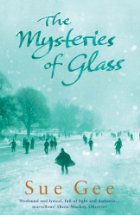
Review: The Mysteries of Glass by Sue Gee

It’s the winter of 1860. Following the death of his father, the young Richard Allen takes his first position as curate in an isolated Herefordshire parish. At first Richard is eager to do well in his new post – but then he falls in love and finds that his faith is put to the test.

The Mysteries of Glass was nominated for an Orange Prize back in 2005 and I can see why, because Sue Gee’s writing is beautiful. I have rarely read a book with such a strong sense of time and place. The book is set in an isolated village in 19th century England and the rural Victorian setting felt entirely believable.

The opening chapters perfectly evoked a winter atmosphere. Although I was reading this book in July, I could still picture the cold, wintry landscape, the snowy fields, the frozen paths leading to Richard Allen’s lonely house, the skating party on the lake. Later in the book, as time passed, I could feel the temperatures rise and the seasons change.

Unfortunately, I had one or two problems with this book. I found it very, very slow – I had to force myself to read at a slower pace than I normally would because I felt I was starting to skim over the words without really absorbing them. After the first few chapters, in which very little actually seemed to happen, I had to make a decision whether or not to continue reading. I was glad that I persevered with it, though. I don’t like abandoning books and this one was so well written and had such a haunting, dreamlike atmosphere that I really wanted to love it.

The characters were realistic and well-drawn, from Alice Birley, the crossing-keeper’s solemn little girl to Edith Clare, the mysterious woman who lives in the woods. However, I thought some of the characters who were potentially the most interesting were very underused, such as Richard’s strong, hot-tempered sister Verity.

Another problem I had was that the religious aspects of the book were a bit too much for me. Knowing that the story was about a curate, I was prepared for this to some extent but I wasn’t really expecting the church scenes to be quite so dominant. If you don’t like that type of thing, you should be aware that it forms a very large part of the book and that the central theme of the story is the portrayal of a man’s inner turmoil as he tries to reconcile his feelings and emotions with his faith and his belief in God.

If this book sounds as if it might interest you at all, then please do give it a try as I definitely seem to be in the minority! The Mysteries of Glass wasn’t a bad book by any means – it didn’t appeal to me but maybe it will appeal to you.

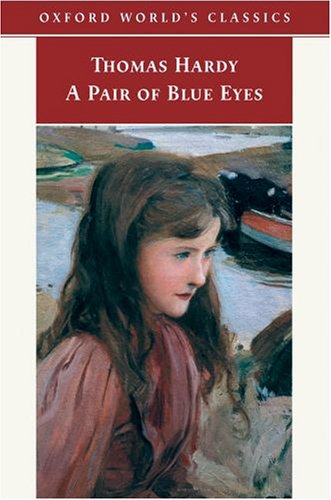
Review: A Pair of Blue Eyes by Thomas Hardy

These eyes were blue; blue as autumn distance – blue as the blue we see between the retreating mouldings of hills and woody slopes on a sunny September morning. A misty and shady blue, that had no beginning or surface, and was looked into rather than at.

I’m loving Thomas Hardy more and more with every book of his that I read. A Pair of Blue Eyes was one of his earliest books, originally serialised in Tinsley’s Magazine from September 1872 to July 1873. Although this is not generally noted as being one of his better novels and is certainly one of his least well known, there was something about it that appealed to me – and I would even say that of all the classics I’ve read so far this year, this might be my favourite.

A Pair of Blue Eyes is the story of Elfride Swancourt, a vicar’s daughter living in a remote corner of England, who is forced to choose between two very different men. One of these, Stephen Smith, is a young architect whom she meets when he is sent by his employer to survey the church buildings. At first, the vicar approves of Stephen and encourages his daughter to spend time with him. It soon emerges, however, that Stephen has been hiding an important secret from the Swancourts; something that could put his relationship with Elfride in jeopardy. Later in the book, another man arrives at Endelstow Vicarage – Henry Knight, an essayist and reviewer from London – and Elfride has to make a difficult decision.

As you might expect with this being a Hardy book, nothing goes smoothly for any of the characters. I would describe A Pair of Blue Eyes as being similar in some ways to the later Tess of the d’Urbervilles, though not as dark and bleak – and not quite as tragic either. Although I didn’t find Elfride particularly likeable, I thought she was an interesting character. Her lonely, secluded life gives her a childlike innocence and vulnerability and at one point Hardy draws a comparison with Miranda from Shakespeare’s The Tempest – both characters have little knowledge of men and a male visitor is a big event (and Elfride even plays chess with Stephen Smith and Henry Knight as Miranda did with Ferdinand in The Tempest). Of the two men, Stephen was the only one I had any real sympathy for. Knight, although another interesting character, annoyed me almost as much as Angel Clare in Tess annoyed me.

The descriptions of scenery in this book are stunningly beautiful and bring the setting vividly to life. If you’re familiar with Hardy you’ll know that he sets most of his works in the fictional region of Wessex in the southwest of England. This story actually takes place in Off-Wessex or Lyonesse, which equates to Cornwall. I had no problem at all in picturing the lonely vicarage, the windswept hills, and the dark cliffs towering over the sea below. Speaking of cliffs, it is thought that the term ‘cliffhanger’ originates from a scene in this book, though I’m not going to say any more about it than that!

Another interesting aspect of this book is that it’s loosely based on Hardy’s relationship with his first wife, Emma Gifford. Unfortunately I don’t know enough about Hardy to have picked up on all the allusions and references to events in his own life. I would like to eventually read a biography as I think it would help my understanding of both this book and his work as a whole.

I found A Pair of Blue Eyes very easy to read. I thought the pacing and flow of the story were perfect and the pages flew by in a weekend. It’s so sad that this book has been ignored and underrated to the point where, until not long ago, I hadn’t even heard of it. Maybe it won’t appeal to everyone and it might not be the best introduction to his work, but I loved it and would highly recommend it to all Hardy fans.