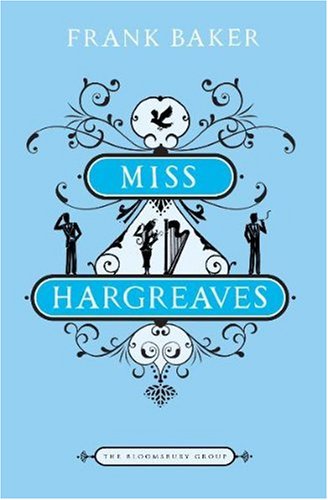
Review: Miss Hargreaves by Frank Baker

When I started to notice these Bloomsbury Group books appearing on other blogs, I knew I wouldn’t be able to resist reading them too. Not just because the covers are so pretty, but also because the stories all sound so intriguing! Miss Hargreaves (pronounced Hargrayves as we are told in the author’s note) was the one that appealed to me the most and the one I’d heard the most about – and it was the right choice because I loved it. It’s a charming tale about the power of imagination and how it can lead to an unusual and unlikely friendship.

“Henry,” I moaned, “she is exactly as I imagined.”
Limping slowly along the platform and chatting amiably to the porter, came – well, Miss Hargreaves. Quite obviously it couldn’t possibly be anyone else.

Norman Huntley has always allowed his imagination to run away with him. On a trip to Ireland with his friend Henry, they amuse themselves by inventing an imaginary eighty-three-year-old woman called Constance Hargreaves. They make Miss Hargreaves a poet and a musician; they give her a dog called Sarah and a cockatoo named Dr Pepusch – and Norman writes her a letter inviting her to stay at his home in Cornford, Buckinghamshire.

Never expecting her to accept his invitation (how could she – she doesn’t exist!) Norman is stunned when a little old lady arrives at the train station accompanied by a dog, a cockatoo, a harp – and even her own bath. It seems that Norman’s creation has come to life – and with even Henry convinced it’s all a practical joke, how will he explain Miss Hargreaves to his parents, his sister and his girlfriend Marjorie?

As the story continues, it gets more and more bizarre. I can safely say this is one of the most original and unusual books I’ve read for a long time! Miss Hargreaves is an unforgettable character – endearing and eccentric, yet ever so slightly sinister – and Norman is torn between a fatherly pride in his creation and frustration at the way she’s taking over his life. Somewhere in the middle of the novel, a gradual shift of power from Norman to Miss Hargreaves takes place, resulting in an almost Frankenstein-like situation where the creator begins to lose control of his creation. And yet Miss Hargreaves seems to be aware that there’s something different about her and that some kind of invisible bond exists between herself and Norman.

I was expecting the story to be funny and entertaining – and it is. However, there are also some very moving and poignant scenes, making the book a perfect mixture of dark and light.

There was only one aspect of this book that I could maybe have done without and that was the music. With Norman Huntley’s church organ, Cornelius Huntley’s violin and Miss Hargreaves’ harp, the musical elements of the book became a bit too much for me. However, I’m sure other readers will enjoy the organ playing scenes and they certainly add to the quirkiness and originality of the book.

Recommended

Pages: 317/The Bloomsbury Group/Year: 2009 (originally published 1940)/Source: My own copy
Review: Miss Ranskill Comes Home by Barbara Euphan Todd

Barbara Euphan Todd was best known as the children’s author who wrote the Worzel Gummidge series about a scarecrow who comes to life. Miss Ranskill Comes Home, first published in 1946, was her only adult novel.

Shortly before the start of World War II, Nona Ranskill was swept overboard whilst on a cruise and was washed up on a desert island. The only other inhabitant of the island is a man known as ‘the Carpenter’, who had also fallen overboard on an earlier occasion. At the beginning of the book, the Carpenter has died and we first meet Miss Ranskill as she’s digging his grave. Before his death however, he had managed to finish building a boat with which he had intended to sail himself and Miss Ranskill to safety. After burying the Carpenter, Miss Ranskill makes an attempt to escape from the island on her own. Luckily, before she becomes hopelessly lost at sea, she is rescued by the British Navy. Returning to England after almost four years, Miss Ranskill discovers that it’s not the England she left behind: in her absence, World War II has begun…

This may all sound very far-fetched, but Todd actually makes it seem believable. I thought the whole idea of someone being cut off from the world and returning home only to find themselves suddenly thrown into the middle of a war was absolutely fascinating. I particularly enjoyed the first half of the book which deals with the first few days of Miss Ranskill’s arrival in England, when everything feels strange and surreal. Even the English language seems different and full of unfamiliar words. When she tries to buy food she can’t understand why she’s asked for her ‘ration book’, or why she needs ‘coupons’ to purchase clothes. This leads to some very amusing situations but at the same time you can’t help but feel sorry for poor Miss Ranskill.

Although he’s dead before the story even begins, the strongest character in the book is the Carpenter. He is constantly in Miss Ranskill’s thoughts and his presence is there on almost every page in the form of flashbacks and memories. Although Miss Ranskill’s friends found it scandalous that she had spent four years in the company of a strange man – particularly a man they consider to be of a lower social standing – I think anyone who has read this book will agree that if we were stranded on a desert island, the Carpenter is exactly the type of person we would like to be stuck there with.

Makes it more homely-like, Miss Ranskill, see.
That had been one of his favourite expressions. He used it as he arranged stones round the smoky fire, and when he handed her a shell.
Saucer, see, Miss Ranskill. We mayn’t have cups, but we’ve plenty of saucers. Makes it more homely.

His optimism and words of wisdom had helped to sustain Miss Ranskill during her time on the island and continue to give her comfort on her return to wartime Britain. However, the years on the island and the company of the Carpenter have given her a new outlook on life and she finds it difficult to adjust. Unlike her friends and family who are all absorbed in their war work, Miss Ranskill feels detached from what’s going on and spends most of the book remembering the island and even feeling nostalgic about the fact that she had to eat fish for every meal and wear the same clothes for nearly four years! England may have changed, but Miss Ranskill has changed even more.

This book has the perfect blend of humour and poignancy and gives us an opportunity to explore World War II from a unique perspective. Recommended.

Pages: 328/Publisher: Persephone Books/Year: 2003 (originally published 1946)/Source: Library book

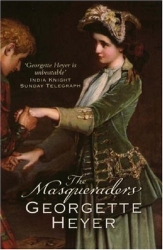
Review: The Masqueraders by Georgette Heyer

This is only the second Georgette Heyer book I’ve read and it was very different to my first, The Talisman Ring, in setting, language and plot. The Masqueraders is set just after the Jacobite Rising of 1745 and follows the adventures of Prudence and her brother Robin. Along with their father (referred to by his children as ‘the old gentleman’) Robin had been involved in the failed Jacobite rebellion and is now in danger of being hanged. To prevent him being captured, the brother and sister have created new roles for themselves – Robin has disguised himself as the beautiful ‘Miss Merriot’ and Prudence has become the handsome young ‘Peter’. All very Shakespearean! Not surprisingly, this leads to a number of misunderstandings and narrow escapes.

Things get even more interesting when Prudence, still posing as Peter Merriot, begins to fall in love with Sir Anthony Fanshawe – and then ‘the old gentleman’ arrives on the scene, claiming to be the lost heir to the Barham fortune.

I found the story confusing and difficult to follow at first. I spent several chapters trying to work out exactly why Prudence and Robin had found it necessary to masquerade as people of the opposite sex and what they were hoping to achieve. It also took me a while to get used to the Georgian-style dialogue, with all the egads, alacks and other slang terms of the period.

Robin made a face at his sister.  “The creature must needs play the mother to me, madam.”
“Madam, behold my little mentor!” Prudence retorted.  “Give you my word I have my scoldings from him, and not the old gentleman.  ‘Tis a waspish tongue, egad.”

After a few chapters, however, various parts of the story started to fall into place and then I had no problem understanding what was happening. I ended up enjoying this book more than The Talisman Ring, which surprised me as a lot of people have said that The Talisman Ring is their favourite Heyer, so I wasn’t expecting this one to be as good. There were many things that made this book such a success for me. I thought the Georgian setting, with its powdered wigs, card games, sword fights and duels, was perfectly portrayed. The plot was full of twists and turns that kept my interest right to the end. And I loved the characters. The calm and cool-headed Prudence was the perfect balance for the more impetuous Robin – and both were fun and likeable. Watching Prudence’s relationship with Sir Anthony develop was one of my highlights of the book. Robin’s romance with Letty Grayson, who knew him only as a masked man known as the Black Domino, was equally well written.

Most of all, I loved the ‘old gentleman’. He was conceited, arrogant and a scheming rogue – but he was also hilarious and capable of coming up with such ingenious schemes that maybe his arrogance was justified.

“Have you limitations, my lord?” asked Sir Anthony.
My lord looked at him seriously. “I do not know,” he said, with a revealing simplicity. “I have never yet discovered them.”

Having enjoyed both of the Georgette Heyer books I’ve read so far, I think I’m starting to become a fan and will definitely look out for more of her books!

Highly Recommended

Genre: Historical Fiction/Pages: 320/Publisher: Arrow/Year: 2005 (originally published 1928)/Source: Library book

Short Story Reviews: Arthur Conan Doyle and Henry Lawson

One of my personal challenges for 2010 was to read more short stories. So far I haven’t been making much progress, but I made up for it this week by reading two very different short stories: The Brazilian Cat by Arthur Conan Doyle and The Drover’s Wife by Henry Lawson.

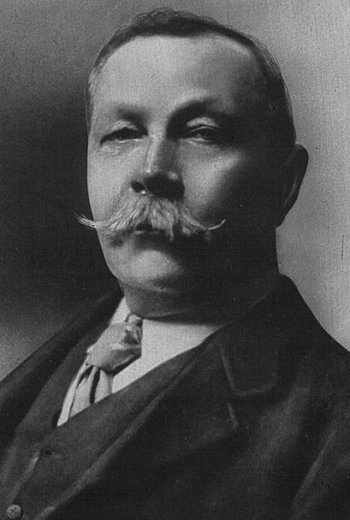
The Brazilian Cat by Sir Arthur Conan Doyle

I don’t use any real method in choosing which short stories to read.  At the rate I’m reading them (only six so far in 2010!) there are enough available online to keep me busy for years, so I’ve just been selecting one or two pretty much randomly.  As I’ve never read any of Conan Doyle’s works other than some of the Sherlock Holmes books, I decided to try one of his stories from Tales of Terror and Mystery (published 1922).

The Brazilian Cat, one of the “tales of terror”, is a quick, easy read. Marshall King, heir to Lord Southerton, has been invited to stay at the home of his cousin Everard, who has recently returned to England from Brazil. Everard has brought a menagerie of animals and birds back to England with him, including a peccary, an armadillo, an oriole…and a Brazilian cat.

“I am about to show you the jewel of my collection,” said he. “There is only one other specimen in Europe, now that the Rotterdam cub is dead. It is a Brazilian cat.”
“But how does that differ from any other cat?”
“You will soon see that,” said he, laughing. “Will you kindly draw that shutter and look through?”

What exactly is a Brazilian cat? Why does Everard’s wife seem so desperate for Marshall to leave Greylands Court? And why is Everard receiving so many mysterious telegrams? You’ll have to read the story to find out.

As a short horror story I wouldn’t say it was terrifying, but it was suspenseful with the tension building at a steady pace throughout the story.  There’s nothing very deep or profound about The Brazilian Cat, nothing complex or thought-provoking, but it’s entertaining and worth reading if you have a few minutes to spare.

Read it online here

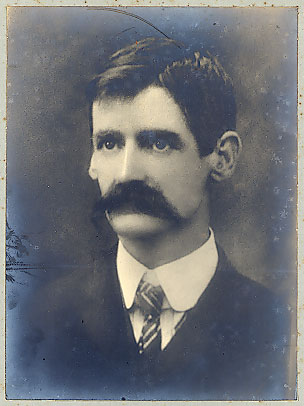
The Drover’s Wife by Henry Lawson

Henry Lawson has been described as one of Australia’s greatest writers but until now I had never read any of his work.

The Drover’s Wife (1892) is the story of an unnamed woman who lives in the Australian bush with her husband and four young children. Her husband is a drover and spends very little time at home; at the time of our story he has been away for six months. When the children spot a snake slithering into the house, their mother makes a bed for them on the kitchen table and sits up all night watching over them. During the long hours of darkness she reflects on her life “for there is little else to think about”.

Although the story is very short and contains very little action, it manages to leave a lasting impression of the hardships, obstacles and overwhelming loneliness faced by a woman living an isolated life in rural 19th century Australia. The drover’s wife’s lifestyle has made it necessary for her to become independent, brave and resourceful. As she sits in the kitchen waiting for the snake to emerge, she remembers all the times in the past when her husband has been absent – on one occasion she had to fight a bush fire on her own; on another she fought a flood. She has also had to defend herself and her home from “suspicious-looking strangers” and “crows and eagles that had designs on her chickens”.

And yet the drover’s wife has grown accustomed to being on her own and is making the best of her lot in life:

“All days are much the same for her; but on Sunday afternoon she dresses herself, tidies the children, smartens up baby, and goes for a lonely walk along the bush-track, pushing an old perambulator in front of her. She does this every Sunday. She takes as much care to make herself and the children look smart as she would if she were going to do the block in the city. There is nothing to see, however, and not a soul to meet… But this bushwoman is used to the loneliness of it. As a girl-wife she hated it, but now she would feel strange away from it.”

I recommend reading this story as it’s an important piece of Australian literature. Having read some of the essays and analysis online however, it seems there’s more than one way to interpret the story. Some people consider it to be anti-feminist because it implies that all of the drover’s wife’s pain and suffering is caused by the absence of her husband. This is interesting because on my first reading I had seen it as a straightforward portrayal of a woman’s courage and bravery; yes, it would have made things easier if her husband had been around to help her, but she was doing the best she could to take care of herself and her children – husband or no husband. I can see I’ll have to give it some more thought. Have you read the story? What was your interpretation of it?

You can read The Drover’s Wife online here

I’ll try to make more progress with this personal challenge and post my thoughts on some more short stories soon!

Pictures of Sir Arthur Conan Doyle and Henry Lawson both in the public domain

Review: The Book of Fires by Jane Borodale

Agnes Trussel is a seventeen year old girl whose life is thrown into turmoil when she discovers she is pregnant and runs away to London to start a new life.  In London she is lucky enough to find employment as an assistant to the firework maker John Blacklock but as she desperately tries to hide her pregnancy from everyone around her, she starts to realise that she’s not the only one with secrets…

When I first heard about this book last year I was immediately interested in reading it but eventually decided to give it a miss – until I saw that it had been shortlisted for the Orange Award for New Writers.  Of course, being shortlisted for an award doesn’t guarantee that a book will be good, but it does usually mean that there will at least be something different or special about it that makes it worth reading.

Well, it was worth reading, but I did also have a few problems with the book – the first being that it’s written in the first person present tense.  There have been a few books written in the present tense that I’ve enjoyed, but usually I find it distracting – and that was the case here.  I also found it difficult to connect to any of the characters, even Agnes herself.  It wasn’t that they were badly drawn or uninteresting – Cornelius Soul the gunpowder seller, Mrs Blight the housekeeper and the mysterious Lettice Talbot wouldn’t be out of place in a Dickens novel – I just couldn’t engage with them or care about them very much.  When I read historical fiction I like to feel as if I’ve been transported back in time and as if I’m there experiencing things along with the characters.  Unfortunately I didn’t feel any of that with this book.

The plot itself was interesting enough.  I struggled with the opening chapters -which described the slaughter of a pig in an unnecessary amount of detail – but after that, when Agnes arrived in London I started to enjoy the story more.


Picture by Jon Sullivan in the public domain

The descriptions of firework making were fascinating.  It was particularly interesting to learn about the early experiments and research that would eventually lead to the discovery of coloured fireworks.

“You imagine colours vividly,” he says.
“I do, sir.” I reply. “It is…almost as though I feel them as a sense of touch or taste when I am looking.”
He looks up at me beside him. I am startled to see how his eyes are tight with excitement. A hope flares up in me.
“Have you attempted a blue, Mr Blacklock?” I whisper.

Despite the negative points I mentioned above, I kept on reading to the last page because I wanted to know how the story ended – and I was rewarded with a surprising ending that I hadn’t been expecting.  In fact, the final few chapters were great and made me glad I’d persevered with the book.

Would I recommend it?  I’m not sure – there are much better historical fiction novels out there in my opinion – but if it appeals to you then give it a try and see what you think.

Review: Agnes Grey by Anne Bronte

After reading The Tenant of Wildfell Hall earlier this year, I wanted to read Anne Bronte’s other book, Agnes Grey.  I approached it with trepidation having read some quite negative reviews of it.  However, I was pleased to find that I enjoyed the book.  Although I didn’t think it was as good as The Tenant and it didn’t have the feel of a must-read classic like Jane Eyre or Wuthering Heights, there was still a lot to like about Agnes Grey.

The plot is simple, plain and linear.  It’s the story of a young woman in 19th century England who goes out to work as a governess when her family fall on hard times. Unfortunately Tom, Mary Ann and Fanny Bloomfield are three of the most badly-behaved children imaginable. When her short, unhappy time with the Bloomfields comes to an end, Agnes finds another situation with two older pupils, Rosalie and Matilda Murray. This second position is not much better than the first – the Murray girls are selfish and thoughtless and the only thing that makes Agnes’s life bearable is her friendship with Mr Weston, the village curate.

Agnes Grey has an autobiographical feel because Anne Bronte herself had worked as a governess and was able to draw on her own personal experiences to show how servants were often treated with cruelty and contempt by their employers. I could sympathise with Agnes as I would soon have lost my patience with the spoilt Bloomfield children and the self-centred, inconsiderate Murrays. I also thought it was unfair that the parents expected Agnes to control their children without actually giving her any real authority over them. It was such a difficult position to be in.  However, I found it slightly disappointing that Agnes seemed prepared to just accept things the way they were and not do anything to change the situation.  The book was more about tolerance and perseverance than about taking action to try to make things better.

Another of the book’s themes is the importance of morality, virtuousness and goodness, qualities in which the Bloomfield and Murray families seem to be sadly lacking, leading Agnes to feel isolated and miserable.  However, I think many readers will find Agnes too self-righteous and superior, so if you prefer your heroines to be flawed and imperfect this probably isn’t the book for you!  Reading about the day to day life of a governess is not particularly exciting or dramatic, but I still found the book enjoyable and interesting – and at under 200 pages a very quick read compared to many of the other Bronte books.

Recommended

Classic/Publisher: OUP (Oxford World’s Classics)/Year: 1998 (originally published in 1847)/Source: Library book

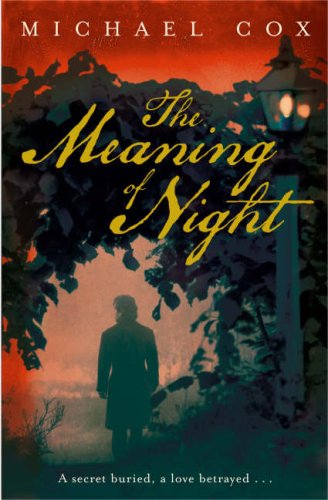
Review: The Meaning of Night by Michael Cox

I was intending to read this book when it was first published four years ago, but for some reason I didn’t and forgot all about it until I noticed it in the library recently.  I’m glad I finally got round to it, even if I’m late as usual!

The plot will be a familiar one to anyone who has read a lot of Victorian fiction – it’s a story of love, betrayal and deceit, revolving around a lost inheritance and a childhood rivalry. A vast country estate, a beautiful, mysterious heroine, and the dark, foggy streets of 19th century London combine to make this a clever imitation of the Victorian sensation novel.

In a similar way to The Unburied which I reviewed earlier this month, the book is presented as a genuine 19th century manuscript, complete with an ‘Editor’s Preface’ and numerous footnotes. The use of footnotes, which seemed to appear on almost every page, reminded me of Susanna Clarke’s Jonathan Strange & Mr Norrell. However, whereas in Jonathan Strange the footnotes really added something to the story, providing us with fascinating anecdotes about the history of magic, in The Meaning of Night they served very little purpose – other than to give the book a scholarly feel. Overall though, this was one of the best written of all the novels of this type that I’ve read so far and I was impressed by the author’s use of language and writing style to make this feel like an authentic 19th century novel.

The narrator, Edward Glyver, is really quite a horrible person. In the first chapter – in fact, in the first sentence (so this is not a spoiler) – he confesses to murder:

“After killing the red-haired man, I took myself off to Quinn’s for an oyster supper.”

He also cheats on the woman who loves him, develops an obsession with his enemy, Phoebus Rainsford Daunt – and becomes increasingly dependent on opium, making him an unreliable narrator at times. Is he a character deserving of our sympathy, then? Definitely not – and yet, I was rooting for him throughout the story, wanting him to right the wrongs that had been done to him, which is a testament to Michael Cox’s writing skills.

The only thing that really disappointed me about this book was the ending. I can’t say too much about it without spoiling the story for you, but the ending left me feeling dissatisfied – I had been hoping for a few more plot twists.

This book won’t be to everyone’s taste – if you simply don’t like intricately plotted Victorian or Victorian-style novels you’ll want to avoid this one. However, fans of Charles Dickens or Wilkie Collins will probably enjoy this book, as they were clearly two of Michael Cox’s influences (many of the characters have Dickensian names such as Phoebus Daunt, Fordyce Jukes and Josiah Pluckrose). It should also appeal to readers of Sarah Waters, Charles Palliser or other writers of neo-Victorian fiction. In particular, I found it very similar to Palliser’s The Quincunx, though slightly less complex and intellectually demanding.

Recommended

Genre: Historical Fiction/Pages: 608/Publisher: John Murray/Year: 2006/Source: Library book