Rebellion by Peter Ackroyd

Rebellion Rebellion, subtitled The History of England from James I to the Glorious Revolution, is the third volume in Peter Ackroyd’s History of England series. I haven’t read the first one, but I did read the second – which covered the Tudor period – and enjoyed it, so I was looking forward to seeing how Ackroyd would tackle the Stuarts in this latest volume. Before I go any further I should point out that Rebellion is the US title, which I’m using here as this is the edition I received for review via NetGalley; the UK title is Civil War.

The book opens with the reign of the first Stuart king of England, James I, who acceded to the throne after the death of Queen Elizabeth I in 1603. He was, of course, also James VI of Scotland and united the two countries under one crown. James was followed by his son, Charles I, and most of the book is devoted to discussing the Civil War which ended in Charles’ execution. After several years of rule by the Lord Protector, Oliver Cromwell, the Stuart monarchy was restored under Charles II and the Restoration period is also covered in this volume. Finally, Ackroyd looks at the reign of James II and finishes with the Glorious Revolution which marked the arrival of William of Orange and his wife, Mary.

I have condensed eighty-five years of history into one paragraph here, but the book itself goes into a huge amount of detail, describing the life of each Stuart monarch and the key events of their reign. It’s a fascinating read, especially if you have a particular interest in this period of English history, and like the previous volume, Tudors, it’s written in a style that is factual without being too academic for the general reader. While the lives of kings and queens are interesting to read about, I also like to know how ordinary people lived, so I was pleased to find that Ackroyd gives some attention to the social history of the period and includes some chapters on literature, science, music and drama.

The only problem I had with this book was that I felt too much time was spent on the Civil War while the reigns of Charles II and James II had been squeezed in at the end. The chapters describing the events leading to the Civil War and the religious and political reasons for it seemed to go on forever, and although I can certainly understand why Ackroyd chose to make this the focus of the book I did start to get bored and found myself looking forward to moving on to the Restoration period.

While I didn’t enjoy this book as much as Tudors, I do feel that I’ve learned a lot from it. I am definitely not an expert on seventeenth century history but having finished this book, I now know much more than I did before I started. I haven’t heard anything about the fourth book in this series yet, but I expect it will continue to move forward chronologically into the eighteenth century. While I’m waiting maybe I should find a copy of the first volume, Foundation, which I still haven’t read…or I could try one of Peter Ackroyd’s other books. He has written more than thirty non-fiction books and a large number of novels too, so there would be plenty to choose from!
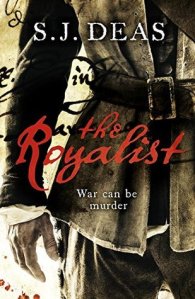
The Royalist by S.J. Deas

The Royalist As someone who loves both historical fiction and mysteries, it’s not surprising that I also enjoy historical mysteries! If the book has an interesting and unusual setting, as this one has, even better.

The Royalist is the first in a planned series featuring the character of William Falkland. Falkland, as the title suggests, is a Royalist and has been fighting for King Charles in the English Civil War. As the novel begins in 1645, he has been captured by Parliamentarians and is in Newgate Prison awaiting his fate. When after several months of imprisonment a guard comes to take him from his cell, he is convinced that the day of his execution has arrived at last. To his surprise, though, he is taken instead to a meeting with Oliver Cromwell, the man with whom Parliament’s hopes of victory lie.

It seems that Cromwell has learned of a previous occasion on which Falkland stood up to his King to see that a criminal was brought to justice – and he is now hoping that Falkland will be able to solve a second crime, this time within Cromwell’s own New Model Army. Large, well-trained and highly disciplined, the New Model Army has been created with the aim of bringing a rapid end to the war. However, with men being pressed into the army regardless of their religious or political beliefs, discontent, disloyalty, fear and resentment are widespread. At the army’s winter camp in the town of Crediton in Devon, three young soldiers appear to have committed suicide – but why? This is what Falkland must agree to find out, in return for his own life.

I enjoyed The Royalist; it’s a very atmospheric book, taking us from a dark, cramped prison cell right into the heart of an army camp in the middle of a cold, harsh winter. This is the unusual setting I mentioned earlier; I’ve read other novels set during the Civil War, but none that focus specifically on the New Model Army. I knew almost nothing about the army before starting this book, and I found it fascinating, particularly the fact that even former Royalists were recruited, often against their will. It was also interesting to read about the ways in which the people of Crediton were affected by the army moving into their town and forcing them out of their homes.

This is not a book about an army on the move so there are (fortunately, in my opinion) no long battle scenes or discussions of military tactics; this is a book about an army that is stationary, based in one place, biding its time. That doesn’t mean there’s no action, of course! As Falkland continues to investigate and begins to uncover the truth about the young men who have died, he finds that he himself is in danger. There’s a lot of suspense as he explores the camp and its buildings in the dead of night, examines the tree where the three soldiers allegedly took their own lives, and tries to decide who can and cannot be trusted.

As the novel’s narrator, Falkland is the character we get to know best, but I still felt that there was plenty of information about his past that he was withholding from us and could reveal in a future novel. There are other interesting characters too: Thomas Fairfax, for example, the commander of the New Model Army and known as ‘Black Tom’ – one of the few real historical figures to appear in the book. There’s also Kate Cain, a woman who has refused to leave Crediton, and with whom Falkland lodges during his time in the town. And I was particularly intrigued by the character of Henry Warbeck, the man given the job of escorting Falkland to the army camp, as I discovered that there was more to him than met the eye at first.

I’m now looking forward to reading the second William Falkland novel, The Protector, which will be out later this year.

Mary of Carisbrooke by Margaret Campbell Barnes

Mary of Carisbrooke Margaret Campbell Barnes is an author I’ve been curious about for a while, since some of her historical fiction novels started appearing in my recommendations on Goodreads. Not really knowing anything about the author or her books, I chose Mary of Carisbrooke (originally published in 1956) because most of her others are set in the Tudor period and I wanted something a bit different, having read a lot of Tudor novels recently. This book is set in the 1640s at the end of the English Civil War, which is a period I’ve read about less often.

The ‘Mary’ of the title is seventeen-year-old Mary Floyd, whose father is a sergeant in the military garrison stationed at Carisbrooke Castle on the Isle of Wight. Over on the mainland, the Civil War is coming to an end, having resulted in victory for Oliver Cromwell and his Parliamentarians; for the islanders, separated from the rest of England by several miles of water, the drama is just beginning. The defeated King Charles I has fled to the island to take refuge in Carisbrooke Castle, hoping that the Governor, Robert Hammond, will be sympathetic. Unfortunately, Hammond feels it is his duty to inform Parliament and so the King finds himself a prisoner in the castle.

Many of the people in and around the castle, including Mary Floyd, still have Royalist sympathies and the rest of the novel follows their numerous attempts to help the King escape from Carisbrooke. If you know your English history you will know whether or not he does escape and what his eventual fate will be, but even if you do think you know how the story ends Barnes still manages to create some suspense and has us hoping that the islanders’ latest scheme will be a success!

I watched a BBC documentary, Castles, a while ago and remember a mention of Carisbrooke and one particular escape attempt involving a barred window; I kept waiting for this incident to appear in the book, which it does, but it is only one small episode. The King and his supporters have lots of other plans in store, and through the character of Mary, conveniently placed within the castle walls, we are right at the heart of the action as preparations are made, secret messages are sent and letters are smuggled in and out.

And yet, despite all the secrecy and intrigue, I found Mary of Carisbrooke quite a boring book. Mary is a likeable enough character, but a bit too good to be true – too nice, too generous, too kind, too courageous, and lacking the flaws and complexity I prefer my heroines to have. There’s a romantic subplot for Mary, as she becomes involved with two of the King’s men who have joined him on the island, but again, there was a lack of passion here. I did love the sections of the novel told from the King’s perspective and wished there had been more of these! His character is written very well, making him not just a King but also a father and a husband wanting to be reunited with his family, a human being we can identify with and understand.

It’s rare to find a book set on the Isle of Wight so I enjoyed that aspect of the story. It was interesting to see how the islanders felt about being suddenly thrust into the middle of the action after being used to feeling distant and removed from what was going on over in mainland England. However, I did wish that the author had spent more time setting up the story and explaining the background. I felt that we were introduced to a lot of characters all at once and I struggled to keep track of who they all were and which side they were on – which wasn’t helped by the fact that some of them seemed to have divided or ambiguous loyalties.

I would be happy to try another of Margaret Campbell Barnes’ books, but I’m not desperate to do so. I’m curious to know whether all of her books would leave me feeling the same way or if I’ve just picked the wrong one to start with.

The Chains of Fate by Pamela Belle

The Chains of Fate This is the second book in Pamela Belle’s Heron series, set in the 17th century and following the adventures of Thomazine Heron and her family in an England torn apart by civil war. I loved this one almost as much as The Moon in the Water, which I read last month, and would highly recommend these books to anyone who enjoys family saga-style historical fiction. The only problem is that they are now out of print, but I definitely think it’s worth trying to find copies.

*Spoiler warning – As this is a sequel and as the previous book ended on such a big cliffhanger, it would be almost impossible for me to discuss this novel without making references to the first one. If you’re interested in this series, please see my review of The Moon in the Water before reading any further!*

The Chains of Fate begins where The Moon in the Water ended, with Thomazine embarking on a journey north to Scotland in search of her cousin and lover, Francis Heron. Believing Francis to have drowned, Thomazine had married Dominic Drakelon before discovering that she had been misled and he was not dead after all. Leaving her husband and baby son behind, she sets off to find Francis with only her friend Grainne, servant Holly and Grainne’s two young children for company. The road north through a country at war is not without its dangers but Thomazine eventually arrives at the Borders home of her Graham cousins – only to discover that convincing Francis of her innocence will not be as easy as she’d hoped.

Will Francis and Thomazine find happiness together in the end or will they be separated forever by war or by the evil scheming of cousin Meraud? I’m not going to say any more because the story that unfolds throughout The Chains of Fate is a wonderful, epic tale of love, war and betrayal and I wouldn’t want to spoil a single page of it for you.

Much as I enjoyed reading this book, however, it’s not without a few flaws that prevented me from loving it quite as much as the first book. While I love Thomazine as a narrator, the fact that she is telling her story in the first person means that she is usually far removed from the centre of the Civil War action. The outcomes of various battles and the movements of the armies are described to Thomazine through letters or gossip picked up in taverns and I thought this became a bit tedious at times. Having said that, I am not a big fan of battle scenes, so I did appreciate the focus on ordinary families and the people who were forced to stay behind, worrying about their loved ones in the thick of the fighting.

I was also slightly disappointed that Thomazine and Francis are kept apart for such long stretches of the book. The other storylines the author brings into the novel – the relationship between Thomazine and her little boy, Kit; the love affairs of Grainne, Lucy and Jamie; and the question of who will inherit Goldhayes – were compelling too and did interest me, but I still found myself getting impatient wondering when Francis was going to make another appearance!

Anyway, this was another great book and I’m now looking forward to reading the third one, Alathea – but apprehensive too because I’m aware that it’s about the next generation of Herons and in my experience sometimes a series is not as good once we leave the original characters behind. I’m hoping this won’t be the case with Alathea and it shouldn’t be too long before I have the chance to find out.

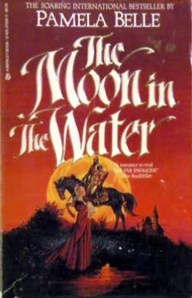
The Moon in the Water by Pamela Belle

The Moon in the Water Pamela Belle’s name first came to my attention two or three years ago when I was looking for lists of novels about Richard III and saw a mention of one of her books, The Lodestar. After discovering that it was out of print, I never actually got round to looking for a copy and forgot about it…until a few weeks ago when I came across one of her other novels, The Moon in the Water. Not the one I had originally wanted to read – and set in an entirely different period – but it sounded good so I decided to try it anyway. And I can’t say that I regret reading this one instead of The Lodestar, as I loved it from the first page to the last!

First published in 1983, The Moon in the Water is the kind of historical family saga I used to love reading – books like Colleen McCullough’s The Thorn Birds, Susan Howatch’s Penmarric or John Jakes’ North and South trilogy come to mind – but haven’t read very often in recent years. It was a joy to discover this one and to know that I have many more Pamela Belle books still to look forward to. The Moon in the Water is the first of her Heron series, following the story of Thomazine Heron and her family, and is set during the English Civil War.

When Thomazine, our narrator, is orphaned at the age of ten, her father’s cousin, Sir Simon Heron, becomes her guardian. Arriving at Sir Simon’s estate of Goldhayes in Suffolk, Thomazine settles into her new life and gets to know the other Heron children – Simon, the eldest and the heir; Edward, who wants to become a soldier; the rebellious, quick-witted Francis; Lucy, an avid reader of stage plays; and six year-old Jamie, the baby of the family. Thomazine soon forms friendships with each of her five cousins, but it’s Francis with whom she feels the closest connection. When a marriage is arranged between Thomazine and another cousin, Dominic Drakelon, Thomazine is horrified but consoles herself with the knowledge that the wedding won’t take place until she is sixteen and a lot can happen in six years.

As time passes and the Heron children grow up, Thomazine discovers that she has fallen in love – not with Dominic, but with her cousin Francis. With Sir Simon now dead, his eldest son, Simon, has become head of the family, but unfortunately he distrusts and disapproves of his younger brother; if Thomazine is to have any chance of escaping from her betrothal to Dominic, she must first find a way to repair the relationship between Simon and Francis. Meanwhile, tensions between King Charles I and his Parliament intensify and the Herons, who choose to support the King, find themselves facing a host of new challenges as civil war breaks out in England.

The Moon in the Water is a romance, but not a silly, bodice-ripping one. There is so much more to this book than just the central love story. Music and poetry are shared interests of several of the characters and we are given fragments of song and verse. The historical background is well researched and there are descriptions of battles, sieges and the ways in which civil war affects not just the people at the heart of the action but also those who have stayed at home. And while it’s sometimes too easy to predict what is going to happen, the story is gripping enough to make this a difficult book to put down.

But going back to that central love story, it’s a great one. Rather than coming out of nowhere, the relationship between Thomazine and Francis develops slowly from friendship to romantic love and it feels believable – although it’s obvious to the reader long before the characters themselves start to become aware of how they feel! It also helps that they are both such great characters. I had a look at some of the other reviews on Goodreads after finishing the book and was intrigued by the fact that several reviewers mentioned that Francis Heron is very like Francis Crawford of Lymond from Dorothy Dunnett’s Lymond Chronicles, which is exactly what I kept thinking too, to the point where I started to find it distracting and wished the author had chosen a different name! The intelligent, imaginative young Francis Heron is very much as I would imagine Francis Crawford as a child and as an adult his relationship with his brother Simon is similar in some ways to Lymond’s relationship with his brother Richard.

I also loved Thomazine, which is fortunate as this is really her story, narrated in the first person, which means her personality comes through on every page. Another favourite character was Grainne, the Irish girl who marries a friend of the Herons and becomes almost one of the family. The villains were maybe a bit disappointing – and it was easy to guess who they were going to be, even before they committed any villainous acts – but that’s just a small criticism of such an enjoyable book.

It’s frustrating that these books and so many others that I want to read are out of print, but at least in this age of the internet it’s a lot easier to find copies of them than it used to be! I’m very excited about reading Pamela Belle’s other novels, beginning with the next in the Heron series, The Chains of Fate. With this one ending on a big cliffhanger, I can’t wait to see what the future holds for the Heron family – although I’m sure things aren’t going to go smoothly for them!

The Crimson Ribbon by Katherine Clements

The Crimson Ribbon The Crimson Ribbon is a new historical fiction novel set during the English Civil War. As the story begins in 1646, our narrator, Ruth Flowers, is a servant in the household of Oliver Cromwell. When her mother is hanged for witchcraft, Ruth is forced to flee to London to the home of Master Poole and his daughter, Elizabeth (Lizzie), friends of Cromwell’s mother. On the journey she meets a former Parliamentarian soldier, Joseph Oakes, who has deserted after the Battle of Naseby and is hoping to become a printer’s apprentice so that he can continue the fight using words instead of violence.

Still haunted by her mother’s death, Ruth finds it difficult to trust Joseph and separates from him when they reach London, expecting never to see him again. As she settles into her new life at the Pooles’ house, Ruth becomes captivated by the beautiful Lizzie Poole and is delighted to find that Lizzie returns her love. But when Lizzie’s religious and political beliefs draw her into the conflict between King Charles I and Oliver Cromwell, the lives of both women could be in danger.

Ruth is a fictional character and her story is imagined by the author, but Elizabeth Poole was a real historical figure who really did claim to have visions and argued against the execution of King Charles I. It seems that there is not a lot of information available about Elizabeth’s life and she eventually disappears from historical records, allowing Katherine Clements to come up with an interesting conclusion to her story. In her author’s note she does explain where the story has moved away from the known facts about Lizzie.

This book is set during a fascinating period of history and one that I wish more historical fiction authors would write about. Ruth’s relationships with Lizzie, with Joseph and with Oliver Cromwell form the basis of the novel, but other subjects and themes are included too, particularly witchcraft and the witch hunts that were so common in seventeenth century England. These were superstitious times and anyone who led an unconventional life could find themselves under suspicion. Through Joseph we also learn a little bit about army life and what happened at Naseby, while Lizzie’s storyline involves prayer meetings and the writing of religious pamphlets.

As the story is narrated by Ruth in the first person, I felt that I got to know her better than any of the other characters. However, I didn’t like the character of Elizabeth Poole and this made it hard for me to understand Ruth’s love for her. It frustrated me that she continued to remain so devoted and loyal, despite the way Lizzie often treated her. Apart from this, my only problem with the book was that it was written in the present tense which I almost always dislike, although I can understand the reasons for choosing to write in that way – it does give the story a sense of immediacy and intimacy.

I did enjoy The Crimson Ribbon and as this is Katherine Clements’ first novel I will be looking out for news of a second!

Thanks to Headline for sending me a review copy of this book.

The King’s General by Daphne du Maurier

The Kings General If you asked me to name my favourite author I wouldn’t be able to give a definitive answer; there are so many that I love and I would find it hard to single one out. But one name that would always be high on my list is Daphne du Maurier. I’ve read twelve of her books now, including this one, and I can honestly say I’ve enjoyed all of them.

The King’s General is set in seventeenth century Cornwall, during the English Civil War. Our narrator is Honor Harris, whose family are Royalists fighting for the King against the Parliamentarians. Honor is eighteen years old when she meets and falls in love with Richard Grenvile but on the day before their wedding tragedy strikes and the marriage never takes place. As the years go by, Richard rises through the ranks of the army, marries another woman and has children, while Honor stays in the Harris family home and remains single.

As the war intensifies and the fighting spreads throughout Cornwall, Honor joins her sister and brother-in-law in the safety of their home, Menabilly, and here she meets Richard again for the first time in fifteen years. He has left his wife, bringing their fourteen-year-old son, Dick, with him, and is now commanding the Royalist forces as the King’s General in the West. Richard and Honor discover they still love each other as much as before and although she refuses to marry him, they begin an unusual relationship that withstands the war, betrayal and rebellion going on around them.

I wasn’t sure at first that I was going to like this book. The first chapter was very confusing – it’s narrated by an older Honor looking back on her life and reflecting on people and events that we know nothing about yet, before going back in time in the next chapter to tell her story from the beginning. But as soon as Honor and Richard had their first meeting on the battlements of Plymouth Castle I knew I needn’t have worried! After I finished the book I went back to re-read the first chapter and it did make a lot more sense.

The King’s General is historical fiction rather than the gothic suspense Daphne du Maurier is probably better known for, but there are still elements of the gothic here, mainly in the atmospheric descriptions of Menabilly with its secret tunnels, hidden chambers and mysterious noises in the night. Menabilly (the inspiration for Manderley in Rebecca) was du Maurier’s home in Cornwall and previously belonged to the Rashleighs, one of the families featured in The King’s General. It was apparently the story of a discovery at Menabilly by William Rashleigh in the 19th century that inspired the writing of this novel.

But while this book could be described as historical romance, as you might expect from du Maurier the romance between Richard and Honor is not a conventional one and neither of the two main characters is a typical romantic hero or heroine. Even people who like flawed characters (and I usually do) might have trouble with Richard as he is not a very pleasant person at all. He’s ruthless, arrogant and cruel and the way he treats his shy, nervous son Dick is particularly horrible. I couldn’t help thinking that his relationship, or lack of it, with Dick reminded me of Heathcliff’s with his son, Linton, in Wuthering Heights and of course, many of du Maurier’s books do have a strong Brontë influence. The only point in Richard’s favour is that he does seem to truly love Honor and in the scenes where they are alone we sometimes see a more human side to him. Honor herself is another strong and complex person. I didn’t always agree with the decisions she made but I admired her courage in helping to protect her family and friends throughout the war and her strength in dealing with the disaster that befell her early in the story. I deliberately haven’t told you exactly what this disaster was because if you can manage to avoid knowing before you start to read the book, it will probably have more impact!

Du Maurier had obviously put a lot of effort into her research for the novel. Although this is a fictional story, the various battles and other historical events in the book did take place as described and most of the characters were real people recorded in history, including both Richard Grenvile and Honor Harris. The Civil War (actually three separate wars between 1642 and 1651) is not a period of English history I have read much about. I know the basics that we were taught at school – that the Royalists (Cavaliers) were defeated by the Parliamentarians (Roundheads), and King Charles I was beheaded and replaced by the Lord Protector, Oliver Cromwell – but beyond that, I don’t know very much at all. That wasn’t necessarily a bad thing, because my total lack of knowledge of the Battle of Lostwithiel, for example, or the Siege of Plymouth Castle, meant that I never knew what was going to happen next.

While The King’s General doesn’t rank as one of my top three or four Daphne du Maurier novels I still loved it and am looking forward to the remaining du Maurier books I still haven’t read.