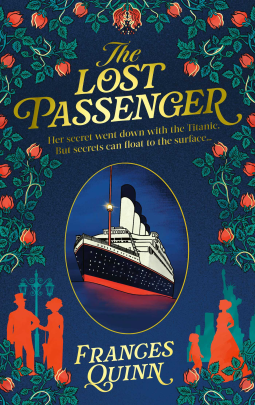
 Frances Quinn’s That Bonesetter Woman was one of my books of the year in 2022 and I didn’t really expect her new one, The Lost Passenger, to live up to it. Well, I’m pleased to say that I thought it was even better!
The novel begins in England in 1910. Nineteen-year-old Elinor Hayward is the daughter of a wealthy Manchester mill owner known as ‘the cotton king’, but when she marries Frederick Coombes, the son and heir of Lord and Lady Storton, she finds herself being looked down upon by her aristocratic in-laws. It seems that nothing she says or does is good enough for them and although Frederick himself is not unkind, it quickly becomes obvious that he doesn’t love her and it’s not going to be the happy marriage she had dreamed about. Worse still, when their first child, Teddy, is born, he is immediately taken away to be raised by a nanny and it is made clear to Elinor that she’s to have very little involvement in his upbringing.
After two unhappy years, Elinor is thrilled when her father buys tickets for the Titanic and invites her to join him on the ship’s maiden voyage, along with Frederick and Teddy. It’s a chance to see more of the world, but also to finally spend some precious time with her little boy. Of course, the voyage ends in tragedy but Elinor and Teddy are lucky enough to be rescued after the ship goes down. When asked for her name so a list of survivors can be compiled, it occurs to Elinor that this is the only opportunity she’s ever going to have to escape from her old life. Before she has time to really think about the consequences, she finds herself giving another woman’s name and taking on a fake identity. But will she be able to avoid being caught – and will the new life she builds for herself in New York be worth the deception?
Frances Quinn has a real gift for creating characters the reader can get behind and root for. I liked Elinor from the beginning and she had my full sympathy in having to deal with the vicious snobbery of Lady Storton and the disappointment of a loveless marriage. Her life with Frederick and his family is so stifling and unhappy that even though the decision she makes after the sinking of the Titanic is questionable, it’s also very understandable. Although this first section of the novel is quite slow, I think it was necessary for Quinn to spend plenty of time showing us how trapped Elinor felt and how desperate she had become.
Many books have been written about the Titanic, but this one is different. The Titanic is not the main focus of the story but is a starting point to explore how Elinor makes the most of the second chance she has been given. However, I still felt that Quinn handles the disaster sensitively and with respect for the victims. She writes about the failings of the evacuation process, the conditions experienced by those who make it into a lifeboat and the realisation that there’s no hope for the hundreds left on board, but she doesn’t go into too much detail on any of these things. Instead of concentrating on the disaster itself, she focuses more on the survivors and how they try to cope with the trauma they’ve suffered and move forward with their lives.
The second half of the book is devoted to Elinor’s arrival in New York and how she goes about trying to build a happier future for herself and Teddy. I’m deliberately not saying much more because I want you to enjoy discovering the rest of Elinor’s story for yourself (everything else I’ve talked about so far is already touched on in the publisher’s blurb for the book). It’s both fascinating and inspirational to see how Elinor is able to create a whole new life out of the ruins of her old one, but at the same time there’s always the risk that someone who knew her before could see her and give her away her secret.
I loved this book and as I haven’t read her first one, The Smallest Man, yet, I still have something to look forward to!
Thanks to Simon and Schuster UK for providing a copy of this book for review via NetGalley.

 She Reads Novels