The Elopement by Gill Hornby

This is the third novel Gill Hornby has written based on the lives of members of Jane Austen’s extended family. I loved Miss Austen and Godmersham Park, so I was looking forward to reading The Elopement, which focuses on Jane’s niece, Fanny Knight, and Fanny’s stepdaughter, Mary Dorothea Knatchbull.

Fanny’s father is Jane’s brother Edward, who was made the legal heir of their wealthy Knight relatives and inherited three estates at Steventon, Chawton and Godmersham (Fanny appears as a secondary character in Godmersham Park). For a long time it seems likely that Fanny is going to remain a spinster until, in 1820, she marries Sir Edward Knatchbull of Mersham-le-Hatch at the age of twenty-eight. She doesn’t love him and he doesn’t love her, but Fanny has always been a practical person and decides that it could still be a marriage that works well for both of them.

Sir Edward has five children from his previous marriage and Fanny is sure she can be a good stepmother to them. However, there’s tension between Fanny and the only daughter, Mary Dorothea, from the beginning. Fanny is not a naturally loving or compassionate person and Mary finds it impossible to warm to her, viewing her as aloof and distant. Things come to a head when Mary falls in love with a man her father considers unsuitable. She knows she can expect no empathy or understanding from Fanny, so is forced to do something drastic.

It took me a while to get into this book. The pacing is uneven, with the first half being very slow and the second much more gripping. The title is maybe slightly misleading, as the elopement doesn’t happen until late in the book and doesn’t really play a big part in the story, although the buildup and consequences do. I think I would have preferred not to have known there was going to be an elopement so I wouldn’t have spent most of the book wondering when it was going to happen.

Hornby focuses less on Mary Dorothea’s romance and more on the relationship between stepmother and stepdaughter, which gets off to a bad start and worsens throughout the book. I went from feeling sympathetic towards Fanny to disliking her more and more as she tries to align herself with her husband’s views and closes her mind to Mary’s feelings. Still, the portrayal of Fanny and Sir Edward’s marriage illustrates the limited options available to 19th century women who would often marry out of duty, necessity or to meet society’s expectations. Mary is trying to do something different and marry for love.

In her author’s note at the end of the book, Hornby explains that she has based the novel on Fanny Knight’s own diaries which she kept from 1804 to 1872. I haven’t read the diaries so I don’t know how the personality of the real Fanny compares to the fictional one, but I was sorry not to have liked her more considering that Jane Austen apparently described her as her “favourite niece”.

I’ve learned that following the recent TV adaptation of Miss Austen which was shown earlier this year, The Elopement is also going to be adapted under the title Miss Austen Returns (I’m not sure why they’ve missed out Godmersham Park). Cassandra Austen, the star of Miss Austen, only appears once or twice in this book so I imagine she’s going to be given a much bigger role in the new adaptation. I’ll be interested to see what Gill Hornby’s next book will be about; I’m sure there’s still more she could write about the Austen family and there seems to be a never-ending appetite for it by readers and TV viewers!

Thanks to Random House UK, Cornerstone for providing a copy of this book for review via NetGalley.

Godmersham Park by Gill Hornby

I enjoyed Gill Hornby’s previous novel, Miss Austen, about the life of Jane Austen’s sister Cassandra. Her new one, Godmersham Park, is also inspired by the Austens, telling the story of Anne Sharp, who became one of Jane’s closest friends after taking up the position of governess to her niece, Fanny.

We first meet Anne in 1804 on the day of her arrival at Godmersham Park, the estate in Kent that is home to Edward Austen Knight, his wife Elizabeth and their many children. (If you’re in the UK and have a current £10 note to hand, Godmersham Park is the house depicted on the back beside the portrait of Jane Austen). At thirty-one years old, Anne has no experience of teaching or caring for children, but following the death of her mother she has found herself in need of employment and somewhere to live. This change of circumstances comes as a shock to Anne and it takes her a while to settle into her new job and way of life.

When Anne’s eleven-year-old charge, Fanny, shows her the letters she has been receiving from her Aunt Jane (yes, that Jane), Anne finds them charming and immediately decides that Jane is her ‘favourite Austen’. Anne will have to wait a long time for her chance to meet this mysterious letter-writer, but first she makes the acquaintance of another Austen – Jane and Edward’s brother Henry, who comes to stay at Godmersham Park and quickly befriends the new governess.

This is a lovely novel and, like Miss Austen, although it doesn’t self-consciously try to recreate the style of Jane Austen’s work, the language still transports you back to the early years of the 19th century. There are no glaring anachronisms that I noticed and it even feels like the sort of story Austen herself could have written. The pace is slow and apart from a subplot involving a mystery surrounding the whereabouts of Anne’s father, nothing very dramatic happens, yet I was drawn in by the characters and the setting and found it quite absorbing. It was particularly interesting to read about Anne’s experience of working as a governess and how she struggled to find her place within the household, not being fully accepted either as one of the family or one of the servants.

The novel is inspired by the diaries kept by Fanny Austen Knight, letters exchanged between Anne Sharp and Jane and Cassandra Austen, and a first edition of Emma that Jane signed for Anne. All of these things add to our knowledge of Anne’s life and personality and provide evidence of her close friendship with Jane Austen. However, almost nothing is known of Anne’s background before she arrived at Godmersham Park and Gill Hornby explains in her author’s note that she had to use her imagination to create a backstory for Anne. The overall result is a convincing blend of fact and fiction, which I really enjoyed.

Thanks to Century for providing a copy of this book for review via NetGalley.

This is book 6/20 from my 20 Books of Summer list.

This is book 31/50 read for the Historical Fiction Reading Challenge 2022.

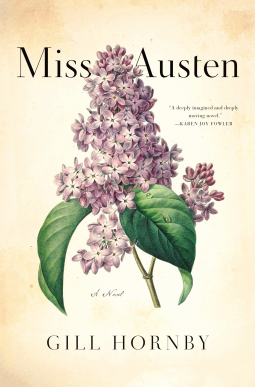
Miss Austen by Gill Hornby

The final book I read in 2021 was one that I very much enjoyed: Gill Hornby’s Miss Austen. The title character is not, as you might expect, the famous novelist Jane Austen, but her elder sister Cassandra. Cassandra, who outlived Jane by nearly thirty years, is known to have burned many of her sister’s letters, although we don’t know exactly why she did this. In this fictional version of Cassandra Austen’s story, Hornby explores a possible reason for the destruction of the letters, while also giving us a glimpse into the lives of Cassandra, Jane and the rest of the Austen family.

The novel opens in 1840 with Cassandra, now an elderly woman, arriving at Kintbury, home of the Fowles, the family of her long-dead fiancé. Following the death of the Reverend Fowle, his daughter Isabella has been left to pack up her parents’ belongings so that a new reverend can move in. Cassandra believes that the letters she and Jane wrote to their friend Eliza Fowle (Isabella’s mother) must still be in the house somewhere and she is determined to find them and remove them before they can be made public.

The story unfolds through the letters Cassandra discovers at Kintbury (not the real letters, of course, as they were destroyed) and through Cassandra’s memories of her younger days. The narrative moves back and forth in time as she remembers the loss of Tom Fowle, the man she should have married, her relationship with Jane and the lives they both led as single women. In the 1840s storyline, we also get to know Isabella, another spinster, and this provides some further insights into what it means to be an unmarried woman in the early 19th century: the lack of security; the pressures created by failing to conform to society’s expectations; and the feeling of being a burden to other family members.

This is a quiet, domestic novel, but I was never bored. There is an authentic period feel and although Hornby doesn’t try to imitate Jane Austen’s writing exactly, the language used generally feels suitable for the time. I enjoyed the occasional references to Jane’s novels, some of which we see her working on and others which the characters read to each other for entertainment. There’s an interesting suggestion that Jane based Mary Bennet in Pride and Prejudice on her sister-in-law, Mary Austen. Most of all, I enjoyed learning a little bit about Cassandra and the world in which she lived.

I had never come across Gill Hornby before, but it seems that not only is she the sister of the writer Nick Hornby, she is also married to one of my favourite authors, Robert Harris! Her earlier novels sound very different and don’t really appeal to me, but I’ve discovered that she has a new book out later this year – Godmersham Park, about a governess in the Austen household. I will be looking out for that one.