Before Dorothy by Hazel Gaynor

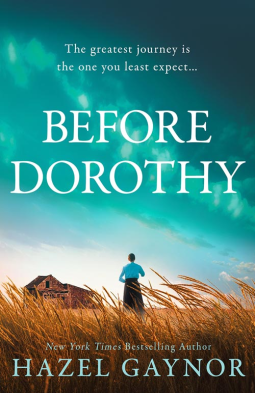
I’m sure most of us have seen The Wizard of Oz (and/or read L. Frank Baum’s classic novel on which it’s based), but how many of us have stopped to think about what happened to the characters before the story began? Why was Dorothy living with her Aunt Em and Uncle Henry? Who were her real parents? And how did the family come to be in Kansas in the first place? In Hazel Gaynor’s new novel, Before Dorothy, she sets out to answer these questions and more.

The book is written from the perspective of Emily Gale – Aunt Em – and begins in 1932 as she returns to Chicago following the death of her sister, Annie. Annie’s seven-year-old daughter, Dorothy, has been left an orphan and Emily and her husband, Henry, are to become her legal guardians. Emily hasn’t seen Dorothy since she was a baby – she and Henry now live in Kansas and her relationship with Annie has been very strained in recent years – and she’s not at all sure she’s the right person to care for a child, particularly one who has suffered the trauma of losing her parents. Once back in Kansas, however, Emily gradually begins to feel a stronger bond with Dorothy than she’d expected.

Moving backwards and forwards in time, we watch as Emily and Annie, originally from Connemara in Ireland, first arrive in Chicago in 1924 and meet their respective husbands, cousins Henry and John Gale. We also see how Emily makes the decision to start a new life with Henry in Kansas and what she discovers when she gets there. The focus is always on Emily rather than Dorothy and unlike the Baum novel and its adaptations, the story is firmly grounded in reality rather than fantasy.

I tend not to read many books that are spin-offs of classics or that borrow other authors’ characters and I only chose to read this one because I’ve enjoyed some of Hazel Gaynor’s previous work. I wasn’t sure I would like it, but I did – although I think it would probably have worked just as well if it had simply been a novel about an original fictional family living on the prairie, with no connection to the Gales. It was fun spotting the references to The Wizard of Oz, though. The scarecrow, tin man and lion all appear, as do the wizard, witches (good and wicked), the tornado and many more – although not necessarily in the form you would expect! Gaynor manages to work these references into the story in a way that feels believable and not too forced.

What I liked best about this book, though, was the portrayal of life on the prairie – the sense of adventure and optimism Emily and Henry feel when they first arrive, followed by a growing awareness that things are going to be much more difficult than they’d expected. With an influx of people coming to the Great Plains in large numbers to farm the land, there’s eventually a surplus of wheat, too much to be sold, leading to a drop in prices. Worse, the overexploitation of the land and removal of the prairie grasses, combined with a prolonged drought, causes severe dust storms (known as the Dust Bowl). The hardships and challenges faced by the Gales, as well as the environmental disaster unfolding around them, forms a big part of the novel.

I’m sure a lot of the people who read this book will have been drawn to it by the links with The Wizard of Oz, but even if that doesn’t appeal to you I think there’s still enough here to make it an enjoyable work of historical fiction in its own right.

Thanks to HarperCollins for providing a copy of this book for review via NetGalley.
The Last Lifeboat by Hazel Gaynor

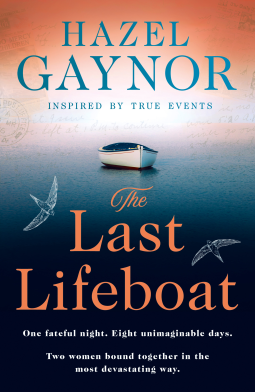
We hear a lot about children being evacuated from the cities to the British countryside during World War II, but not so much about those who were sent away to safety overseas. Hazel Gaynor’s new novel, The Last Lifeboat, explores this often overlooked aspect of the war, taking as its inspiration the real life tragedy of the SS City of Benares, a British evacuee ship which was torpedoed by a German U-boat in September 1940 with almost 100 children on board.

The novel follows the stories of two women: Alice King and Lily Nicholls. Lily, who lives in London, is a widow and the mother of two young children, Georgie and Arthur. All she wants is to keep her children safe, but as bombs begin to rain down on the city, Lily starts to fear for their lives and when she hears about a new government scheme to evacuate children to other countries, she has a difficult decision to make. Meanwhile, schoolteacher Alice King is looking for a way to ‘do her bit’ for the war effort and has signed up with CORB (the Children’s Overseas Reception Board) as a volunteer escort who will accompany a group of children on a ship sailing for Canada.

These two separate storylines connect when Lily entrusts Arthur and Georgie to Alice’s care as parents are not allowed to accompany their children overseas. The ship on which they set sail – the SS Carlisle – is part of a large convoy so everyone assumes they will be protected from the German U-boats, but once out in the Atlantic things go badly wrong. The ship is hit by a torpedo and begins to sink, leaving the passengers and crew to pile into the lifeboats. Some are rescued, others are thrown into the waves, but one lifeboat drifts out of range with Alice King on board. The days that follow will be a traumatic period for Alice, as she and the others in the boat find themselves lost at sea with little hope of rescue and limited supplies of food and water, but it will be equally traumatic for Lily as news of the disaster reaches London and she discovers that one of her children is missing.

I think this is the best of the three Hazel Gaynor books I’ve read so far (the others are The Lighthouse Keeper’s Daughter, about Grace Darling, and The Cottingley Secret, the story of the Cottingley fairies). I liked both Lily and Alice and found each of their stories very moving. Alice’s is more dramatic as the days go by and she and the other lifeboat passengers struggle to survive while adrift in the Atlantic, but I could also feel Lily’s heartbreak and anger as she waits for news of her lost child and makes the shocking discovery that the evacuee ships were not being escorted to Canada as promised but left to fend for themselves after passing a certain point. Knowing that the book is based on a true story and that real people did have to go through the things that Alice and Lily went through just makes it even more powerful.

Thanks to HarperCollins for providing a copy of this book for review via NetGalley.
This is book 22/50 read for the 2023 Historical Fiction Reading Challenge.

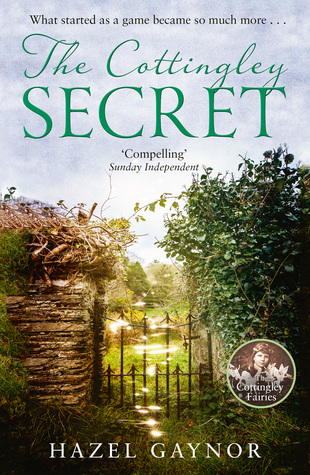
The Cottingley Secret by Hazel Gaynor

I was already aware of the Cottingley Fairies before reading this book; I remember watching a documentary years ago, as well as the 1997 film Fairy Tale. I knew that, early in the 20th century, a series of photographs appeared, taken by two young girls and allegedly showing fairies playing in the garden. Were the photographs real? Well, the girls managed to convince half the world that they were, including the famous author Sir Arthur Conan Doyle! In The Cottingley Secret, Hazel Gaynor gives a fictional account of the story of one of the girls, Frances Griffiths, and through her eyes we see how and why they take the photographs and the effect the incident has on the rest of their lives.

Frances’ story begins to unfold in 1917, when she and her mother return to England from South Africa because her father has gone to fight in the war. Arriving in the Yorkshire village of Cottingley, where they will stay with family, nine-year-old Frances gets to know her cousin, Elsie Wright, who is sixteen, and the two quickly become close friends. When Frances insists that she has seen fairies playing by the beck, or stream, at the bottom of their garden, she and Elsie decide to take photographs to prove that they exist. However, they are completely unprepared for the sensation they cause when the pictures are eventually made public.

One hundred years later, in 2017, Olivia Kavanagh is in Ireland where she has inherited her grandfather’s bookshop. Sorting through his things, she comes across an old manuscript and is fascinated by what it contains: the true story of the Cottingley Fairies, written by Frances Griffiths herself. As Olivia delves into Frances’ story, she discovers her own family connection to the village of Cottingley and begins to understand the appeal of believing in fairies!

I’ve mentioned in the past that I often have problems with dual timeframe novels, particularly where one period is much more interesting to read about than the other, but I’m pleased to say that I think The Cottingley Secret is one of the better examples of this type of book. Although I did find Frances’ narrative slightly more compelling, I liked Olivia too and enjoyed watching her discover the story of the fairies while also trying to bring new life to the ‘Something Old’ bookshop, coming to terms with her grandmother’s dementia and making some important decisions about her future.

I can’t talk too much about how Hazel Gaynor approaches the subject of the fairies and whether or not Frances’ sightings of them are genuine, because that would spoil the novel, but I do think she creates a convincing explanation for how the girls come to take the photographs while leaving just enough mystery in the story to raise some intriguing possibilities. You may also be wondering how so many people, ranging from photography experts to the author of Sherlock Holmes, were so ready to believe that the fairies were real, but remember that the photographs were published at a time when the world was just emerging from four years of war and it’s easier to see why people were desperate for some magic in their lives.

I have now read two of Hazel Gaynor’s books – this one and The Lighthouse Keeper’s Daughter, about Grace Darling – and have enjoyed both. I’m looking forward to reading more!

Book 7/50 read for the Historical Fiction Reading Challenge.

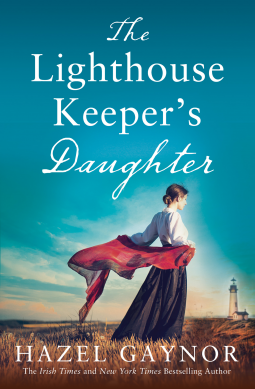
The Lighthouse Keeper’s Daughter by Hazel Gaynor

Being from the North East of England, Grace Darling is something of a local heroine, but although I remember hearing her story at school, I couldn’t really have told you very much about her. Hazel Gaynor is an author I’ve been interested in reading for a while and I already have one of her previous books, The Cottingley Secret, on the TBR, but when I saw that her latest book, The Lighthouse Keeper’s Daughter, was about Grace Darling I thought it might be a better one for me to start with.

The Lighthouse Keeper’s Daughter is divided between two different time periods, but unlike most dual timeline novels where one storyline is set in the past and the other in the present, both periods in this book are historical. One thread begins in 1838 and introduces us to Grace, a young woman whose father runs the lighthouse on Longstone Island, one of the Farne Islands just off the coast of Northumberland. The family live with him at the lighthouse and although it’s an isolated, unconventional lifestyle, Grace loves it and can’t imagine living anywhere else. One night, she helps her father with a rescue when a paddle steamer, the Forfarshire, gets into trouble during a storm and is wrecked on the rocks. News of Grace’s bravery quickly reaches the public and suddenly she finds herself the centre of attention, but all she wants is to continue living a quiet, simple life in her beloved lighthouse…how will she cope with her unexpected fame?

The other storyline is set in America in 1938 and follows Matilda, a young Irish woman who has been sent away from home in disgrace after becoming pregnant. Matilda is staying with an older relative, Harriet, who happens to be a lighthouse keeper in Newport, Rhode Island. At first she finds Harriet unwelcoming and difficult to talk to, but as she gets to know her better she starts to understand what has made Harriet the person she is.

I was interested in both storylines, but although it was the promise of learning more about Grace Darling that drew me to this book, I think I preferred reading about Matilda. To be honest, I didn’t feel that there was much difference between the narrative voices of Grace and Matilda, especially considering that they were living in different centuries, but of the two I felt closer to Matilda and more emotionally invested in her story. I wanted to understand the nature of her relationship with Harriet and I enjoyed watching that aspect of the story unfold, as well as discovering the connections between Matilda and Grace. Grace’s chapters deal mostly with the events of the sea rescue and the unwanted, unlooked for fame she experiences in the aftermath, but the author also imagines a romance for her, which feels believable and is also quite moving and poignant.

There was some added interest for me in that I was familiar with so many of the places which form the setting for Grace’s story, including North Sunderland, Seahouses, Alnwick and Bamburgh. The Matilda sections are more fictional, but do also incorporate some real places and events such as the New England Hurricane of 1938. Although there were one or two small things that stopped me from enjoying this book as much as I would have liked to – particularly the use of present tense, which I almost always find annoying – overall I thought this was a good, interesting read. I’m looking forward to reading more by Hazel Gaynor, starting with The Cottingley Secret.

Thanks to HarperCollins for providing a copy of this book for review via NetGalley.
This is book 7/20 of my 20 Books of Summer.