 Freedom always comes at a price, that much she had learned, and a confinement was a small sacrifice for the reward of being able to set the rest of her life exactly as she wanted it.
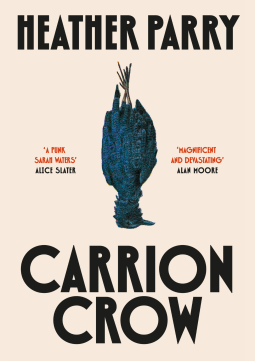
I’ve never read anything quite like this book and am not sure I’ll be able to describe it adequately, but I’ll do my best! It’s not Heather Parry’s first novel – she has written a previous one, Orpheus Builds a Girl – but it’s the first I’ve read and I didn’t really know what to expect.
Marguerite Périgord, who lives in London with her mother, Cécile, has just become engaged to George Lewis, a man thirty-five years her senior. Although he’s a respectable solicitor and Marguerite is sure he’ll make her happy, Cécile disapproves of the engagement because Mr Lewis comes from a humble background and doesn’t have a lot of money. Telling her that if she really must go ahead with the marriage, she first needs an education on how to be a good wife, Cécile locks Marguerite in a tiny attic room with a sewing machine and a copy of Mrs Beeton’s Book of Household Management. Although it seems obvious to the reader that Cécile’s true intentions are simply to keep her daughter hidden away to prevent the marriage, Marguerite is sure she’ll be released as soon as she has made enough progress.
The rest of the novel follows Marguerite through the period of her confinement in the attic, while also giving us some glimpses into Cécile’s own history and her relationship with the man who was Marguerite’s father. The Cécile sections of the book do help to explain how she became the woman she is and why she so desperately wants to stop her daughter from making the same mistakes she did – but at the same time, her treatment of Marguerite is inhumane and cruel. Even more chilling is the way Marguerite just seems to accept that she has been sent into the attic for her own good and makes no attempt to escape. She tells herself that it will all be worth it in the end when she completes her ‘training’ and can become the perfect wife to Mr Lewis.
If Marguerite already seems mentally unstable when she enters the attic, she becomes even more so as her confinement continues. With little to occupy her mind and only a crow nesting in the roof above for company, she becomes obsessed with her own body and the changes she sees in it as she remains shut away from the fresh air outside and the meals delivered to the attic become smaller and more sporadic. The book gradually becomes stiflingly claustrophobic, as well as increasingly disturbing and uncomfortable to read. It reminded me at times of Charlotte Perkins Gilman’s The Yellow Wallpaper or Virginia Andrews’ Flowers in the Attic, although more gruesome than either. As Marguerite is an unreliable narrator and it’s sometimes difficult to know what’s real and what’s imaginary, the ending of the book both confused and surprised me, and I was left with the overall impression that I’d read something very powerful.
This is not a book that I could really say I ‘enjoyed’, but I do recommend it as long as you’re prepared for something very, very dark and unsettling!
Thanks to Doubleday for providing a copy of this book for review via NetGalley.
 She Reads Novels