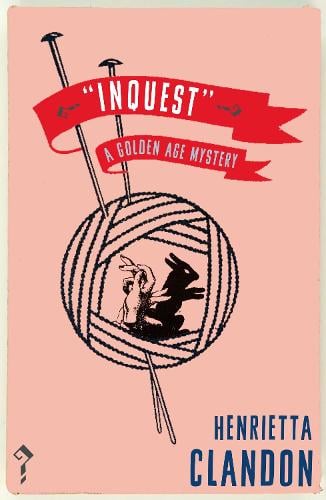
Inquest by Henrietta Clandon

Inquest is one of four Henrietta Clandon mysteries available from Dean Street Press. Many of you will have heard the sad news earlier this year of DSP publisher Rupert Heath’s death, but it has been confirmed that the titles currently in print will still be available as long they have the copyrights. I loved the first Clandon novel I read, Good by Stealth, so I thought I would read another one while I still had the opportunity.

Henrietta Clandon was a pseudonym of John Haslette Vahey, a Northern Irish author who also wrote under several other names, most often Vernon Loder. Inquest, originally published in 1933, was the first of his books under the Clandon name. I’ve never read anything else he has written, so I don’t know how much difference there is between the various pseudonyms in terms of writing style or topics.

The novel opens six months after the death of William Hoe-Luss, an English businessman believed to have been poisoned by consuming deadly mushrooms during a house party in France. Now his widow, Marie Hoe-Luss, has assembled all of the original guests – with the addition of Dr Soame, William’s physician – for another house party at Hebble Chase, her estate in England, where she plans to hold a sort of informal ‘inquest’ into her late husband’s death. However, when one of the guests breaks their neck falling from a high window, it seems that the killer may have struck again.

Although the police do eventually arrive on the scene, most of the sleuthing in the book is done by Dr Soame, who also narrates the whole novel. He’s an interesting choice of narrator as his medical knowledge and previous experience as a police surgeon means he works alongside the detectives at times, while also being one of the party, mixing with the suspects. Soame already knows some of the guests through his position as the Hoe-Luss family doctor, but others are new to him which allows the reader to get to know them along with Soame.

I enjoyed the first half of the book, which introduces the characters as they arrive at the estate for Marie’s inquest – an assortment of friends, family members, business partners and former lovers, which means there are plenty of tensions, entanglements and motives for murder. They aren’t the most pleasant bunch of people, but that’s common in Golden Age mysteries so not unexpected and not too much of a problem! However, I felt that later in the book, after the second death takes place, the plot became unnecessarily complicated and I began to struggle to keep everything straight in my mind.

I really wanted to love this book, so I’m disappointed that I didn’t. It’s a good, solid mystery novel, apart from getting a bit confusing towards the end, but there’s nothing to make it stand out from other similar books in the genre, unlike Good by Stealth, which was unusual, witty and clever. I’m not sure whether I’ll read the other two Henrietta Clandon books – I suspect I’ve already read the best one – but maybe I’ll try a Vernon Loder at some point.
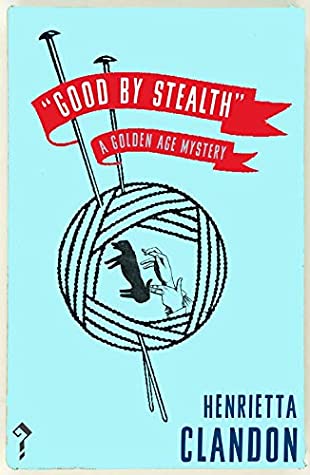
Good by Stealth by Henrietta Clandon – #ReadIndies

I had so many reading plans for February, yet the month is slipping away and I’ve hardly read any of the books I’d hoped to read. However, I really wanted to read something for the Read Indies Month hosted by Karen and Lizzy and I’m pleased that I’ve managed to fit in Good by Stealth by Henrietta Clandon, published by Dean Street Press.

This wonderful Golden Age crime novel from 1936 was written by John Haslette Vahey; Henrietta Clandon was one of his many pseudonyms – he seems to have been very prolific and used different names for his work with different publishers or in different genres. I found this one so much fun to read, I will certainly be reading more of his books! It reminded me very strongly of The Murder of My Aunt by Richard Hull, but also a little bit of Miss Buncle’s Book by DE Stevenson and Queen Lucia by EF Benson.

Good by Stealth is what is known as an ‘inverted mystery’. We know from the beginning that our narrator, Miss Edna Alice, has been found guilty of sending anonymous letters – letters which have caused suicides, broken engagements and ruined relationships – but what we don’t know is why. In Miss Alice’s own words, we watch the sequence of events unfold which lead to the writing of the letters and we hear her reasons for doing so. There’s no real suspense because we know that eventually she will be caught, tried and sent to prison, but by the end of the book we have enough information to decide for ourselves whether there is any justification for Miss Alice’s actions.

Miss Alice begins her story by describing her arrival in the small English village of Lush Mellish, where she settles into her new cottage with her dog and sets out to make friends with the other residents, but succeeds only in turning them all against her. Her attempts to join the art circle, the literary society and the tennis club all end in disaster – and of course, it is never Miss Alice’s fault.

I paid my subscription and joined the tennis club. It was sometime later that I heard how my comments – which were quite harmlessly witty – had been repeated and exaggerated, causing great offence. It was no good trying to prove that, and in the end I decided that the truth still remains the truth, even if embroidered. But people hate to recognise themselves in what they take to be a faulty mirror.

Although Miss Alice is undoubtedly an unpleasant, self-righteous woman, it’s impossible not to have sympathy for her when, first of all, not just one but several of her pet dogs die in ways which seem not to have been accidental, and then the other inhabitants of Lush Mellish appear to engage in a series of campaigns designed to humiliate her and drive her out of the village. The cruelty of these people, particularly the elderly woman who lives next door, is so excessive and spiteful that you can’t help but feel sorry for our poor narrator, despite her own nastiness.

But these things did me no harm, the more so as cook knew a great deal about the slanderers and backbiters, and as good as told me that some of them were determined to drive me out of the town. Can you imagine people so lost to any sense of decency? In the end they had their wicked will, and so contrived it that I appeared technically to be at fault. But was it my fault if I had not their cunning and lack of principle?

In Miss Alice’s version of events, she has the best of motives for beginning to send anonymous letters to the people of Lush Mellish containing helpful pieces of advice aimed at improving their morals and correcting their behaviour. But of course the recipients of the letters don’t see things that way and as we are only given one side of the story we have to make up our own minds as to whether Miss Alice was really as well-meaning as she claims to have been.

The book is hugely entertaining and often very funny (I particularly loved Miss Alice’s descriptions of the ‘wicked old woman’ next door) and although some parts of the story don’t seem at first to have much to do with the overall plot, everything falls into place by the end and the significance of even the smallest detail becomes clear. This is not a conventional crime novel or mystery in any way, but there is still an element of detection towards the end, when the police begin to investigate Miss Alice’s alleged crimes. Again, because we are seeing things from the suspect’s point of view rather than the detective’s, my sympathies were with Miss Alice and even though I knew from the opening chapter what the outcome would be, I was still hoping she wouldn’t be caught!

If anyone has read any of Henrietta Clandon’s other books – or anything published under one of Vahey’s other names – please let me know which one I should try next!