“I have been enamoured of this country and this city for so long. The Venice of the north. How I have loved every golden dome, every frozen canal, every ballet, every concert, every wonderful person I have ever met. This country takes your soul, it takes it away and it doesn’t ever give it back.”
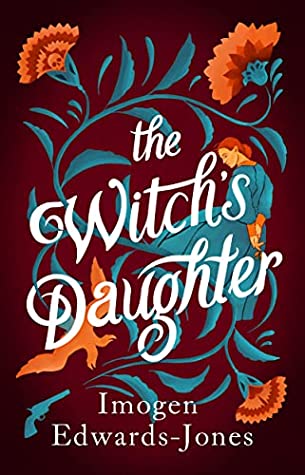 Imogen Edwards-Jones’ new novel, The Witch’s Daughter, is the sequel to 2018’s The Witches of St Petersburg, but I don’t think it’s essential to read them in order. The first book tells the story of Princesses Militza and Stana of Montenegro, who marry into the Russian aristocracy and introduce Rasputin to the Romanov court. This one begins with the murder of Rasputin, then moves on to follow Militza’s daughter, Nadezhda, throughout the Russian Revolution.
As the novel opens in December 1916, Tsar Nicholas II is preoccupied with Russia’s involvement in World War I when news breaks out in Petrograd of Rasputin’s murder. However, the war is soon going to be the least of the Tsar’s troubles because Rasputin has left behind a letter predicting the death and destruction of Nicholas himself and the entire Romanov family. As unrest and violence breaks out on the streets of Petrograd, it seems that the prophecy is starting to come true and Princess Nadezhda finds herself caught up in it all.
Unlike the first book, which took as its premise the idea that Militza and Stana were ‘witches’ who believe they have conjured up Rasputin through black magic, this one – despite the title – involves almost no magic at all. It could be misleading for those who pick it up specifically hoping for a story about witchcraft, but I preferred the more serious tone of this book. I can’t tell you whether everything that happens is historically accurate or not, because I don’t know – the Russian Revolution is not a period I’ve ever studied or read very much about – but I think it works well as a general overview of the situation and the feeling of the Russian people towards the Romanovs and the aristocracy. Edwards-Jones doesn’t shy away from describing the violence and brutality as tensions boil over on the streets and simple demands for ‘peace, land and bread’ spiral into a larger revolutionary movement.
Although the focus is on Nadezhda’s family, and the sequence of events that lead them to flee St Petersburg for the relative safety of the Crimea, The Witch’s Daughter has a large number of other characters and they are all listed at the front of the book in case you have trouble keeping track of the relationships between the various Princes and Princesses, Grand Dukes and Grand Duchesses. The character who interested me the most, however, was Bertie Stopford, a British antiques and art dealer who has some sort of unspecified connection with the War Office and engages in some spying and smuggling on behalf of his friend, the Grand Duchess Vladimir. Bertie was a real person, although I don’t think I’ve read about him before; he seems to have led a very eventful life and is the author of an anonymously published memoir, The Russian Diary of an Englishman: Petrograd 1915–1917, which I’m sure must be fascinating.
I’m not expecting a third book in this series as everything seemed to be tied up nicely at the end, but I’m pleased to have had the opportunity to learn a little bit about Nadezhda and her family.
Thanks to Aria for providing a copy of this book for review via NetGalley.

 She Reads Novels