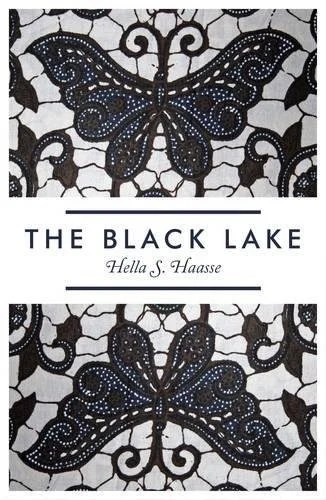
The Black Lake by Hella S. Haasse – #WITMonth

Translated by Ina Rilke

Since reading Hella S. Haasse’s In a Dark Wood Wandering, I’ve been looking forward to reading more of her books. This one, The Black Lake, is on both my Classics Club list and 20 Books of Summer list and is also perfect for this year’s Women in Translation Month. Always good when one book counts towards multiple projects!

First published in 1948 as Oeroeg, this book is considered a Dutch classic and is apparently often taught in Dutch schools. Now that I’ve read it, I can see why it would be a popular choice with schoolteachers; it’s a short novella (under 140 pages in my edition so doesn’t take long to read), is written from the perspective of a young protagonist, and deals with the subject of colonialism in Indonesia, formerly the Dutch East Indies.

Our unnamed narrator is the son of a Dutch planter and his wife and grows up on their tea plantation in Preanger (now Priangan), West Java. As a child, he forms a close friendship with Oeroeg, the son of his father’s estate manager, and soon the two are inseparable. The narrator becomes vaguely aware that his parents and their servants disapprove of his attachment to a ‘native boy’, but with the innocence of childhood he has no idea why. However, when Oeroeg’s family is struck by tragedy, his father feels a sense of duty to the boy and reluctantly allows the friendship to continue. It’s only when he and Oeroeg start to attend school that the narrator begins to understand that their lives will never be able to follow the same path and that society has different expectations for each of them. During World War II, he leaves to serve in the Dutch army and on his return he finds that neither Oeroeg nor Indonesia are the same as when he went away.

The Black Lake is a beautifully written book, with lovely, vivid descriptions of the island of Java – the mountains, the rivers and the black lake of the title, Telaga Hideung, where one of the story’s pivotal scenes takes place. Ina Rilke’s English translation flows smoothly and is easy to read, while keeping in place some Dutch words and terms which can be looked up in the glossary at the back of the book if needed.

With the whole story being told from the perspective of a boy from a white Dutch colonial family, it’s both interesting and limiting. If Haasse was writing this book today, I think she would be expected to include the perspective of the oppressed people as well as the colonists – or maybe not write it at all and leave the story for an Indonesian author to tell. But in the context of the 1940s, when it was published, it gives some fascinating insights into the colonial mindset and I’m sure Haasse will have drawn on some of her own experiences and views (she was born in Indonesia herself and spent most of her first twenty years there).

Although I found this a powerful book, it’s not really one that I can say I ‘enjoyed’. The writing style was too dreamlike and distancing for me to fully engage with and the narrator’s story left me with a feeling of sadness. He’s naive, oblivious and looks back on his earlier years with what seems to be a fond nostalgia for an idyllic childhood, with a lack of understanding that, for Oeroeg, it was hardly idyllic at all. Oeroeg is the centre of the narrator’s life, yet there’s no indication that Oeroeg feels the same way or places much value on their friendship. Oeroeg proves to be the most socially and politically aware of the two and eventually the narrator is in the uncomfortable position of having stayed the same while everyone and everything around him has changed.

Of the two Haasse books I’ve read, I preferred the much longer In a Dark Wood Wandering, but am glad I read this one as well. If you’ve read any of her other books which are available in English translations, I’d love to hear your thoughts.

This is book 19/20 of my 20 Books of Summer 2024.

This is also book 45/50 from my second Classics Club list
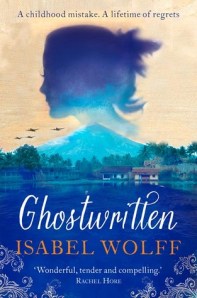
Ghostwritten by Isabel Wolff

Ghostwritten As a ghostwriter, Jenni’s job involves writing books for people who are unable or unwilling to do the writing themselves. Many of her projects include celebrity biographies and self-help guides, but some of her clients are ordinary people with extraordinary tales to tell. At a friend’s wedding she is introduced to a man who tells her about his mother, Klara, a Dutch woman who survived the Japanese internment camps in Java during World War II. Klara has said very little to her family about her wartime experiences, but as she approaches her eightieth birthday she has decided that the time has come for her story to be told. Intrigued, Jenni agrees to visit Klara at her home in Cornwall and help to put her memories down on paper.

The only problem with this new project is that the little Cornish town of Polvarth where Klara lives is a place that holds traumatic memories for Jenni, but although she is not very happy about returning to Polvarth, the temptation of hearing Klara’s story is impossible to resist. After meeting Klara and listening to her talk about her childhood, her family’s rubber plantation in Java, and the unimaginable horrors of the internment camps, Jenni is both moved and inspired. She has been going through a difficult time with her boyfriend, Rick (he wants children and she doesn’t), and she is still haunted by her own tragic past – but being with Klara gives her the strength to start facing up to her problems.

I enjoyed Ghostwritten and while I was initially drawn to it because of the Java storyline, I thought the balance of the contemporary and the historical was just right. I did prefer Klara’s storyline to Jenni’s, but ghostwriting sounds like an interesting career and I loved reading about Jenni’s work. I was also curious to find out more about the secret Jenni had spent her whole life trying to hide and her connection with a little girl called Evie who visited Polvarth years earlier in 1987.

Klara’s story, though, was fascinating, especially as I knew very little about Japanese internment camps and what conditions were like for people in Java during the war. As you would expect, some of Klara’s tales of the suffering she and the other prisoners experienced are quite upsetting to read. There are descriptions of what it was like being packed onto an overcrowded train for twenty-eight hours to be transported from one camp to another, living crammed into a house with up to one hundred other women and children, being made to stand outside in the relentless heat of the sun for hours with no shelter and nothing to drink, and worst of all finding yourself separated from a parent, a spouse or a child with no idea where they are and whether they are alive or dead.

I’ve never read anything by Isabel Wolff before, but looking at her previous work it seems that this book is a bit different from her others. I was so impressed by it. It’s not just a book about ghostwriting or Japanese internment camps, but also a book about friendship and love, about learning to forgive and to move on with life.

Ghostwritten will be published in the UK on 27th March 2014 and I hope it will be available elsewhere very soon.

Drive-By Saviours by Chris Benjamin

Drive-By Saviours, the debut novel by Canadian author Chris Benjamin, tells the story of two men from very different backgrounds who meet one day on the subway in Toronto and form a friendship that changes both of their lives forever. One of these men is Bumi, an illegal immigrant from Indonesia, on the run from his troubled past. The other is Mark, a Canadian social worker who is growing increasingly disillusioned with his job. As they get to know each other, Mark learns that Bumi is suffering from OCD (obsessive compulsive disorder) and decides to try to help him get the treatment he needs – and at the same time discovers that this new friendship could have important consequences for his own future.

The novel moves back and forth between Indonesia and Canada, with alternating chapters being told from first Bumi’s perspective, then Mark’s. Bumi’s chapters are in chronological order, whereas Mark’s are in the form of flashbacks and anecdotes. This might sound like a confusing structure, but the author handles the transitions very well and the story flows nicely.

This wasn’t a bad book by any means, but overall it didn’t quite work for me. Although I enjoyed the first half of the book, there were a few occasions during the second half where I started to lose interest in the story. And while I thought Bumi was a fascinating and sympathetic character, I felt less engaged with the chapters narrated by Mark. Maybe I just wasn’t the right reader for this book as most other reviews seem to be very positive.

However, there were some things I really liked about this book. First of all, I enjoyed the chapters set in Indonesia which described Bumi’s childhood on a small fishing island and the difficulties he experienced when he was sent to school in the city of Makassar as part of a government experiment. I know very little about Indonesia so it was nice to have the opportunity to learn something about the history, politics and culture of the country. I also found the portrayal of Bumi’s OCD very interesting to read about. The author spent a lot of time describing how Bumi’s obsessions originated and spiralled out of control, what the symptoms were, and how people reacted to his behaviour in a community where most people were uneducated and had a limited understanding of mental illness.

A lot of other interesting issues are touched on, including families being separated by immigration, the effects of tourism and progress on an island community, and life in Indonesia under President Suharto’s regime. But at the centre of the novel is the idea that two people who have grown up thousands of miles apart can discover a number of parallels in their lives and form a bond that transcends their cultural and personal differences.

I received a review copy of this book through LibraryThing Early Reviewers