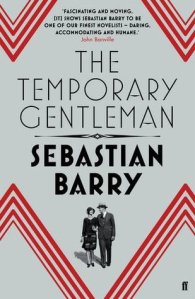
The Temporary Gentleman by Sebastian Barry

The Temporary Gentleman

“It seemed there was more cruelty than joy stored up in the human story, and kindness and comfort only rationed, and the ration book for both indeed not issued to everyone.”

The Temporary Gentleman is the third Sebastian Barry book I’ve read and I was looking forward to it, having loved both The Secret Scripture and On Canaan’s Side. Based on those two novels I knew I could expect a tragic, heartbreaking story and some beautiful, haunting writing – and that’s exactly what I got. Whenever I read a book by Sebastian Barry I am impressed by how much care he gives to each and every sentence, always searching for the perfect word or phrase to use. He can make the most ordinary, mundane things sound poetic and magical.

This is the third, I think, of Barry’s novels to focus on members of the McNulty family. The first, which I haven’t read yet, is The Whereabouts of Eneas McNulty and the second is The Secret Scripture, which tells the story of Roseanne, Tom McNulty’s wife. This new book, The Temporary Gentleman, is narrated by Jack McNulty, the brother of Tom and Eneas. They are all standalone novels and I don’t think they need to be read in any particular order, but I do like the fact that they are all loosely connected.

As an Irishman whose commission in the British Army during the Second World War is not permanent, Jack McNulty is the ‘temporary gentleman’ of the title. In 1957, sitting in his lodgings in Accra, Ghana where he lives alone with only his houseboy, Tom Quaye, for company, Jack begins to write his memoirs. He remembers his early days in Ireland and his first meetings with his future wife, Mai Kirwan. He reflects on the reasons why their relationship became strained and their marriage began to disintegrate. And he thinks of the mistakes he has made and the terrible impact of alcohol on both his own life and the lives of his family. Occasionally we return to the present where we learn a little bit about the political situation in 1950s Ghana, but the majority of the novel is devoted to Jack and Mai’s troubled marriage.

This is such a sad story, made even sadder by the fact that Jack does truly love Mai and although he can see that he is ruining his life and hers, he can’t stop himself from doing it. He knows he has made bad decisions and that he is to blame for the tragic outcome of those decisions – and yet he seems incapable of trying to put things right. Jack is not the most pleasant of people but even while I felt frustrated and angry with him, it was still possible to feel a bit of sympathy for him at times. I was also intrigued by Mai’s character, particularly because we only see her through Jack’s eyes and never have a chance to hear her point of view. It would have been interesting to have been able to read the same story from Mai’s perspective – I would love to know how she really felt about Jack and his actions.

As usual with a Sebastian Barry novel, I found that I was constantly marking lines and passages that I loved and as usual, if I started to quote them here I would have to quote almost the whole book. But despite the gorgeous writing I didn’t like this book quite as much as The Secret Scripture or On Canaan’s Side, maybe because Jack causes so many of his problems through his own behaviour and I didn’t feel as desperately sorry for him as I did for Roseanne McNulty or Lilly Dunne. I also felt that the Ghana sections of the novel added very little to the story. Still, this book was worth reading for the beauty of the writing alone. While I’m waiting for Sebastian Barry’s next novel I would like to go back and read his other books on the McNulty and Dunne families that I haven’t read yet.

I received a copy of this book from NetGalley for review.
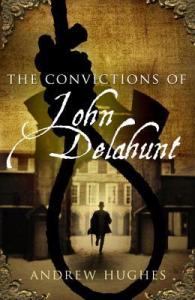
The Convictions of John Delahunt by Andrew Hughes

The Convictions of John Delahunt Imagine you’re a poor student at Dublin’s Trinity College in the 1840s. You’re newly married and living with your wife in a squalid tenement, cut off from friends and family. The future looks bleak, so when the authorities at Dublin Castle suggest that you become an informer, it seems to be the perfect solution. You will be rewarded well for any information you can give them leading to a conviction…and if you could just manage to witness a few murders, your money troubles could be over!

This is the situation in which our narrator finds himself in this wonderfully moody and sinister historical crime novel, The Convictions of John Delahunt. As the novel opens, John is sitting in a prison cell awaiting his death. We’re not sure exactly what he has done, except that it appears to involve the murder of a child. As he begins to write his final testimony, we are taken back to the origins of John’s dangerous career as an informer and discover how and why this young student of natural philosophy has been sentenced to hang.

Andrew Hughes is also the author of a non-fiction book about the residents of Dublin’s Fitzwilliam Square, Lives Less Ordinary, and so he has been able to draw on his knowledge of the city’s history to make John Delahunt’s world feel authentic and real. Because of the circles in which Delahunt moves, the focus is on the darker side of society – workhouses, grave robbing, illegal abortions, rat-killing and laudanum addiction are all explored. Dublin’s streets and alleys, taverns and parks, courtrooms and drawing rooms are all vividly described and although the language the author uses is modern enough to be accessible and easy to read, it never feels out of place with the Victorian setting.

John Delahunt himself is an intriguing narrator, though not always entirely reliable. He is certainly not easy to like – one of his first actions in the book is to tell a lie to the police that leads to a friend being found guilty of a crime he didn’t commit – yet I could still feel for him when things didn’t go according to plan and when he saw his life beginning to disintegrate around him.

A large part of John’s story revolves around his relationship with his wife, Helen, who is another interesting character – although we never get to see things from her perspective as John is narrating in the first person. At first Helen seems to be on the same wavelength as her husband, attending a hanging with him and even helping him to compile a list of friends, family and neighbours to inform on. Later in the book she experiences a personal tragedy and after this she seems to undergo a change, though because we only see her through John’s eyes, her true thoughts and emotions are not very clear.

I loved this dark and atmospheric book and was completely gripped by John Delahunt’s fascinating story (based on true events, by the way). A word of advice to potential readers – don’t start reading it in your lunch break at work or in bed when you need to be up early the next day, as you may find that you really don’t want to put it down!

Thanks to the publisher for providing a review copy via NetGalley

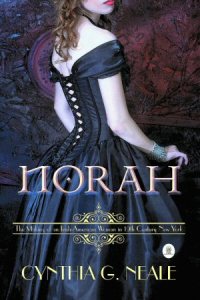
Norah by Cynthia G. Neale

Norah Norah McCabe is a young Irish woman living in Five Points, New York City in the 1850s. Having left Ireland during the Famine to come to America as an immigrant, Norah is determined to work hard and escape a life of poverty. Her first venture is a used clothing store called A Bee in Your Bonnet which she runs with her friend, Mary, but when the purchase of an expensive dress leads to them both being implicated in a murder inquiry this proves to be an unexpected turning point in Norah’s career. Offered a job as a reporter for the Irish-American newspaper, she meets a man who introduces her to revolutionary politics – and finds herself both in love and in serious danger.

Cynthia Neale has previously written two young adult books about Norah McCabe, The Irish Dresser and Hope in New York City, which tell the story of Norah’s journey to America as a teenager and her first years in her new country. This book, subtitled The Making of an Irish-American Woman in 19th Century New York, is the author’s first adult novel and continues Norah’s story. The fact that this is actually the third Norah McCabe book probably explains why from the very first chapter Norah feels like a fully developed, three-dimensional character.

I didn’t always like Norah or agree with her decisions – she can be sharp tongued, impulsive and reluctant to take advice – but she is also ambitious, courageous and resilient. Some of the terrible situations she finds herself in could possibly have been avoided, which was frustrating, but I was pleased to find that she does learn from her mistakes and continues to mature over the course of the novel. While I’m not Irish, not an immigrant and not living in 1850s New York, I could still relate to parts of Norah’s story and enjoy watching her use her wits and intelligence to overcome the obstacles that are constantly being placed in her path.

As a work of historical fiction, the background to the novel has clearly been well researched. Life in the poorer areas of New York during this period was not easy and not always very pleasant and the author doesn’t shy away from describing the violence, corruption and prejudice that Norah encounters. But this is also a book about love, about the importance of family and friends, and about what it was like to be a woman in the 19th century – a woman with dreams and ambitions and the determination to try to make them a reality.

Although the pace was slow at the beginning of the book, there was plenty of drama in the later chapters to make up for it. I found this quite an enjoyable, inspirational read and I’m pleased to have had the chance to get to know Norah McCabe.

Norah book tour

I read Norah as part of a Virtual Book Tour organised by Fireship Press, an independent publisher of historical and nautical fiction and non-fiction. For more reviews, guest posts and giveaways please see the tour schedule.

The Herbalist by Niamh Boyce

The Herbalist by Niamh Boyce The Herbalist is set in a small unnamed town in Ireland in the 1930s and tells the story of four women whose lives are affected by the arrival of a stranger – a travelling herbalist who appears from nowhere one day and begins selling his lotions and tonics in the marketplace. Nobody knows anything about the herbalist or his history and initially they are suspicious, but slowly he starts to cast a spell over the women of the town, including sixteen-year-old Emily. Lonely and vulnerable after losing her mother, Emily convinces herself that she and the herbalist are in love, but when she makes a shocking discovery she finds herself with a difficult decision to make.

Another of our main characters is Carmel, who runs a small shop in the town. Having suffered a recent tragedy, Carmel is depressed and insecure and she feels that the only person who understands is the herbalist. Her brother, a teacher, suggests she should find an assistant to help her in the shop and recommends a former student, Sarah, for the job – but how will Carmel react to Sarah’s arrival?

We also follow Sarah, who is having problems of her own. The night before she leaves home to start her new job, her beloved aunt Mai throws a party for her and something that happens at that party will have a big impact on Sarah’s future. Finally, there’s Aggie, a ‘woman of ill repute’ and a fortune-teller. Aggie is an outsider, but through watching and listening to what is going on around her she seems to know more about the herbalist than anyone else in the town. The stories of Emily, Carmel and Sarah are told in alternating chapters, with occasional contributions from Aggie, and gradually the truth about the herbalist is revealed.

I was very impressed with this book and found it hard to believe that it’s Niamh Boyce’s first novel! The writing is beautiful, the setting and the characters feel completely believable and the story itself is fascinating – inspired by true events, according to the author’s note at the front of the book.

Something I found particularly intriguing was the fact that two of the women’s stories are told in the third person (Carmel’s and Sarah’s) and two in the first person (Emily’s and – in question and answer format – Aggie’s). The only problem with this was that while Emily and Aggie both have distinctive narrative voices of their own, the other two feel very similar. One way in which the use of multiple viewpoints works very well in this novel, though, is that it allows us an opportunity to see things from the perspectives of women from different social backgrounds whose lives are confined by the class system of their small, narrow-minded community.

The herbalist himself remains a mysterious, shadowy figure and although he is at the centre of everything that is happening throughout the novel, the focus is always on the female characters and the various ordeals they are going through. I should mention that this is not a happy story and really delves deeply into the darker side of life in 1930s Ireland. I would like to be able to tell you more about some of the issues the book raises, but then I would be giving away the herbalist’s secrets!

I loved The Herbalist and hope there will be more books from Niamh Boyce in the future.

I received a copy of this book from Penguin Ireland for review.

Hungry Hill by Daphne du Maurier

“I have cursed your father tonight, and your brother, and now I curse you, John Brodrick,” he cried, “and not only you, but your sons after you, and your grandsons, and may your wealth bring them nothing but despair and desolation and evil, until the last of them stands humble and ashamed amongst the ruins of it, with the Donovans back again in Clonmere on the land that belongs to them.”

Hungry Hill Hungry Hill is the story of five generations of the Brodricks, a family of rich landowners who live at Clonmere Castle in Ireland. It begins in 1820 when ‘Copper John’ Brodrick decides to open a copper mine on Hungry Hill, land which once belonged to the Donovan family, who have been feuding with the Brodricks for many years. As soon as Morty Donovan hears about the new mine he becomes determined to destroy it and places a curse on Copper John and his descendants.

Hungry Hill, as you can probably tell from the brief summary I’ve given, is a very dark and depressing novel. Its pages are filled with deaths, accidents, illnesses and every sort of bad luck you could imagine. As we move down through the generations we meet characters such as the lazy, irresponsible ‘Greyhound John’, wild and beautiful Fanny-Rosa Flower and spoiled, selfish Johnnie, and we watch as they suffer one tragedy after another, sometimes not entirely undeserved.

It’s not unusual for a du Maurier book to be dark and depressing, but this one is particularly relentless in its portrayal of utter misery, unhappiness and despair. It’s true that most of the characters are very flawed and often bring their misfortunes on themselves (I disliked a few of them so much I wasn’t sorry at all when they came to an unpleasant end!) but it was still frustrating and painful to see them making such huge mistakes. There are also some good, decent people who become caught up in the Brodricks’ web of disaster and it’s very sad to see them suffering too.

Although this is historical fiction, the story has that strangely timeless feel that so many of du Maurier’s books have. We know that it’s the nineteenth century (dates are given in the section headings) but the historical events of the time don’t play any significant part in the novel; the potato famine, the Crimean War and other important events are barely mentioned or alluded to at all. Similarly, although it’s not difficult to work out that the book is set in Ireland, I don’t think the name ‘Ireland’ is ever specifically used – there are just vague references to ‘this country’ or ‘over the water’. This story of a cursed family could almost have been set in any time and any place. And maybe that is the point, because the themes of the novel are universal: coping with the loss of a parent or a spouse, addictions to gambling or alcohol, unemployment and poverty, and whether we have the right to spoil natural beauty in the name of progress.

This is not one of my favourite du Maurier novels and I can’t imagine that I would want to read it again – once was enough for me – but I still enjoyed it (if enjoyed is the right word for such a bleak and unhappy story). I would recommend it not just to du Maurier fans but also to anyone looking for a good, well written family saga similar to Susan Howatch’s Penmarric or Cashelmara.

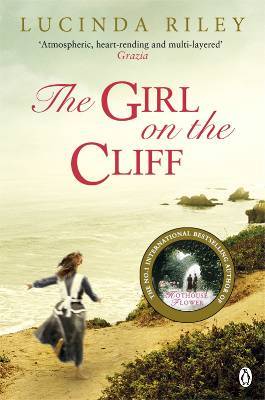
The Girl on the Cliff by Lucinda Riley

I read this book just after Christmas but it’s been one of those reviews that I’ve found difficult to write. Not because I didn’t enjoy the book, but because it was a complex story and hard to summarise or to write about without giving too much away.

The Girl on the Cliff begins in the present day and follows Grania Ryan, who has returned to her parents’ home in Ireland after having problems in her relationship with her boyfriend, Matt, in New York. One day Grania meets an eight-year-old girl, Aurora, standing on the edge of a cliff. As she gets to know the girl and her father better, Grania begins to discover how Aurora’s family, the Lisles, are connected with her own family, the Ryans.

Grania’s mother, Kathleen, is worried when she hears about her daughter’s new friends. Kathleen knows what problems the Lisles have caused for the Ryans in the past and is afraid of history repeating itself. As we go back in time, first to wartime London and then to one summer in 1970, we gradually learn the truth about the two families and why Kathleen has come to see the Lisles as enemies.

As we move through the generations, we meet lots of different characters but the most memorable is Aurora. In many ways Aurora seems much older than eight, though in others she still behaves like the child she is. Some short sections narrated by Aurora herself are interspersed with the main story, which I thought was very effective. There’s something almost otherworldly about her narration and at times I found myself wondering whether she was supposed to be a real child or some kind of ghost or fairy!

This is yet another of those novels with multiple time periods that I’ve been reading so many of recently, but this book is an example of how this structure can work very well – I found all the threads of the story equally interesting and cared about the characters in each one. So many things happen throughout the pages of this novel and I’ve only mentioned a few of them here – each time period contains its own set of surprises and secrets and I wouldn’t want to spoil anything for any future readers! I will say that the 1970s section was particularly moving and took the story in a direction I hadn’t expected at all. But whether I was reading about London in World War I or World War II, a farmhouse in rural Ireland or Grania and Matt’s fashionable loft apartment in New York, every time and location came to life.

The book wasn’t perfect – there were a few plot developments towards the end that I found difficult to believe and some parts of the story were too predictable – but there were plenty of surprising twists that I didn’t see coming and enough suspense to keep me turning the pages to see what would happen next. After enjoying this one so much, I’ll be looking out for Lucinda Riley’s next book and would also like to go back and read her previous one, Hothouse Flower.

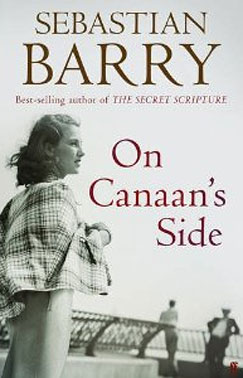
On Canaan’s Side by Sebastian Barry

“Bill is gone. What is the sound of an eighty-nine-year-old heart breaking? It might not be much more than silence, and certainly a small slight sound.”

When this year’s Man Booker Prize longlist was announced at the end of July, one of the titles that I was most looking forward to reading was this one, On Canaan’s Side. I read The Secret Scripture last year and fell in love with Sebastian Barry’s beautiful, poetic writing style. There are some similarities between The Secret Scripture and On Canaan’s Side, the most obvious one being the idea of an old woman looking back on her life, but the stories are different enough to make this book a good read too.

On Canaan’s Side is narrated by Lilly, a retired cook. At the beginning of the book she is eighty-nine years old and has just lost her beloved grandson, Bill, who has committed suicide after returning from fighting in the Gulf War. As Lilly mourns for her grandson, she begins to remember all the things that have happened in her life and over the next seventeen days she shares her memories with us.

Canaan, in the Bible, is the ‘promised land’ and the title On Canaan’s Side represents the idea that many Irish people had that America was a place where they would be safe and happy. Lilly’s story begins during her childhood in Ireland as the daughter of the superintendent of the Dublin police. She is forced to run away to America when both she and her boyfriend, Tadg Bere, find themselves the target of an IRA death sentence. However, Lilly soon discovers that even there, on ‘Canaan’s Side’, she and Tadg are still in danger. The following decades are filled with tragedy and sorrow. Lilly’s story is unbearably sad and yet her voice never becomes self-pitying; she stays a strong and resilient character until the day when her ‘eighty-nine year-old heart’ finally breaks.

At first I thought I wasn’t going to enjoy this book because the first chapter was very ‘stream-of-consciousness’ and it seemed as if it was going to be one of those novels where nothing really happens. But when I got further into the book and the story began to take shape I didn’t want to stop reading. I mentioned at the start of this post how beautifully written The Secret Scripture was and I thought Sebastian Barry’s writing was possibly even more beautiful in this book. I usually prefer books with more plot but the way Barry uses language and imagery is so stunning and mesmerising, the slow pace of the story didn’t bother me.

And it’s really not true that nothing happens: there’s murder, rape and suicide, for a start. Other themes include war (both World Wars, Vietnam and the Gulf War) and how it’s possible to survive a war physically but not mentally; identity and how sometimes we can live with people for years without really knowing who they are; important events in Irish and American history; racial tensions; love and loss.

I loved this book and although it was slow to begin with, I was soon swept away by the quality of Barry’s writing and the atmosphere his words convey. I haven’t read his previous books Annie Dunne and A Long, Long Way but as they are about Lilly’s sister and brother I really should read them soon.