The Second Duchess by Elizabeth Loupas

The Second Duchess The Second Duchess is a fascinating historical novel set in Renaissance Italy and narrated by Barbara of Austria, the second wife of Alfonso d’Este, the Duke of Ferrara. The recent tragic death of the Duke’s first Duchess, Lucrezia de’ Medici, has never been satisfactorily explained and many people think she may have been murdered by the Duke himself. Listening to these rumours, Barbara doesn’t know what to believe. Determined to discover the truth she decides to investigate, but it seems that whoever killed Lucrezia doesn’t like Barbara asking questions. Will Alfonso’s second duchess meet the same fate as his first?

Although the back cover of this book promised “conspiracy, intrigue and murder”, I was still surprised that the story had such a strong mystery element. I have never read anything about Lucrezia de’ Medici’s death before and enjoyed watching Barbara trying to piece the facts together. Despite the gossip suggesting that Lucrezia was poisoned by the Duke, Barbara soon discovers that there are plenty of other people at court and beyond who may also have wanted the first duchess dead. With lots of possible suspects and clues that are only revealed slowly throughout the novel, it’s not easy to guess the truth. Today historians believe Lucrezia probably died of natural causes, but the mystery Elizabeth Loupas weaves around her death feels plausible and makes a great story!

I think another of the things I liked about this book was that the ‘romance’, if you can even call it that, is very subtle and understated. At twenty-six, Barbara has a mature and realistic outlook on life and she is aware that her marriage has been made for political reasons. She doesn’t expect to instantly fall in love with Alfonso and is prepared to work at their relationship, trying to get to know and understand him. Of course, this would be a lot easier if she could just find out whether or not he’s a murderer! Barbara is portrayed as an intelligent and courageous woman, not beautiful like Lucrezia but with a grace and dignity of her own, and never seeming too modern or out of place in a sixteenth century setting.

Alfonso, Duke of Ferrara is an intriguing character and I could never quite decide whether I liked him or not. He commits an act of violence near the beginning of the book that made me think not, but as the story progressed I started to have more respect for him. Both Barbara and the Duke feel like realistic people of their time period and don’t always behave as we might like them to behave, but I actually found that very refreshing as so many authors try to give modern day sensibilities to their historical characters. As for Lucrezia, although she is dead before the novel begins, she is still a very strong presence and we do have the opportunity to hear her point of view – in a very unconventional way. Lucrezia’s passionate, vengeful voice contrasts nicely with the style of Barbara’s narration and gives us a different perspective on the story.

I also loved all the descriptions of the court of Ferrara: the clothes, the food, the interiors of the churches and palazzi, the hunts, banquets and pageants – I particularly liked reading about the Festival delle Stelle with costumes and mechanical devices representing the signs of the Zodiac. Finally, I should mention that this novel is inspired by Robert Browning’s poem, My Last Duchess. The poem is included at the end of the book and I recommend reading it as it adds another layer to the story. I also found it interesting to search for more information and pictures of the main characters in the novel after I finished reading, as they are all historical figures I previously knew nothing about. Portraits of the beautiful young Lucrezia, the dark, enigmatic Duke, and our heroine Barbara can all easily be found online.

I enjoyed The Second Duchess and really liked the way Elizabeth Loupas writes, which is maybe not surprising as she lists two of my favourite authors (Mary Stewart and Dorothy Dunnett) among her influences. This is the first of her books that I’ve read but I’ll certainly be looking out for her others.

I received a copy of this book from the publisher for review.
Turn of the Century Salon: A Room with a View by E.M. Forster

Turn of the Century Salon - February
This year I am participating in a Turn of the Century Salon hosted by Katherine of November’s Autumn. The idea of this is to read books published around the turn of the century – between the late 1880s and the early 1930s. While I do seem to have read more books from this period than I initially thought, there are still a huge number of turn of the century authors whose work I haven’t explored yet and E.M. Forster was one of those that I was most looking forward to trying for the first time.

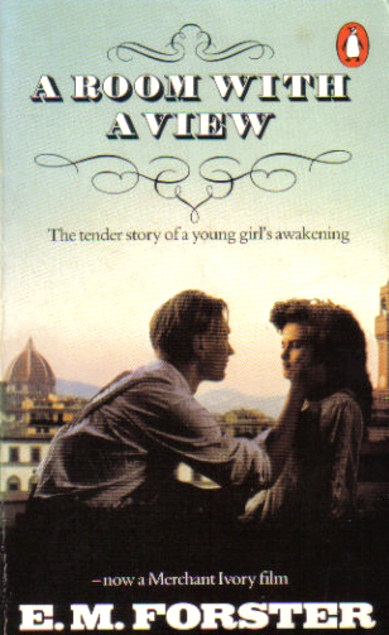
A Room with a View is the story of Lucy Honeychurch who we first meet on a trip to Italy with her cousin, Charlotte Bartlett. Lucy and Charlotte have just arrived at the Pension Bertolini in Florence and are disappointed to find that they have been given rooms with no view of the River Arno. Two of the other English guests – a Mr Emerson and his son, George – hear them complaining and immediately offer to exchange rooms, but instead of accepting their generous offer, the rules of Edwardian society mean that Charlotte is shocked and offended by what she considers their inappropriate behaviour. During the rest of their time in Florence, Charlotte and the other middle-class English tourists dismiss the Emersons as bad-mannered and socially unacceptable but Lucy has several more encounters with them and is intrigued by their different outlook on life.

A Room with a View Back in England, their paths cross again when the Emersons move into a cottage in Lucy’s village not far from the Honeychurch home, Windy Corner. Lucy is now engaged to Cecil Vyse, a cold, pretentious man she doesn’t really love, but who is considered to be a suitable husband for her. But with George Emerson living nearby Lucy must decide whether to be true to her heart even if it means breaking the social conventions of the time.

As this is the first E.M. Forster book I’ve read, I didn’t know what to expect so I was pleased to find it was much easier to read than I had been afraid it might be. I loved the wit and warmth of Forster’s writing and I enjoyed watching Lucy’s slow development from a young woman who allows other people and society in general to dictate how she should think and behave to one who finds the courage to be herself and live her life the way she wants to live it.

The beginning of the book with the portrayal of the English in Italy made me think of The Enchanted April by Elizabeth von Arnim and as for the descriptions of Italy itself, they were beautiful and vivid:

At the same moment the ground gave way, and with a cry she fell out of the wood. Light and beauty enveloped her. She had fallen on to a little open terrace, which was covered with violets from end to end.

“Courage!” cried her companion, now standing some six feet above. “Courage and love.”

She did not answer. From her feet the ground sloped sharply into view, and violets ran down in rivulets and streams and cataracts, irrigating the hillside with blue, eddying round the tree stems collecting into pools in the hollows, covering the grass with spots of azure foam. But never again were they in such profusion; this terrace was the well-head, the primal source whence beauty gushed out to water the earth.

Forster has a sense of humour as well; the dialogue is often quite funny and he puts his characters into some amusing situations. I also loved the character names and the chapter titles (especially Chapter Six – “The Reverend Arthur Beebe, the Reverend Cuthbert Eager, Mr. Emerson, Mr. George Emerson, Miss Eleanor Lavish, Miss Charlotte Bartlett, and Miss Lucy Honeychurch Drive Out in Carriages to See a View; Italians Drive Them.”)

Published in 1908, A Room with a View was a perfect book to choose for the salon as it really does epitomise turn of the century society and a gradual move away from Victorian values into a freer, less socially constrained twentieth century.

Which of E.M. Forster’s other books should I read next?

The Master of Verona by David Blixt

The Master of Verona by David Blixt The Master of Verona is set in Northern Italy in the early 14th century. At the beginning of the novel the great poet Dante Alighieri, after years of exile from Florence, has been invited to the city of Verona by its ruler, Francesco della Scala, known as Cangrande. Dante and his two sons, Pietro and Jacopo, arrive in Verona at a turbulent time for the city; not only has war broken out with Padua, but Cangrande’s heir, Cesco, has been the target of an assassination attempt.

When seventeen-year-old Pietro impresses Cangrande with his courage and loyalty, he becomes caught up in Verona’s battles with Padua and is also entrusted with trying to help protect the life of baby Cesco. As if this wasn’t enough, Pietro’s two best friends, Mariotto Montecchio and Antonio Capecelatro have both fallen in love with the same girl and an ancient feud between their two families looks set to be reignited…

This was one of the final books I read in 2012 and I finished it just in time for it to make my list of favourite books of the year. It has taken me a while to actually write this post as there’s so much going on in the novel and so many different aspects to the story, it’s difficult to know where to begin! First, there’s a link with Romeo and Juliet; although this is not a retelling of Shakespeare’s play, Blixt suggests a possible theory to explain how the feud between the Montagues and Capulets may have originated. I noticed allusions to some of Shakespeare’s other plays too, but the story could still be understood and enjoyed even if you have no knowledge of Shakespeare at all as this is just one small element of the novel.

The plot does become quite complicated and some concentration is needed at first to keep all the characters straight, especially as many of them are also referred to by their titles or nicknames (Cangrande, for example, is sometimes referred to as Francesco della Scala, the Scaliger, the Greyhound or the Capitano). However, I never had any problems understanding what was happening and could even manage to follow the battle scenes! This is a great book for those of us who like our historical fiction novels long, detailed and complex but with plenty of action at the same time. There’s always something happening, whether it’s a battle, a chase, a festival or a duel. One of the most memorable episodes of the story describes Pietro’s participation in the Palio, a dramatic horse race through the streets of Verona. It’s all breathtakingly exciting and makes the book a much quicker read than you might expect considering the length of it.

But it’s not all non-stop action; in quieter moments, the characters have lots of discussions on religion and philosophy, mainly with reference to Dante’s work – the concepts of Heaven and Hell, the significance of stars, etc – which made me wish I had actually read Dante so I knew what they were talking about! He is definitely on my list now for future reading. There are also some fascinating passages in which we see the 14th century literary world of booksellers and scribes through the eyes of Dante’s daughter, Antonia Alighieri.

Many of the characters in the book are real historical figures of the period. Cangrande, the ‘Master of Verona’ who is believed by some to be the legendary ‘Greyhound’ or saviour of Italy, is fascinating and charismatic, a complex character with several different sides to his personality. As all good historical fiction novels should, this book left me wanting to know more about the real life Cangrande. Dante himself is someone I have never read much about, so knowing very little about his life, I have no idea how accurately he was portrayed in this book. The spelling Alaghieri is sometimes used in place of Alighieri but the author explains his reasons for this both in the text of the story and in his notes at the end of the book, and again, I don’t really have enough knowledge of Dante to be able to comment on this. There are some strong and interesting female characters in the book too: I’ve already mentioned Antonia, but there’s also Katerina della Scala, Cangrande’s sister. And even little Cesco, despite being not much more than a baby, has a very strong personality of his own.

The only negative thing I can say about this book is that the dialogue felt a bit too modern at times (I’m sorry for mentioning this yet again – I feel as if I’ve been complaining about the dialogue every time I’ve reviewed historical fiction recently!) but luckily I was enjoying the story so much I could overlook the occasional word that didn’t sound right.

This book is the first in a series and I’m already looking forward to reading the second one, Voice of the Falconer!

The House of the Wind by Titania Hardie

The House of the Wind is a novel consisting of two storylines, one set in the present day and one in the 14th century. In 2007 we meet Madeline Moretti, a young lawyer living in San Francisco. Maddie is grieving for her fiancé, Chris, who has been killed in a car accident. She is also involved in a complicated legal case involving a large company suspected of putting the health of their employees at risk. In an attempt to help Maddie cope with her bereavement away from the stresses of her job, her Italian grandmother arranges for her to spend some time in Italy with a family friend. When Maddie arrives in Tuscany she becomes intrigued by the legend of the Casa al Vento, or House of the Wind, which tells of a woman who emerged unscathed from the ruins of a house destroyed by a storm.

The second main thread of the novel is set in the same area of Tuscany in the year 1347, a time when a mysterious and deadly disease is spreading across Europe. Maria Maddalena, known as Mia, has been raised by her Aunt Jacquetta and hasn’t spoken since her mother’s tragic death. When two young pilgrims come to stay at Jacquetta’s house, Mia slowly begins to find her voice again and at the same time makes some surprising discoveries about her past.

The House of the Wind is the first book I’ve read by Titania Hardie. I thought her writing was beautiful and whether I was reading about 14th century Tuscany or modern day California I was able to become completely immersed in the time and place. I also liked the way so many different elements of myths and legends, religion, poetry, medieval medicine, arts and literature were incorporated into the story.

The obvious similarity between Maddie’s story and Mia’s is that they are both young women trying to deal with their pain and grief (more than six centuries apart) but there are lots of other connections between the two and these are slowly revealed to us as the novel progresses. Although both of the storylines were engaging, I found I was much more interested in the 14th century one and it was fascinating to learn what life was like in Tuscany during that period. However, I’ve read a lot of books with dual timeframes and it seems to be almost inevitable that I’ll like one more than the other (usually the historical one due to my love of historical fiction). I expect there will be plenty of other readers who prefer the present day storyline!

The only problem I had with this book was that the pace was too slow for me in places and there were times when I felt the plot wasn’t moving forward at all, which made the book feel longer than it needed to be. Other than that, I enjoyed The House of the Wind and as I haven’t read Titania Hardie’s previous novel, The Rose Labyrinth, I still have that one to look forward to.

I received a copy of this book from Headline for review

The Flight of the Falcon by Daphne du Maurier

Having read most of Daphne du Maurier’s more popular books I’m now slowly working through her lesser known novels (though I’m saving Frenchman’s Creek for last as I’m expecting to love that one and want to have something to look forward to). Published in the 1960s, The Flight of the Falcon was one of her final novels and although I didn’t think it was one of her best, I did still enjoy it. If you’re new to du Maurier I would recommend reading some of her other books first, but this one is definitely worth reading too.

Our narrator, Armino Fabbio, works for Sunshine Tours and at the beginning of the book he is showing a group of British and American tourists the sights of Rome. By chance he becomes indirectly involved in the murder of an elderly peasant woman, who he believes he recognises as his childhood nurse, Marta. Deciding to visit Ruffano, the town of his birth, in an attempt to find out what had happened to Marta, Armino begins to uncover some shocking family secrets.

After Armino’s arrival in Ruffano (which is based on the real Italian city of Urbino), the story begins to revolve around the city’s university and the rivalry between the Arts students and the Commerce & Economics students. The battle between these two groups reaches its climax during the preparations for a festival re-enacting the final moments of the city’s fifteenth-century ruler, the evil Duke Claudio – also known as The Falcon.

As I think I’ve said every time I’ve written about a du Maurier book, one of the things I love most about her writing is the atmosphere she creates. In The Flight of the Falcon she succeeds in making Ruffano, with its medieval streets, historic churches and ducal palace, seem beautiful and picturesque but claustrophobic and forbidding at the same time. Whether she’s writing about Cornwall, Italy, France or any other part of the world, her settings always feel vivid and real.

Not everything about this book worked for me, though. I found I didn’t really care about the university politics and rival student groups, which formed such a big part of the plot. I was much more interested in Armino’s personal story. Armino himself is not the strongest of characters, but I was fascinated by his relationship with his elder brother, Aldo. And I hadn’t realised how many of du Maurier’s novels have male narrators! My Cousin Rachel, The Scapegoat, The House on the Strand, I’ll Never Be Young Again and now this one. Are there any others?

In October, Simon from Savidge Reads and Polly of Novel Insights are hosting a ‘Discovering Daphne’ season, so if you still haven’t read any of Daphne’s books that could be a good time to start.

The House by the Sea by Santa Montefiore

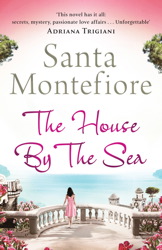
The House by the Sea is the first book I’ve read by Santa Montefiore. The novel consists of two alternating stories, one set in present day England and the other in Italy several decades earlier. The Italian storyline begins in 1966 with Floriana, a ten-year-old girl who lives with her drunken father in a small village in Tuscany. Looking over the crumbling wall of a beautiful villa by the sea, Floriana comes face to face with seventeen-year-old Dante, whose parents own the house. Floriana dreams of one day marrying Dante and escaping from her lonely, miserable life but unfortunately things don’t go exactly as she planned.

In 2009 we meet Marina, a woman in her fifties who runs a hotel on the Devon coast. The hotel is in financial difficulties and in an attempt to save her struggling business, Marina advertises for an ‘artist-in-residence’ to spend the summer at the hotel teaching guests to paint. And so Rafa Santoro, an artist from Argentina, arrives in Devon and proves to be a big success – particularly with Marina’s stepdaughter, Clementine. But as Clementine begins to fall in love with Rafa, she starts to suspect that he may be hiding something.

What is Rafa’s secret? And what is the link between Floriana’s story and Marina’s? At first I had no idea; I couldn’t understand how the two could be connected. Eventually, though, the answers to these questions started to become clear – and there were a few other interesting sub-plots which also kept me guessing. I found myself completely engaged with both threads of the book. We spend quite a lot of time in each period before switching back to the other one, long enough to really get to know the characters and become absorbed in their lives. All of the characters were interesting to read about, even Clementine, who spent most of the book being completely annoying and irritating.

I thought Montefiore did a wonderful job of bringing two such different locations to life. The Devon chapters, with descriptions of cream teas, fishing trips and the office where Clementine works, have a very ‘English’ feel, while the Tuscan sections conjure up the sights and sounds of Italy. I loved both, though the Italian one felt particularly vivid and magical.

I really enjoyed this book and would be happy to read more books by Santa Montefiore, definitely. With mystery, romance, beautiful settings and well-developed characters, The House by the Sea proved to be a perfect summer read!

I received a copy of this book for review from Simon & Schuster

Virago Reading Week: The Enchanted April by Elizabeth von Arnim

This is my second post for Virago Reading Week, hosted by Rachel of Book Snob and Carolyn of A Few of My Favourite Books. When I was choosing my books for this week, I knew it was time to try something by Elizabeth von Arnim, a writer whose work I had never read but who seems to be one of the most popular and most loved Virago authors.

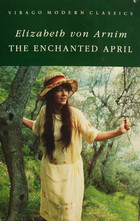
The Enchanted April, first published in 1922, is the story of four women who rent a castle in Italy together one April. The women are strangers to each other at the beginning of the novel, but each of them has her own reasons for wanting a holiday. Spending a month at San Salvatore surrounded by sunshine and flowers gives each woman a chance to resolve her problems and try to find happiness.

Our four main characters have very different personalities and very different circumstances. First, there’s Lotty Wilkins who has grown tired of having her life controlled by her husband and is desperate to escape from him for a while. Calm, grave Rose Arbuthnot has the opposite problem: her husband is so wrapped up in his career that he barely remembers she exists:

To be missed, to be needed, from whatever motive, was, she thought, better than the complete loneliness of not being missed or needed at all.

Then there’s Lady Caroline Dester, also known as ‘Scrap’, who is bored with her life and just wants to be left alone. And finally there’s Mrs Fisher who, at sixty-five, is older than the others, and spends most of her time reminiscing about the past.

The story begins when Lotty and Rose meet for the first time in a Women’s Club in London one rainy afternoon and decide to respond to an advertisement in The Times:

To Those Who Appreciate Wistaria and Sunshine: Small mediaeval Italian Castle on the shores of the Mediterranean to be Let furnished for the month of April. Necessary servants remain. Z. Box 1000, The Times.

How could anyone resist answering an ad like that? However, they need to find another two ladies to help share the cost and this is where Lady Caroline and Mrs Fisher come into the story. All four of the female protagonists are interesting, complex people and I enjoyed seeing how they were transformed by their time in Italy. I think my favourite was probably Lady Caroline. She’s tired of being surrounded by people who only care about her looks and money and throughout the novel she attempts to keep her companions at a distance – but as the reader, we are given an insight into her mind and can understand her unhappiness.

People were exactly like flies. She wished there were nets for keeping them off too. She hit at them with words and frowns, and like the fly they slipped between her blows and were untouched. Worse than the fly, they seemed unaware that she had even tried to hit them. The fly at least did for a moment go away. With human beings the only way to get rid of them was to go away herself.

I’m so glad my first experience with von Arnim was a good one. I hadn’t expected something so readable and full of gentle humour and wit and yet with so much depth and such a lot of character development. I also loved the setting and the atmosphere. The images of Italy in the spring were beautifully described, with the sun shining and the flowers bursting into bloom. I defy anybody to read this story and not want to immediately book a trip to Italy this April!

As the title suggests, The Enchanted April is a lovely, enchanting story! After enjoying this one so much, I’ll definitely be reading more of Elizabeth von Arnim’s books – any suggestions as to which one I should read next?