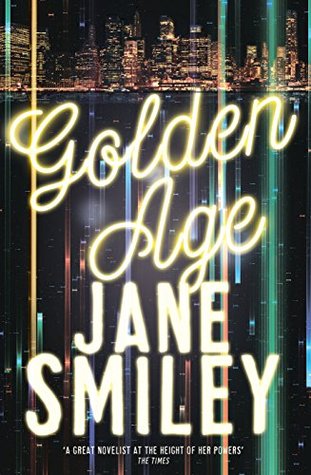
 This is the final book in Jane Smiley’s Last Hundred Years trilogy which follows the lives of one American family, the Langdons, throughout the twentieth century and beyond. Although I did enjoy the trilogy as a whole, I’m also very pleased to have reached the end of it – the three books are so long there were times when I felt I’d been reading them for a hundred years!
Golden Age is written in the same format as the first two volumes, with one chapter devoted to each year. Beginning in 1987 this time, we are taken right through to 2019. As the book was published in 2015, this means that the final few chapters are set in Jane Smiley’s future – not far enough into the future to feel like science fiction, but things definitely become slightly dystopian as the rate of climate change rapidly increases to an alarming level, creating dry, dusty landscapes and water shortages. She doesn’t correctly predict Donald Trump’s presidency, but then, I don’t think there are many people who would have seen that coming.
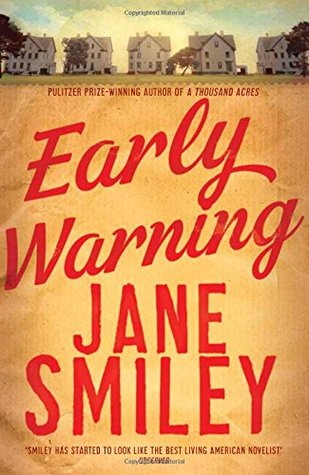
I started reading Golden Age shortly after finishing the previous novel, Early Warning, which was a good idea as the Langdon family tree is now enormous with four or five generations all living at the same time. Some of the characters have been with us from the beginning – Henry, Claire and Andy are still around and I enjoyed catching up with them again – but I found it difficult to keep track of the younger characters (even with the family tree to refer to) and even more difficult to form any kind of connection with them. There were just too many new people to get to know and not enough time devoted to any of them.
For the same reason, it would be impossible for me to mention everything that happens in the book here, but a few storylines that stood out were: the continuing rivalry between twins Richie and Michael as one becomes a politician and the other begins to speculate on Wall Street; Joe’s son, Guthrie, leaving the Langdon farm in Iowa to go and fight in Iraq; Andy’s amazing strength in the face of betrayal and her willingness to embrace new technology in her old age; and Henry, who thought he was destined to grow old alone, finding late in life that he is wanted and needed after all.
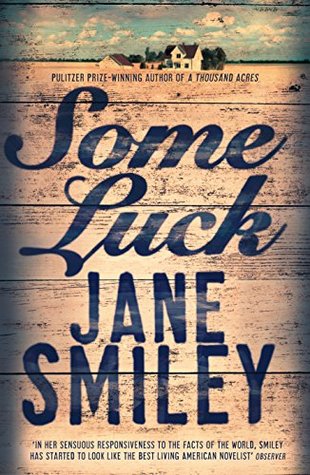
I don’t regret reading the whole of this trilogy as I did enjoy getting to know at least some of the family members and learning some American history along the way (even if a lot of the politics in this one did go over my head), but I also thought the three books became progressively less engaging and less enjoyable as the geographical scope grew wider and the distance between reader and characters increased. If you think you might be interested, I would strongly recommend starting at the beginning with Some Luck and deciding whether you like it enough to want to continue.

 She Reads Novels