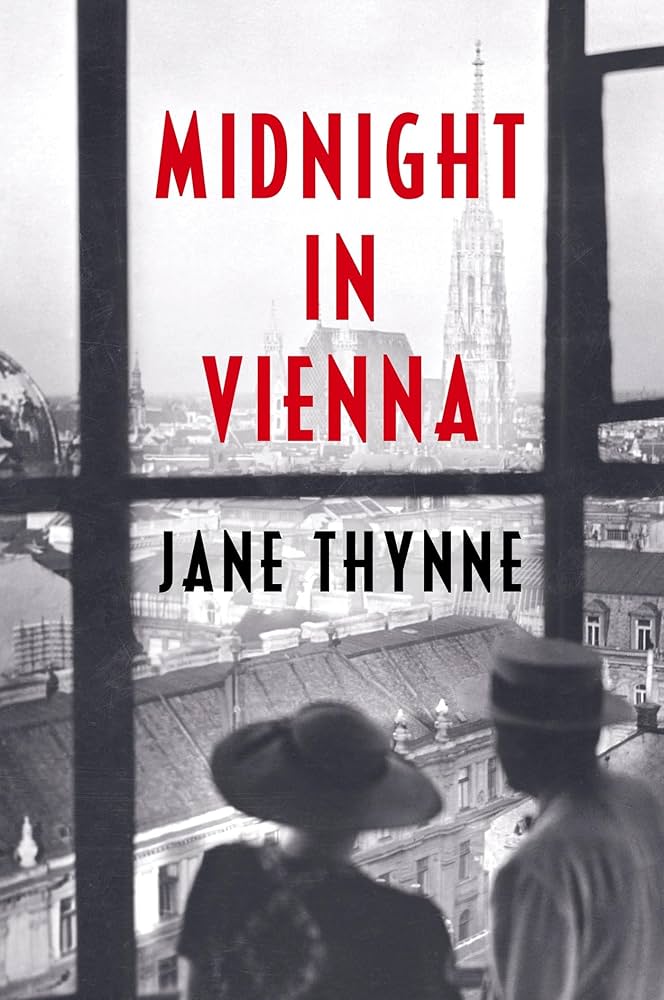
 This is a sequel to Jane Thynne’s Midnight in Vienna, which I read in 2024 and enjoyed. That book was set just before the beginning of the Second World War and followed two characters – former MI5 spy, Harry Fox, and a gifted linguist, Stella Fry – who team up to look into the suspicious death of a famous crime writer. Appointment in Paris brings Harry and Stella together again to investigate a second murder, but this one is a separate mystery so if you haven’t read the first book yet, it’s not completely essential.
The novel opens in April 1940 at Trent Park, a country house in Cockfosters, north London. The house has been requisitioned by the government as a facility for holding captured German pilots who have no idea that their rooms are bugged with microphones while a team of ‘listeners’ eavesdrop on their conversations. One night, a man in a Luftwaffe captain’s uniform is found dead in the grounds and the next morning, it’s discovered that one of the listeners has disappeared. Assuming that the missing man killed the German captain and then fled, the people in charge are desperate to catch him in case he gives away any of Trent Park’s secrets. This is where Harry and Stella come in…
Since the events of the previous novel, Stella Fry has settled into a new job making documentaries for the GPO Film Unit and is not very happy when she’s summoned by Maxwell Knight of MI5 who orders her to go and work at Trent Park as a listener. Stella is reluctant to go but her fluency in German and the fact that the suspected killer is an old friend from her university days means she’s the ideal choice to go undercover and try to find out what really happened. Meanwhile, Harry Fox has also been given orders by Knight – his mission is to stay in London and look for any information that could lead them to the missing man.
I enjoyed Appointment in Paris just as much as the first book, although I would have liked to have seen Harry and Stella working together more closely – they have very separate storylines in this book and their paths only cross occasionally. Stella’s story was the one that interested me most. I loved learning more about Trent Park and the work of the listeners, many of whom were German-Jewish refugees who had fled persecution and were assisting the British war effort. It was an emotionally difficult, often unpleasant job as the listeners would overhear all kinds of disturbing conversations between the German prisoners. As the title suggests, Stella’s investigations eventually take her to Paris, where she meets Noël Coward, who is running Britain’s Bureau of Propaganda. Although most of the characters in the book are fictional, inserting a real person here didn’t feel too forced or unnatural, especially as Coward had already been referenced several times via Stella’s actress friend, Evelyn, who is performing in one of his plays.
As she does in the previous novel, Thynne evokes the time period perfectly, describing the mood of the public during the eight months known as the Phoney War and how things abruptly changed in May 1940 with the invasion of France, Belgium, Luxembourg and the Netherlands, and the increased threat to Britain. It’s the little details that give the novel its colour – people hurrying home earlier than usual in the evenings because the blackout made it difficult to walk in the dark; newspapers shrinking in size because Scandinavian pulp supplies had been cut off; Parisian waiters taking payment before serving food because they are often interrupted by air raid sirens and the patrons forget to pay. The strong sense of time and place makes everything feel real and convincing.
Having enjoyed both books about Stella and Harry, I’m now hoping there’s going to be a third. The way this one ended definitely made me think that there will be – and as we’re still in 1940, there’s a lot more of the war to cover. I would also like to read some of her earlier novels, which also sound interesting.
Thanks to Quercus for providing a copy of this book for review via NetGalley.

 She Reads Novels