My commonplace book: January 2016

commonplace book
Definition:
noun
a notebook in which quotations, poems, remarks, etc, that catch the owner’s attention are entered

Collins English Dictionary

~

A summary of this month’s reading, in words and pictures.

~

I hated the mountains and the hills, the rivers and the rain. I hated the sunsets of whatever colour, I hated its beauty and its magic and the secret I would never know. I hated its indifference and the cruelty which was part of its loveliness. Above all I hated her. For she belonged to the magic and the loveliness. She had left me thirsty and all my life would be thirst and longing for what I had lost before I found it.

Wide Sargasso Sea by Jean Rhys (1966)

~

Roger had learned from Mr. Gray that this particular kind of rhododendron was called Ponticum, so the secret hiding-place was called Ponticum House. It was used for all sorts of activities and gradually it was furnished with odds and ends of furniture.

Amberwell by D.E. Stevenson (1955)

~

There was the rub: that Julia, who could get intimate with a trapeze artist after five minutes’ conversation – who was intimate with a salesman after buying a pair of shoes – had talked for an hour to her own daughter, about the girl’s own father and lover, without the least intimacy at all.

“I’m a fool,” thought Julia, again. “It’s just because she’s such a perfect lady. And what I need is a good sleep.”

The Nutmeg Tree by Margery Sharp (1937)

~

So fine was the morning except for a streak of wind here and there that the sea and sky looked all one fabric, as if sails were stuck high up in the sky, or the clouds had dropped down into the sea. A steamer far out at sea had drawn in the air a great scroll of smoke which stayed there curving and circling decoratively, as if the air were a fine gauze which held things and kept them softly in its mesh, only gently swaying them this way and that.

To the Lighthouse by Virginia Woolf (1927)

~
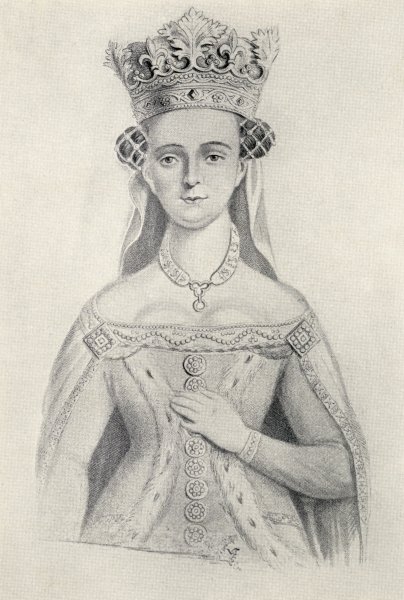
Come, Joanna. I can wait no longer.

There it was, Henry’s declaration, as clear as my reflection in my mirror. Neither, I decided, could I wait.

I sent for my uncle of Burgundy. I had an urgent negotiation to undertake.

The Queen’s Choice by Anne O’Brien (2016)

~

Meantime, all around me is violence and robbery, coarse delight and savage pain, reckless joke and hopeless death. Is it any wonder that I cannot sink with these, that I cannot so forget my soul, as to live the life of brutes, and die the death more horrible because it dreams of waking? There is none to lead me forward, there is none to teach me right; young as I am, I live beneath a curse that lasts for ever.

Lorna Doone by R.D. Blackmore (1869)

~

“It is the women who lay clothes to dry on the rooftops of Troy,” I continued. “It is the fishermen who catch the silver fish in the bay,” I gestured out over the plain towards the sea, sparkling blue in the sunlight, “and sell them on the stalls of the marketplace. It is the princes who live in the palaces on the windy heights of the city, and the slaves who draw water from the wells. This, my king – this is Troy. And if we act now, we may still be able to save our city before it is too late.”

For the Most Beautiful by Emily Hauser (2016)

~

The desolation struck me like a blow, fresh and painful, as if all this destruction had been newly made yesterday, and as if this were my first sight of it. It was grief, I think, nothing more or less. I knew it was absurd. But I had noticed this reaction in others as well as in myself: that we mourned for our ravaged city as if for a mother.

The Ashes of London by Andrew Taylor (2016) – Review to follow

~

“And you cannot move at all in Time, you cannot get away from the present moment.”

“My dear sir, that is just where you are wrong. That is just where the whole world has gone wrong. We are always getting away from the present moment. Our mental existences, which are immaterial and have no dimensions, are passing along the Time-Dimension with a uniform velocity from the cradle to the grave. Just as we should travel down if we began our existence fifty miles above the earth’s surface.”

The Time Machine by H.G. Wells (1895)

~

Favourite books this month: Lorna Doone and Amberwell

Wide Sargasso Sea by Jean Rhys

Wide Sargasso Sea After finishing a re-read of Jane Eyre recently, I decided that my next read would have to be Wide Sargasso Sea by Jean Rhys, a book inspired by Charlotte Brontë’s classic novel and which I’ve seen described both as a prequel and a reimagining. I don’t read this type of book very often as I prefer to keep my feelings for the originals intact, but this one, published in 1966, is now considered a classic in itself and I wanted to find out why.

As I started writing this review it occurred to me that it would be impossible to discuss Wide Sargasso Sea in any meaningful way without giving away some of the secrets revealed in Jane Eyre and spoiling the Brontë novel for anyone who hasn’t read it yet. I will assume that if you’re reading this post you’re already familiar with Jane Eyre, so consider this your spoiler warning!

Wide Sargasso Sea is the story of Mr Rochester’s first wife, Bertha, the ‘madwoman in the attic’. In Jane Eyre, we learn that Rochester was sent by his father to Jamaica where he met the Mason family and married Bertha, a beautiful Creole heiress. Rochester explains that he was unaware of the madness running in Bertha’s family and the fact that her mother was not dead, as he had first believed, but had actually been locked away in an asylum. When Bertha’s own behaviour begins to worry Rochester, he brings her home to England and Thornfield Hall, where he has her imprisoned in an attic room under the care of a servant, Grace Poole.

Jane Eyre only shows us one side of the story: Rochester’s. In Wide Sargasso Sea, Jean Rhys gives a voice to Bertha (or Antoinette Cosway, as she is known here). The first part of the novel, narrated by Antoinette herself, describes her childhood in 1830s Jamaica, just after the Emancipation Act has ended slavery across the British Empire. Antoinette’s own father made his fortune through slavery and since his death the family have remained on their crumbling plantation, Coulibri, where as white Creoles they are isolated and shunned by the freed black slaves and their rich white neighbours alike. As the years go by and Antoinette’s mother descends into mental illness, her stepfather, Mr Mason, announces that friends from England are coming to visit…

In the middle section of the book, we switch to Rochester’s point of view (although he is not actually named in the novel, it’s clear who he is supposed to be) and he relates in his own words the story of his marriage to Antoinette, whom he renames Bertha, and his views on the deteoriation of her mental health. The final, shortest section is set at Thornfield Hall and takes us through the familiar events of Jane Eyre.

I was quite disappointed with this book, if I’m going to be completely honest. Yes, it’s beautifully written but I found the dreamlike, disjointed narrative slightly difficult to follow and while I could sympathise with Antoinette’s situation, I never felt fully engaged with her on an emotional level. I realise that the writing style was probably intended to unsettle and disorientate the reader, but I just didn’t like it. Luckily, my lack of love for this novel has not affected my memories of Jane Eyre or its characters – not even Mr Rochester, despite the negative portrayal, mainly because the character in this novel just doesn’t feel at all like Brontë’s Rochester (not even his ‘voice’ sounds the same).

Wide Sargasso Sea is a short novel (I was surprised when I discovered just how short it was) but it’s also a complex one with lots of layers, symbolism and important themes – including slavery, colonialism, mental illness, race and gender – and I can see why it’s a book that has come to be widely studied in schools and universities. I can recommend the Penguin Modern Classics ‘Annotated Edition’ as an excellent choice for students or anyone who wants to study the story and its background in more depth. There’s an introduction, notes at the end, suggestions for further reading and background information on some of the topics alluded to in the story, such as the Jamaican folk magic known as Obeah.

I did love the concept of giving Bertha/Antoinette a chance to tell her story and I wouldn’t want to put anyone else off reading this book – even though I didn’t find it very satisfying, I know there are many, many other people who have enjoyed it, so if it does sound appealing to you then I would certainly recommend giving it a try.