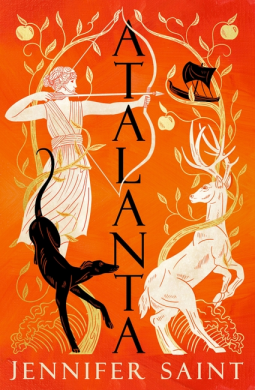
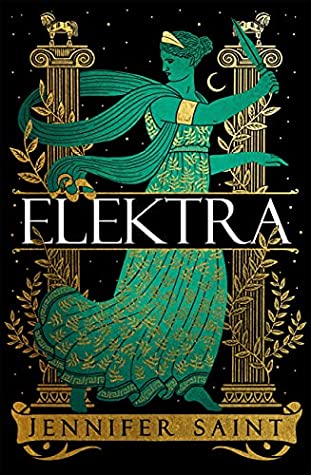
 In her previous novels, Jennifer Saint has retold the stories of several women from Greek mythology including Ariadne, Elektra and Atalanta. Her new book, Hera, as the title suggests, is a retelling of the life of Hera, Greek goddess of marriage.
The novel opens with Hera helping her brother Zeus to overthrow their father, the Titan Cronus, in a great war. With Cronus and the other Titans defeated and banished, Zeus divides control of the world between himself and his two brothers, Poseidon and Hades. Hera wants nothing more than to rule beside Zeus, so while her sisters Demeter and Hestia find new roles for themselves as goddesses of the harvest and the hearth respectively, Hera ends up marrying her brother. She isn’t able to gain the power she desires, however, and begins to grow increasingly resentful of Zeus.
Zeus makes Hera the goddess of marriage, presiding over weddings and childbirth, but their own marriage is far from perfect. Zeus is an unfaithful husband, cheating on Hera with nymphs, mortals and other goddesses, producing a multitude of children who either join the gods on Mount Olympus (such as Artemis and Apollo) or become heroes in the mortal world (Heracles and Perseus). Hera is determined to take revenge, but is this really her best route to happiness?
Hera is usually depicted in Greek myths as vengeful, jealous and vindictive and although Jennifer Saint has clearly set out to paint a more nuanced picture of her here, she doesn’t really do much to change that overall impression. I could certainly have sympathy for her as she’s repeatedly betrayed and treated badly by Zeus and struggles to achieve what she sees as her rightful position as his equal, but Saint’s Hera is still not an easy character to like. Her actions often seem petty and spiteful, taking out her frustrations not just on Zeus but on his children and their mothers, despite the fact that most of those women were actually raped or tricked by Zeus.
Hera is involved in many of the key moments and incidents from Greek myths and I felt that Saint tried to include absolutely everything in this book. Some episodes are fascinating and gripping, but I think others could probably have been left out. My favourite parts of the book were Hera’s visits to the caves inhabited by Ekhidna (usually spelled Echidna), the half woman-half snake who is mother to many of the most famous Greek monsters including Cerberus, the Hydra and the Chimera. In this version, Hera is the mother of Typhon, a monstrous snake-like giant, whom she gives birth to secretly and gives to Ekhidna to raise without Zeus’s knowledge.
This isn’t my favourite Jennifer Saint book – that would probably be Ariadne – but I did find it quite enjoyable and it was interesting to see Saint writing from the perspective of a goddess rather than a mortal woman for a change. Ultimately, though, I was left with a feeling of sadness because Hera seemed so bitter and unhappy; I wished she could have carved out her own path in life like Demeter and Hestia instead of allowing Zeus to do it for her. I’ll be interested to see who Saint writes about next; I would love a whole novel about Ekhidna and her monsters!
Thanks to Headline, Wildfire for providing a copy of this book for review via NetGalley.

 She Reads Novels