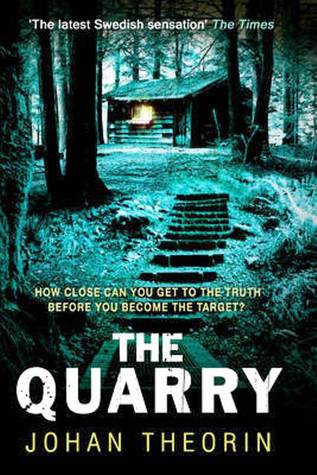
The Quarry by Johan Theorin

This is the third in Johan Theorin’s Öland Quartet, a series of four crime novels set on the Swedish island of Öland. Each book in the series is set during a different season, with the changes in weather and landscape affecting the mood and atmosphere of the story. I loved the first two books, Echoes from the Dead and The Darkest Room, so I was looking forward to my third visit to Öland. I couldn’t wait to meet my favourite character, Gerlof Davidsson, again and to find out what life on the island was like during the spring months.

In The Quarry, Gerlof is now eighty-three years old and, deciding he doesn’t want to spend the remainder of his life in the residential care home he’s been living in, he moves out and returns to his old cottage in the village of Stenvik. Once back in his own home, he finds some of his late wife’s old diaries written while he was away at sea many years earlier. What he discovers in the diaries could be connected to the story of Vendela Larsson, who has recently moved into a luxury house nearby with her husband, Max. Vendela grew up on the island listening to her father’s tales of myths and legends, and returning to Öland as an adult she finds herself wondering whether the elves and trolls she believed in as a child might really exist.

Meanwhile, Gerlof and Vendela also have another new neighbour: Per Mörner, a divorced father, who has inherited his uncle’s cottage beside an abandoned quarry. Per is looking forward to spending the Easter holidays there with his two children, but he has to change his plans when his daughter becomes seriously ill and his father, Jerry, is almost killed in an arson attempt. Per has barely spoken to Jerry for years but feels obliged to help him, and when he begins to investigate he becomes drawn into his father’s sordid past.

“If you like Stieg Larsson, try a much better Swedish writer” it says on the back cover of this book. I can’t comment on that as I’ve never read Stieg Larsson and am not an expert on Swedish crime fiction, but I would certainly be happy to recommend Theorin’s Öland novels. They are all standalone stories and with the exception of Gerlof, they have different characters so can be read in any order, though I would suggest leaving The Quarry until you’ve read the previous two as I found this one the weakest book of the three.

I still love Gerlof and enjoyed being reacquainted with him. I can only hope that I’m as independent, alert and intelligent as he is when I’m in my eighties! I also liked Per, who was doing his best to deal with his various problems including his daughter Nilla’s illness and his difficult relationship with Jerry. And as usual, the descriptions of the island of Öland are beautifully written. This book is set in the spring, as the last of the winter snows are melting away, so the story is not quite as dark as the first two but there’s still a feeling of loneliness and isolation. The translator, Marlaine Delargy, deserves a word of praise for not losing any of the atmosphere or sense of place.

So why didn’t I enjoy this book as much as the others in the series? The reason, I think, was that Vendela’s story, filled with folklore and magical stories of battles between elves and trolls, didn’t really work very well with the other main storyline. Although I was interested in the fates of both Vendela and Per, I thought their stories could have been the subjects of separate books rather than being combined in the same novel and because of this, I found The Quarry less satisfying than Echoes from the Dead and The Darkest Room (the best of the three, in my opinion). I was disappointed after loving the first two so much, but that won’t stop me reading more Johan Theorin books in the future.
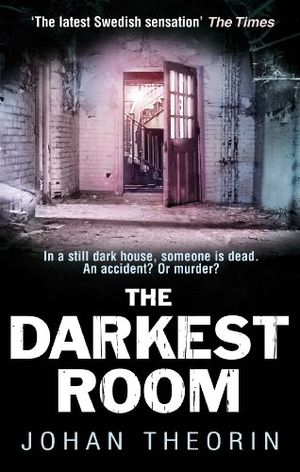
The Darkest Room by Johan Theorin

“Those who have lived here in times gone by are still here,” said Gerlof, his coffee cup in his hand. “Do you think they rest only in graveyards?”

The Darkest Room is the second in a planned quartet of novels by crime writer Johan Theorin, all set on the Swedish island of Öland. In March I wrote about how much I enjoyed the first book in the series, Echoes from the Dead, and I thought this one was even better. So far I have been very impressed by these books. I would describe them as intelligent, well-written mystery novels with believable characters and one of the most vivid and atmospheric settings I’ve come across. There are surprises, revelations and plot twists but nothing that I’ve found too hard to believe. And in this second novel there’s a touch of the supernatural too, as well as some Swedish folklore.

There are three main threads which alternate throughout the novel. The first follows Joakim and Katrine Westin who have recently moved to Öland with their two young children, Livia and Gabriel. Their new home, the isolated manor house at Eel Point, has an interesting history which is slowly revealed through a number of flashbacks. The second thread features Henrik Jansson and his involvement with a pair of criminals, the Serelius brothers, who are planning a series of burglaries. And the third storyline introduces us to Tilda Davidsson, a police officer who is another new arrival on the island. Add a couple of abandoned lighthouses and a ‘sacrificial peat bog’ and it soon becomes clear that this is much more than just another haunted house story.

Although I personally prefer to read a series in the correct order if possible, it wouldn’t be necessary to read Echoes from the Dead before this one; they don’t really follow on from each other in any way. The only links that connect the two books are the Öland setting and the character of Gerlof Davidsson, a retired sea captain. He’s Tilda Davidsson’s great-uncle and with his knowledge of Eel Point and the superstitions surrounding it, she decides to enlist his help with her investigations. Gerlof, at eighty years old, again plays an important part in solving the mystery as he did in the previous book. I love Gerlof; with his independence, his quiet confidence and his ability to listen he’s a great character and it was wonderful to meet him again.

On the author’s website, Theorin states that his aim in writing the Öland quartet is to set each novel in a different season, so that the atmosphere of the story is influenced by the weather and the changing landscape. Having now read the first two books in the quartet, I can say that so far he has done this very well. The Darkest Room is set in the winter after all the summer tourists have left Öland and the island is at its most deserted. Snow storms, blizzards and relentless cold all add to the mood of the book. Theorin doesn’t give us pages and pages of lengthy descriptions of the scenery; instead, the descriptions are woven into the fabric of the story conveying both the beauty of the island and the sense of loneliness and isolation that give the setting its eerie feel. I’m now looking forward to starting the third book, The Quarry, and finding out what Öland is like in the spring!

Echoes from the Dead by Johan Theorin

One foggy afternoon in 1972, a little boy went missing on the Swedish island of Öland. Twenty years later, his mother, Julia Davidsson, is still trying to come to terms with the loss of her son. She has left Öland and is living alone in Gothenburg, depressed, drinking too much and barely speaking to her elderly father, Gerlof. One day she receives an unexpected telephone call from her father, who now lives in an old people’s home on the island, saying he has received new evidence regarding the disappearance: one of the sandals little Jens was wearing on that fateful day. Julia immediately returns to Öland and together she and Gerlof attempt to discover what really happened to Jens.

Gerlof believes his grandson may have been abducted by Nils Kant, a notorious criminal who fled Öland at the end of the Second World War. But Nils Kant is known to have died in the 1960s – his body was sent back to the island from Costa Rica and is now buried in the churchyard there – so how could he possibly have been involved in the events of 1972?

Echoes from the Dead has all the ingredients of a great crime novel: a gripping, well-structured plot, believable characters and an atmospheric setting. I thought the pacing was perfect – slower at the beginning and steadily building in suspense and tension towards the end. Although I didn’t guess the solution to the mystery, I’m not sure whether it would have been possible to work it out before the final chapter anyway – there were some surprising twists towards the end that were completely unexpected.

There were three main characters: Julia, Gerlof and Nils Kant. I didn’t find Julia very engaging, but I loved Gerlof and his stubborn determination to do things in his own way and on his own terms. Nils Kant’s story unfolds slowly through a series of flashbacks interspersed with the present day storyline and I found him another intriguing character. And the Swedish island of Öland is almost a character in itself. Beautiful but cold and lonely, it provided a wonderful setting for the novel. Despite never having been to Öland (or any part of Sweden) Theorin’s descriptions of this island were so vivid I could visualise exactly what it must look like.

I’m glad I’ve now discovered Johan Theorin and am looking forward to reading his second book set on Öland, The Darkest Room.

I received a copy of this book from Transworld as part of their Great Crime Caper.