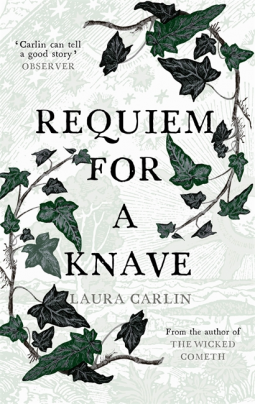
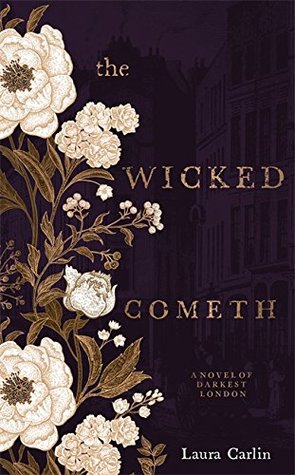
 When I saw that there was a new novel by Laura Carlin, I wasn’t sure whether to read it. Her first book, The Wicked Cometh, set in Victorian London, had left me with mixed feelings; I liked her writing and I liked the atmosphere she created, but I felt that the plot was too melodramatic and too predictable – too similar to other books I’d read. This one sounded quite different, though, so I decided to give it a try.
Requiem for a Knave is set in the 14th century, a much earlier time period than The Wicked Cometh, and this immediately gives it a different feel. It’s also written in past tense, rather than the present tense of the previous book, which is always a big bonus in my opinion! Our narrator is Alwin of Whittaker who, following the death of his mother, sets off on a pilgrimage to the shrine of Our Lady of Walsingham in search of clues to the identity of his father. Village priest and family friend Father Oswald gives Alwin a letter of introduction to the prioress of Winfeld Priory to enable him to obtain accommodation for the first night of his journey, but along the way he falls in with a band of soldiers who insist on accompanying him. The scenes that follow at the priory leave Alwin traumatised and ashamed and will continue to haunt him for the rest of the novel.
After leaving Winfeld to continue on his journey, Alwin is joined by Father Oswald and several other pilgrims, but as further misfortune befalls the little group, he starts to wonder whether his new companions are as innocent as they appear to be. Deciding to place his trust in fellow pilgrim Rosamund, Alwin shares with her a terrible secret he has carried with him since his childhood and with Rosamund’s help he begins to uncover the truth about his family, his past and who he really is.
First of all, I can say that I thought this book was better than The Wicked Cometh. I have read so many historical novels with a gothic Victorian London setting that they’re all starting to feel very alike, so this book, set in medieval rural England was a refreshing change. The plot also seemed more original, although some of the revelations towards the end of the book – the motives of the villains, for example, and the reasons for some of the bad things that happen to the pilgrims throughout the story – felt too far-fetched and unlikely. As for Alwin’s secret, there were clues from the beginning that made it easy for me to guess, but perhaps the author had intended us to have our suspicions all along; the interest is in waiting to see when other characters will discover the truth and how Alwin will cope with the revelation.
However, I did have a problem with the way the novel handles one of its major themes, which is gender. It can’t be denied that women were not treated equally in medieval society and historical fiction can certainly play a part in highlighting those injustices, but I don’t think it’s realistic to do so by portraying almost every male character as an evil monster who can’t look at a woman without trying to rape her. I can’t really give examples without spoiling the story, but at times I felt I was reading a long lecture on the wickedness of men and I couldn’t really believe that 14th century women would have had discussions about gender issues in quite the same way that we do today. It’s a shame because otherwise the medieval atmosphere is very well done and the writing feels appropriate to the period, avoiding any annoyingly modern language.
On the whole, I did enjoy reading this book but if its central messages had been put across in a more subtle way I think I would have enjoyed it much more.
Thanks to Hodder & Stoughton for providing a copy of this book for review via NetGalley.
 She Reads Novels