The Silent Companions by Laura Purcell

I decided to read this for the 20 Books of Summer challenge in preparation for the sequel, House of Splinters, coming out in October. I’m not sure how closely connected the two books will be, but it made sense to read The Silent Companions first and as I’ve enjoyed other books by Laura Purcell I was sure I would like this one anyway.

The novel begins in 1865 with Elsie Bainbridge arriving at The Bridge, her late husband’s family estate near the village of Fayford. Elsie only married Rupert a month earlier but already he is dead, leaving her a widow and pregnant with his child. She has come to The Bridge for the funeral and to spend the duration of her pregnancy, accompanied by Sarah, a cousin of Rupert’s.

From the moment she sets eyes on the house, Elsie has an uneasy feeling about it, which only increases when she learns that The Bridge has a bad reputation in the village and there’s been difficulty finding servants because no one wants to work there. Then, in a locked room upstairs she and Sarah discover a painted wooden figure that bears a striking resemblance to Elsie herself. What is this ‘silent companion’ and why does it seem to have a mind of its own? The answers can be found in a two-hundred-year-old diary written by Anne Bainbridge, who lived in the house with her husband and daughter, Hetta, during the reign of King Charles I.

The narrative switches back and forth between Anne’s story in 1635 and Elsie’s in 1865 and there are also some chapters set in St Joseph’s Hospital at an unspecified point in the future. The hospital is an asylum and we learn that Elsie has been sent there following a fire at The Bridge which has left her badly burned and unable to speak. It seems that Elsie has been accused of murder and her doctor suggests that if she writes down everything she can remember, beginning with her arrival at The Bridge, it might be enough to save her from execution.

Although I felt that the framing story in the hospital wasn’t really necessary (maybe because the ‘woman sent to an asylum by family members’ trope is one I come across such a lot in novels with Victorian settings), I did really enjoy the book as a whole. I loved the atmosphere Purcell creates, which grows increasingly tense and sinister as more and more strange occurrences take place at The Bridge and the silent companions multiply in number. Silent companions really existed; also known as dummy boards, they originated in the 17th century – the National Trust has some information about them here and some pictures which show how lifelike they were.

The story that unfolds through Anne’s diary is fascinating. After having several sons, she uses herbs to try to conceive a daughter and when that daughter, Hetta, is born with a damaged tongue and without the ability to speak, Anne believes it was her fault for using witchcraft. The child is shunned by her father and hidden away from society, where she becomes associated with the sense of evil that seems to be spreading throughout the house and the Bainbridge family. It’s Anne who first acquires the silent companions and brings them home, creating the link between her own life and Elsie’s two centuries later.

This is not a book where everything is neatly tied up at the end. There are questions left unanswered and several possible theories to consider. I usually prefer an explanation, but in this case I was happy to be left wondering. I’m looking forward to House of Splinters now!

Book 20/20 for 20 Books of Summer 2025.
The Winter Spirits: Ghostly Tales for Frosty Nights

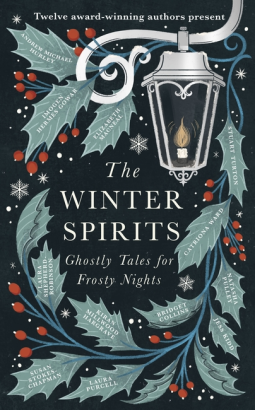
The Winter Spirits: Ghostly Tales for Frosty Nights is a collection of twelve new ghost stories written by popular authors of historical and Gothic fiction, all with a Christmas or Advent theme. It’s a follow-up to The Haunting Season, which I haven’t read but which includes eight of the same authors. This is the perfect time of year for ghost stories, so maybe I’ll look for the previous book next winter.

Back to The Winter Spirits and most of the stories are set in the 19th or early 20th centuries, giving them a traditional feel. More variety would have been nice – not just in the time periods, but also in the geographical settings, as the majority take place in Britain, with one or two in America or elsewhere in Europe – but otherwise I really enjoyed this collection. I’ve previously read full-length novels by most of the featured authors, but three of them were new to me: Andrew Michael Hurley, Catriona Ward and Susan Stokes-Chapman. I felt that Hurley’s The Old Play and Stokes-Chapman’s Widow’s Walk were two of the weaker stories, but looking at other reviews, some readers have singled them out as favourites, so I think it’s just a case of different stories appealing to different people! Ward’s contribution, Jenkin, was completely bizarre but added some diversity as it felt quite unlike any of the others.

The biggest surprise, for me, was Natasha Pulley’s The Salt Miracles; I really didn’t get on with her writing style in her novel The Bedlam Stacks, so I wasn’t expecting too much from this tale of disappearing pilgrims on a remote Scottish island (based on St Kilda). However, I ended up loving it – it’s such an unusual and chilling story! Inferno by Laura Shepherd-Robinson, one of my current favourite historical fiction authors, is another I particularly enjoyed – a wonderfully eerie story set in 18th century Italy, where a man is forced to confront his sins. Even better than both of these is Stuart Turton’s creepy and imaginative The Master of the House, in which a young boy who is being neglected by his father makes a deal with the devil. This one feels almost like a very dark fairytale and is one of the highlights of the book.

Of the twelve authors, Laura Purcell is probably the most well established as a writer of horror fiction and she doesn’t disappoint here with Carol of the Bells and Chains, in which a governess trying to deal with two unruly children tells them the story of the Krampus, with unintended consequences. Imogen Hermes Gowar’s A Double Thread, where a woman gets her comeuppance after badly treating her hardworking seamstress, is another I really enjoyed – it made me long for another novel by Gowar, as it’s been a few years since The Mermaid and Mrs Hancock!

The remaining stories are by Elizabeth Macneal, Bridget Collins, Jess Kidd and Kiran Millwood Hargrave. With a range of different styles and subjects, unless you just don’t like ghost stories I think this collection should contain something to please almost every reader.

Thanks to Sphere for providing a copy of this book for review via NetGalley.

The Whispering Muse by Laura Purcell

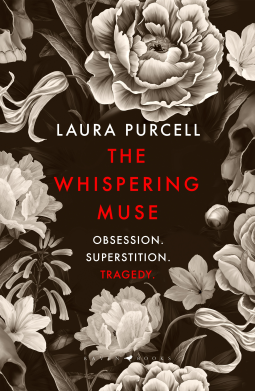
This is the second book I’ve read by Laura Purcell; I liked, but didn’t love, the first one I read, Bone China, so was hoping for better things from this one. It certainly sounded good – a Gothic novel set in the theatres of Victorian London – and I wasn’t disappointed at all. I was gripped from start to finish!

Our narrator is Jenny Wilcox, a young woman who has been left to support herself and her younger siblings after her brother Gregory ran off to America with an actress, taking the family savings with him. Jenny is deeply grateful when Gregory’s former employer, Mrs Dyer of the Mercury Theatre, offers her a job as dresser to the new leading lady, Lilith Erikson. Before she even begins work, however, Jenny discovers that Mrs Dyer has not just offered her the position out of kindness – she believes that her husband is having an affair with Lilith and she wants Jenny to spy on them.

At first, Jenny shares Mrs Dyer’s dislike of Lilith, but gradually she becomes concerned about the behaviour of the beautiful young actress. Why is she so obsessed with a watch engraved with the face of Melpomene, Muse of Tragedy – a watch that once belonged to the actor Eugene Grieves, who died on stage while performing Dr Faustus? Could Lilith have formed some sort of pact with Melpomene, to help her achieve her dream of becoming London’s greatest tragic actress? And if so, what will Melpomene demand in return?

The Whispering Muse is divided into five acts, mirroring the five tragedies performed by the Mercury Theatre Company over the course of the novel, beginning with Macbeth. Theatrical settings are usually atmospheric and this one is no exception! I loved the insights we are given into what goes on behind the scenes and the descriptions of Lilith’s powerful stage performances are so vivid I could almost imagine I was watching them from a seat in the front row. The book is wonderfully creepy in places – and a bit gory in others, although not excessively so. What makes it so compelling is that we’re never quite sure whether Lilith really has made a pact with her muse and supernatural forces are at work within the Mercury Theatre or whether the strange events that begin to take place have a more human explanation.

As well as enjoying the fascinating plot, I also found it interesting to see how Jenny’s relationships with the other characters change over the course of the novel. Although I didn’t always agree with Jenny’s decisions, I had some sympathy for her situation – she needs to keep Mrs Dyer happy in order to stay in her job and earn money to support her younger brothers and sister, but the closer she becomes to Lilith the more she starts to feel that Mrs Dyer’s hatred of the actress is unreasonable and the more her conscience begins to bother her. The dynamics between these three characters add extra depth to the story and make it something special. I loved it and look forward to reading Laura Purcell’s other books!

Thanks to Raven Books for providing a copy of this book for review via NetGalley.

This is book 5/50 read for the 2023 Historical Fiction Reading Challenge.

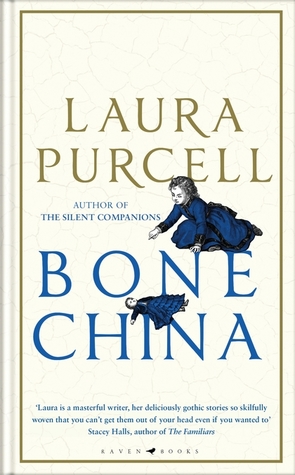
Bone China by Laura Purcell

Hester Why, the narrator of Laura Purcell’s latest gothic novel Bone China, is a woman with secrets. We know that Hester Why is not her real name, but what is the reason for her new identity? Why is she fleeing to Cornwall from London, who is she hiding from and how did she come to be addicted to gin and laudanum? These are questions we ask ourselves in the very first chapter and they are answered eventually, but first we must follow Hester to Morvoren House, perched high on the Cornish cliffs, where she is taking up a new position as nurse to Miss Louise Pinecroft.

Hester quickly discovers that her job is not going to be easy and soon she is asking questions of her own. What is wrong with Miss Pinecroft, who barely moves, never speaks and spends her days sitting in a cold room surrounded by china cups and plates? Who is Rosewyn, the strange, child-like young woman described as Miss Pinecroft’s ward? Is there any truth behind the claims of the superstitious servant Creeda that Rosewyn needs to be protected from fairies who are trying to steal her away and replace her with a changeling?

Bone China moves between three different timelines; as well as following Hester at Morvoren House, we also go back to an earlier time in her life, when she was known as Esther Stevens, and learn what went wrong in her previous employment, leading to her decision to run away and start again. Finally, in a third narrative we meet Louise Pinecroft as she was forty years earlier, when she and her father first arrived at Morvoren House after losing the rest of their family to consumption.

Laura Purcell has become known for writing dark, creepy Victorian novels and Bone China does have a lot of classic Gothic elements, including a gloomy, imposing clifftop house, family secrets and hints of madness. Despite this, I didn’t think this was a particularly scary or chilling story and although the exploration of Cornish folklore added atmosphere, I never doubted that the fairies and changelings existed only in legends and in Creeda’s stories. How much more spine-tingling it would have been if I had found myself feeling convinced that they could be real after all!

What I did find very disturbing and unsettling was the storyline set in Louise Pinecroft’s younger days, describing the work of her father, a doctor, who is looking for a cure for consumption (tuberculosis), the disease which took the lives of his wife and his other children. With Louise’s help, Dr Pinecroft carries out a revolutionary experiment, taking a group of prisoners who are suffering from the illness and lodging them in a cave beneath the cliffs where he claims the salty sea air will be good for their health. This part of the book was based on historical fact – cave air really was suggested as a possible cure for consumption at one time – and it was horrifying to read about the barbaric treatment of sick people due not to cruelty but to ignorance of modern medical procedures and a lack of understanding.

There are lots of interesting ideas incorporated into Bone China, then, but in the end I felt that the three threads of the story didn’t come together as neatly as they should have done. I also found the pacing uneven; in the second half of the book, the sense of mystery and carefully building tension of the earlier chapters was replaced by a sudden race to reach the conclusion. I didn’t enjoy this book as much as I’d hoped to, but I’m planning to read Laura Purcell’s first novel, The Silent Companions, soon and will see if I get on better with that one.