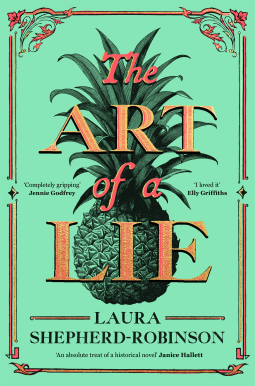
The Art of a Lie by Laura Shepherd-Robinson

I’ve enjoyed all of Laura Shepherd-Robinson’s previous books, particularly The Square of Sevens, so this is one of the new releases I’ve been most looking forward to reading this year. It has many of the same elements as her others – an 18th century setting, a mystery to be solved, lots of surprising plot twists and characters who are not quite as they seem! This one also features ice cream, which makes it a perfect summer read.

The Art of a Lie opens in London in 1749 and the first section is narrated by Hannah Cole, whose husband Jonas was found dead in the street several months earlier, seemingly the victim of a robbery. Since his death, Hannah has continued running their business, a confectionery shop known as the Punchbowl and Pineapple, but is struggling financially. A visit from the magistrate, Henry Fielding – who is also the author of the recently published Tom Jones – brings her some welcome news: Jonas had a large sum of money in his bank account that she knew nothing about. Unfortunately, her excitement is short-lived because Fielding also tells her that he suspects the money was acquired illicitly and that Jonas was probably not just the victim of a random attack as first thought, but was murdered by someone he knew.

A second way of improving her financial position soon presents itself to Hannah when a gentleman enters the Punchbowl and Pineapple and introduces himself as William Devereux, a friend of her late husband’s. William gives Hannah a recipe for ‘iced cream’, a frozen dessert made by his mother, who was raised in Italy. Despite some initial problems – freezing cream without the aid of an electric freezer is not an easy task – the new treat proves a big success. And soon William is helping her to solve a bigger problem – the question of who killed Jonas Cole and where the money in his bank came from.

The perspective switches between Hannah and William several times throughout the novel, with each narrator being given a distinctive narrative voice of their own. I felt a stronger connection with Hannah, but seeing things from William’s point of view provides a whole different side to the story. It quickly becomes clear to the reader that neither one of them is being completely honest with the other (or with anyone else) and that, as the title suggests, this really is a novel about the art of telling lies! It was fascinating to follow both of their narratives, wondering who was going to come out on top. The ending of the book wasn’t really what I’d expected and although I would have preferred the ending I had expected, it was good to be taken by surprise!

I loved the setting of the book, particularly the descriptions of Hannah’s shop and all the cakes, chocolates and sweets she sells. I enjoyed reading about her experiments with different varieties of ice cream (don’t miss the author’s note at the end of the book, which has some factual information about the history of ice cream in the UK). The inclusion of Henry Fielding as a character in the book was also interesting – he really was Chief Magistrate of Westminster at the time the story is set and was the founder of the Bow Street Runners, London’s first police force.

The Square of Sevens is still my favourite Laura Shepherd-Robinson book, but I think it’s just a matter of personal taste and I’m sure some readers will like this one better. It reminded me very much of The Queen of Fives by Alex Hay and I think if you enjoyed that one you’ll probably enjoy this one as well.

Thanks to Pan Macmillan/Mantle for providing a copy of this book for review via NetGalley.

Book 9/20 for 20 Books of Summer 2025.
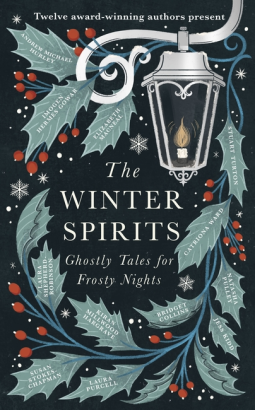
The Winter Spirits: Ghostly Tales for Frosty Nights

The Winter Spirits: Ghostly Tales for Frosty Nights is a collection of twelve new ghost stories written by popular authors of historical and Gothic fiction, all with a Christmas or Advent theme. It’s a follow-up to The Haunting Season, which I haven’t read but which includes eight of the same authors. This is the perfect time of year for ghost stories, so maybe I’ll look for the previous book next winter.

Back to The Winter Spirits and most of the stories are set in the 19th or early 20th centuries, giving them a traditional feel. More variety would have been nice – not just in the time periods, but also in the geographical settings, as the majority take place in Britain, with one or two in America or elsewhere in Europe – but otherwise I really enjoyed this collection. I’ve previously read full-length novels by most of the featured authors, but three of them were new to me: Andrew Michael Hurley, Catriona Ward and Susan Stokes-Chapman. I felt that Hurley’s The Old Play and Stokes-Chapman’s Widow’s Walk were two of the weaker stories, but looking at other reviews, some readers have singled them out as favourites, so I think it’s just a case of different stories appealing to different people! Ward’s contribution, Jenkin, was completely bizarre but added some diversity as it felt quite unlike any of the others.

The biggest surprise, for me, was Natasha Pulley’s The Salt Miracles; I really didn’t get on with her writing style in her novel The Bedlam Stacks, so I wasn’t expecting too much from this tale of disappearing pilgrims on a remote Scottish island (based on St Kilda). However, I ended up loving it – it’s such an unusual and chilling story! Inferno by Laura Shepherd-Robinson, one of my current favourite historical fiction authors, is another I particularly enjoyed – a wonderfully eerie story set in 18th century Italy, where a man is forced to confront his sins. Even better than both of these is Stuart Turton’s creepy and imaginative The Master of the House, in which a young boy who is being neglected by his father makes a deal with the devil. This one feels almost like a very dark fairytale and is one of the highlights of the book.

Of the twelve authors, Laura Purcell is probably the most well established as a writer of horror fiction and she doesn’t disappoint here with Carol of the Bells and Chains, in which a governess trying to deal with two unruly children tells them the story of the Krampus, with unintended consequences. Imogen Hermes Gowar’s A Double Thread, where a woman gets her comeuppance after badly treating her hardworking seamstress, is another I really enjoyed – it made me long for another novel by Gowar, as it’s been a few years since The Mermaid and Mrs Hancock!

The remaining stories are by Elizabeth Macneal, Bridget Collins, Jess Kidd and Kiran Millwood Hargrave. With a range of different styles and subjects, unless you just don’t like ghost stories I think this collection should contain something to please almost every reader.

Thanks to Sphere for providing a copy of this book for review via NetGalley.

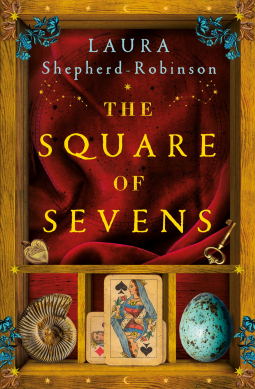
The Square of Sevens by Laura Shepherd-Robinson

Laura Shepherd-Robinson’s books are getting better and better! This one will be on my books of the year list in December, without a doubt.

A standalone novel set in the first half of the 18th century, The Square of Sevens is the story of Red, the daughter of a Cornish fortune teller or ‘cunning-man’. Red can’t remember her mother and has spent the first seven years of her life moving from village to village with her father, telling fortunes using an ancient method of cartomancy known as the Square of Sevens. They need to keep on the move, her father says, to avoid being caught by enemies who wish them harm.

Life changes abruptly for Red when her father dies of a sudden illness and she becomes the ward of a respectable gentleman, Mr Antrobus. Going to live with him in his elegant home in Bath, Red finds herself thrust into society for the first time. Raised by Mr Antrobus and his kindly housekeeper, she settles into her new life while entertaining the people of Bath by reading their cards for them. It’s through her gift for card-reading that Red crosses paths with the wealthy De Lacy family, whom she believes hold the key to the secrets of her own past. And so a sequence of events are set in motion that take Red from Bath to London’s Bartholomew Fair and a grand house in Devon in search of answers.

It’s not really possible for me to say much more about the story without spoiling it, but if I tell you it includes family secrets, disputed inheritances, stolen documents, and lots of surprising twists and turns you’ll get the idea! It’s very entertaining, with the feel of a Charles Dickens novel at times, and I was often reminded of Charles Palliser’s The Quincunx (another great Dickensian novel with an inheritance at the heart of the plot).

I found Red a very engaging narrator; I initially had a lot of sympathy for her, as she struggles to uncover the secrets of her family background and find her place in the world, while others around her try to prevent her from learning the truth at all costs. However, I soon discovered that Red can be just as ruthless herself and is not above doing some plotting and scheming of her own in order to get what she wants. As she tells us at one point in the novel, If you’d wanted a saint, then you should have read a different book. There are plenty of other interesting and memorable characters to get to know – I was particularly intrigued by Lazarus Darke – and what makes the book so fascinating to read is that we can never be quite sure who can be trusted and who can’t.

The ‘Square of Sevens’ method of card reading was described in an 1897 book by Edward Irenaeus Stevenson and Shepherd-Robinson incorporates it throughout the novel. Red tells the fortunes of many of the characters she meets and the fortune-telling theme is carried further with each chapter heading including a picture of a playing card and an interpretation of that card’s meaning. Reading the author’s note at the end of the book, a lot of thought went into choosing the correct card for each chapter and I feel a bit guilty that I didn’t always pick up on the significance of that choice.

If you’ve read and enjoyed Laura Shepherd-Robinson’s two previous novels, the Georgian mysteries Blood and Sugar and Daughters of Night, I’m sure you’ll enjoy this book too – I think it’s even better. If you’re yet to try any of her books then this would be a great place to start!

Thanks to Mantle for providing a copy of this book for review via NetGalley.

This is book 24/50 read for the 2023 Historical Fiction Reading Challenge.

Daughters of Night by Laura Shepherd-Robinson

It’s 1782 and Caroline Corsham – known to her friends as Caro – is waiting for her husband, Captain Harry Corsham, to return to London from France where he has been sent on diplomatic work. Visiting the Vauxhall Pleasure Gardens one evening, Caro is horrified when she comes across the body of her friend, Lady Lucia, an Italian noblewoman, who has been stabbed and left to die. The London authorities seem to have no intention of investigating the murder, which confuses Caro until she discovers that her friend was not who she claimed to be: she was actually a prostitute known as Lucy Loveless. As the police are no longer interested, Caro knows that she will have to avenge Lucy’s death herself – so with the help of thief taker Peregrine Child, she sets out to begin an investigation of her own.

Daughters of Night is a sequel to Laura Shepherd-Robinson’s previous novel, Blood & Sugar, but both books work as self-contained mysteries and I don’t think it will matter if you read them out of order. Those of you who have read Blood & Sugar will remember that it follows Harry Corsham as he investigates the death of an abolitionist friend and uncovers the horrors of the slave trade. Caro was only a minor character in that book, but now, with Harry absent in France, this is Caro’s turn to take centre stage with her own mystery to solve – and again, there is a very dark topic at the heart of the story, in this case prostitution and the treatment of women in 18th century society.

I mentioned in my review of the first book that I found the characters too thinly drawn and not memorable enough, but that was not a problem at all with this second novel. Daughters of Night is written partly from Caro’s perspective and partly from Peregrine Child’s; I liked them both and thought they complemented each other very well. Child’s previous experience as a magistrate means he knows what sort of questions to ask and what clues to look out for, and while he has some personal problems of his own he is a decent and honourable man. Caro is new to crime solving but there are things she understands that Child does not and together they make a perfect team. I certainly had no idea who the murderer was; there were several suspects who all seemed equally likely to me, so I enjoyed following the twists and turns of the plot until the truth is revealed.

Although the Georgian world that has been created here is not always very pleasant, it’s always fascinating to read about and feels thoroughly researched, ranging from larger themes such as the roles of art and classical mythology to the tiniest pieces of arcane knowledge that add colour and intrigue to the story. Laura Shepherd-Robinson has said that her next book will be a standalone but that she might return to this world again for a future novel – and I hope she does, as I would love to find out what else life has in store for Caro and Harry!

Thanks to Mantle for providing a copy of this book for review via NetGalley.

Book 8/50 read for the Historical Fiction Reading Challenge.

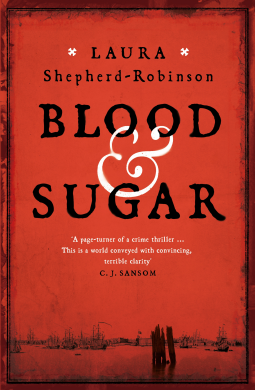
Blood & Sugar by Laura Shepherd-Robinson

This new historical mystery – Laura Shepherd-Robinson’s first novel – deals with one of the darkest subjects in our history. Set in 1781, it follows the investigations of former army officer Captain Harry Corsham into the disappearance of his friend, the lawyer and abolitionist Tad Archer. It seems that Tad had been about to uncover a secret that, once exposed, could damage the reputations of those involved in the British slave trade. Could someone have killed Tad to prevent him from telling what he knows?

Captain Corsham is determined to find out what has happened to his friend, but to do so he will need to continue Tad’s enquiries into a shocking incident which took place onboard a ship carrying slaves across the Atlantic. This brings him into conflict with some very powerful men who could destroy his hopes of a political career. But Harry Corsham is a man with principles and even when he, like Tad before him, begins to receive threatening letters and warnings, he refuses to walk away until he has discovered the truth.

There are many things I liked about Blood & Sugar. The setting and atmosphere are wonderful; with the action taking place partly in London, where Harry Corsham lives with his wife, Caro, and their young son, and partly in the nearby slaving port of Deptford, we see Harry move between both locations in search of answers to his questions. I loved the contrasting descriptions of Deptford, from the elegant homes of the wealthy slave merchants to the notorious dockside alleys with their brothels and opium dens.

We also meet a wide range of characters from very different backgrounds, including magistrates, politicians, mayors and surgeons, prostitutes, innkeepers, sailors and servants. Many of the latter group are black, which is interesting because I think we tend to forget (or are not aware of) how many black people there were living in eighteenth century Britain. It is estimated that there were more than twenty thousand in London alone, yet they rarely appear in fiction set during that period. As for the slavery aspect of the story, there are parts that are not easy to read, as you can probably imagine – particularly when we hear about what happened on the ship, something which is based on a real incident. But unpleasant as it is, we can’t ignore the fact that slavery did happen and I think it’s important that we remember and learn from it.

I was very impressed with this book at the beginning. I liked Laura Shepherd-Robinson’s writing, the mystery seemed intriguing and I was starting to draw comparisons with one of my favourite historical crime authors, Andrew Taylor. However, as the plot continued to develop, I thought it became far too complicated and I struggled to remember who had said what to whom and what the various motives of the characters were. Towards the end, there were so many threads to tie up that everything seemed to take forever to be resolved (and there were one or two revelations which added very little to the overall story and weren’t really necessary, in my opinion). I also felt that as there were so many characters to keep track of, they really needed to be better defined – instead, I thought they were thinly drawn and not very memorable.

I’m disappointed that I didn’t enjoy this book as much as I thought I would at first, but I still think there were more positives than negatives and as this is the author’s first novel I would be happy to read more.

Thanks to Pan Macmillan for providing a copy of this book for review via NetGalley.