 One day in 1745, a Dutch sailor called Arie ten Brink leaves his home on the Portuguese island of Porto Santo and sets sail for Brazil where he hopes to make his fortune. His thirteen-year-old daughter, Diamantina, is heartbroken; left behind on Porto Santo with her mother, a former African slave, life is not easy and she vows to join her father in Brazil one day.
While she waits for a letter saying that he has reached his destination, Diamantina faces struggles with poverty, her mother’s reputation as a witch, and men who are ready to take advantage of a lonely, vulnerable young woman. Eventually an offer of marriage gives Diamantina a chance to escape, but the marriage is not what she would have hoped for and it seems that her ordeals are not yet over.
I love Linda Holeman’s books (I’ve read all of her adult novels apart from her first one, The Linnet Bird) so it was disappointing to find that The Devil on her Tongue was initially published only in Canada. Luckily for me, Traverse Press have now made it available as an ebook, as they did with the previous one, The Lost Souls of Angelkov, so readers in the UK and US are now able to read it as well.
There are a few things I’ve come to expect from Linda Holeman’s novels; one of them is an interesting and unusual historical setting. I know there must be other books set in 18th century Portugal, but this is the first I’ve read; it’s not a common choice for historical fiction and it made a refreshing change. There are some beautiful descriptions of Porto Santo, and later, of Madeira and Lisbon, and we are given insights into what life was like in each of these places. While the focus is on Diamantina’s personal story, it is played out against a historical background that feels well researched and believable. I particularly loved the vivid depiction of the earthquake that destroyed most of Lisbon in 1755.
Another thing I expect is a long, engrossing and emotional story – and that’s what I got from The Devil on her Tongue. But although Diamantina’s story is certainly very compelling, it’s also very sad; I couldn’t believe one person could experience so much misery and have so little luck in life. I felt so sorry for her but I also admired her resilience as she tried to build a new life for herself in the face of so much betrayal, disappointment and unhappiness. One aspect of Holeman’s novels I really like is the way they explore attitudes towards women in different time periods and cultures – in previous books we have seen how women were treated in 19th century India, Afghanistan and Russia, in 1930s Morocco, and now in a small community in Portugal during the 1700s.
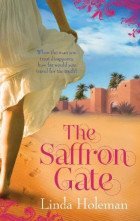
I don’t think this is my favourite of Linda Holeman’s novels (that would probably be the book set in Morocco, The Saffron Gate) but it’s beautifully written and I did enjoy reading it, despite finding the story so sad.
Thank you to Traverse Press for providing a copy of this book for review.



 She Reads Novels
