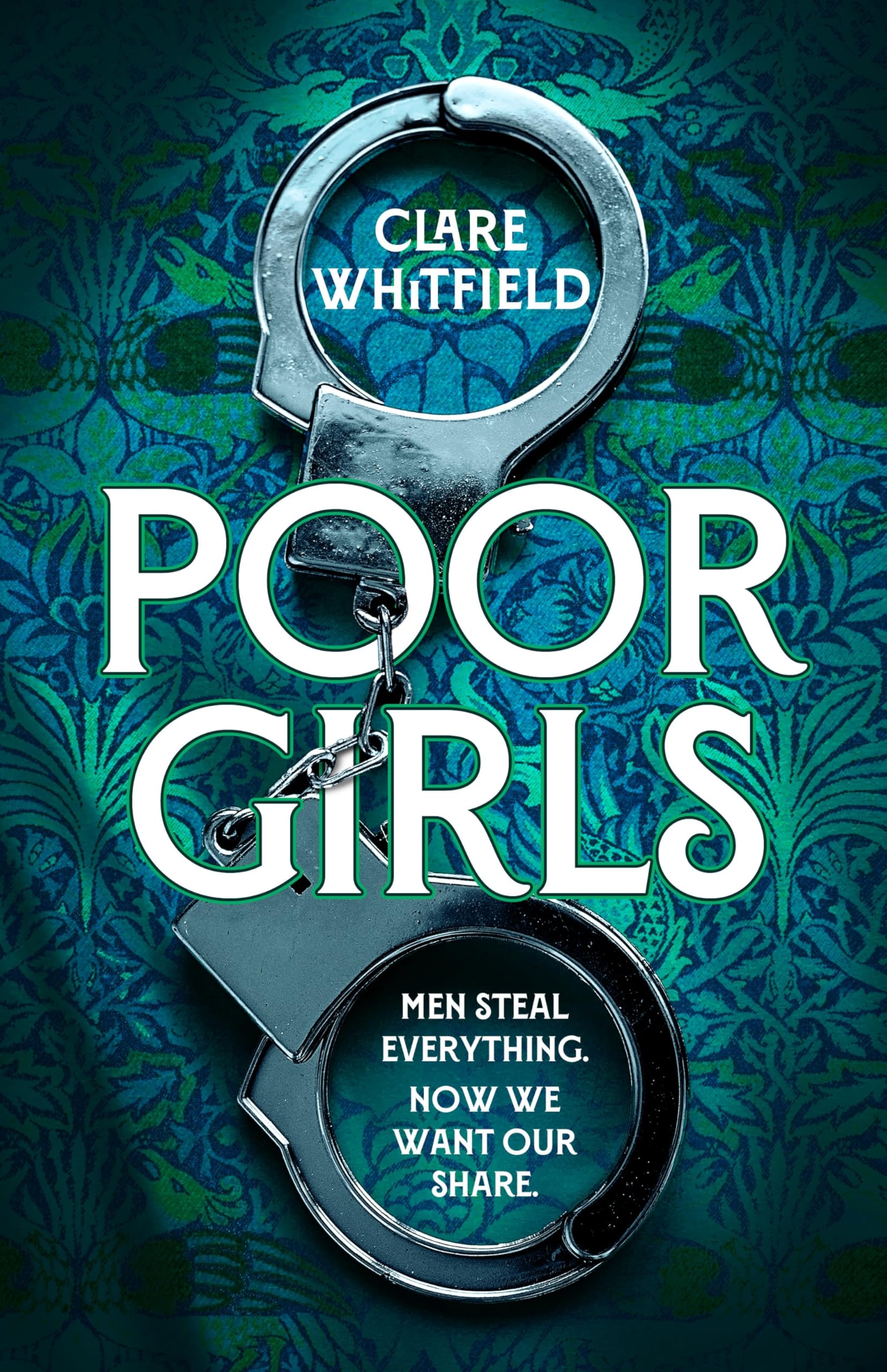
Poor Girls by Clare Whitfield

It’s 1922 and Eleanor Mackridge, like many women, is finding it difficult to adjust to ‘normal life’ now that the war has ended. Compared to working in a munitions factory and feeling that she was doing something important for her country, her new job waitressing at a Brighton hotel is dull and boring. Marriage could offer an escape route, but that doesn’t sound very appealing either, so when Eleanor crosses paths with a member of the all-female crime gang, the Forty Elephants, the temptation to join them is too strong to resist.

Now known as Nell, she moves to London where she is assigned to a cell – a group of four gang members who live and work together – and begins her education in the art of theft. Soon she knows how to steal expensive furs and jewels from London’s grandest department stores, how to conceal her loot in hidden pockets and, most importantly, how to avoid being arrested. Although her conscience troubles her at first, she soon learns to love her new life and her new friends. But what will Nell’s family say when they discover what she is doing? And what will happen if her luck runs out and she gets caught?

Poor Girls is an enjoyable, fast paced novel rooted in historical fact. I wasn’t aware until I finished the book and read the author’s note that the Forty Elephants really existed (the name comes from the Elephant and Castle area of London, where they were based). Although the gang leader, Alice Diamond – known as Queen Alice – was a real person, Nell Mackridge seems to be a fictional character. However, through the stories of Nell and her friends, Whitfield explores some of the factors that may have driven young women like them to turn to a life of crime.

It was fascinating to see how the gang operated and to watch Nell learning all the tricks of the trade – all the cons, deceptions and disguises she needed to be able to avoid detection. Interestingly, women had an advantage when it came to shoplifting as store security were reluctant to stop and search female customers. Also, all those layers of clothing they wore were useful for hiding stolen goods! The success of their operations depended on working together as a team, so trust was necessary between the members of each cell and Nell formed strong bonds with Effie, Lily and Charlie, her partners in crime.

I did have one or two minor criticisms of the book: I felt that the characters of Nell’s three friends could have been more clearly defined – Charlie and Lily, in particular, seemed interchangeable – and there were times when the language felt more 2020s than 1920s. Otherwise, this was a very entertaining novel with a plot not quite like any other I’ve read. I also liked the fact that, although crime is obviously not something we should admire or find glamorous and Whitfield does make the consequences clear, at the same time she isn’t trying to push a moral message onto the reader. The ending of the book isn’t quite what you would expect either, but it’s probably more realistic that way.

It seems that Alice Diamond and the Forty Elephants have been the subject of several recent novels and there’s a non-fiction book available as well. I’m not sure how I’ve missed them all, but will investigate them now. I would also like to read Clare Whitfield’s earlier novel, People of Abandoned Character.

Thanks to the publisher for making a copy of this book available for review via The Pigeonhole.

Book 51 for the Historical Fiction Reading Challenge 2024

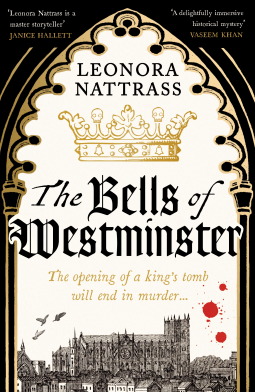
The Bells of Westminster by Leonora Nattrass

I’ve enjoyed all three books in Leonora Nattrass’ Laurence Jago series (Black Drop, Blue Water and Scarlet Town) and was hoping for a fourth, but it seems she’s moved on to other things, at least temporarily. Like the Jago books, The Bells of Westminster is set in the 18th century but is a completely separate story with a new set of characters to get to know.

It’s 1774 and King George III has just given his permission for the Society of Antiquaries to open the tomb of Edward I, who rests in Westminster Abbey. The Society wants to discover whether Edward’s body was embalmed, according to his wishes, and whether he was buried with any valuable artifacts. However, the opening of the tomb sets in motion a series of bizarre events: first, a ghostly figure is seen wearing the dead king’s crown, then one of the Antiquaries is found dead and Edward’s body is stolen. Mr Bell, the Dean of Westminster, is given the job of investigating, but his daughter Susan knows he’s not capable of solving the mystery and it will be up to her to solve it for him.

The novel is narrated by Susan Bell who, at twenty-three, is already considered a spinster. Her father would like her to marry her cousin Lindley, an aspiring scientist who is staying with them at the Deanery, but Susan isn’t sure what she thinks of him – and anyway, she’s quite happy with the company of her talking parrot, Cuthbert. Susan’s narration takes the form of diary entries, through which we see the mystery unfold as well as gaining some insights into life within the confines of Westminster Abbey.

I’ll be honest and say that at first I didn’t think I was going to enjoy this book. I had trouble connecting with Susan’s narrative style, peppered with notes and asides, which seemed to be trying very hard to be clever and witty. It also took a long time for the story to really get started, but once the murder happened about a quarter of the way into the book, I became drawn in. Susan’s narration also grew on me after a while and I found I liked her much more than I thought I would at the beginning.

Nattrass explains in her author’s note which parts of the book are based on fact and which are invented. The opening of Edward I’s tomb in 1774 really happened, for example – although the body wasn’t stolen and a ghost didn’t really appear! The characters are also a mixture of real people and fictional ones (Susan Bell is one of the latter). One thing that’s completely real, of course, is the setting: with the whole book being set within Westminster Abbey and its grounds, there are lots of detailed descriptions of the chapels, arches and galleries as well as the various tombs and shrines.

The eighteenth century was also a time of major scientific developments and Nattrass is able to explore some of these through Lindley’s interest in science. In particular, we see how a knowledge of science can work along with – and sometimes in conflict with – superstitions, religion or fear of the supernatural. This is a fascinating novel, then, and although I would still have preferred another Laurence Jago book, I did enjoy this one once I got past the slow, uncertain start!

Thanks to Viper for providing a copy of this book for review via NetGalley.
Book 47/50 for the Historical Fiction Reading Challenge 2024

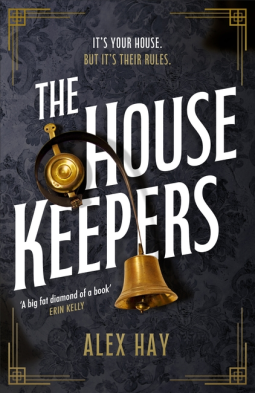
The Housekeepers by Alex Hay

It’s June 1905 and plans are underway for a ball at the grandest house on London’s Park Lane. Miss de Vries, who has recently inherited the house from her millionaire father, has decided to throw the party of the season to launch herself into society and find a suitable husband. However, someone else also sees the night of the ball as a great opportunity – an opportunity for revenge. She is Mrs King, the former housekeeper, who was dismissed from her job just a few weeks earlier and is now planning a daring heist. On the night of the Park Lane ball, she and a group of other carefully recruited servants will strip the house of its treasures – its artworks, books, furniture, silverware, even the carpets – and Miss de Vries and her guests won’t notice a thing until it’s too late. But will this plan work or will the housekeepers be caught in the act?

The Housekeepers is Alex Hay’s debut novel and I found it an entertaining read. It was fascinating to see how carefully Mrs King and her accomplices plan the heist – preparing inventories of each room, taking measurements, identifying escape routes and making sure nothing is left to chance! Despite their detailed planning, there are still some factors outside their control and a lot of things that could go wrong, so there’s plenty of suspense as we wait to see whether or not they will succeed. As the novel progresses and we learn more about what has been going on behind the doors of the Park Lane house, I found I didn’t have much sympathy for Miss de Vries and was definitely rooting for the servants!

The heist is Mrs King’s idea, but I thought some of the other women she enlists were more interesting characters. These include Mrs Bone, who runs a criminal network but seems to have a moral code of her own, the actress Hephzibah and the two trapeze artist sisters referred to as Jane-one and Jane-two. There’s also Winnie, who held the position of housekeeper before Mrs King, and Alice the sewing maid who is befriended by Miss de Vries and faces a battle with her conscience. I felt that too many characters were introduced too quickly at the beginning of the book, which made things confusing for a while, but I eventually managed to keep them all straight in my mind.

The novel is also an interesting exploration of the class system and the injustice of some people being born into a life of privilege while others are not. In his author’s note, Alex Hay describes the satisfaction of imagining the servants trying to claim some of that privilege for themselves! However, Miss de Vries herself is looked down upon by the people she most wants to impress because she had a father who made his fortune through diamond mining rather than inheriting wealth passed down through the generations.

I thought The Housekeepers was fun to read and with its period setting, portrayal of life above and below stairs, and vividly described heist sequences, I could easily imagine a BBC adaptation. As a first novel it’s quite impressive and I’ll certainly be looking out for more from Alex Hay!

Thanks to Headline Review for providing a copy of this book for review via NetGalley.

This is book 26/50 read for the 2023 Historical Fiction Reading Challenge.

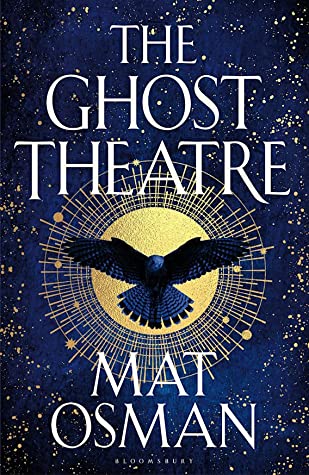
The Ghost Theatre by Mat Osman

The Ghost Theatre, Mat Osman’s second novel, is the story of two young people who meet on the rooftops of Elizabethan London. One of them is Shay, a teenage girl who dresses as a boy and belongs to a community of bird-worshippers. As the novel opens, Shay has released some caged birds from captivity in a shop and is being chased by the angry owner; with the instincts of a bird herself, she flees upwards to the roof and here she has her first encounter with Nonesuch. Taking his name from Henry VIII’s grand palace, Nonesuch claims to be the abducted son of a great lord, forced into performing at the Blackfriars Theatre, dressing as a woman to play leading female roles such as Cleopatra.

As Shay begins to fall in love with Nonesuch, she helps him to create the Ghost Theatre, a troupe of young actors who stage special plays in secret locations all over London. But it is another talent of Shay’s – her ability to tell fortunes – that brings her to the attention of Queen Elizabeth I and leads her into danger.

Mat Osman is the brother of the author and TV presenter Richard Osman and also the bassist in the British rock band Suede. I haven’t read his first novel, The Ruins, and had no idea what to expect from this one, but I can tell you it’s a very unusual book – not purely historical fiction but not quite fantasy either. It’s set in a city we can recognise as the London of the late Elizabethan period – there are outbreaks of plague, attempted rebellions, references to popular Elizabethan sports such as cock-fighting and bear-baiting – but there are also some imagined elements. As far as I know there was no community of Aviscultans living in Birdland and predicting the murmurations of starlings!

I have to be honest and say that this book wasn’t really for me. Perhaps because of the blend of alternate history with real history, it didn’t have the strong period feel I prefer – the dialogue was too modern, for example. I also found it quite difficult to focus on the plot; the imagery and descriptions were lovely but slightly distracting and sometimes I read several pages without really absorbing any of the words. If I had to compare this book to anything, it would be Megan Campisi’s The Sin Eater, another novel set in an alternate Elizabethan world and which I had some similar problems with. Incidentally, there is a sin eater in Osman’s novel too, although only mentioned in passing!

It would seem that Osman’s own love of music has influenced this story, with a lot of emphasis placed on the power of song, performing on stage and entertaining an audience. The novel as a whole is imaginative, creative, dreamlike and completely original. I wish I had been able to enjoy it more, but the right reader will love it.

Thanks to Bloomsbury Publishing for providing a copy of this book for review via NetGalley.
This is book 16/50 read for the 2023 Historical Fiction Reading Challenge.

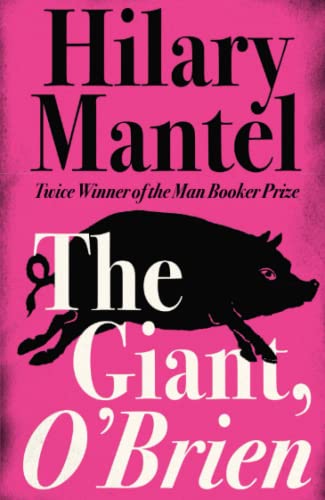
The Giant, O’Brien by Hilary Mantel

Having finished Hilary Mantel’s Thomas Cromwell trilogy last year, I knew I wanted to read more of her books. A Place of Greater Safety, her novel about the French Revolution, has always sounded appealing to me but the length is off-putting, so I decided to try a shorter one first.

The Giant, O’Brien, published in 1998, is based on the true story of the 18th century Irish giant, Charles Byrne. Also known as Charles O’Brien and claiming descent from the High Kings, but usually referred to by Mantel as simply ‘the Giant’, Byrne and his friends leave Ireland in 1782, fleeing ‘cyclical deprivation, linguistic oppression and cultural decline.’ The Giant has previously been able to make a living by entertaining his neighbours with stories and songs but, sensing that things are changing, he knows he needs to find a new way to earn money. The solution seems obvious, so after arriving in London with his entourage, the Giant appoints the unscrupulous Joe Vance as his agent and agrees to exhibit himself as a freak, to be stared at, pointed at, poked and prodded, in return for money.

The story of another man unfolds in parallel with the Giant’s. His name is John Hunter, a Scottish surgeon and anatomist – like Charles Byrne, a real historical figure. Mantel describes Hunter’s early years in Long Calderwood and how he came to be in London, first as an assistant to his brother William, another famous anatomist, and then on his own, conducting autopsies in the name of scientific research. Before the Anatomy Act of 1832, it was very difficult to obtain bodies for medical study in the UK, a problem which led to body snatching and the illegal digging up of graves. In one fascinating, if slightly gruesome scene, Hunter lectures a group of newly recruited body snatchers on the best ways to get hold of fresh corpses without being detected. Naturally, the bodies of most interest to Hunter are those that are unusual in some way – so when he hears news of the Giant currently being exhibited in London, he decides to make him an offer, despite the fact that the Giant is not yet dead.

Mantel portrays the Giant as a gentle, intelligent man with a natural gift for telling stories and a seemingly endless knowledge of myth, folklore and fairy tales. This, as much as his height, makes him stand out from his friends. While the others succumb to London’s temptations – alcohol, women and gambling – the Giant saves his money in the hope of one day rebuilding Mulroney’s tavern, now a ruin but once the place where ‘Courts of Poetry’ were held and he was taught the art of storytelling. John Hunter, in contrast, is much less likeable; if the Giant represents tradition and a way of life that is about to be lost forever, Hunter represents progress and advancement and is portrayed as clever, ambitious and lacking in empathy.

In her author’s note at the end of the book, Mantel explains which parts of the story are based on fact and which are purely fictional. There’s more factual information available on John Hunter than there is on the life of Charles Byrne, but what we do know about Byrne is that he suffered from gigantism caused by pituitary tumours, his height was 7ft 7 (2.31m) and his skeleton has been on display in the Hunterian Museum at the Royal College of Surgeons for over two centuries, despite his own wishes to be buried at sea. The museum has been closed since 2017 for renovations and the future of Charles Byrne’s remains is the subject of an ethical debate.

I found both the Giant and John Hunter interesting to read about, particularly as I previously knew nothing at all about either of them, but I thought the book seemed slightly disjointed because of the way it kept switching between the two narratives. Until they began to converge very near the end, the two storylines felt completely separate and unconnected; I suppose Mantel’s aim was to show the contrast between the main characters and the different paths they followed through life, but I felt it didn’t flow very well as a novel. I also didn’t find the eighteenth century London setting as immersive as the Tudor world she creates in the Wolf Hall books. Still, there are some fascinating ideas in this novel and the Giant O’Brien himself is a character I won’t forget in a hurry!

This is book 1/50 read for the 2023 Historical Fiction Reading Challenge.

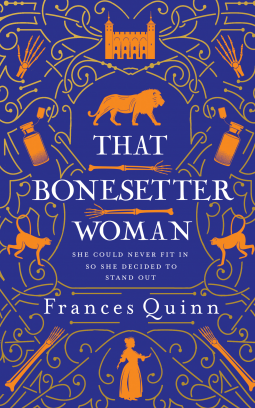
That Bonesetter Woman by Frances Quinn

I loved this! I’ll admit that when I first saw that this was a novel about a female bonesetter in the 18th century, I had my doubts. Was this really something a woman would be able to do at that time or was this going to be another book, like one or two others I’ve read recently, based around a completely anachronistic idea that could never have happened in reality? Then I discovered that there really was a female bonesetter working in London in the 1700s: her name was Sally Mapp and her story has provided Frances Quinn with the inspiration for her latest novel.

That Bonesetter Woman begins with Endurance Proudfoot – known as Durie – arriving in London in 1757 with her sister, Lucinda. The unmarried Lucinda has found herself pregnant and, with Durie accompanying her, has been hastily packed off to stay with an aunt so that she can give birth away from prying eyes at home. Durie is not at all happy to be sent away; she had been on the verge of persuading her father, a bonesetter, to allow her to work with him as his assistant. Now it looks as though the position will go to her younger brother instead. This is devastating for Durie – with her large hands and feet, social awkwardness and tendency to always say and do the wrong thing, bonesetting is the one thing she’s discovered she’s good at.

Watching with a mixture of admiration and resentment as Lucinda overcomes her own personal crisis and launches a new career for herself on the London stage, Durie decides it’s time to take matters into her own hands. She’s determined to find a way to do the work she loves and nothing is going to stop her.

This is a fascinating novel, particularly as it’s loosely based on the lives of real people (like Durie, Sally Mapp was believed to have a sister, Lavinia Fenton, who became a famous London actress). I enjoyed reading about Durie’s work as a bonesetter – similar to a modern-day chiropractor or osteopath, I think – but what particularly interested me was seeing the obstacles she had to overcome to be allowed to carry out her work at all, the mistrust from patients on discovering that they were going to be treated by a woman, and the hostility she faces from the existing, exclusively male, medical community. Poor Durie experiences one setback after another, but her passion for bonesetting and helping those in pain really shines through.

Although Durie is not considered a great beauty like her sister, she does have love interests throughout the novel but her lack of self-confidence leads to her making mistakes and poor decisions. Nothing ever seems to go her way, but while things often look bleak for Durie I never stopped hoping that she would find happiness and success in the end.

As I come to the end of this review I realise there are a lot of things I haven’t mentioned – the vivid portrayal of 18th century London, the menagerie in the Tower of London, the subplot involving the Foundling Hospital – but there’s so much going on in this novel, I can’t include all of it! It’s a great book and I will have to find time to read Frances Quinn’s previous novel, The Smallest Man.

Thanks to Simon & Schuster UK for providing a copy of this book for review via NetGalley.

This is book 36/50 read for the Historical Fiction Reading Challenge 2022.

The Fugitive Colours by Nancy Bilyeau

A new Nancy Bilyeau book is always something to look forward to. I’ve loved everything I’ve read by her so far: her Joanna Stafford trilogy, about a nun displaced in Tudor England after the dissolution of the monasteries; Dreamland, set in a Coney Island amusement park; and The Blue, a wonderful historical thriller involving spies, art and the race to create a beautiful new shade of blue. The Fugitive Colours is a sequel to The Blue and another great read; the two books stand alone, so it’s not necessary to have read the first novel before beginning this one, although I would recommend doing so if you can.

It’s 1764 and Genevieve Planché, heroine of The Blue, is now a married woman running her own silk design business in Spitalfields, London. With the help of her two young assistant artists, Caroline and Jean, Genevieve is beginning to find buyers for her silk designs and is determined to make the business a success. However, she has not given up on her dream of becoming a serious artist and when she is invited to a gathering at the home of the portrait painter Joshua Reynolds, it seems she could still have a chance of achieving her ambition.

This in itself would have been the basis for an interesting novel – a woman trying to build a career for herself in what was still very much a male-dominated field – but there’s a lot more to the story than that. Due to the parts played by Genevieve and her husband in the recent search for the blue, their names have come to the attention of some very powerful people who are hoping to enlist them in further conspiracies. Yet again Genevieve is forced to wonder who she can and cannot trust, but this time one wrong decision could mean the end of her dreams, the loss of her business and even the destruction of her marriage.

The Fugitive Colours is perhaps not quite as exciting and fast-paced as The Blue, but I found it equally gripping. Set entirely in London, it’s a very immersive book taking us from the Spitalfields workshops of the Huguenot silk-weaving community to the grand homes of the rich and famous and the nightlife of Covent Garden. While Genevieve and most of the other main characters are fictional, we do meet some real historical figures too – not just Joshua Reynolds but also Giacomo Casanova, the Earl of Sandwich and the fascinating Chevalier d’Eon. I particularly enjoyed the portrayal of the 18th century art world, the snippets of information I picked up (not coming from an art background myself, I didn’t know what ‘fugitive colours’ were, but now I do), and the insights into how difficult it was for women like Genevieve and the real-life Frances Reynolds, Joshua’s sister, to gain recognition for their work.

I hope there will be another book in the Genevieve Planché series as I think there’s certainly a lot more that could be written about her. If not, I’ll look forward to seeing what Nancy Bilyeau decides to write next.

Thanks to Lume Books for providing a copy of this book for review via NetGalley.
This is book 21/50 read for the Historical Fiction Reading Challenge 2022.