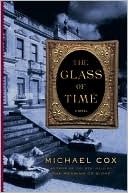
Review: The Glass of Time by Michael Cox

This is the sequel to Michael Cox’s The Meaning of Night, which I read earlier in the year. Although I don’t think it’s absolutely necessary to read the books in the correct order, it would make sense to do so. You’ll definitely get the most out of this book if you’ve read the previous novel first and are already familiar with the plot and the characters.

The way The Meaning of Night ended had left me feeling dissatisfied, but The Glass of Time provides the perfect continuation to the story. Our narrator is Esperanza Gorst, an orphan who has been raised in France by her father’s friend Madame L’Orme and her tutor Mr Thornhaugh. When she is nineteen years old, she is sent by her guardians to the beautiful estate of Evenwood in England, where she will work as lady’s maid to Emily Carteret, the 26th Baroness Tansor. At first Esperanza doesn’t know why she has been sent to Evenwood and is told only that it is part of Madame L’Orme’s ‘Great Task’. As she learns more about her mission, however, Esperanza begins to unravel the mysteries of both her own past and Lady Tansor’s.

I enjoyed The Meaning of Night but I loved The Glass of Time even more. I thought Esperanza was a more likeable character than Edward Glyver (the narrator of The Meaning of Night), and the story also seemed to move at a faster pace. I literally didn’t want to put this book down and finished it in two days (considering it’s over 500 pages long that should indicate how much I was enjoying it).

While I was reading this book there were times when I could almost have believed it really had been written in the 19th century, as the setting, atmosphere and language are all flawlessly ‘Victorian’. Charles Dickens was clearly one of Cox’s biggest influences. In my review of The Meaning of Night I mentioned the Dickensian names Cox gave his characters, and there are more of them in The Glass of Time, from Armitage Vyse and Billy Yapp to Perseus Duport and Sukie Prout. But this time I also noticed lots of similarities to Dickens’ Bleak House: the young orphan searching for the truth of her parentage; the noblewoman with a dark secret; the way the story moves between an idyllic country house and the dark, dangerous streets of Victorian London; the intricate plot and the cleverly interlocking storylines.

I could also recognise elements of various Wilkie Collins novels including Armadale and No Name (Esperanza Gorst is even seen reading No Name at one point). In both writing style and structure this book does feel very like one of Collins’ sensation novels, filled with cliffhangers and plot twists – and with parts of the mystery being revealed through letters, diary entries and newspaper clippings. I did find some of the twists very predictable but that didn’t matter to me, because it was actually fun to be one step ahead of Esperanza, waiting for her to discover what I had already guessed.

It’s so sad that there won’t be any more books from Michael Cox, as he died of cancer in 2009, but together these two novels are the best examples of neo-Victorian fiction I’ve read: complex, atmospheric and beautifully written.

Highly Recommended

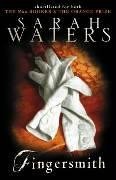
Review: Fingersmith by Sarah Waters

I’ve had a copy of this book on my shelf for a few months now but I kept putting off reading it because, after seeing so many glowing reviews, I was afraid I wouldn’t like it. Eventually I decided I would have to just get on with it, before I really was the only person left on earth who still hadn’t read it!

Somehow I had managed to avoid coming across any spoilers (and hadn’t seen the TV adaptation either) so was able to go into Fingersmith knowing almost nothing about the plot. As I don’t want to spoil the book for any of you who haven’t read it yet, all I will tell you is that Fingersmith is the story of Sue Trinder, an orphan raised by Mrs Sucksby in a den of thieves in Victorian London, and Maud Lilly, a young heiress who lives with her uncle at their country house, Briar. When an acquaintance of Mrs Sucksby’s, known as ‘Gentleman’, comes up with a plan to cheat Maud of her inheritance, Sue agrees to pose as a lady’s maid and help him with his scheme. And that’s all I’m going to say about it!

I was expecting a complex plot with lots of twists, and that was what I got. Unfortunately, I guessed what the first big plot twist was going to be! I was disappointed because I would have loved to have been shocked by it. (Actually, I think if only I’d read this a few years ago before I started reading so many Victorian sensation novels, it probably would have come as a shock.) I’m envious of those of you who didn’t see the twist coming because I can imagine it must have been stunning. Although this did have a slight impact on my enjoyment of the book, luckily there were plenty of other things that I did enjoy!

As I’ve probably mentioned before, the 19th century is one of my favourite periods to read about. I love the original Victorian classics and I love Victorian historical fiction too. Having read both this book and Affinity now, I can say that Sarah Waters has a real talent for portraying the atmosphere of Victorian London: the dark alleys, the narrow streets, the fog, the Thames. The locksmith’s shop at Lant Street, where Sue lives, is described particularly vividly.

Although I thought many of the characters in the book were very unlikeable, I could still find every one of them interesting, which must be a testament to Sarah Waters’ skills as a writer. I thought Gentleman was fascinating (funny how the word gentleman can be made to sound so sinister!). I liked the relationship between Sue and Maud too and the way the book switches perspective between the two girls, giving us an insight into each of their emotions, thoughts and motives, and allowing us to sympathise with them both.

I was really hoping I’d be able to gush about how much I loved this book, like the majority of people have. However, although I did enjoy it and couldn’t put it down at times (it didn’t feel like a 550 page book at all – I got through it in half the time it would normally take me to read a book this length), I don’t think it’s going to be one of my top reads of the year. Maybe it’s just that my expectations were a bit too high, which is not the fault of the book. Having enjoyed this one and Affinity, I’m looking forward to reading the rest of Sarah Waters’ books, starting with The Little Stranger for the RIP challenge.

Summer Reading Challenge: After You by Julie Buxbaum

Eight-year-old Sophie has been left traumatised after witnessing the murder of her mother, Lucy, in the street near their London home. Sophie’s reaction to the tragedy is simply to stop speaking. Lucy’s best friend, Ellie Lerner, has travelled from America to London to try to help her goddaughter and she becomes determined to break through Sophie’s self-imposed silence. Knowing how much Sophie loves reading books, Ellie decides to introduce her to one of her own childhood favourites – The Secret Garden by Frances Hodgson Burnett.

However, Ellie has plenty of problems of her own. She’s left her husband Phillip at home in Boston – and she’s not sure if she wants to go back to him. Lucy’s grieving husband, Greg, is drinking too much and Ellie doesn’t want to leave him alone with Sophie just yet. And her divorced parents have just announced that they’re getting married again.

I was very unsure about this book at first; it looked very ‘chick lit’ and I’m not usually a fan of chick lit. So why did I request it from Transworld for their Summer Reading Challenge, you might ask? Well, the plot sounded interesting and the Secret Garden connection piqued my curiosity (The Secret Garden was one of my favourite books when I was a child – I really need to reread it sometime!). It’s nice to think that sharing a special book with someone can help them through a difficult time. I also learned a few interesting facts about the book – I never knew Frances Hodgson Burnett was inspired by the walled garden at Great Maytham Hall, for example.

The author has given Sophie a well-developed personality of her own, making her a believable and endearing eight-year-old. She’s a girl who prefers reading to playing games and as a result isn’t very popular with other children her age; Ellie’s own love of books helps her to form a bond with Sophie and watching their friendship develop was one of the highlights of the story.

This book is not just about Sophie though. I was kept guessing how Ellie’s relationships were going to resolve themselves, as it wasn’t immediately obvious what was going to happen. Would she go back to her husband? Or would she end up with Greg or someone else entirely? As the main character and narrator, I didn’t always agree with Ellie’s actions (particularly the way she had left Phillip without giving him a proper explanation) but as the book progresses it becomes obvious that she is grieving too – and not just for Lucy – and is trying to work out what she wants from life.

Another aspect of the book I found interesting was the way Ellie, as an American woman from Boston, had to adapt to the British culture and life in London.

So, although this was not a book I would usually have chosen to read, I did enjoy it. It was a much more complex and emotional story than I had been expecting with some important messages about love, loss, relationships and family.

I received a review copy of this book from Transworld Publishers as part of their Summer Reading Challenge.

Review: Affinity by Sarah Waters

This is the story of two women, both prisoners in their own different ways and drawn together by a special bond – their ‘affinity’.

Margaret Prior is a single woman of twenty nine who, following the death of her father, begins visiting London’s Millbank Prison as a Lady Visitor. Lady Visitors were women who voluntarily visited prisoners with the aim of befriending them and giving them comfort during the time of their imprisonment. However, Margaret is in need of some friendship and comfort herself. From her very first visit, she finds herself strangely drawn to Selina Dawes, a young spiritualist imprisoned for assault after one of her spiritualism sessions goes badly wrong, leaving a woman dead and a girl traumatised.  Selina blames her ‘control spirit’, Peter Quick, for what happened, but is she telling the truth?

The book is told in the form of diary entries – Margaret’s longer sections being interspersed with Selina’s shorter ones. Margaret’s diary entries are very bleak and miserable, as she is trying to cope not only with the loss of her father, but also with her feelings for both Selina and her sister-in-law Helen, the expectations of her domineering mother, and the sense of being ‘left behind’ that she experiences when her younger sister gets married and leaves home. Although I found it difficult to like Margaret, I did have a lot of sympathy for her – she had been labelled a ‘spinster’ and was bound by the conventions of the time, preventing her from studying and leading the kind of life she wanted to lead.  I really wanted her to find happiness with Selina.

Selina’s sections of the story are very vague and confusing and I didn’t fully understand them until I went back and read them again after reaching the end of the book. Her entries chronicle the events leading up to the death of Mrs Brink at the seance, and allow us to watch the development of Selina’s spiritualist abilities and the first appearances of the spirit Peter Quick.  Throughout the story, the reader is made to wonder whether Selina really has the powers she claims to have or if Margaret is the victim of an elaborate hoax.

I enjoyed learning about life in a Victorian prison, as it’s not something I’ve read about in so much detail before. Waters does a wonderful job of conveying the oppressive atmosphere of Millbank, with its labyrinthine corridors and gloomy wards.

I haven’t read all of Sarah Waters’ books yet so I can’t really say where Affinity stands in comparison to her others, but I thought it was an excellent book – suspenseful, moving and with some passages that were genuinely spooky.

Recommended

Review: The Book of Fires by Jane Borodale

Agnes Trussel is a seventeen year old girl whose life is thrown into turmoil when she discovers she is pregnant and runs away to London to start a new life.  In London she is lucky enough to find employment as an assistant to the firework maker John Blacklock but as she desperately tries to hide her pregnancy from everyone around her, she starts to realise that she’s not the only one with secrets…

When I first heard about this book last year I was immediately interested in reading it but eventually decided to give it a miss – until I saw that it had been shortlisted for the Orange Award for New Writers.  Of course, being shortlisted for an award doesn’t guarantee that a book will be good, but it does usually mean that there will at least be something different or special about it that makes it worth reading.

Well, it was worth reading, but I did also have a few problems with the book – the first being that it’s written in the first person present tense.  There have been a few books written in the present tense that I’ve enjoyed, but usually I find it distracting – and that was the case here.  I also found it difficult to connect to any of the characters, even Agnes herself.  It wasn’t that they were badly drawn or uninteresting – Cornelius Soul the gunpowder seller, Mrs Blight the housekeeper and the mysterious Lettice Talbot wouldn’t be out of place in a Dickens novel – I just couldn’t engage with them or care about them very much.  When I read historical fiction I like to feel as if I’ve been transported back in time and as if I’m there experiencing things along with the characters.  Unfortunately I didn’t feel any of that with this book.

The plot itself was interesting enough.  I struggled with the opening chapters -which described the slaughter of a pig in an unnecessary amount of detail – but after that, when Agnes arrived in London I started to enjoy the story more.


Picture by Jon Sullivan in the public domain

The descriptions of firework making were fascinating.  It was particularly interesting to learn about the early experiments and research that would eventually lead to the discovery of coloured fireworks.

“You imagine colours vividly,” he says.
“I do, sir.” I reply. “It is…almost as though I feel them as a sense of touch or taste when I am looking.”
He looks up at me beside him. I am startled to see how his eyes are tight with excitement. A hope flares up in me.
“Have you attempted a blue, Mr Blacklock?” I whisper.

Despite the negative points I mentioned above, I kept on reading to the last page because I wanted to know how the story ended – and I was rewarded with a surprising ending that I hadn’t been expecting.  In fact, the final few chapters were great and made me glad I’d persevered with the book.

Would I recommend it?  I’m not sure – there are much better historical fiction novels out there in my opinion – but if it appeals to you then give it a try and see what you think.

Review: Basil by Wilkie Collins

In 19th century literature, a man can approach a girl’s father, ask for permission to marry her and be given that permission, all without the girl having any say in the matter whatsoever. Sometimes the potential husband has only actually spoken to the girl once or twice; sometimes not at all – and they certainly haven’t had time to get to know each other properly. Basil by Wilkie Collins is a good example of why these arrangements were often doomed to failure and caused unhappiness both for the husband and the wife.

Our narrator, the Basil of the title, is the son of a rich gentleman who is proud of his family’s ancient background and despises anyone of a lower social standing. When Basil meets Margaret Sherwin on a London omnibus he falls in love at first sight and becomes determined to marry her. Unfortunately Margaret is the daughter of a linen-draper, the class of person Basil’s father disapproves of most of all, so he decides not to tell his family about her just yet.

Mr Sherwin agrees to Basil marrying Margaret – but he insists that the wedding must take place immediately and that Basil must then keep the marriage secret for a whole year, not even seeing his wife unless Mr or Mrs Sherwin are present. This unusual suggestion should have told Basil that something suspicious was going on but he’s so blinded by love that he doesn’t care – until it’s too late…

Basil was one of Collins’ earliest novels and it shows, as it’s just not as good as his more famous books such as The Woman in White. The story took such a long time to really get started, with Basil introducing us to the members of his family, giving us every tiny detail of their appearance, personality and background. The second half of the book was much more enjoyable, filled with action, suspense and all the elements of a typical sensation novel including death, betrayal and adultery (Victorian readers apparently found the adultery scenes particularly shocking). There are lots of thunderstorms, people fainting and swooning, fights in the street, and everything you would expect from a Victorian melodrama.

All of Collins’ books are filled with strong, memorable characters and this was no exception. There’s Basil’s lively, carefree brother Ralph, his gentle, kind hearted sister Clara, the poor, frail Mrs Sherwin and the sinister Mr Mannion. However, I thought the overall writing style of this book was slightly different to what I’ve been used to in his later books – although I can’t put my finger on exactly what the difference was. This is not a must-read book but if you like the sensation novel genre, you’ll probably enjoy this one.

Review: Drood by Dan Simmons

I think I liked the idea of this book more than the book itself. A gothic mystery/horror story set in Victorian London, featuring Charles Dickens and narrated by Wilkie Collins sounded like exactly the kind of book I would enjoy. Unfortunately it didn’t quite live up to its fascinating premise and I was left with mixed feelings about it.

Drood is told in the form of a memoir written by Wilkie Collins (a close friend and collaborator of Charles Dickens, as well as being the author of The Woman in White, The Moonstone and many other novels and plays) and addressed to an unknown reader in the future – that is, to us.

The story begins with the Staplehurst Rail Disaster of 1865, when the train on which Charles Dickens is travelling crashes, sending most of the carriages plummeting over a viaduct into the riverbed below. Luckily Dickens is in one of the few carriages that doesn’t fall. As he helps to rescue people from the wreckage, he encounters a mysterious figure dressed in a black cape who introduces himself only as ‘Drood’. In the days following the train crash, Dickens becomes obsessed with finding Drood and discovering his true identity. With the reluctant help of Wilkie Collins, Dickens begins a search for Drood which leads them through the dark alleys and underground catacombs of London.

Interspersed with the Drood storyline are long passages in which we learn about the family life and living arrangements of both Dickens and Collins, how much they earned for their various novels, their walking tour of Cumberland in 1857, the details of Wilkie’s laudanum addiction, the story of the Swiss chalet given to Dickens by his friend Charles Fechter, Dickens’ interest in mesmerism and every other piece of biographical information you could possibly want to know. Simmons also incorporates some genuine historical letters and quotes which adds some authenticity to the book. I can see why some readers might find this boring, but I enjoyed these sections – I thought the descriptions of Dickens’ reading tours were particularly fascinating.

Simmons has attempted to imitate Wilkie Collins’ narrative style (including the Victorian habit of talking directly to the reader) but I felt that he didn’t get it quite right. He also uses a lot of words and phrases that just sound either too modern or too American to me (the real Collins or Dickens would have walked on the pavement rather than the sidewalk, for example). This is only a small complaint though, as overall, Dear Reader, I thought his style was quite convincing.

I do like the way the book takes us through the process of researching and writing The Moonstone. However, some important plot points are given away so if you haven’t already read The Moonstone and think you might want to, then I would suggest you read it before you begin Drood. It might also be a good idea to read The Mystery of Edwin Drood first (I didn’t and kept wishing I had). Another thing I liked about the book was the way Simmons deliberately tries to confuse and mislead the reader – at several points in the novel we are made to wonder whether something we’ve just read is real or an illusion.

This journey through the cemeteries, opium dens and underground sewers of London is a good atmospheric read for a cold dark night, but I was slightly disappointed by it and despite reading all 775 pages I still can’t decide whether I enjoyed it or not! However, it will almost certainly leave you wanting to learn more about Dickens and Collins and their works, which can only be a good thing. If you like this type of book I would also recommend The Quincunx by Charles Palliser – another book set in Victorian England and written in a 19th century style.

Before I come to the end of this review I would just like to say a few words in defence of poor Wilkie Collins, who happens to be one of my favourite authors. Simmons clearly doesn’t rate Wilkie as a writer (I saw an interview where he described him as ‘mediocre’) and in Drood, the character is portrayed as a not very talented, second-rate author who is consumed with jealousy of the more successful Dickens and becomes increasingly bitter and unlikeable as the book goes on. I admit I’m biased because I’ve absolutely loved every Wilkie Collins book I’ve read; he was a much better writer than Drood suggests and definitely not mediocre, at least in my opinion!

*Pictures of Charles Dickens (top) and Wilkie Collins (bottom) both in the public domain

Genre: Historical Fiction/Horror/Pages: 775/Publisher: Quercus Fiction/Year: 2009/Source: My own copy bought new