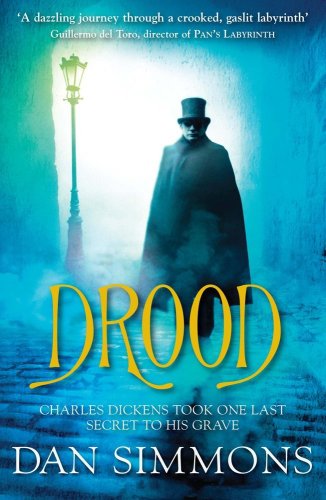
I think I liked the idea of this book more than the book itself. A gothic mystery/horror story set in Victorian London, featuring Charles Dickens and narrated by Wilkie Collins sounded like exactly the kind of book I would enjoy. Unfortunately it didn’t quite live up to its fascinating premise and I was left with mixed feelings about it.
Drood is told in the form of a memoir written by Wilkie Collins (a close friend and collaborator of Charles Dickens, as well as being the author of The Woman in White, The Moonstone and many other novels and plays) and addressed to an unknown reader in the future – that is, to us.
The story begins with the Staplehurst Rail Disaster of 1865, when the train on which Charles Dickens is travelling crashes, sending most of the carriages plummeting over a viaduct into the riverbed below. Luckily Dickens is in one of the few carriages that doesn’t fall. As he helps to rescue people from the wreckage, he encounters a mysterious figure dressed in a black cape who introduces himself only as ‘Drood’. In the days following the train crash, Dickens becomes obsessed with finding Drood and discovering his true identity. With the reluctant help of Wilkie Collins, Dickens begins a search for Drood which leads them through the dark alleys and underground catacombs of London.
Interspersed with the Drood storyline are long passages in which we learn about the family life and living arrangements of both Dickens and Collins, how much they earned for their various novels, their walking tour of Cumberland in 1857, the details of Wilkie’s laudanum addiction, the story of the Swiss chalet given to Dickens by his friend Charles Fechter, Dickens’ interest in mesmerism and every other piece of biographical information you could possibly want to know. Simmons also incorporates some genuine historical letters and quotes which adds some authenticity to the book. I can see why some readers might find this boring, but I enjoyed these sections – I thought the descriptions of Dickens’ reading tours were particularly fascinating.
Simmons has attempted to imitate Wilkie Collins’ narrative style (including the Victorian habit of talking directly to the reader) but I felt that he didn’t get it quite right. He also uses a lot of words and phrases that just sound either too modern or too American to me (the real Collins or Dickens would have walked on the pavement rather than the sidewalk, for example). This is only a small complaint though, as overall, Dear Reader, I thought his style was quite convincing.
I do like the way the book takes us through the process of researching and writing The Moonstone. However, some important plot points are given away so if you haven’t already read The Moonstone and think you might want to, then I would suggest you read it before you begin Drood. It might also be a good idea to read The Mystery of Edwin Drood first (I didn’t and kept wishing I had). Another thing I liked about the book was the way Simmons deliberately tries to confuse and mislead the reader – at several points in the novel we are made to wonder whether something we’ve just read is real or an illusion.
This journey through the cemeteries, opium dens and underground sewers of London is a good atmospheric read for a cold dark night, but I was slightly disappointed by it and despite reading all 775 pages I still can’t decide whether I enjoyed it or not! However, it will almost certainly leave you wanting to learn more about Dickens and Collins and their works, which can only be a good thing. If you like this type of book I would also recommend The Quincunx by Charles Palliser – another book set in Victorian England and written in a 19th century style.
Before I come to the end of this review I would just like to say a few words in defence of poor Wilkie Collins, who happens to be one of my favourite authors. Simmons clearly doesn’t rate Wilkie as a writer (I saw an interview where he described him as ‘mediocre’) and in Drood, the character is portrayed as a not very talented, second-rate author who is consumed with jealousy of the more successful Dickens and becomes increasingly bitter and unlikeable as the book goes on. I admit I’m biased because I’ve absolutely loved every Wilkie Collins book I’ve read; he was a much better writer than Drood suggests and definitely not mediocre, at least in my opinion!
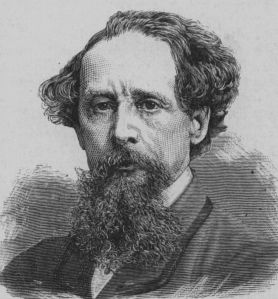
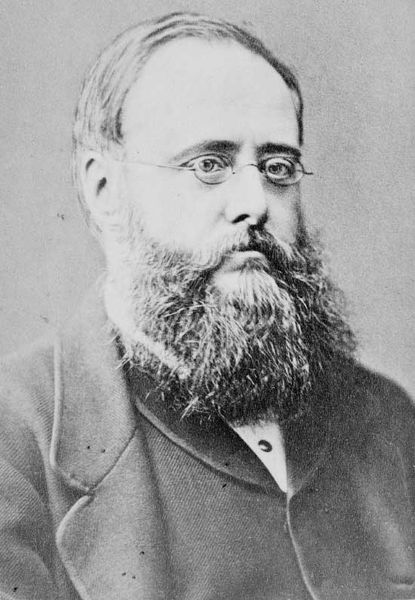
*Pictures of Charles Dickens (top) and Wilkie Collins (bottom) both in the public domain
Genre: Historical Fiction/Horror/Pages: 775/Publisher: Quercus Fiction/Year: 2009/Source: My own copy bought new
 She Reads Novels