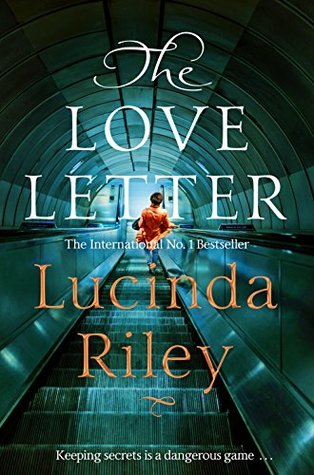
The Love Letter by Lucinda Riley

I have been enjoying following Lucinda Riley’s Seven Sisters series over the last few years and am looking forward to starting the newest book, The Moon Sister, which is due to be published later this year. The Love Letter is not part of that series, though – it’s a reissue of one of her earlier novels, first published in 2000 as Seeing Double under the name of Lucinda Edmonds. As explained in the brief Author’s Note which opens the novel, Seeing Double was not a success on its original release, probably because of poor timing – it wasn’t long since the death of Princess Diana in 1997 and the plot involves a scandal within a fictional British royal family. Lucinda and her publisher obviously feel that enough time has now passed to give the book a second chance and a new look and title.

The Love Letter is set in 1996 and begins with young journalist Joanna Haslam reporting on the funeral of Sir James Harrison, one of the most famous actors of his generation, who has died at the age of ninety-five. The funeral is a star-studded affair, attended by celebrities including Harrison’s granddaughter Zoe, a successful actress in her own right, and his film-producer grandson Marcus. The service has only just begun when Rose, an elderly woman sitting beside Joanna, is suddenly taken ill. Joanna offers to accompany the old lady home in a taxi, unaware that by doing so she is taking the first step in a sequence of events that could destroy the British establishment. Within days Rose is dead, but not before sending Joanna a letter, the contents of which hold clues to a shocking secret that some very powerful people will stop at nothing to keep concealed.

This is a very different sort of book from Lucinda Riley…a combination of spy thriller, mystery and romance. I have to admit, I found the plot a bit far-fetched and not always very plausible, but it’s certainly a page-turner – it was difficult to stop reading until I had found out what the letter meant and what the secret was. I did manage to work some of it out for myself (especially as we are told in the Author’s Note before we even start reading that the story is going to involve members of the royal family), but not all of it, because new pieces of the puzzle are being revealed right up to the end of the novel. For a book with six hundred pages, it’s a quicker read than you might expect and a lot of fun to read too, with some surprising plot twists and characters who aren’t quite what they seem.

Unlike the Seven Sisters novels with their dual timeline stories, The Love Letter is set entirely in the modern day (although events from the past provide the answers to the mystery). Having said that, I suppose 1996 is not exactly the ‘modern day’ anymore and the absence of recent technology from the characters’ lives does set the story firmly in its time period. As for the implications for the royal family, I don’t think people would be too bothered by a novel like this today, but I can see why it might have been controversial on publication eighteen years ago.

I think one of Lucinda Riley’s strengths as a writer is in creating characters the reader can really care about and like – and there are several of those in this novel. I loved Joanna from the beginning; she’s such an ordinary, down-to-earth person with the sort of hopes, ambitions and problems that are easy to identify with. I also liked Zoe, who is embroiled in a secret and possibly dangerous love affair, and I became very fond of her brother Marcus too. The only one of the main characters I didn’t warm to was Simon, Joanna’s best friend, although I did have some sympathy with the internal conflicts he faced in trying to choose between his job and his friendships.

The developments towards the end of the book became a bit too dramatic for me, but I was happy with the final few twists which led to the conclusion I’d been hoping for. I’m looking forward to getting back to the Seven Sisters – I have a copy of The Moon Sister which I’m planning to read soon – but The Love Letter made an interesting change.

Thanks to Pan Macmillan for providing a copy of this book for review.
The Pearl Sister by Lucinda Riley

The Pearl Sister is the fourth book in Lucinda Riley’s Seven Sisters series based loosely on the mythology of the Pleiades (or ‘seven sisters’) star cluster. There will eventually be seven novels each telling the story of one of the adopted daughters of a mysterious millionaire known as Pa Salt.

The girls, who are all from very different backgrounds and who grew up together in Switzerland on Pa Salt’s Lake Geneva estate, are named after the stars in the cluster – Maia, Alycone (Ally), Asterope (Star), Celaeno (CeCe), Taygete (Tiggy) and Electra D’Aplièse. There should have been a seventh sister, whose name would have been Merope, but for some reason which has not yet been revealed only six girls were adopted rather than seven. Pa Salt dies at the beginning of the series, leaving each sister some clues to help them trace their real parents, if they wish to do so.

The books could be read in any order as they all work as standalones, with only a small amount of overlap. The first book in the series, The Seven Sisters, tells Maia’s story, the second, The Storm Sister, tells Ally’s, and the third, The Shadow Sister, concentrates on Star. This time it’s CeCe’s turn. CeCe and Star are nearly the same age, being adopted as babies just a few months apart, and have always had a very close relationship. In the previous novel we saw the shy, quiet Star stepping out from CeCe’s shadow to build a life of her own, while The Pearl Sister begins with CeCe feeling rejected and left behind as Star moves on.

Pa Salt has left CeCe the name of an Australian pioneer and a black and white photograph to point her on her way, so she sets off for Australia, stopping in Thailand for a few weeks first. Following a trail which she hopes will lead to her own birth family, CeCe makes some discoveries which help her to understand who she really is.

CeCe’s story is set in the modern day, but we also follow the story of another woman and this one takes place in the early part of the twentieth century. It’s 1906 and Kitty McBride has left her home in Edinburgh to travel to Australia as a lady’s companion. Here she meets the Mercer family, who own both a pearl business and a cattle station, and becomes entangled with twin brothers Drummond and Andrew Mercer. When it becomes obvious that both of them are hoping to marry Kitty, she will have a big decision to make. Her choice will affect not only her own life but the lives of future generations as well.

Having read most of Lucinda Riley’s novels now, I think she deals with multiple time periods very well, spending long enough in each one for us to become fully immersed in the story before switching to the other. I enjoyed both of the storylines, but Kitty’s was more dramatic, filled with plot twists and surprises (as well as one or two coincidences which I thought stretched things a bit too far, although that wasn’t a big problem). I loved reading about Kitty’s involvement in the pearl industry and about her friendship with another strong and courageous woman, her maid Camira. CeCe’s storyline kept me turning the pages too. There’s a subplot involving a man she meets in Thailand which feels slightly disconnected from the rest of the story, but once she leaves Thailand and arrives in Australia things become more interesting.

Until I read this book, CeCe was one of my least favourites of the sisters; because of the way she behaved whenever we saw her together with Star, I thought she was a bossy and controlling person, but it seems I had misjudged her. In this novel, we see a very different side of CeCe and discover just how dependent she had been on Star. She has a lot of insecurities as a result of her dyslexia and her appearance – she is convinced that her sisters are all much prettier than she is – and after a bad experience at art college she has even lost confidence in her abilities as an artist. As she gets closer to discovering her roots, CeCe begins to grow as a person; she finds some independence, makes new friends and enters into new relationships. The CeCe we leave behind at the end of the book seems a much happier person than the one we met at the start!

Earlier this week I said that I wanted to incorporate more books set outside my own country into my reading this year. The Pearl Sister takes place in two: Thailand and Australia. I particularly enjoyed the Australian settings – Broome and then Alice Springs – and I was as interested as Kitty and CeCe in learning about the history and culture of the Aboriginal people.

Having had the chance to get to know four of the D’Aplièse sisters now, I’m looking forward to the next two books on Tiggy and Electra.

Thanks to the publisher for providing a copy of this book for review.
The Shadow Sister by Lucinda Riley

the-shadow-sister-lucinda-rileyThis is the third book in Lucinda Riley’s Seven Sisters series based loosely on the mythology of the Pleiades (or ‘seven sisters’) star cluster. There will eventually be seven novels each telling the story of one of the adopted daughters of an enigmatic millionaire known as Pa Salt. The girls, who are all from very different backgrounds and who grew up together in Switzerland on Pa Salt’s Lake Geneva estate, are named after the stars in the cluster – Maia, Alycone (Ally), Asterope (Star), Celaeno (CeCe), Taygete (Tiggy) and Electra. There should have been a seventh sister, whose name would have been Merope, but for some reason which has not yet been revealed only six girls were adopted rather than seven.
The first book in the series, The Seven Sisters, tells Maia’s story, while the second, The Storm Sister, tells Ally’s. In The Shadow Sister, we get to know more about the third sister, Star. This novel works as a standalone, but it also follows a similar pattern to the first two, beginning just after the sisters learn of Pa Salt’s death and each receive a set of clues which he has left behind to help them discover the secrets of their origins. Star’s clues include a black panther figurine and the address of a bookshop in London. As fate would have it, she is about to move into a new London apartment with her sister CeCe, who is due to begin an art course at college. Star, who is a shy, quiet person, would prefer to live a simple life in the countryside, but she and CeCe have always done everything together – which usually means doing whatever CeCe wants.

In London, it’s not long before Star’s curiosity gets the better of her and she finds herself pushing open the door to Arthur Morston Books ready to take the first step towards uncovering the truth about her past. As Star begins to investigate, she learns of a possible connection with Flora MacNichol who grew up at Esthwaite Hall in England’s Lake District in the early 20th century and became a friend of the children’s author Beatrix Potter. With the help of Orlando Forbes, the eccentric owner of Arthur Morston Books, and his brother, the intriguingly named Mouse, Star attempts to piece Flora’s story together and in the process finds the courage to step out of CeCe’s shadow and take control of her own destiny.

I have enjoyed all three books in this series so far, but I think this one is my favourite. How could I not love a book that’s set (at least partly) in a bookshop? The characters Star meets on her journey of discovery are wonderful too – they are all so well drawn, from the melodramatic Orlando and the troubled Mouse to their artist cousin Marguerite and her little boy, Rory, who loves Superman and making chocolate brownies. I couldn’t work out, at first, exactly how Star could be linked to these people, but I wanted, desperately, for her to find a place within this family – and the relationships do all become clear eventually, with a few surprises along the way!

Flora’s story is a fascinating one too, filled with love, betrayal and deception and encompassing some of the most prominent figures in Edwardian society, including King Edward VII himself, and his mistress, Alice Keppel. I was as engrossed in Flora’s storyline as I was in Star’s; usually when a novel is set in more than one time period I find that I prefer one over the other, but with this book I enjoyed reading about both periods equally.

I was sorry that we saw nothing of Maia, Tiggy or Electra in The Shadow Sister, but it was nice to see a few appearances from Ally, the heroine of the previous novel, and to briefly pick up some of the threads from her story again. The title of book four will be The Pearl Sister and it will focus on CeCe. I was intrigued by CeCe’s character in this book – while I initially found her bossy and controlling, I can see now that there’s a lot more to her than meets the eye and I’m looking forward to getting to know her.

Thanks to the publisher for providing a copy of this book for review.

My Commonplace Book: August 2016

A summary of this month’s reading, in words and pictures.

commonplace book
Definition:
noun
a notebook in which quotations, poems, remarks, etc, that catch the owner’s attention are entered

Collins English Dictionary

~

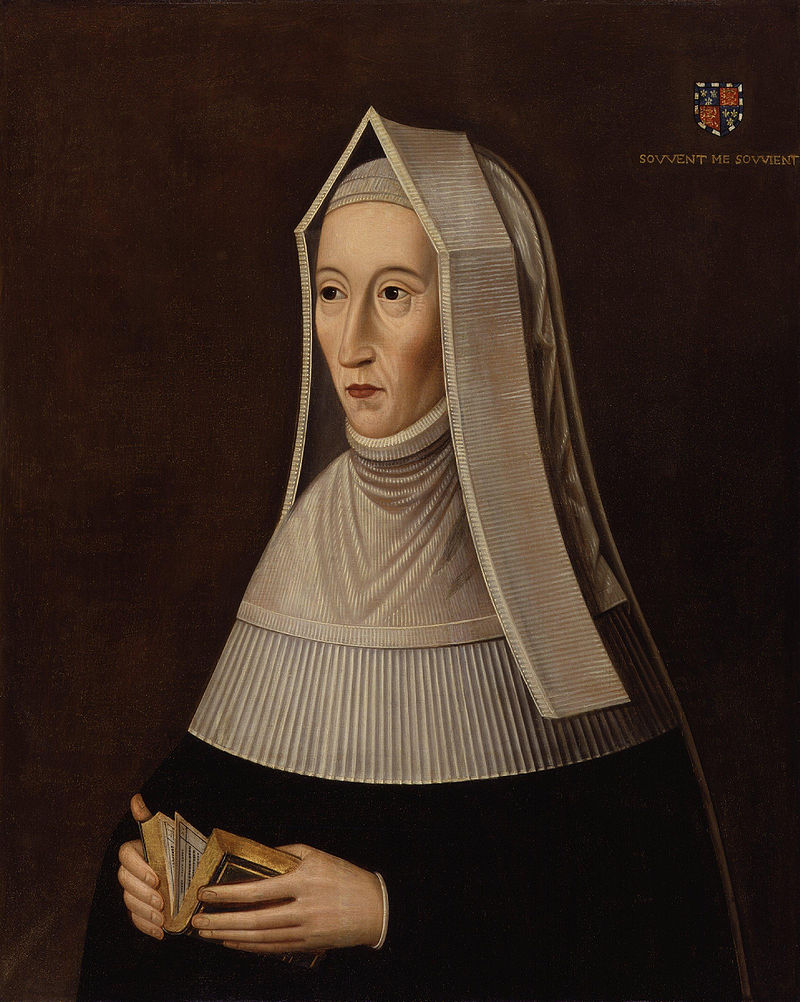
Margaret Beaufort

She could have asked, of course, but she would not get any answers. She thought of all the words that went unspoken in the world, throughout time: what happened to them, where did they go? What would happen if they were all spoken? How different would the world be then?

Succession by Livi Michael (2014)

~

“Molly, I cannot have you speaking so to Lady Harriet,” said Mrs. Gibson, as soon as she was left alone with her stepdaughter. “You would never have known her at all if it had not been for me, and don’t be always putting yourself into our conversation.”

“But I must speak if she asks me questions,” pleaded Molly.

“Well! if you must, you must, I acknowledge. I’m candid about that at any rate. But there’s no need for you to set up to have an opinion at your age.”

“I don’t know how to help it,” said Molly.

Wives and Daughters by Elizabeth Gaskell (1865)

~

I know very little about my mother, and have no family to help me fill in the gaps. I am an only child and my father’s two elder sisters died several years ago. I am intrigued by this photograph and would like to find out more about the people in it…I hope you don’t mind me asking all these questions. Any information you could offer would mean a great deal to me.

The People in the Photo by Hélène Gestern (2011)

~

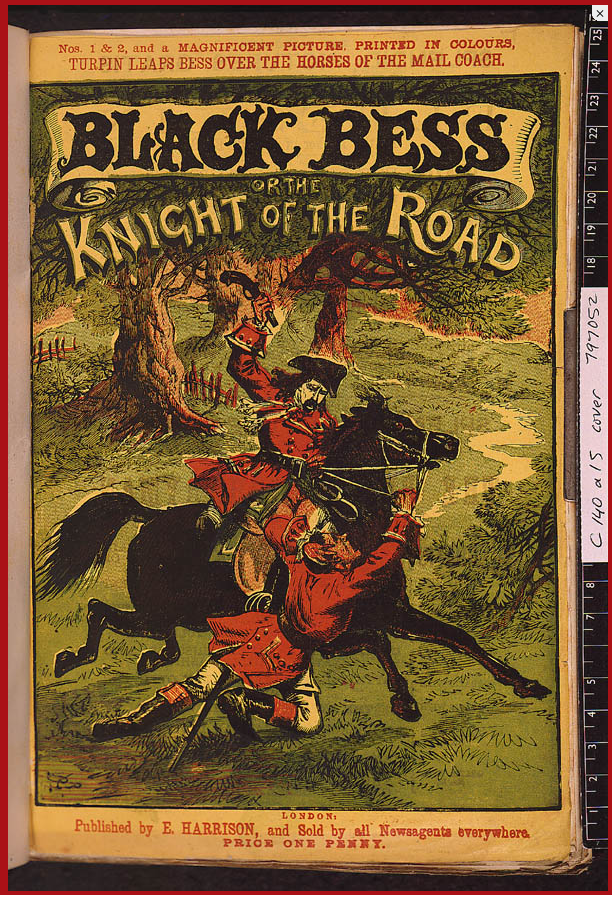
Penny dreadful

Since cheap magazines were traded on street corners, in playgrounds and factory yards, each issue could have many readers. Penny fiction was Britain’s first taste of mass-produced popular culture for the young, and was often held responsible for the decay of literature and of morality.

The Wicked Boy by Kate Summerscale (2016)

~

It can’t have been much of a life, can it? for a woman of over seventy, living alone in lodgings, in debt to her landlady, wearing our cast-off clothes, trotting round after jobs that never materialised, writing articles that nobody would publish, and eating bread and margarine for supper. There really was something rather pathetic about that awful room of hers – crowded with papers full of impossible schemes…I don’t suppose there can ever have been anyone whose life was much less important, or who had less influence on anybody else.

Poor Caroline by Winifred Holtby (1931)

~

It was something he’d learned in the war: only think about what is directly in front of you. No, that wasn’t quite right. He’d had to plan ahead all the time…but not to feel ahead. For a man of Giles’s far-seeing, intricate temperament that had been a hard lesson. But Simon, he could see, knew it by instinct.

Exposure by Helen Dunmore (2016)

~

Red Cocker Spaniel

Hers was the pale worn face of an invalid, cut off from air, light, freedom. His was the warm ruddy face of a young animal; instinct with health and energy. Broken asunder, yet made in the same mould, could it be that each completed what was dormant in the other? She might have been — all that; and he — But no. Between them lay the widest gulf that can separate one being from another. She spoke. He was dumb. She was woman; he was dog. Thus closely united, thus immensely divided, they gazed at each other.

Flush by Virginia Woolf (1933)

~

“I play,” he once said to me, “for the best musician in the world – he may not be there, but I play as if he were”. I thought to myself that he was always there when Sebastian was playing, but I did not say so, for that was the kind of thing which did not please him.

The Little Chronicle of Magdalena Bach by Esther Meynell (1925)

~

It is quite beautiful, a metaphoric triumph over adversity, with every millimetre of its gnarled trunk proudly displaying its struggle.
I wonder now why humans hate the map of their life that appears on their own bodies, when a tree like this, or a faded painting, or a near-derelict uninhabited building is lauded for its antiquity.

The Olive Tree by Lucinda Riley (2016)

~

I cannot say – I had misjudged him before – yet I do think, in that moment, he had his battle to fight – one fierce as his fiercest charge. Cosmas waited, devouring him with his eyes. And I waited; a sudden, amazing sense springing up in me, that if he yielded, as I had so desired him to yield, this King who might be would never be the Prince whom I had served and loved.

Rupert, by the Grace of God by Dora Greenwell McChesney (1899)

~

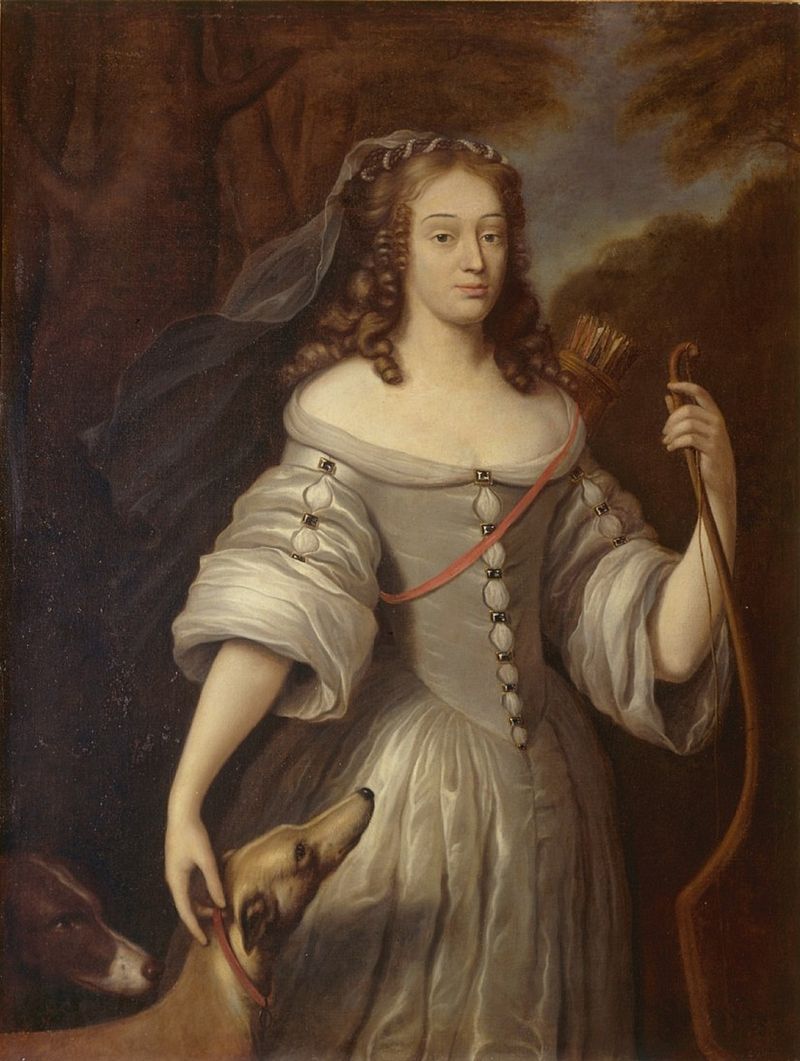
louisedelavalliere

“Life, monsieur,” said Planchet, laughing, “is capital which a man ought to invest as sensibly as he possibly can.”

Louise de la Vallière by Alexandre Dumas (1850)

~

Hélène wondered whether the lady was protesting a bit too much in order to convince her, or to convince herself. Could she start a new life at her age? You can start a new game of cards or redecorate the living room, but life itself, can you do that again?

The Travels of Daniel Ascher by Déborah Lévy-Bertherat (2013)

~

And now? Overseas in England, his brethren in the faith were fighting, were dying, to achieve the freedom which he had sought. Before his eyes rose the grey, thronged sea-port town he knew, the richer fields, the narrower skies; and yet here, in this strenuous bleakness, he had found his soul.

Cornet Strong of Ireton’s Horse by Dora Greenwell McChesney (1903)

~

Love for her was to be a slow, ripening process, the fruit of many meetings and mutual interests. She had never believed in love at first sight. That surely, she told herself, was an invention of novelists, whose business it was to make everything slightly larger than life.

The Jewelled Snuff Box by Alice Chetwynd Ley (1959)

~

Fountains Abbey 1

The queen responded a week later. “We are sending a young gentleman up to Yorkshire to resolve the matter. We do not wish to hear from you again.”

It was a measure of Mr Aislabie’s poor standing at court that I was the young gentleman in question.

A Death at Fountains Abbey by Antonia Hodgson (2016)

~

Favourite books this month: Wives and Daughters, Flush and Exposure

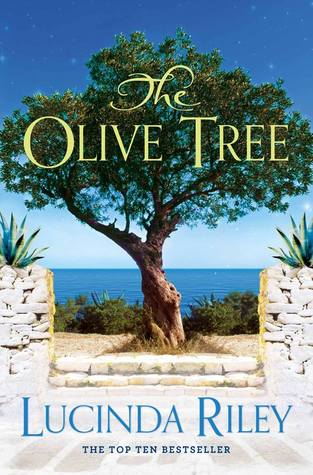
The Olive Tree by Lucinda Riley

The Olive Tree I wasn’t sure, when I first heard about The Olive Tree, whether I really wanted to read it or not. I’ve enjoyed most of Lucinda Riley’s previous novels but part of the appeal is the way she intertwines past and present, linking the lives of modern day characters with ones who lived in times gone by. The Olive Tree is not like that; it has a contemporary setting, with the action taking place mostly in 2006 with a few chapters bringing us right up to date in 2016. I thought I would miss the historical element, but actually, once I started reading, I found I didn’t mind that it was a different sort of book and I ended up enjoying it anyway (although not quite as much as the historical ones).

The Olive Tree is the story of a family holiday in Cyprus. The setting couldn’t be more idyllic – a house called Pandora, with its own pool, a sunny terrace and a beautiful view – but the holiday itself is the holiday from hell. As its Greek name suggests, Pandora holds a lot of secrets and some of them are about to be revealed.

Pandora belongs to Helena Cooke, the novel’s main female character, who is returning to the house for the first time in years, having recently inherited it from her godfather. Almost as soon as she arrives, however, she wonders whether coming back was a mistake: Alexis, with whom she had a teenage romance in Cyprus more than twenty years earlier, is still living nearby and still seems to have feelings for Helena. Her husband, William, is not going to be pleased!

Someone else whose life has been thrown into turmoil by the presence of Alexis is Helena’s eldest son, thirteen-year-old Alex. Alex has never known the identity of his biological father…could it be Alexis? As Alex retreats to the privacy of his tiny bedroom to write in his diary and pour out his hopes and fears, another troubled family arrives to stay at Pandora. They are the Chandlers: William’s alcoholic best friend, Sacha; his long-suffering wife, Jules, and their two children, one of whom is Alex’s worst enemy. With the additions of Chloe, William’s teenage daughter from a previous marriage, and Helena’s friend Sadie, who is getting over a break-up with her latest boyfriend, it’s going to be a difficult summer!

At nearly 600 pages, this was a surprisingly quick read, which is something I’ve found with most of Lucinda Riley’s novels; she knows how to tell a good story and how to hold the reader’s attention from one chapter to the next. I don’t think the book needed to be quite so long (the Sadie storyline, for example, added very little to the overall plot) but otherwise I did enjoy spending time getting to know the Cooke and Chandler families. There were some twists in the story towards the end and although I’d had my suspicions, I was still surprised by some of the revelations.

Interspersed throughout the novel are passages from Alex’s diary and I particularly liked reading these sections. I found Alex an intriguing character; having been assessed as a gifted child with an exceptionally high IQ, sometimes he seems much older than thirteen, but in other ways – such as his attachment to his toy rabbit, Bee – he feels very young and insecure. I think if the whole novel had been narrated by Alex it might have been too much, but I always looked forward to returning to his diary entries – they were written with such a unique combination of humour, wisdom and vulnerability.

This isn’t my favourite Lucinda Riley novel but with its sunny, summery setting it was a perfect August read. I’m now looking forward to reading The Shadow Sister, the next book in her Seven Sisters series, which is coming out later this year.

Thanks to the publisher for providing a copy of The Olive Tree for review.

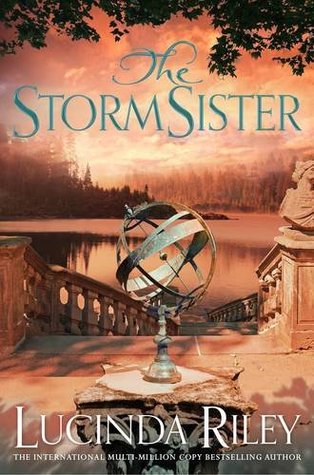
The Storm Sister by Lucinda Riley

The Storm Sister The Storm Sister is the second book in Lucinda Riley’s ambitious new series, The Seven Sisters. Based on the mythology surrounding the Pleiades (or ‘seven sisters’) star cluster, each novel in the series will tell the story of one of the adopted daughters of a reclusive millionaire known only as Pa Salt. Maia, Alycone (Ally), Asterope (Star), Celaeno (CeCe), Taygete (Tiggy) and Electra D’Aplièse have all been named after one of the stars in the constellation and have grown up together at Pa Salt’s estate, Atlantis, near Lake Geneva, Switzerland. The first book, which I read last year, is Maia’s story; The Storm Sister is Ally’s.

The beginning of this novel is very similar to the first: the sisters have been informed of Pa Salt’s death and have all hurried home to Atlantis, where they find that their adoptive father has left each of them a set of clues which will enable them to discover the truth about their own origins. At first, Ally’s clues mean nothing to her: a small brown frog and a pair of coordinates directing her to a museum in Norway. She is intrigued but has no time to investigate because, as a professional sailor, she is preparing to take part in one of the biggest yacht races of her career. When tragedy strikes, however, Ally decides to travel to Norway where she attempts to unravel the secrets of her past.

Following the trail left by Pa Salt, Ally learns of a talented young singer, Anna Landvik, who sang at the premiere of Peer Gynt more than a hundred years earlier. It seems that Anna’s story – and that of Jens Halvorsen, one of the musicians in the orchestra – could be linked to Ally’s own, but Ally is not quite sure what the connection could be. With the help of Thom Halvorsen, who tells her he is the great-great-grandson of Jens, Ally is able to fill in the gaps and in the process makes some surprising discoveries that will change the course of her own life.

I enjoyed The Storm Sister but I think I preferred the first book in the series (I suppose in a seven-book series it’s understandable that I’m going to like some more than others). The Storm Sister is a very long novel and I think I would have been happier if less time had been spent at the beginning of the book on Ally’s sailing and her romance with her fellow sailor, Theo. It seemed to take such a long time for the historical storyline to begin! I did become much more engrossed in Ally’s story in later sections of the book, though; I loved the way things came together towards the end and the links between several different generations of Halvorsens grew stronger.

The Anna and Jens storyline was fascinating and made me want to pause in my reading and listen to parts of Edvard Grieg’s Peer Gynt to help me imagine Anna singing Solveig’s Song and Jens playing the opening bars of Morning Mood on his flute. There is a musical theme running throughout the entire book and I was reminded of one of Lucinda Riley’s other novels, The Italian Girl, in that respect.

As part of a larger series, I had hoped that this book might shed more light on some of the central mysteries. Who was Pa Salt? What were the true circumstances surrounding his death and burial at sea? And what happened to the seventh sister, who should have been called Merope? However, we don’t learn much more about any of these things in this book; based on the two that I’ve read, it seems that each novel will stand alone and can be read in any order – presumably until we reach the seventh book when our questions should finally be answered!

Book three will focus on Star, or Asterope, and I’m already looking forward to it. Star is not one of the strongest characters among the sisters, but I like her and I think her story will be an interesting one.

Thanks to the publisher for providing a review copy of The Storm Sister.

The Seven Sisters by Lucinda Riley

The Seven Sisters This is the first in a planned series of seven novels based around the legends of the Seven Sisters star constellation. Each novel follows the story of one of six sisters, all born to different parents and adopted as babies by a man the girls call ‘Pa Salt’. Pa Salt has named his adopted daughters after the stars in the constellation: Maia, Alycone (Ally), Asterope (Star), Celaeno (CeCe), Taygete (Tiggy) and Electra. There is no seventh sister, which has made me very curious about the seventh book in the series!

This first novel introduces us to Maia d’Apliese, the eldest of the six girls. Growing up on Pa Salt’s estate, Atlantis, by Lake Geneva in Switzerland, Maia and her sisters have been loved and cared for by their adoptive father and his housekeeper, Marina, but know almost nothing about their own origins. When Pa Salt dies suddenly, the sisters – all now adults with lives and careers of their own – gather at Atlantis to remember the man who had been a father to them all. To their surprise, they discover that Pa Salt has left each of them an envelope containing clues to their heritage and pointing them in the direction of their place of birth.

Maia is surprised to find that her own life began in Rio de Janeiro, and with no reason to remain in Switzerland, she sets off to Brazil to research her roots. With the help of the Brazilian novelist, Floriano Quintelas, Maia begins to uncover the story of a young woman called Izabela who lived in Rio during the 1920s and played a part in the creation of the statue of Christ the Redeemer. As she learns more about Izabela, Maia begins to gain the confidence to move on with her own life and seize her own chance of happiness before it’s too late.

The Seven Sisters is a big book with over 600 pages in the hardback edition I read, but I never felt that it was too long. I was drawn into both main characters’ stories, so I didn’t really notice the length of the book. The experiences of Maia and Izabela are very different in some ways – Maia, in 2007, has freedom and opportunites that Izabela could only dream of – but there are also some similarities between their two stories. Both women are hiding secrets, both have made mistakes and both have lost someone close to them. Of the two characters, I preferred Maia, but both storylines interested me.

I also liked the setting – or settings, as there is more than one! Some of the 1920s chapters are set in Paris where Izabela spends some time among the Bohemian artists and writers in Montparnasse, but my favourites were the sections set in Rio. I know very little about Brazil and its history, so I enjoyed going back in time and learning about the construction of Christ the Redeemer, as well as the modern day chapters in which Maia sees some of the city’s famous sights.

I really love the concept of this series; it’s ambitious and something different. After I finished the book I took the time to explore Lucinda Riley’s Seven Sisters website, where she explains some of the mythology behind the Seven Sisters, or Pleiades, constellation. I discovered that she had also woven some anagrams and mythological allusions into the story too, which I hadn’t noticed while I was reading the book but will look out for in future novels now that I’m aware of it! I’m already looking forward to the second in the series, which will be Ally’s story. Ally’s personality seems to be very different from Maia’s and I can’t wait to get to know her better.