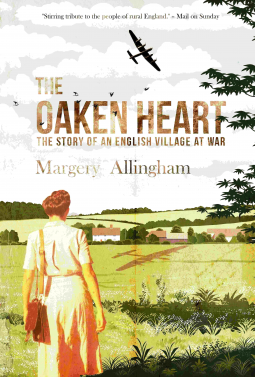
 Having read several of Margery Allingham’s detective novels, I was intrigued to come across The Oaken Heart, an account of life in her small English village during the Second World War. Originally published in 1941, it was apparently based on letters written to some American friends and expanded into a book at the suggestion of her publisher. It’s interesting to think that she was writing this while the war was still taking place and when nobody knew how much longer it would last or what the outcome would be.
Allingham’s village was Tolleshunt D’Arcy in Essex, but she refers to it in the book as ‘Auburn’ after a line from the poem The Deserted Village by Oliver Goldsmith. She is obviously very proud of Auburn and the way the people who live there work together to cope with whatever the war throws at them; it’s true that all towns and villages have their own unique characteristics, but I think it’s also true that the wartime experiences of the residents of Auburn will have been similar to the experiences of people in other parts of Britain.
Like many other villages, Auburn, in 1938 when the book opens, is still suffering from the effects of the previous war which ended just twenty years earlier. There’s a sense that Allingham and her friends are putting all their faith in Neville Chamberlain, not really believing or wanting to believe that war could possibly happen again. Of course, it does happen again – after a year of preparations, gas mask distributions and discussions of who should take in how many evacuees. The subject of evacuees is an important one to the people of Auburn; at first they are excited at the thought of groups of little schoolchildren from London arriving in the village (since the First World War there has been a shortage of young people in Auburn), but the reality is very different – hundreds of young mothers and babies! Allingham’s descriptions of the newcomers, the culture differences and how the villagers dealt with all of this are quite funny to read about.
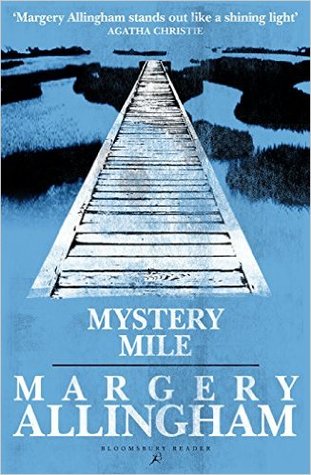
I have never read anything about Margery Allingham as a person before, so I don’t know what she was supposed to be like or what impression the people who knew her had of her, but based on her own words in The Oaken Heart, she seems very likeable and down-to-earth. She makes a few references to her writing career now and then (she was working on Traitor’s Purse at the time), but there is never any sense of self-importance or superiority over anyone else in the village. Her writing style is warm, conversational and, as you would expect, very readable.
This is a wonderful book, which I would recommend to anyone who enjoys reading about life during the war. The fact that it is a first-hand account written in 1941 rather than a memoir written years later gives it another layer of interest. As we reach the final page, there is still no end to the war in sight and nobody has any idea if or when it’s all going to stop. I was sorry that the book ended when it did, as I would have liked to have continued reading about the people of Auburn and to find out how they fared later in the war.


 She Reads Novels