My Commonplace Book: July 2016

A summary of this month’s reading, in words and pictures.

commonplace book
Definition:
noun
a notebook in which quotations, poems, remarks, etc, that catch the owner’s attention are entered

Collins English Dictionary

***

He turned his head to smile at her, apologetically; and his face was haggard in the firelight, so that suddenly she cared nothing for kings and wars, nor bishops nor the soul of man, nor for what Thomas did, only for what Thomas was; and she longed to fling her arms round him and hold him close because he was like a lute that was strung too tight.

The Rider of the White Horse by Rosemary Sutcliff (1959)

***
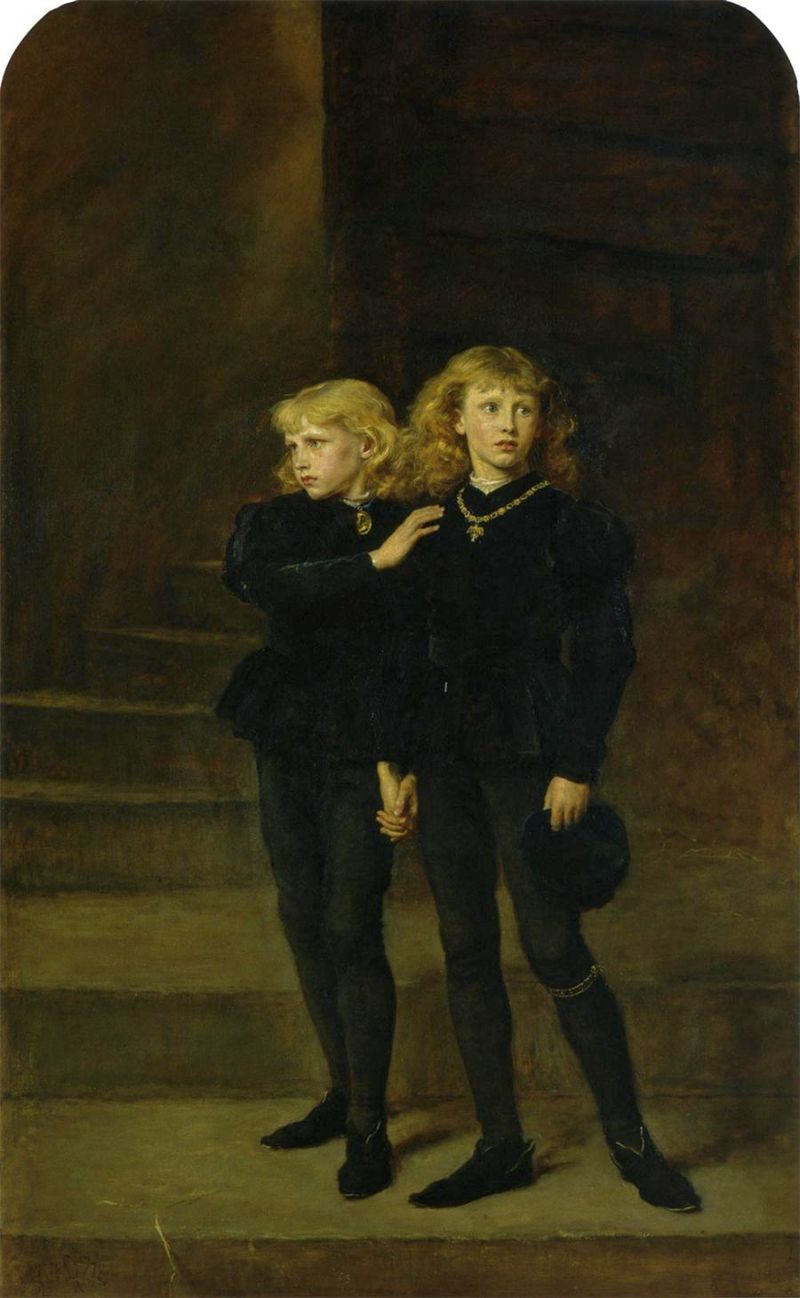
Princes in the Tower

No banners were raised above the company and they wore no livery, anonymity as well as haste their ally this April morning. Where Watling Street cut its blade-straight course towards the Great Ouse, the last of the sentries who had ridden on ahead to silence any word of their coming joined the company and, together, the horsemen thundered towards the small market town of Stony Stratford and the object of their race: the boy who had become king.

Sons of the Blood by Robyn Young (2016)

***

Nash is a follower of the playwrights and knows their best bons mots by heart, but I am fascinated by the actors themselves. I wonder about the life behind the stage and the precariousness of it. The thought of it gives me a shiver. Perhaps my interest stems from the apprehension that actors, whose calling depends on looks and voices and bodies that cannot last, must confront the same hard laws of life that women do. When the brightness of our beauty dies, we are plunged into the dark.

The Revelations of Carey Ravine by Debra Daley (2016)

***
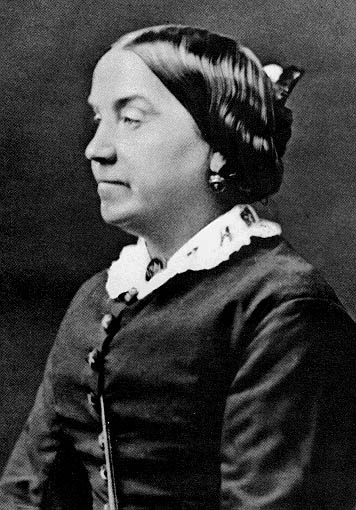
Lizzie Burns

And is it any different with love? Isn’t love the reverse side of the same medal? To love is to have, but rare does it happen that what we have is what we love. Love buys cheap and seeks to sell at a higher price; our greed is for gain that lies outside our reach. We desire those who don’t desire us in return.

Mrs Engels by Gavin McCrea (2015)

***

Before him lay the well-kept grounds, the clipped rose trees already beginning to put forth their glossy leaves, the panes of the glass-house gleaming like ice in the moonlight, the fountain where the water splashed in silver threads, hollow-eyed termini set between yew trees. The windows in the side of the pleasure house facing Desgrez were shuttered; he crept along, however, most warily; he did not know who was posted in the gardens nor what sentries might be placed about the house and grounds.

The Poisoners by Marjorie Bowen (1936)

***

Gondola

They glided away through the spangled water, and he filled his lungs with the haunting sea air. Other gondolas slipped past with lovers or merrymakers. A delicious languor filled the night, lapping of water, wandering of music. He felt a longing, sweeter than possession, for the indescribable, the unattainable. He would return here someday with her; he would occupy one of these palaces; they would live in terms of color – sapphire and silver – in terms of a casement open on the sea-scented night.

Prince of Foxes by Samuel Shellabarger (1947)

***

“Oh, don’t worry, we’re still appalling know-it-alls. We dig things up, but then we photograph and catalogue, record and document, and as often as not we put things back. It’s not the finds so much as the findings. Not the objects but the stories they tell.”

Sandlands by Rosy Thornton (2016)

***

Magna Carta

Under the shade of the pavilion, he noted a table in readiness, stools around it, and parchment and pens and wax all ready, with clerks and knights waiting. They had at least the grace to stand when he entered and, without speaking, took the stool at the table-head. Before him lay the long charter. He knew it by heart, each clause of it had burned into him with rage while impotently he had listened to these rogues’ demands.

The Devil and King John by Philip Lindsay (1943)

***

Favourite books this month: Prince of Foxes and The Revelations of Carey Ravine.

God and the Wedding Dress by Marjorie Bowen

the-1938-club After the success of last year’s 1924 Club, Karen (of Kaggsy’s Bookish Ramblings) and Simon (of Stuck in a Book) are back with The 1938 Club, the idea being that bloggers read and review books published in 1938, building up a picture of the literary scene in that year. I found lots of possibilities – 1938 seems to have been a particularly great year for literature – but I knew I was only going to have time to read one of them. Luckily the book that I decided on turned out to be a good choice for me.

The intriguingly titled God and the Wedding Dress is set in the seventeenth century in the village of Eyam in England’s Peak District. William Mompesson, the new Rector of Eyam, has recently arrived in the village with his wife, Kate, their two young children and Kate’s sister, Bessie, but the family are finding it difficult to adjust to their new life. They have all been used to luxury and comfort, but Mompesson’s new position requires them to live within their means, avoiding unnecessary extravagance. With Bessie’s marriage to the wealthy John Corbyn quickly approaching, however, the women are determined to make it a day to remember and so they send to London for a beautiful – and very expensive – dress.

God and the Wedding Dress Unfortunately, both women are unaware that with plague sweeping across London, Mompesson has been advised not to have any contact with people or items coming from the capital. By the time the Rector hears about the wedding dress, it’s too late: it has already been delivered to the tailor, the box has been opened, and the tailor’s apprentice is about to die a rapid and unpleasant death. It seems that the plague has arrived in Eyam.

What follows is a story which is both depressing and inspiring; the story of a small community working together in the face of unimaginable horrors, making sacrifices for the good of others which will have deadly consequences for themselves. It’s also a true story, based on the real events of 1665/66 (it’s not the only novel to have tackled this subject – Geraldine Brooks’ Year of Wonders is also set in Eyam, although I haven’t read that one yet). Eyam itself really exists and is known today as ‘the Plague Village’, while many of the characters, including William Mompesson, were real people too.

Although we do change perspective from time to time, most of the story is told from Mompesson’s point of view, which I thought was the right decision. Mompesson, like his wife and sister-in-law, likes the finer things in life, but also has a desire to live the way his parishioners expect the Rector of Eyam to live. He is in conflict with himself, but also with the people around him. At first he views the villagers as little more than pagans, trusting to spells and charms to protect them from the plague. He finds it difficult to gain their respect and it is only when he joins forces with Thomas Stanley, the former Puritan minister of Eyam who was appointed during the time of Oliver Cromwell and who lost his position following the restoration of the monarchy, that Mompesson really begins to feel part of the community.

In her foreword, Marjorie Bowen states that there are many different types of historical novel and ‘this author has tried most of them’ which may sound conceited until you look at the very long and impressive list of books she wrote! I have read three of them in recent months (the other two being Dickon, a fictional biography of Richard III, and The Viper of Milan, a wonderful story set in Renaissance Italy) and I can say that the three I’ve read are all quite different in subject, style and tone. This is a quieter, more reflective novel, as much about a man’s inner struggles as it is about the history surrounding him.

I enjoyed God and the Wedding Dress, although it is obviously not the most cheerful of novels and not one to read if you need all of your characters to have a happy ending. It’s a fascinating story, though, and an important one because I think the sacrifice made by the people of Eyam deserves to be remembered.

~

Other 1938 books previously reviewed on this blog:

Princes in the Land by Joanna Cannan
Miss Pettigrew Lives for a Day by Winifred Watson

My commonplace book: February 2016

commonplace book
Definition:
noun
a notebook in which quotations, poems, remarks, etc, that catch the owner’s attention are entered

Collins English Dictionary

~

A summary of this month’s reading, in words and pictures.

~

Every sound of the quiet evening came clearly to her ears with an unnatural distinctness; but now each one possessed a different and terrifying meaning. The muffled shouts and laughter of the few remaining bathers from the indoor swimming bath were the cries of fleeing, panic-stricken people. The whisper of the breeze through the pine needles was a frightened man whispering orders in the shadow of fog-shrouded whin bushes. A passing car was the drone of an enemy bomber and the faint lap of water against the sea-green tiles at the far side of the wide pool was the lap of waves against a pebble beach.

Death in Berlin by M. M. Kaye (1955)

~

“The promise of the day!” said Visconti, dreamily and sadly. “Hath it never struck thee how that promise never is fulfilled? Day after day, since the world began, something in the mystery of the dawn is promised – something the sunset smiles to see unfulfilled – something men have ever been cheated of – something men will never know – the promise of the dawn!”

The Viper of Milan by Marjorie Bowen (1906)

~

Louis X

Uncertain health, a clever but overbearing father whose authority had crushed him, an unfaithful wife who had scoffed at him, an empty treasury, impatient vassals always ready to rebel, a famine in the first winter of his reign, a storm which threatened the life of his second wife – beneath what disastrous conjunction of the planets, which the astrologers had not dared reveal to him, must he have been born, that he should meet with adversity in every decision, every enterprise, and end by being conquered, not even nobly in battle, but by the water and mud in which he had engulfed his army?

The Poisoned Crown by Maurice Druon (1956)

~

She looked up as the train passed, and I was almost near enough to catch her eye. She had a round pale face, the usual exhausted face of the slum girl who is twenty-five and looks forty, thanks to miscarriages and drudgery; and it wore, for the second in which I saw it, the most desolate, hopeless expression I have ever-seen. It struck me then that we are mistaken when we say that ‘It isn’t the same for them as it would be for us,’ and that people bred in the slums can imagine nothing but the slums. For what I saw in her face was not the ignorant suffering of an animal. She knew well enough what was happening to her — understood as well as I did how dreadful a destiny it was to be kneeling there in the bitter cold, on the slimy stones of a slum backyard, poking a stick up a foul drain-pipe.”

The Road to Wigan Pier by George Orwell (1937)

~

Flag of Iowa

After all no fledgling had it easy, farmer or crow. Hadn’t he known since he was a boy the way the fledglings had to fall out of the nest and walk about, cheeping and crying, until they grew out their feathers and learned to fly on their own? Their helpless parents flew above them, and maybe dropped them a bit of food, but flying or succumbing belonged to them alone.

Some Luck by Jane Smiley (2014) – review to follow

~

“I must insist upon it,” she continued, “that you shall take me now as I really am — as your dearest friend, your sister, your mother, if you will. I know what I am. Were my husband not still living it would be the same. I should never under any circumstances marry again. I have passed the period of a woman’s life when as a woman she is loved; but I have not outlived the power of loving.”

Phineas Redux by Anthony Trollope (1873)

~

“There is no other way, Robert,” James said quietly, watching the emotions shift across his face. “If Balliol returns you lose everything. At least this way you have a chance to make sure you and your family are protected. Our best hope is that Edward will be able to keep Balliol from the throne. If he succeeds, God willing, you may one day still claim it.”

Renegade by Robyn Young (2012)

~

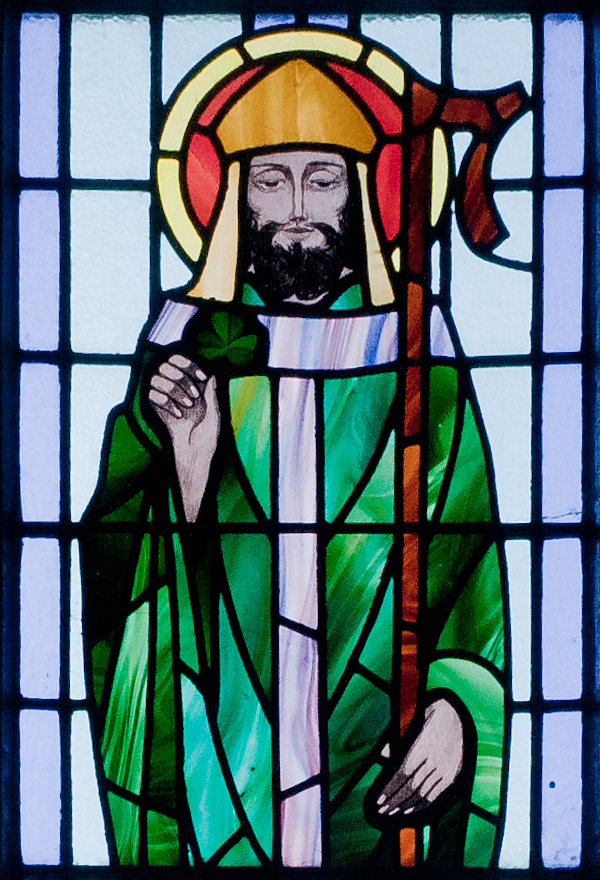
St Patrick

And so it came to be that they carried me away into bondage, slung over the shoulder of the black-beard while the girl walked, roped behind. I cannot tell you of the voyage, nor of the faces of the many who were taken into captivity with us. I can only say that on that day “…the Lord brought over us the wrath of His anger and scattered us among many nations, even unto the utmost part of the earth, where now my littleness is placed among strangers” in the land known as Eire.

The Lion and the Cross by Joan Lesley Hamilton (1979) – review to follow

~

Everybody was bowing, sliding on to one knee as Henry came into the chamber, leaning on his staff and smiling…Here comes the King, and with the coming of the King, all life must stop, the very air must thicken as if congealed in awe of this gross man who hobbled painfully on his tall staff, nodding and smiling, blinking every second.

Here Comes the King by Philip Lindsay (1933)

~

In a country where so many desire status and wealth, petty annoyances can spark disproportionately violent behaviour. We become frustrated because we feel powerless, invisible, unheard. We crave celebrity, but that’s not easy to come by, so we settle for notoriety. Envy and bitterness drive a new breed of lawbreakers, replacing the old motives of poverty and the need for escape. But how do you solve crimes which no longer have traditional motives?

Ten-Second Staircase by Christopher Fowler (2006) – review to follow

~

Favourite books this month: Phineas Redux and The Viper of Milan

The Viper of Milan by Marjorie Bowen

Marjorie Bowen was a new discovery for me towards the end of last year. Born Margaret Gabrielle Vere Campbell, she wrote more than one hundred and fifty books under several pseudonyms, covering a variety of genres from historical fiction and romance to supernatural horror, crime fiction and biography. Having enjoyed Dickon, her fictional account of the life of Richard III, I decided not to wait too long to try another of her books.

The Viper of Milan The Viper of Milan, originally published in 1906, was Bowen’s first novel and a favourite book of the author Graham Greene. This reissue by Endeavour Press includes an introduction by Greene (I recommend reading it at the end to avoid spoilers) in which he explains how Bowen influenced his own early attempts at writing. The Viper of Milan, he says, taught him that human nature is “not black and white but black and grey”.

The novel is set in Lombardy in the middle of the 14th century and follows a battle for power between Gian Galeazzo Maria Visconti, Duke of Milan, and Mastino della Scala, Duke of Verona. As the story opens, in 1360, Visconti is busy expanding his territories and forging alliances; he has forced della Scala out of Verona and taken his wife, Isotta d’Este of Ferrara, as a hostage. It seems that nobody can stop Visconti in his relentless conquest of northern Italy – nobody apart from della Scala, who vows to regain his lost lands and release Isotta from captivity.

Meanwhile, Visconti’s sister Valentine has problems of her own: her brother has arranged a marriage for her with the Duke of Orleans, while the man she really loves has been imprisoned in a deserted villa outside the city and is slowly starving to death. Another young lady, Graziosa, who lives with her artist father by the western gate of Milan, is also in love – but is her lover really as he seems?

As you can probably tell from my summary of the plot, The Viper of Milan is a dark tale of treachery, trickery and betrayal. I was amazed to learn that Marjorie Bowen was only sixteen years old when she wrote it. Apparently it was rejected by several publishers who considered it an inappropriate novel for such a young woman to have written. What interests me more than the darkness of the story, though, is – as Graham Greene said – Bowen’s view of the ambiguities of human nature. The Duke of Milan, a clever, patient and shrewd man, is also a cruel and brutal one, ruling through fear and violence. In contrast, the Duke of Verona is honest, honourable and trusting, inspiring respect and admiration in those who follow him. It’s only when he discovers that doing the right thing doesn’t always pay that he begins to wonder whether it’s worth continuing to stick to his morals.

After reading Dickon, I thought I had an idea of what to expect from Bowen’s writing, but I found The Viper of Milan to be very different in style and tone. The archaic language which felt slightly unnatural in Dickon suited this book perfectly, with its more melodramatic and gothic feel. This is an ideal read for people who, like myself, enjoy reading authors like Alexandre Dumas and Rafael Sabatini (in fact, Sabatini’s Bellarion is a very similar novel, set in the same part of Italy at about the same time).

If you do choose to read this book, I should warn you that the historical background to the story is not particularly accurate. Some of the characters have the names of real historical figures, but the plot is fictional and many of the things that happen have no basis in history. Having said that, the novel does capture perfectly the atmosphere of early Renaissance Italy with its warring city states and is a wonderfully entertaining story in its own right. There are some beautifully written descriptions of the Lombardy region too. If this sounds like your sort of book, then I would highly recommend The Viper of Milan. If not, Marjorie Bowen does seem to have been a very versatile author, so maybe one of her other books would be of more interest. I will be reading more of them, so I’ll let you know what I discover!

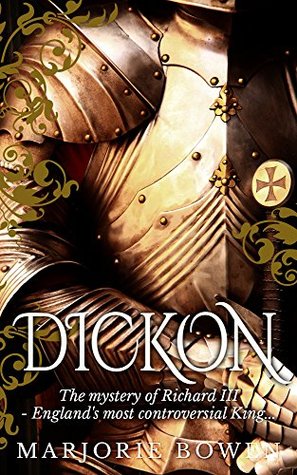
Dickon by Marjorie Bowen

Dickon Marjorie Bowen (1885-1952) was a very prolific author of historical fiction, romance, crime and horror, producing over one hundred and fifty books during her lifetime. Endeavour Press have gradually been making some of them available to modern readers and there are several that I’m interested in reading, but I decided to start with this one, Dickon, as it is set during one of my favourite historical periods: the Wars of the Roses.

The title refers to Richard III (Dickon, of course, is a nickname for Richard) and the novel follows Richard throughout his entire life, beginning with the moment when, as a child, he learns that his father, the Duke of York, and elder brother, Edmund, have been killed at the Battle of Wakefield. The book is divided into three sections; the first is called The Three Suns, which refers to the parhelion which appeared in the sky at the Battle of Mortimer’s Cross, but could also be a pun on the three remaining ‘sons’ of the Duke of York – and covers Richard’s childhood up to the point where his brother wins the throne for York, becoming King Edward IV.

The middle section, The Bear and Ragged Staff (a reference to the emblem of the Earl of Warwick) concentrates on 1470-1472, the period of the rebellion of Warwick and George, Duke of Clarence. Finally, The White Boar takes us through Edward’s death and the period immediately afterwards – Richard’s own brief reign and his tragic end at the Battle of Bosworth in 1485. There is no doubt that Richard suffered a lot of misfortune and tragedy and this is symbolised in the novel in the form of Jon Fogge, a man-at-arms whom Richard believes has been haunting him throughout his life, bringing bad news and bad luck to the Plantagenets.

Dickon was published in 1929 and I think it’s fair to say that it’s quite different from the majority of historical fiction that is being published today. The dialogue has a very old-fashioned feel, being sprinkled with words like ‘thou’, ‘thee’, ‘doth’ and ‘hath’, something that seems to have been dropped by most modern historical novelists, and the whole novel also has an air of innocence, with sex scenes only hinted at rather than explicitly described. I do like ‘older’ historical fiction but I suspect some readers will find this book too archaic and romanticised.

In her preface to the novel, Marjorie Bowen says that she has studied all of the known sources and “has violated no known fact, nor presented any character or action in any light that is not probable, as well as possible”. I did notice a few historical inaccuracies, but as I’m not completely sure how much material was available in 1929 and how much has only come to light in more recent years, I’m not going to be too critical. There are also a lot of controversies surrounding Richard III and his reign – there is no one version of events that has been accepted by everybody – so different authors and historians do have different theories and different interpretations. I was particularly curious to see how Bowen was going to approach the mystery of the disappearance of the Princes in the Tower, so I was disappointed to find that her solution was simply to ignore the whole episode!

Richard himself is portrayed as sensitive, loyal and trusting, a brave warrior and a devoted brother, father and husband. His character lacks the depth and complexity I would have liked and sometimes seems too good to be true, although I can appreciate that this is one of the earliest pro-Ricardian novels, written decades before books like The Daughter of Time or The Sunne in Splendour, and that the author was trying to provide an alternative to the usual view of Richard as the hunchbacked villain of Shakespeare’s play.

If you’re completely new to this period of history and the life of Richard III, this book is maybe not the best place to start, but I did find it quite enjoyable and a good addition to my collection of Wars of the Roses fiction. I will be reading more by Marjorie Bowen.

Thanks to the publisher for providing a review copy via NetGalley.