Love, Sex & Frankenstein by Caroline Lea

Love is a light you can see only when you reach for it. You hold it in your hand and, for as long as the flame glows, it warms you.
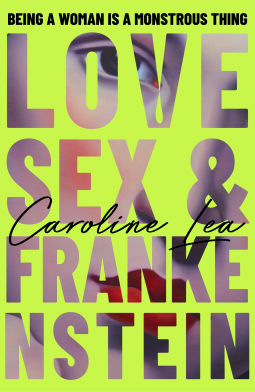
I’ve read three of Caroline Lea’s previous books, all of which I found interesting, so I was looking forward to reading her new novel about the life of Mary Shelley – although I have to admit, if I hadn’t already known I liked Lea’s work, the cover and title of this one would have probably put me off. I’m glad that didn’t happen because I really enjoyed it; it’s probably my favourite of her books so far.

The main focus of the novel is the events of 1816 – known as the Year Without a Summer due to the unusual weather caused by a volcanic eruption the year before. It’s also the year that Mary Godwin and her lover, Percy Shelley, travel to Geneva with their baby son and Mary’s stepsister, Claire Clairmont. Not for the first time, Shelley’s debts have brought the bailiffs to their door and, tired of constantly moving around London to avoid them, Claire has seized the opportunity to persuade Mary and Percy to come to Switzerland with her to visit Lord Byron. Claire is convinced that Byron loves her and claims that he has been begging her to go and spend the summer with him at Lake Geneva but Mary, who is familiar with Byron’s reputation, thinks she’s deluded. However, in their desperation to escape the bailiffs, she and Shelley agree to Claire’s plan.

As they arrive at their hotel in Geneva, the foggy, oppressive weather mirrors Mary’s mood. She and Shelley seem to do nothing but argue and with no sign of Byron, Claire has turned her attentions to Mary’s lover, making no secret of what she is doing. When Byron finally does appear and the party start to spend time with him and his companion, John Polidori, at his rented home, the Villa Diodati, Mary hopes things will improve. However, the dynamics between the four of them only grow more tense and strained and Mary thinks of taking baby Willmouse and running away. Then, during a storm one evening, they gather to read ghost stories and, unimpressed, Byron issues a challenge: they should each write one of their own and see whose is best. Now Mary has something to focus on and during this difficult, emotional time, her famous novel, Frankenstein, begins to take shape.

Despite the title, the writing of Frankenstein forms only a small part of the book; instead Lea concentrates on exploring Mary’s state of mind in the period immediately before and during the creation of the novel. There’s some jumping around between timelines in the first half of the book as Lea tries to fill the reader in on Mary’s background, her childhood and the beginning of her relationship with Shelley, and I found it slightly difficult to keep track of things, but this became less of a problem later in the book when I had settled into the story.

Having read several other novels about the Shelleys and Lord Byron, I was interested to see how Lea’s portrayal of the characters would compare. As our protagonist, Mary is a complex woman but also a contradictory one. She has the strength and determination to repeatedly defy convention to be with the man she loves – the already married Shelley – while at the same time she feels trapped in her relationship with him and unable to escape. Shelley seems to love her in his own way, but is insensitive towards her and expects her just to accept his various infidelities. Mary’s relationship with Claire is equally difficult, continually switching between resentment and affection. As seen through Mary’s eyes, Claire doesn’t come across well at all in this book, flirting openly with Shelley in front of her sister then complaining when Mary later does the same with Byron. (For a more sympathetic view of Claire, try Clairmont by Lesley McDowell.) The portrayal of Byron is also largely very negative – he treats Claire appallingly, although we see a more tender side of him in his interactions with Mary.

This is definitely not a book with likeable characters, then, but the fact that they are all, like Mary, complex and contradictory is what makes them feel human and believable. It’s also beautifully written and I enjoyed reading it, despite not really learning much about Frankenstein!

Thanks to Michael Joseph for providing a copy of this book for review via NetGalley.

Doomed Romances: Strange Tales of Uncanny Love edited by Joanne Ella Parsons – #ReadIndies

This new short story collection, Doomed Romances: Strange Tales of Uncanny Love, is part of the British Library’s Tales of the Weird series. These books have been around for a few years now but I’ve let them pass me by as I’ve had enough to read with their Crime Classics series! I’m glad I’ve finally found time to try one as although this collection is a bit uneven I did find it entertaining.

The book contains twelve stories by different authors and includes an introduction by the editor, Joanne Ella Parsons. The stories were originally published between 1833 and 2022 and appear here in chronological order. All have a ‘doomed romance’ theme, with some being much darker than others. There are two that I’ve actually read before – one of them is Sheridan Le Fanu’s lesbian vampire novella, Carmilla, and the other is Angela Carter’s The Lady of the House of Love, also a vampire story, first published in The Bloody Chamber. I didn’t read Carmilla again as I just read it fairly recently, but I did re-read the Carter and was impressed again by the beautiful imagery and the atmospheric Gothic setting she creates.

The oldest story in the book is Mary Shelley’s The Invisible Girl, in which the narrator, out walking along the coast of Wales, finds a painting of a beautiful woman hanging on the wall inside a ruined tower. It was good to have the opportunity to try more of Shelley’s work, having only read Frankenstein so far, but I didn’t find this a particularly strong story. Two that I did enjoy were The Little Woman in Black by Mary Elizabeth Braddon and One Remained Behind by Marjorie Bowen. These are also authors I’ve read before; Braddon is a favourite Victorian author of mine and has a very readable writing style. Her story seemed as if it was heading in one direction, but then surprised me with an ending I wasn’t expecting at all! Bowen was a very prolific author of historical novels and supernatural tales – the story in this collection is a ghost story from 1936 and one of the highlights of the book for me.

Joanne Ella Parsons has clearly tried to include stories with a wide range of geographical settings, exploring different cultures, rather than just sticking with more traditional Gothic stories. Wilkie Collins, another Victorian author I usually enjoy, is represented here with Mr Captain and the Nymph, in which a ship’s captain lost on an unidentified Pacific island falls in love with the daughter of a local priest. It’s an interesting story, although not a good example of his best work. Alice Perrin’s The Tiger-Charm is set on safari in India, while Nalo Hopkinson’s The Glass Bottle Trick transposes the famous Bluebeard folktale to a Caribbean setting. The latter are two new authors for me and I found both stories entertaining, but I’m not sure if I would search out more of their work based on these.

Another highlight was Could You Wear My Eyes? by Kalamu ya Salaam, where a man whose wife has died agrees to have her eyes inserted into his face after her death, allowing him to see life from her perspective. It’s a strange story but a fascinating one! The collection is completed with another 19th century story, Ella D’Arcy’s White Magic, and two contemporary ones, I’ll Be Your Mirror by Tracy Fahey and Dancehall Devil by V. Castro.

Doomed Romances is a real mixed bag, then – there are some very strong stories and some much weaker ones, and including Carmilla seemed an odd decision to me, as it’s so much longer than any of the other stories and made the book feel unbalanced. I enjoyed the collection overall, though, and will probably consider reading more of them.

British Library Publishing publish a range of fiction and non-fiction including the Tales of the Weird, Crime Classics and Women Writers series. They are an independent publisher, so I’m counting this book towards #ReadIndies month, hosted by Kaggsy’s Bookish Ramblings and Lizzy’s Literary Life.

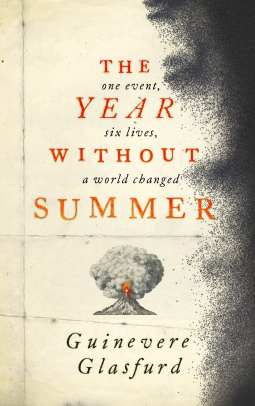
The Year Without Summer by Guinevere Glasfurd

Two years ago I read Guinevere Glasfurd’s first novel, The Words in My Hand, about a young Dutch woman and her relationship with the philosopher René Descartes. I loved that book so was hoping for a similar experience with her new one, The Year Without Summer. However, although I loved parts of this book too, I found it entirely different from The Words in My Hand and less enjoyable as a whole.

The title refers to the year 1816, which was the year following the eruption of Mount Tambora, an Indonesian volcano. It was known as ‘the year without a summer’ due to the effects of the volcanic activity on the weather. These effects were felt all over the world, far away from Asia: in Europe, low temperatures and heavy rain caused flooding, failed harvests and famine, while crops were also destroyed in North America by droughts and by frost and snow in June. In The Year Without Summer, Glasfurd explores, in fictional form, the stories of six different people whose lives were affected by the extreme weather.

The first character we meet is Henry Hogg, ship’s surgeon aboard the Benares, who sets sail in April 1815 for the island of Sumbawa to investigate reports of explosions and is shocked by what he finds: ash falling from the sky, the sea turning to stone and what had once been a green island now ‘a hellish scene’. Henry’s story is the only one in the book that takes us directly to the scene of the eruption – the others only mention the volcano briefly, if at all – yet, surprisingly, his is the one given the least time and attention.

The following spring, the English landscape painter, John Constable, is returning home to Suffolk from an unsuccessful visit to London in an attempt to gain recognition for his art and be admitted to the Royal Academy. Without that recognition and the money it would bring, John’s future looks bleak: how can he expect his beloved Maria to marry a struggling artist with no prospects?

The future of our third protagonist, Sarah Hobbs, looks even more uncertain. She and her friend Tessie are walking across the Fens from farm to farm looking for work, only to be told that there is no work to be had – and even if there was, the wages would only be half of what they were the year before. Meanwhile, Hope Peter, a soldier back from Waterloo, is having problems of his own. In his absence, his mother has died and his family home has been demolished; the life to which he’d thought he was returning no longer exists.

In the May of that year, Mary Godwin travels to Switzerland with her lover Percy Bysshe Shelley, their baby son Willmouse, and her half-sister Claire Clairmont. They are planning to spend the summer at Lake Geneva with Lord Byron and his doctor, John Polidori, but the gloomy weather keeps them indoors where they entertain themselves by writing horror stories. Finally, we meet Charles Whitlock, a preacher from Vermont, who gives us an American perspective on the summer of 1816. Charles is trying to gain the trust of his flock who are growing increasingly worried about the lack of rain and planning to abandon their farms to head west to Ohio.

These six very different storylines alternate throughout the book, never meeting or intersecting in any way, the only link between them being the unusual weather of 1816. They cover a range of issues including the social unrest which led to the Littleport Riots, the enclosure of land in the English countryside, the writing of Mary Shelley’s Frankenstein and the influence of the weather on John Constable’s paintings, and I found something to interest me in all of the stories – although most of them are very bleak and it would have been nice to have had a few more happy endings!

My problem with the book was that the way it was structured, with a chapter from one story, then a chapter from another, made it feel disjointed and made it difficult to stay engaged with each set of characters. As the six threads never came together at all, I think I would have preferred just a straightforward collection of six complete short stories – or maybe even just four, as the ones following the ship’s surgeon and the Vermont preacher felt very slight and undeveloped in comparison to the others.

As a whole, I don’t think this book was entirely successful, but still with more positives than negatives. It’s impossible not to draw parallels between the weather of 1816 and some of the extreme weather the world has been experiencing recently, which we can only expect to see more of in the future due to climate change, so this was a relevant read as well as an interesting one.

Thanks to Two Roads for providing a copy of this book for review via NetGalley.

Frankenstein by Mary Shelley

Frankenstein I’ve had this book on my list for the RIP challenge for the last four years and finally, this year, I found time to read it! This was technically a re-read for me as I know I read it in when I was in my teens, but I had almost completely forgotten the story so it did feel as though I was reading it for the first time again. I also think I was maybe a bit too young to fully appreciate it the first time (I remember skipping through the ‘boring’ parts at the beginning to get to the parts with the monster).

Frankenstein, or the Modern Prometheus was written while Mary Shelley and her husband, the poet Percy Bysshe Shelley, were staying at Lake Geneva with Lord Byron and John Polidori in the summer of 1816. Shelley’s novel is said to have come about as a result of a challenge from Byron that also led to Polidori’s The Vampyre (a story that influenced Bram Stoker’s Dracula) and the beginnings of Byron’s own unfinished vampire story.

Frankenstein begins with some letters written by Arctic explorer Robert Walton to his sister in which he describes his voyage to the North Pole and how he saw a huge figure crossing the ice in a sledge pulled by dogs. Soon after this, Walton and his companions rescue another man, who is frozen and exhausted. His name is Victor Frankenstein and he tells Walton that he was trying to catch up with the giant figure they saw earlier. What follows is Victor’s story, beginning with his childhood in Geneva and his early interest in chemistry and other sciences. At university, his study of science continues and he secretly begins the construction of a human-like being which he plans to bring to life.

Victor’s experiment is a success, but after his creature is brought to life he panics and runs away, leaving the monster alone to fend for itself. The rest of the book follows Frankenstein’s nameless monster, abandoned and rejected by his creator, as he searches for acceptance and friendship. Meanwhile, Victor is convinced that he has unleashed a terrible evil upon the world and that he will have to destroy the monster before it destroys him.

Like Dracula, Frankenstein has become a part of popular culture, but most film versions of Frankenstein have very little in common with this book, so it’s still worth reading even if you think you already know the story. We probably all have an image in our mind of what Frankenstein’s monster looks like (green skin, bolt through the neck etc) but in the book, there are only a few descriptions of the monster’s physical appearance. We are told that he’s hideously ugly and much bigger than ordinary men, but he is also agile, intelligent and sensitive. The monster is also never given a name (his name is not Frankenstein, which is another common misconception) and Shelley refers to him most often as ‘the wretch’.

It’s the chapters that are told from the monster’s perspective that are the most interesting and also the most moving. Despite some of the horrific acts the monster commits, it would be difficult not to feel sympathy for him and anger towards Victor, who has created a living being and then abandoned it. The clear message of the book is that we need to think before we act and be prepared to accept responsibility for our actions. I think another thing Shelley is trying to show us is that rather than being born a monster we can become a monster because of the way we are treated by others. When we first meet Victor’s creature he is gentle and compassionate but after he is repeatedly rejected by society he begins to carry out violent, monstrous actions.

To the modern day reader there are some aspects of Frankenstein that are maybe not very satisfying or believable, such as the way the monster teaches himself to speak and to read. I would also have liked more details of the scientific methods Victor uses to create the monster and bring him to life, but I suppose that would have been beyond the scope of someone writing in the 1800s. As an early nineteenth century gothic novel, though, this is a true classic and I’m glad I took the time to re-read it.