A Daughter’s a Daughter by Mary Westmacott

I haven’t taken part in the Read Christie challenge for the last two months and wanted to join in with the May read. The book of the month, Cards on the Table, is one that I’ve read quite recently, though, and I’ve also read all of the other alternative suggestions – so instead I decided to read a book I had been considering for 1952 Club in April but didn’t get to as I ran out of time. A Daughter’s a Daughter, published in 1952 (obviously), is one of six novels that appeared under the name Mary Westmacott, Christie’s pseudonym for her books that weren’t mysteries or thrillers. It’s the third Westmacott I’ve read (the others being Unfinished Portrait and Giant’s Bread) and it’s my favourite so far.

The novel opens with Ann Prentice saying goodbye to her nineteen-year-old daughter, Sarah, who is going on a skiing trip to Switzerland. Ann, a widow in her early forties, is very close to her daughter and isn’t looking forward to spending three whole weeks without her. However, while Sarah is away, Ann meets Richard Cauldfield at a party and falls in love. Richard has spent many years in Burma since the death of his wife and has only recently returned to England. On the surface he seems a pompous man, but as Ann gets to know him she sees that he is good and kind – and just days after meeting him, she agrees to marry him. The only problem is, Sarah is due back from Switzerland soon and Ann is worried about how she’ll take the news.

Sarah takes it very badly: she dislikes Richard on sight and decides that her mother can’t be allowed to marry him. Richard tries to befriend Sarah, but has no idea how to speak to a teenage girl and gets everything badly wrong. Meanwhile, Sarah deliberately tries to provoke him and cause arguments, until the atmosphere in the household becomes unbearable. Ann is caught in the middle – she loves Richard and is sure she will be happy with him, but Sarah is her only child and she loves her too. Eventually, she is forced to choose between them and makes a decision she’ll regret for the rest of her life.

I loved this book, but at the same time I found it uncomfortable to read. Sarah is infuriatingly selfish and spiteful, so much so that even later in the book when she ends up desperately unhappy, I couldn’t find much sympathy for her. My heart broke for Ann when she had to make her difficult choice, but after a while she also began to annoy me and I felt that she didn’t handle the situation as well as she could have done. Both Ann and Sarah feel very human, though, and it’s a testament to Christie’s writing that her characters were able to evoke strong emotions in me. Fortunately, there are also some characters I liked, such as Sarah’s boyfriend, Gerry Lloyd, and Ann’s loyal but outspoken housekeeper, Edith. My favourite, though, is Dame Laura Whitstable, Ann’s friend and Sarah’s godmother. A woman in her sixties, Laura has more experience of life than the two younger women and tries her best to pass on her wisdom and knowledge to them without actually giving ‘advice’ or telling them what to do.

I’ve seen the Westmacott books described as romances, but this one is much more of a psychological novel, exploring the relationship between mother and daughter and what it really means to sacrifice your own happiness for someone you love. I found it surprisingly gripping and finished it in two days. I’m now looking forward to reading the other three Westmacotts.
Unfinished Portrait by Mary Westmacott

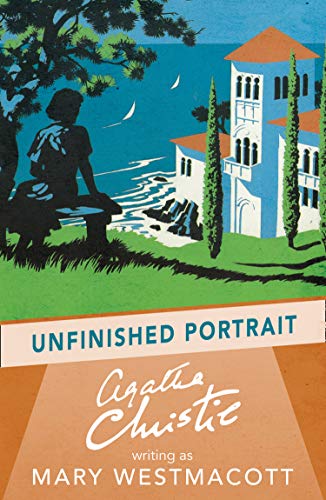
May’s theme for the Read Christie 2023 challenge is ‘betrayal’ and the suggested title this month is Unfinished Portrait, a 1934 novel which is one of six books Christie published under the pseudonym of Mary Westmacott. Although I haven’t managed to take part in the challenge every month so far this year, I was particularly keen to join in with this one as I’ve previously only read one Westmacott novel – Giant’s Bread – and have been looking forward to reading more of them ever since.

Unfinished Portrait begins by briefly introducing us to Larraby, a portrait painter who is visiting an unnamed island when he comes across a woman sitting alone in a garden. Sensing that something is wrong, Larraby engages her in conversation and discovers that he is correct – she is intending to commit suicide. Not wanting to leave her alone, he accompanies her back to her hotel and listens as she tells him the story of her life and explains the sequence of events that have put such desperate thoughts into her head.

The woman’s name is Celia – at least that’s what Larraby calls her, as he doesn’t know her real name – and her story forms the main part of the novel. A lot of time is spent on Celia’s sheltered childhood, growing up in the late Victorian period in a comfortable home with servants and a nanny until the family’s financial position is affected by the early death of Celia’s father. I only know the basics about Agatha Christie as a person, but apparently Unfinished Portrait is semi-autobiographical, drawing on her own childhood memories to create Celia’s tales of inventing imaginary friends, time spent abroad due to her father’s poor health, the close relationships she had with her mother and grandmother and her first attempts at writing books. Later, Celia finds herself trapped in an unhappy marriage to Dermot, a man who is insensitive, controlling and eventually unfaithful – which again is based on Agatha’s own marriage to Archie Christie. If I’d been more familiar with Christie’s own life I would have appreciated the autobiographical element of the book a lot more, which would probably have added to my enjoyment of it, but I still found Celia’s story compelling in its own right.

After finishing the book, I could see how it fits the challenge topic for this month, exploring the theme of betrayal from several different angles: Dermot betrays Celia with another woman, Celia herself betrays a previous lover, and later in life she feels she has betrayed her daughter. All of these betrayals combine to cause the deterioration in Celia’s mental state that leads to her feeling so unhappy the day she meets Larraby. It’s a sad and emotional story – even sadder knowing that it was how Christie felt about her own situation at that time. Of course, the book was published in the 1930s and so it’s an ‘unfinished portrait’, leaving a lot of things in Celia’s life (and Christie’s) unresolved and incomplete.

I found this book quite different from Giant’s Bread, the only other Westmacott book I’ve read, and I think I preferred that one overall. I’m definitely more of a Christie fan than a Westmacott fan, but these are still great books and I’m looking forward to reading the other four.

Giant’s Bread by Mary Westmacott

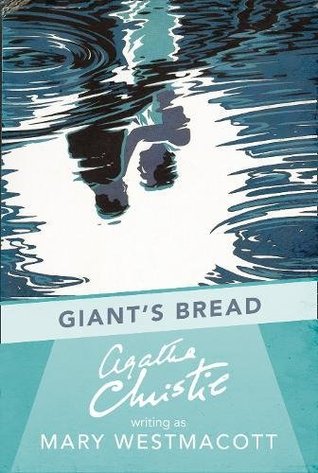
I was aware that Agatha Christie had written several books under the name of Mary Westmacott but I had never really thought about trying one until I saw that the February book for the Read Christie 2019 Challenge was Giant’s Bread. Published in 1930, this is the first of the Westmacott novels, so seemed like a good place to start with them. Now that I’ve read it, I can see why she used a pseudonym as it’s very different from the mystery novels for which she is much more famous, but it’s still enjoyable in its own way and I will definitely be going on to read more Westmacott books.

Giant’s Bread is the story of a young man and his love of music. We first meet Vernon Deyre as a child, growing up in a wealthy household under the care of a succession of nursemaids and servants. With a highly-strung, melodramatic mother and a father who is more interested in other women than in his wife, Vernon retreats into a world of imaginary friends – and imaginary monsters, such as the grand piano, which he thinks of as a vicious ‘Beast’ with teeth. This irrational fear makes him avoid all forms of music until, as an adult, he allows himself to listen for the first time and is enchanted by what he hears.

Although the focus is mainly on Vernon as he pursues a career in music, determined to make up for all the years he has wasted, we follow the stories of several other characters too. There’s Joe (Josephine), Vernon’s cousin and best friend, an independent and rebellious young woman who wants to become a sculptor; the beautiful, timid Nell Vereker, Vernon’s childhood playmate with whom he later falls in love; Jane Harding, an older woman who shares his love of music; and Sebastian Levinne, whose family buy the house next to the Deyres’ estate, Abbots Puissants. Sebastian is Jewish, and yes, you can expect some of the anti-Semitism that appeared in so many books from this era – but despite that, I thought he was portrayed as the most likeable of the five main characters in the novel. The others are all deeply flawed people but, of course, that is what makes them and their struggles so interesting to read about.

Before I started to read Giant’s Bread, I had the impression that Mary Westmacott’s books were light romances, but that’s not how I would describe this one at all. Although characters do fall in and out of love over the course of the novel, it’s not a very romantic story – more a story of the sacrifices we are prepared or not prepared to make in order to get what we want out of life. This is illustrated particularly well with Nell’s storyline, in which she has to decide whether her love for Vernon is more important to her than her love of comfort and luxury.

Towards the end of the novel, things became much more dramatic, with some very implausible plot twists and some coincidences that seemed far too convenient! It was disappointing because up to that point I had really believed in the story and the characters. This did let the book down, in my opinion, but didn’t spoil it too much, as there had been so much else that I’d loved. The early chapters describing Vernon’s childhood were wonderful and captured the way a lonely, imaginative little boy may have looked at the world. Later in the book, I enjoyed reading about Nell’s experiences as a nurse during the First World War.

On finishing the book, I wasn’t entirely sure what message Christie wanted us to take away from it. Yes, Vernon and the others had made sacrifices, but were we supposed to agree that those sacrifices were worthwhile or not? If anyone else has read the book, I would be interested to hear your thoughts on that. I do like books that leave me with something to think about and this one certainly did. I hope the other Mary Westmacott novels will be equally fascinating.

If you’re wondering, the title Giant’s Bread comes from the lines spoken by the giant in Jack and the Beanstalk – ‘Fee-fi-fo-fum, I smell the blood of an Englishman. Be he alive, or be he dead, I’ll grind his bones to make my bread’.