April reading summary

April-clip-Art I read six books in April which is fewer than I usually read, but as two of them were very long books and April was another busy and stressful month for me at work, I’m happy with that! I’m glad May is here because I have lots to look forward to this month: two Bank Holidays (the first one this Monday), my birthday and a trip to Dubrovnik!

Looking back at my April reads, I started the month with The Edge of Dark by Pamela Hartshorne, a time slip novel set in York and telling the stories of two women in two different centuries whose lives are linked by a recently restored Elizabethan building. I loved the combination of history, suspense and the supernatural. While I was reading this I was also dipping into a non-fiction book, The Gothic by Nick Groom, part of the Very Short Introduction series. I particularly enjoyed Groom’s discussion of Gothic literature, but the book also covers many other aspects of Gothic culture.

The Eustace Diamonds The two very long books I read in April were both for reading events. The first was The Eustace Diamonds, which I read for Karen’s Anthony Trollope Bicentennial Celebration. I’m slowly working through Trollope’s Palliser novels and this is the third in the series. I did like it but found it quite repetitive and at 800 pages I thought it would never end! The second very long book was my choice for Lory’s Elizabeth Goudge Reading Week: The Child from the Sea, a historical novel based on the life of Charles II’s mistress, Lucy Walter. My first experience of Goudge’s work was a good one and I’m looking forward to trying more of her books.

After spending some time in the 17th century with Lucy Walter, I then went back to a much earlier period – to the 7th century, in fact – and met Edwin: High King of Britain. This is the first in a trilogy by Edoardo Albert called Northumbrian Thrones and I found it both a fascinating and an educational read.

The Fatal Flame The final book I read in April – and the only one I haven’t had time to write about yet – was The Fatal Flame, Lyndsay Faye’s third Timothy Wilde mystery novel set in 19th century New York City. I enjoyed it as much as I enjoyed her previous two, The Gods of Gotham and Seven for a Secret, so I was sad to discover that it’s the last in a trilogy (I had been hoping she would go on to write more books in the series).

As we move into May I have three books on the go (I wish I could go back to the days when I only read one book at a time, but that just doesn’t seem possible any more). I’m reading Piu Marie Eatwell’s intriguingly titled The Dead Duke, His Secret Wife And The Missing Corpse, Kate Atkinson’s third Jackson Brodie book, When Will There Be Good News?, and The Invention of Fire, Bruce Holsinger’s second historical mystery novel. As soon as I finish one or two of those I will be starting my book for the Classics Club Spin and I also want to read at least one book for the Once Upon a Time Challenge.

Did you have a good April? What are you hoping to read in May?

March reading summary

March is over and I can’t say that I’m sorry to see it go. It’s been a stressful month for me at work as the woman I’ve been working with and sharing an office with for the last six years retired last week and the company directors decided to take the opportunity to restructure our department. This means that I’ve spent the whole month not knowing if my job would be changing, who I would be working with and even where I would be working. Things are settling down now and while I’m not exactly thrilled about the changes, at least I know what’s happening now and I’m hoping April is going to be a better month for me.

RomolaIn terms of reading, March got off to a great start with Ross Poldark, the first of Winston Graham’s Poldark series which I really enjoyed and finished just in time for the start of the BBC’s new adaptation. I also finished two long novels that I had begun in February. One of these was George Eliot’s classic novel set in Renaissance Italy, Romola, a detailed and demanding read but one that I loved; the second was Sea of Poppies by Amitav Ghosh, the first in a trilogy set during the Opium Wars. Sea of Poppies ended on a cliffhanger but luckily I had a copy of the sequel, River of Smoke, so I could start that one straight away!

I managed to read two books for Jess’s Forgotten Histories challenge. One was Temeraire by Naomi Novik, an alternate history in which dragons play a part in the Napoleonic Wars. The other was City of God by Cecelia Holland, a novel set in Borgia-ruled Rome. I’m interested in reading more by both of these authors, particularly Naomi Novik – I have the second Temeraire novel, Throne of Jade, and also a review copy of her new novel Uprooted waiting to be read.

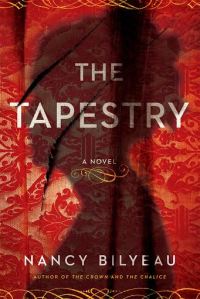
The TapestryI also read two Tudor novels this month – Dark Fire, the second book in CJ Sansom’s Shardlake series, and The Tapestry, the third and final volume of Nancy Bilyeau’s Joanna Stafford trilogy. I read some non-fiction too – An Accidental Tragedy by Roderick Graham, a biography of Mary, Queen of Scots, and Rebellion, the latest book in Peter Ackroyd’s History of England series. And I continued working through Baroness Orczy’s Scarlet Pimpernel books; The League of the Scarlet Pimpernel is a collection of short stories and although they were fun to read I’m disappointed that none of the Pimpernel sequels I’ve tried so far are as good as the original novel.

There were also two books that I started reading towards the end of the month but didn’t finish. I read the first three chapters of The Marigold Chain by Stella Riley, which I was interested in reading because I’d heard that it was similar to Dorothy Dunnett’s Lymond Chronicles; I wasn’t prepared for just how similar it was, to the point where it made me feel uncomfortable and I had to stop reading. I gave up on The Buried Giant by Kazuo Ishiguro as well. It was a very intriguing book with some fascinating concepts and ideas, but somewhere in the middle I accepted that I wasn’t engaging with either the story or the characters and couldn’t go any further. I’ll probably write more about that book soon as I did read more than half of it before abandoning it.

In April I’m hoping to read The Eustace Diamonds for Karen’s Anthony Trollope Bicentennial Celebration. Lory is also hosting an Elizabeth Goudge Reading Week and I would like to read something for that too. And of course, there’s Easter to look forward to this weekend!

What did you read in March? Do you have any plans for April?

Looking back at February

February

February was another good month for me in terms of reading – I read eleven books and enjoyed most of them.

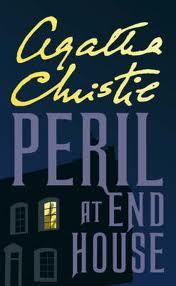
Peril at End House I started the month with a great book – Death in Kashmir by M. M. Kaye, an exciting and atmospheric mystery novel set in Kashmir in 1947. Although I haven’t had an opportunity to read any more yet, there are five other books in the series to look forward to. After reading this book, I was in the mood for another mystery and the one I chose was Agatha Christie’s Peril at End House. I almost guessed the solution to this one, but allowed myself to be misled by the red herrings!

I only managed to read one book from my Classics Club list this month and that was Jerome K. Jerome’s The Idle Thoughts of an Idle Fellow – a fun read (and a quick one), though not as memorable as Three Men in a Boat. I’ve also been reading another classic throughout February, which I hope to finish soon. This is Romola by George Eliot – quite a challenging book to read but I’m loving it.

Two other books I loved this month were Guy Gavriel Kay’s The Last Light of the Sun, historical fantasy based on the Viking, Anglo-Saxon and Welsh cultures, and Small Island by Andrea Levy, a novel about the experiences of Jamaican immigrants in Britain. I also continued with the third book in Patrick O’Brian’s Aubrey-Maturin series, HMS Surprise, which I think is probably my favourite of the series so far. I don’t want to say too much about any of these books here as I haven’t had time to write my reviews yet.

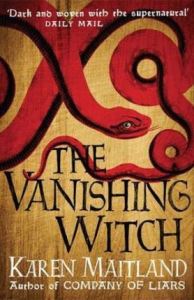
The Vanishing WitchI also enjoyed The Royalist by S.J. Deas, the first in a series of historical mysteries set during the English Civil War – and going further back in time, I read Karen Maitland’s The Vanishing Witch, set in the 14th century at the time of the Peasants’ Revolt.

Only two of the books I read during February disappointed me slightly – they were The Widow’s Confession by Sophia Tobin, yet another mystery (I told you I’d been in a mystery-reading mood this month!) and Jakob’s Colours by Lindsay Hawdon, a book about the Romany Holocaust. Again, I haven’t had time to write about these two books yet, but will do so as soon as I can. Finally, I have just finished reading The Goddess and the Thief by Essie Fox, a novel set in the Victorian period and revolving around the fate of the Koh-i-Noor diamond.

Have you read any of these books? What did you read in February?

Goodbye to January

January

It’s been such a long time since I last posted an end-of-month reading summary! I didn’t bother with them last year or the year before, but now I’ve decided that I miss having a place to reflect on what I’ve read, am reading and am about to read.

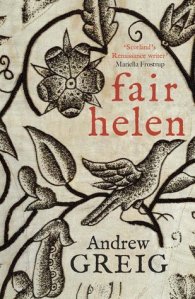
Fair Helen January has been a good month for me in terms of number of books read, as the cold weather and dark nights mean more time spent inside reading. At a quick glance, my month has been dominated by historical fiction (I’ve made a great start to the Historical Fiction challenge) but the books I’ve read within that genre have been quite diverse. Two of them were for my Reading the Walter Scott Prize project, coincidentally both by Andrews. Andrew Greig’s Fair Helen was a beautifully written novel set in Scotland and based on a Border Ballad, while Andrew Miller’s Pure was the story of the destruction of a Parisian cemetery in the 18th century.

I also read The King’s Curse by Philippa Gregory which I found to be one of the best of her Cousins’ War series. It’s actually more of a Tudor novel than a ‘cousins’ war’ one, but that’s fine as it got me into the mood for the BBC’s excellent new adaptation of Wolf Hall. Has anyone else been watching it? What do you think?

Going back to the early days of the cousins’ war, or Wars of the Roses as we more commonly call it these days, I read Red Rose, White Rose by Joanna Hickson. I’d been hesitant about reading it as I wasn’t particularly impressed by her earlier novel, The Agincourt Bride, but I was pleasantly surprised by how good this one was.

I was pleased to finally read two books I’ve been meaning to read for years: The Book Thief by Markus Zusak and The Crimson Petal and the White by Michel Faber. I loved the latter but was slightly disappointed with the former – the story was great but I didn’t like the writing style.

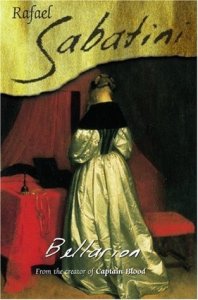
BellarionI read two books from my Classics Club list in January as well. The first was Bellarion by Rafael Sabatini, which I enjoyed – not surprisingly, as Sabatini is quickly becoming a favourite author. The other was one of the Charles Dickens novels on my list, David Copperfield. I’ve just finished, so my thoughts will be coming soon.

After reading Kate Atkinson’s Case Histories just before the New Year, I couldn’t wait to read the next in the series, so went straight on to One Good Turn. I loved it and am looking forward to reading the rest of the Jackson Brodie series. I also read The Glassblower of Murano by Marina Fiorato, a dual timeline novel set in Venice. And I reviewed Mercedes Rochelle’s Shakespeare-inspired Heir to a Prophecy for Issue 4 of Shiny New Books.

Mary of CarisbrookeI’ve been making an effort to write about every book I read within a few days of finishing, but I haven’t quite managed it. As well as David Copperfield, there are a few others that I finished towards the end of the month and haven’t had time to review yet. First there was Mary of Carisbrooke, a novel set on the Isle of Wight during the English Civil War, the first book I’ve read by Margaret Campbell Barnes. Then I read Georgette Heyer’s The Quiet Gentleman, which I think might be one of my favourite Heyer novels so far. And finally, I read one of Sarah Dunant’s Italian Renaissance novels, The Birth of Venus, and a historical mystery by Andrew Taylor called The Silent Boy. I’ll be posting my thoughts on all of these books as soon as I can!

Also in January, I brought back my Remember These series, with a selection of books beginning with F and G and I added two new pages to My Journey Through TimeThe Plantagenets and The English Civil War.

As February begins I am reading The Vanishing Witch by Karen Maitland and M.M. Kaye’s Death in Kashmir. I don’t have any plans for the rest of the month as I’m enjoying just reading whatever I want to read!

What about you? Did you have a good start to the year?