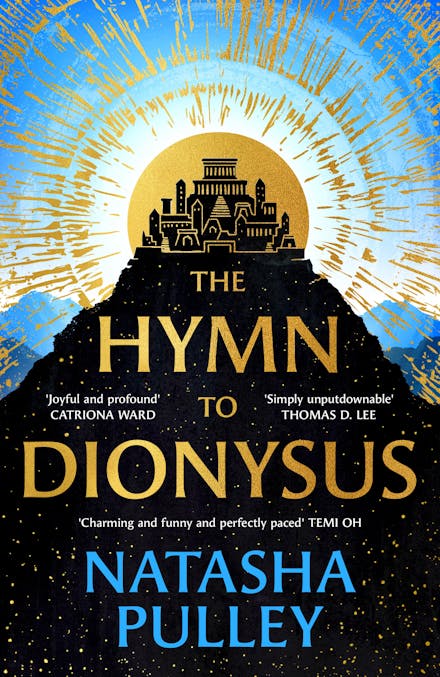
The Hymn to Dionysus by Natasha Pulley

I know what you’re thinking: not another Greek mythology book! There have been so many in recent years, it would be easy to dismiss this one as just more of the same. However, I found it completely different from any of the others I’ve read, and despite the marketing it’s nothing like the Greek retellings written by Madeline Miller or Jennifer Saint.

The Hymn to Dionysus is narrated by Phaidros, whom we first meet as a child being trained as a knight in a Greek legion (knight is the term Pulley uses, but it clearly just refers to a mounted soldier rather than our image of a medieval knight). Phaidros doesn’t know who his parents are, but that’s not considered important in the Theban army, where your duty and loyalty is to your commander – in this case, Helios, who provides all the love, guidance and leadership Phaidros needs. He never questions his commander’s orders until the day when, during a trip to Thebes, Phaidros rescues a blue-eyed baby from a fire at the palace and Helios insists on the baby being abandoned at a temple, never to be mentioned again.

Many years later, Phaidros is a commander himself, training new recruits in Thebes. When Pentheus, the crown prince, disappears, desperate to escape an arranged marriage, Phaidros is drawn into the search, something which leads him to an encounter with a blue-eyed witch, Dionysus. The arrival of Dionysus coincides with an outbreak of madness amongst the knights of Thebes and stories of a mysterious new god. Is there a connection between Dionysus and the baby boy rescued by Phaidros all those years ago?

I read Natasha Pulley’s The Bedlam Stacks, set in 19th century England and Peru, when it was published in 2017 and although it was getting glowing reviews from everyone else at the time, I didn’t like it very much, mainly because I found the language irritatingly modern and anachronistic and the magical realism elements were stronger than I expected. I haven’t tried any of her other novels since then, but I loved one of her short stories which appeared in The Winter Spirits, a ghost story anthology, so I thought it would be worth giving her another chance. I’m glad I did, because I found this book a lot more enjoyable. It’s still written in very modern language, but that doesn’t seem to bother me quite as much when a book is set in the ancient world, although I would find it difficult to explain why.

Although I’ve read other Greek mythology novels in which Dionysus and some of the other characters appear, I don’t really have a very extensive knowledge of the myths surrounding them (I haven’t read Euripides’ play, The Bacchae, in which some of this is covered) and I think this was probably actually a good thing, as it meant I could just enjoy the story without having too many preconceived expectations. As I’ve said, it’s not a typical retelling anyway; as far as I can tell, it draws on various aspects of different myths and blends them together to form an original story. There are elements of magic – ivy that suddenly begins to grow when Dionysus is around; masks that bestow new characteristics on the wearers – but the book never quite becomes full-blown fantasy. I loved Pulley’s descriptions of the giant mechanical statues she calls ‘marvels’ and although I doubt they would have existed in the way she describes, there are examples of automata dating back to Ancient Greece so it could have been possible.

The main focus of the book, though, is on Phaidros and his relationships – particularly the one with Dionysus, which develops slowly as Phaidros wonders whether Dionysus is the baby he rescued all those years ago or whether he isn’t, whether he’s the ‘mad god’ everyone is talking about or whether he is just the witch he claims to be. I liked Phaidros and enjoyed the way he narrated his story, so even though this is a long book I felt that the pages went by quite quickly. I would probably consider reading some of Natasha Pulley’s other books, if anyone has any recommendations.

Thanks to Gollancz for providing a copy of this book for review via NetGalley.
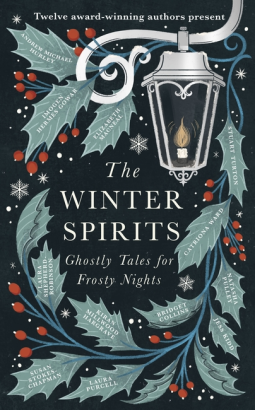
The Winter Spirits: Ghostly Tales for Frosty Nights

The Winter Spirits: Ghostly Tales for Frosty Nights is a collection of twelve new ghost stories written by popular authors of historical and Gothic fiction, all with a Christmas or Advent theme. It’s a follow-up to The Haunting Season, which I haven’t read but which includes eight of the same authors. This is the perfect time of year for ghost stories, so maybe I’ll look for the previous book next winter.

Back to The Winter Spirits and most of the stories are set in the 19th or early 20th centuries, giving them a traditional feel. More variety would have been nice – not just in the time periods, but also in the geographical settings, as the majority take place in Britain, with one or two in America or elsewhere in Europe – but otherwise I really enjoyed this collection. I’ve previously read full-length novels by most of the featured authors, but three of them were new to me: Andrew Michael Hurley, Catriona Ward and Susan Stokes-Chapman. I felt that Hurley’s The Old Play and Stokes-Chapman’s Widow’s Walk were two of the weaker stories, but looking at other reviews, some readers have singled them out as favourites, so I think it’s just a case of different stories appealing to different people! Ward’s contribution, Jenkin, was completely bizarre but added some diversity as it felt quite unlike any of the others.

The biggest surprise, for me, was Natasha Pulley’s The Salt Miracles; I really didn’t get on with her writing style in her novel The Bedlam Stacks, so I wasn’t expecting too much from this tale of disappearing pilgrims on a remote Scottish island (based on St Kilda). However, I ended up loving it – it’s such an unusual and chilling story! Inferno by Laura Shepherd-Robinson, one of my current favourite historical fiction authors, is another I particularly enjoyed – a wonderfully eerie story set in 18th century Italy, where a man is forced to confront his sins. Even better than both of these is Stuart Turton’s creepy and imaginative The Master of the House, in which a young boy who is being neglected by his father makes a deal with the devil. This one feels almost like a very dark fairytale and is one of the highlights of the book.

Of the twelve authors, Laura Purcell is probably the most well established as a writer of horror fiction and she doesn’t disappoint here with Carol of the Bells and Chains, in which a governess trying to deal with two unruly children tells them the story of the Krampus, with unintended consequences. Imogen Hermes Gowar’s A Double Thread, where a woman gets her comeuppance after badly treating her hardworking seamstress, is another I really enjoyed – it made me long for another novel by Gowar, as it’s been a few years since The Mermaid and Mrs Hancock!

The remaining stories are by Elizabeth Macneal, Bridget Collins, Jess Kidd and Kiran Millwood Hargrave. With a range of different styles and subjects, unless you just don’t like ghost stories I think this collection should contain something to please almost every reader.

Thanks to Sphere for providing a copy of this book for review via NetGalley.
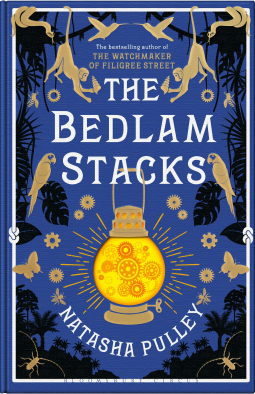
The Bedlam Stacks by Natasha Pulley

This is Natasha Pulley’s second novel. I remember seeing lots of very positive reviews of her first, The Watchmaker of Filigree Street, a year or two ago and thinking it sounded interesting. I never got round to reading that book, but when I heard about her new one, The Bedlam Stacks – which sounded just as intriguing – I decided to give it a try.

Set mainly in Peru in 1860, The Bedlam Stacks is narrated by Merrick Tremayne, a former opium smuggler and an expert in botany. Confined to his family estate in Cornwall due to a leg injury, Merrick is trying to come to terms with the fact that he will now have to put his adventuring days behind him and find something else to do with his life. Just as he is beginning to lose hope, his old friend Clem Markham arrives with a request from Merrick’s former employers, the East India Company. To tackle the problem of treating malaria in India, a supply of quinine is urgently needed – and Merrick’s expertise with plants makes him the ideal person to travel with Clem to Peru to take cuttings of the quinine-rich cinchona tree.

At first Merrick is reluctant to agree, knowing that his disability will make it difficult for him to travel through dangerous terrain – not to mention the fact that the Peruvians have a monopoly on the trees and are not about to let anyone else steal them. The alternative, though, is to stay at home and follow his brother’s suggestion of becoming a parson, so it doesn’t take him long to reach a decision! Venturing into the uncharted depths of Peru, Merrick and Clem finally arrive in the holy town of Bedlam, a place where the boundaries between magic and reality begin to merge.

The magical realism elements in The Bedlam Stacks are much more dominant than I had expected. There are moving statues, exploding trees and several other surprises which I will leave you to discover for yourself! This wasn’t really to my taste – I think I would have found it just as enjoyable to read a novel about an expedition to Peru that was based entirely on fact, without the touches of fantasy – but it was certainly imaginative and original. I did love the concept of the Markayuq statues, which apparently really exist and are still found in the countryside in Peru, originally thought to be guarding the villages. Natasha Pulley finds a clever and fascinating way to incorporate these into the story, but again I don’t want to say too much.

The sense of place is very strong – there are some wonderful descriptions of the Peruvian landscape as well as vivid accounts of more practical considerations such as the altitude sickness experienced during the journey – but I was slightly disappointed that there wasn’t a stronger sense of the time period. Neither Merrick’s narrative voice nor the dialogue between the characters felt convincingly Victorian to me; the choice of words and phrases, the grammar and the structure of sentences just weren’t right for the 19th century. I’m aware, though, that I can be a bit pedantic about anachronistic language used in historical novels and I know it’s not something that bothers everyone!

I did find a lot to enjoy in The Bedlam Stacks, although I’m sorry that I couldn’t quite manage to love it. Maybe I’m just not the right reader for Natasha Pulley’s books, but I’m still glad I’ve tried this one – even if not everything worked for me, I can understand the appeal!

Thanks to Bloomsbury Publishing for providing a copy of this book for review via NetGalley.