HMS Surprise by Patrick O’Brian

HMS Surprise Do you love novels set at sea?

Do you know your topsail from your mainsail?

Do you find descriptions of sea battles exciting and easy to understand?

I would answer NO to all three of those questions, so you may be wondering why I am continuing to read Patrick O’Brian’s Aubrey/Maturin series. The answer is that while, yes, most of the action takes place at sea and there are certainly a lot of nautical terms and quite a few sea battles, the series has so much more to offer than that. So let me ask three more questions.

Do you love novels with strong, complex, nuanced characters?

Do you like to be swept away to fascinating and exotic locations?

When you read historical fiction, do you like the setting to feel accurate and the language authentic?

Now you see why I’m happy to struggle through the naval terminology and the occasional engagement between enemy ships; HMS Surprise has all of the qualities I’ve just mentioned above and more. There’s adventure (including a dramatic rescue scene, a duel and a storm), a long voyage during which we visit Brazil, India and Madeira, romantic rivalries, witty dialogue and humour – where else would you find a line like “Jack, you have debauched my sloth!” – and descriptions of life aboard a navy frigate that are so interesting and detailed even a landlubber like me can appreciate them.

This is the third book in the series and although it is my favourite so far, I would recommend reading both Master and Commander and Post Captain first. I think it’s important to start at the beginning so that you can watch the friendship develop between Royal Navy captain Jack Aubrey and physician, naturalist and spy Stephen Maturin and so you know the background to their relationships with other characters, particularly the two women in their lives, Sophie Williams and Diana Villiers. I’m definitely finding the books more and more enjoyable now that I’m familiar with the characters and with Patrick O’Brian’s writing style.

I realise I haven’t said very much about the plot of this particular instalment, but I’m not sure that it’s really necessary. It’s probably enough to know that Jack, whose marriage plans have been put on hold as he’s in debt again, has been given the job of escorting a British ambassador to the East Indies, while Stephen, who is accompanying him, has learned that the woman he loves is in India and is determined to see her – even if it means he risks having his heart broken. To go into any further detail would mean giving too much of the story away (I always find it difficult to know how much to say about books that are part of a series) so I’ll leave it there.

The Mauritius Command will be next for me and this time I’ll try not to leave such a long gap between books. I was shocked when I discovered that it was August 2013 when I read Post Captain! Meanwhile I’m reading Temeraire by Naomi Novik, which I’ve seen described as Patrick O’Brian with dragons and which I’m counting as my first book for the Forgotten Histories Reading Challenge.
Post Captain by Patrick O’Brian

Post Captain This is the second book in Patrick O’Brian’s Aubrey-Maturin series following the adventures of Royal Navy Captain Jack Aubrey and his friend, ship’s surgeon Stephen Maturin.

Post Captain continues the story begun in Master and Commander. As the novel opens, the French Revolutionary Wars have come to a sudden end with the Peace of Amiens and Aubrey and Maturin have returned to England where Jack has rented a country estate – which happens to be near the home of Mrs Williams, a lady with several daughters of marriageable age. For the first hundred or so pages of the book, we follow Jack and Stephen as they live the lives of country gentleman, attending social engagements and becoming involved in complex romantic relationships with the eldest Williams daughter, Sophia, and her widowed cousin, Diana Villiers.

This period of peace soon comes to an end, though. Jack and Stephen are forced to flee to France when Jack finds himself in financial difficulties and while they are there, war breaks out again. The rest of the book centres around their return to naval action, Jack’s efforts to avoid being arrested for debt, and the conflict between Jack and Stephen caused by their involvement with Sophie and Diana.

After I posted my thoughts on the previous book, Master and Commander, and mentioned my general dislike of nautical books, I was told that this one might be more to my taste as it had more land-based action. And I did enjoy this book a lot more than the previous one. I still struggled at times with the sea battles and naval terminology, but I think I can cope with not being able to follow all the details of what is happening as long as I can understand the final outcome. As for the land-based chapters, I don’t think I’ve ever read anything more Austenesque that wasn’t actually written by Jane Austen! The Austen comparison, by the way, is not just because of the plot but also the writing style and language.

The fact that fewer pages are devoted to descriptions of naval action means there’s lots of time to develop the two main characters and explore various aspects of their personalities and their relationships. I also enjoyed meeting Sophie and Diana and I look forward to getting to know them better. Obviously when Aubrey and Maturin are at sea it’s a very male-dominated environment, so I was pleased to see that O’Brian also writes such convincing female characters.

With the friendship between Jack and Stephen being threatened by their romantic entanglements, there’s a lot of tension in this book but there are plenty of funny moments too, including a scene with a dancing bear on the road to Spain. I also loved Stephen’s attempts at beekeeping while at sea…

“There! A glass hive. Is it not ingenious, charming? I have always wanted to keep bees.”

“But how in God’s name do you expect to keep bees on a man-of-war?” cried Jack. “Where in God’s name do you expect them to find flowers, at sea? How will they eat?”

“You can see their every motion,” said Stephen, close against the glass, entranced. “Oh, as for their feeding, never fret your anxious mind; they will feed with us upon a saucer of sugar, at stated intervals. If the ingenious Monsieur Huber can keep bees, and he blind, the poor man, surely we can manage in a great spacious xebec?”

Having enjoyed this book so much, I now feel much more enthusiastic about reading the rest of the series than I did after the first book. I’m looking forward to H.M.S Surprise!

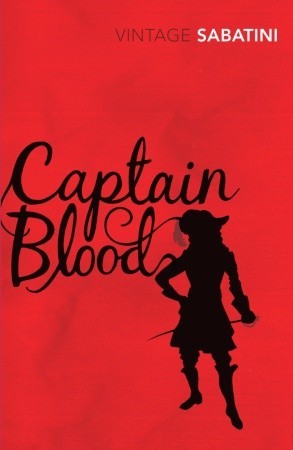
Captain Blood by Rafael Sabatini

Captain Blood

“Thief and pirate is what you heard Miss Bishop call me today – a thing of scorn, an outcast. And who made me that? Who made me thief and pirate?”

One of my favourite books of last year was Scaramouche by Rafael Sabatini, a classic historical adventure novel set during the French Revolution. I loved it so much I immediately added two more of Sabatini’s books to my Classics Club list – Captain Blood and The Sea-Hawk – though not without some reservations as these are both books about pirates and with my general dislike of books set on ships I thought the seafaring elements might be too much for me. I was wrong. Captain Blood is another wonderful book and I enjoyed it almost as much as Scaramouche!

Peter Blood, an Irish physician and former soldier, is arrested during the Monmouth Rebellion of 1685 when he is discovered tending the wounds of an enemy of King James II. Wrongly found guilty of treason, he is lucky enough to avoid hanging but instead he is sent into slavery on a sugar plantation in Barbados. Here Blood meets two people who will have a huge influence on his future: Colonel Bishop, the cruel, brutal plantation owner and his beautiful niece, Arabella, with whom Blood falls in love. When the island is attacked by Spanish raiders, he seizes his chance to escape by commandeering one of their ships and after transforming himself into the notorious Captain Blood, our hero becomes a pirate both feared and respected throughout the Caribbean.

Sailing up and down the shores of Barbados, Jamaica and Tortuga, Captain Blood becomes involved in a series of exciting adventures and daring escapades, while being pursued by both Colonel Bishop and a Spanish rival, Don Esteban, who has sworn revenge – but what sets Blood apart from the other pirates he meets is his sense of honour and his dream of one day clearing his name and settling down to a peaceful life with Arabella. To the reader, it’s obvious that Peter Blood has become a pirate because he feels he has no choice – his only other option is to remain in slavery – but Arabella doesn’t understand this and when she tells him she can never love a “thief and pirate”, he must find a way to redeem himself in her eyes.

It amazes me that Rafael Sabatini’s books are not more widely read. As well as his great writing style, clever plots and vividly described characters, his novels also have well-researched and believable historical settings. While I was reading this book, I never questioned that I was in the Caribbean of the 17th century, just as when I read Scaramouche I was fully immersed in revolutionary France. And my fears that I might struggle with the pirate theme proved to be completely unfounded!

Sabatini keeps the sailing terminology to a level that even I could cope with and I found that even without understanding every nautical reference it didn’t affect my understanding of the story (which is what I also discovered when I read Master and Commander by Patrick O’Brian earlier this year). Although there were a lot of sea battles, they weren’t too difficult to follow and in fact, not only could I follow them but I actually enjoyed them too, which is something I never thought I would say! I suspect that the descriptions of these battles were not completely realistic and in real life Blood would never have been able to overcome such great odds every time, but with my total lack of naval knowledge I’m happy to pretend that he could.

But Captain Blood is more than just a swashbuckling adventure story and even if it had only been half as exciting, I would still have loved it solely for the great characterisation of Peter Blood, a true romantic hero (in the old-fashioned sense of the term). Like Andre-Louis Moreau from Scaramouche, Edmond Dantes from The Count of Monte Cristo or Francis Crawford from the Lymond Chronicles, Blood is one of those characters who can sometimes seem to be almost superhuman. He has an intelligence and wit superior to everyone else’s, he’s charismatic and quick thinking, multilingual, as talented a swordsman as he is a surgeon, and when it comes to buccaneering, he’s a brilliant leader and tactician. However difficult the situation he and his men might find themselves in, he never fails to come up with an imaginative and ingenious way to get out of it. But despite his perfection or perhaps because of it, things don’t always go smoothly for Captain Blood and like the other characters I’ve mentioned, he experiences a series of injustices and misfortunes that makes him a character we can sympathise with and believe in.

Captain Blood was published in 1922 and is available online as a free ebook, though the edition I read was the Vintage Classics paperback pictured here. I recommend giving it a try even if pirate stories don’t sound appealing to you, as it’s worth reading this one just to meet Peter Blood!

She Rises by Kate Worsley

She Rises She Rises begins in 1740 when Louise Fletcher, a young dairymaid from Essex, is offered a position as lady’s maid in a sea captain’s house in Harwich. Louise has never been more than a few miles away from home, so arriving at the Handleys’ prosperous household in the busy port town is like entering a different world. As Louise settles into her new job and gets to know her selfish, spoiled young mistress Rebecca Handley, she also decides to see if she can find out what happened to her brother, Luke, who went away to sea and has never been seen or heard from again.

In the other main thread of the story we learn how Luke was pressed into the Royal Navy from a tavern in Harwich and found himself taken aboard the warship, the Essex. Luke has never been on a ship this size before and soon discovers that life at sea is harsh and dangerous. Things improve when he is befriended by an older, more experienced seaman, Nick Stavenger, but still Luke wants nothing more than to escape and get back home to the girl he loves.

Louise’s story and Luke’s are told in alternating chapters and both narratives have a distinctive voice and style of their own. Luke’s is in the present tense and is filled with nautical terminology and slang; Louise’s is addressed to a mysterious ‘you’ – though we don’t have to wait long before we learn who ‘you’ is. Having finished the book, I think I can see why Kate Worsley chose to write the story in this way, but I’m not a fan of unusual or experimental writing styles in general and couldn’t help thinking that it made the book harder to read than it really needed to be!

The book was so atmospheric, though! The chapters set at sea felt realistic and gave me a good idea of how hard life could be for a pressed man in the navy, though as usual I struggled with all the references to mizen yards, main-topsails and other seafaring terms. But the descriptions of eighteenth century Harwich were particularly vivid: the labyrinths of dark alleys and smugglers’ tunnels, the smell of fish, the sailors standing in tavern doorways, the way the streets become flooded with sea water when the tide rises.

So, there were some aspects of this book that I loved and others that I didn’t like very much. I found it too slow at the beginning, but when Louise’s and Luke’s stories finally come together, the effect is amazing. I had been starting to get impatient, wondering how the two of them would be linked, but when it happened it was definitely worth waiting for! Things that had confused me earlier suddenly made perfect sense and some of the revelations in the final section of the book made me want to go back and read earlier chapters again.

She Rises reminded me of Sarah Waters, particularly Tipping the Velvet, due to the way both authors deal with themes such as gender and identity within a historical setting – so I wasn’t surprised to read that Sarah Waters was Kate Worsley’s mentor. As a first novel this was a very clever and ambitious book and although I had too many problems with it to be able to say that I loved it, I will be hoping for more books from Kate Worsley in the future.

Master and Commander by Patrick O’Brian

Master and Commander I do not usually like books set at sea. However hard I try, I just can’t seem to keep track of the nautical terms and as soon as I see words like ‘mainsail’, ‘fo’c’sle’ or ‘bosun’ my brain just seems to switch off. As a fan of historical fiction, I have been unable to avoid this entirely – after all, until the 20th century the only way to cross the sea was by ship and many historical fiction novels do involve a sea voyage or two – but the thought of reading a book where seafaring forms a major part of the plot is always quite daunting for me. For this reason I’ve resisted reading the Aubrey/Maturin series for a long time, despite it being described as one of the best historical series ever written, but a couple of weeks ago I decided it was time I gave Master and Commander a try.

The story begins in Port Mahon, Minorca, with Jack Aubrey and Stephen Maturin meeting for the first time at a concert in the Governor’s House. After an initial disagreement that almost results in a duel, Aubrey and Maturin discover a shared passion for music and a friendship begins to develop. Jack Aubrey has just been given his first command of the sloop, HMS Sophie, and after discovering that Stephen is a physician, he invites his new friend to join him as ship’s surgeon. With Britain at war with France (it’s the year 1800), life at sea is both dangerous and exciting and as the Sophie cruises the Mediterranean she becomes engaged in a series of sea battles and encounters with enemy ships.

I loved Patrick O’Brian’s writing style from the beginning, but as soon as the Sophie set sail all my fears about naval novels were realised. I did try – there’s a useful diagram at the front of the book and of course there’s always the option of looking up unfamiliar words and finding pictures of ships online (if, like me, you don’t know the difference between a brig and a frigate and have always thought a settee was something you sat on) – but in the end I decided not to worry about it and luckily, there were still plenty of things for a landlubber like me to enjoy, not least the wonderful characters. Too often characters in historical fiction are depicted as having modern sensibilities and come across as twentieth century people dropped into a historical background – that was thankfully not the case with this book; they felt realistic and believable. O’Brian’s prose and dialogue is completely appropriate for the time period and the same is true of the behaviour and thought processes of the characters.

I liked both of the main characters and the contrast between their very different personalities and am looking forward to getting to know them better over the course of the series. At the moment Stephen Maturin is my favourite; I also appreciated the fact that he doesn’t have much more knowledge of seafaring matters than I do and has to have even the most basic naval facts explained to him by other members of the crew. It was good to know that someone else shared my bewilderment of the nautical world and I loved the way even at moments of high drama at sea, he was more excited about spotting a rare bird or fish.

Master and Commander doesn’t have a lot of plot, being of a more episodic nature, but I finished the book with a better understanding of what conditions were like onboard a ship in the Napoleonic era and what daily life involved for a sailor in the Royal Navy. It seems that not being able to follow all of the terminology or the more intricate points of the various naval manoeuvres was not the problem I was afraid it would be. I didn’t instantly fall in love with this series, but I still enjoyed my first introduction to Aubrey and Maturin and I’m sure I’ll be reading the next one very soon!

Review: The Time of Terror by Seth Hunter

In The Time of Terror, Seth Hunter introduces us to a new naval hero in the style of C.S. Forester’s Horatio Hornblower.  Nathan Peake is a commander in the British Navy who spends his days chasing smugglers along the English coastline.  This is not really Nathan’s idea of fun and he longs to have some real adventures.  He gets his chance in the year 1793 when, with England and France at war, he is asked to run the blockade in the English Channel and deliver some important documents to the American minister in Paris.  Unknown to Nathan, however, his ship is carrying a cargo of counterfeit banknotes – putting his life in serious danger!

Although it’s not necessary to be an expert on French history to understand this story, you will get more out of it if you have some prior knowledge of the French Revolution and the Reign of Terror.  So if names such as Georges Danton and Robespierre mean nothing to you, it might be a good idea to do some research before beginning the book.

Readers who enjoy historical fiction novels that focus on real historical figures will be pleased to know that throughout the pages of The Time of Terror you’ll meet the author and feminist Mary Wollstonecraft, the American agent (and Mary’s lover) Gilbert Imlay, the revolutionary writer Thomas Paine and many more – so many, in fact, that I began to feel Hunter was just trying to drop as many famous names as possible into the story, regardless of whether they were necessary.  The sheer amount of historical detail in this novel was slightly overwhelming, though usually interesting.  There were dinner parties with Camille Desmoulins and Lucile Duplessis, visits to the waxworks (including a brief appearance by the young Madame Tussaud) and vivid descriptions of the guillotine.  However, other parts of the story that interested me were barely touched on.  The romantic storyline, for example, is very weak, and I would also have liked to have seen more of Nathan’s American feminist mother who had the potential to be a fascinating character.

If you’re concerned that there’ll be a lot of unfamiliar nautical terms and difficult-to-understand naval battles you’ll be right to some extent, but the story can still be followed even if you find yourself confused or bored by the seafaring aspects.  The sea battle scenes, although very well written, actually contribute very little to the plot and the book would have worked better as a more conventional historical fiction novel in my opinion.  However, there was probably too much land-based action to satisfy fans of nautical fiction so I think the book suffered from not really knowing what it wanted to be or what kind of reader it was aimed at.

This book is the first in a trilogy.  In the second Nathan Peake book, The Tide of War, the action moves to the Caribbean and in the third, The Price of Glory, Nathan will meet Napoleon Bonaparte.  Although I did find this book entertaining and interesting, I’m undecided as to whether I want to invest the time in following Nathan’s story to its conclusion.

Genre: Historical Fiction/Year: 2010/Publisher: McBooks Press/Pages: 391/Source: Won copy from LibraryThing