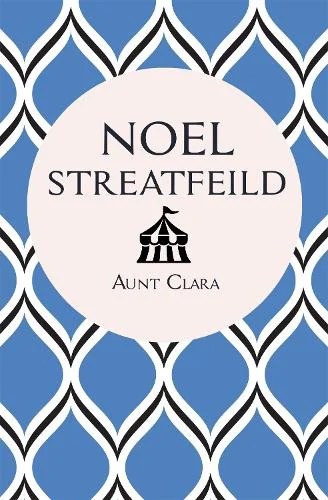
Aunt Clara by Noel Streatfeild – #1952Club

My final book for the 1952 Club being hosted this week by Simon and Karen is one of Noel Streatfeild’s adult novels. I loved Streatfeild as a child but came to her books for adults just a few years ago. So far I’ve enjoyed The Winter is Past and Caroline England and hoped that her 1952 novel, Aunt Clara, would be another good one.

Before we meet the title character, Streatfeild introduces us to Simon Hilton, a wealthy, curmudgeonly man approaching his eightieth birthday, who lives in London with his valet, Henry. Simon has never married, but has five nieces and nephews, most of whom now have children and grandchildren of their own. None of them care much for Simon – and the feeling is mutual – but they all have their eyes on his money and don’t want to risk being disinherited. The old man is looking forward to celebrating his birthday in August and when he receives a stream of letters from various family members suggesting that he switch his party to July instead as it would be more convenient for them, Simon is furious. Feeling disrespected and insulted, he decides to teach them all a lesson!

A few weeks after his birthday party (which was held in August, despite his family’s complaints), Simon dies and everyone gathers for the reading of the will. To their shock and disgust, they hear that everything has been left to Clara, Simon’s sixty-two-year-old niece. Clara is one of the only people in the family who is not greedy and selfish: she looked after her parents until their deaths, sacrificing her own chance of marriage in the process; she is always ready to help her siblings and their children whenever they call on her; she carries out work for charity and sees only the best in everyone else. It may seem that Simon has rewarded her for her goodness, but the bequests include some odd things to leave to a religious, teetotal spinster in her sixties – a small brothel, The Goat in Gaiters pub, Simon’s racehorses and racing greyhounds, a fairground game called Gamblers’ Luck, and two children from a circus. Is Simon playing one last cruel joke from beyond the grave?

I enjoyed Aunt Clara, although I felt that the plot jumped around too much in the second half of the book, making it a bit difficult to follow, particularly as there are so many characters to keep track of as well. It’s fascinating to see how Clara deals with her unusual inheritance, though; she’s endearingly naive and innocent, oblivious to Simon’s malicious humour, and considers each of his bequests to be a ‘sacred trust’. Her efforts to care for each of the people or things entrusted to her eventually begin to give her a different perspective on life and on things she’s always viewed as sins, such as drinking and gambling. She also has to contend with the rest of the Hilton family, who switch their attentions to her, hoping to get their hands on some of her newly gained wealth!
As I’ve mentioned, there are far too many characters – and only a few of the family members are drawn with any depth. One character who does jump out of the pages, though, is Henry, Simon’s manservant, a no-nonsense Cockney who sees the goodness in Clara and takes her under his wing. Henry is present throughout the book and speaks in dialect, including a lot of rhyming slang, which I found a bit tiring to read after a while. Aunt Clara isn’t my favourite of the Streatfeild novels I’ve read so far, then, but I think there’s a lot more to like than to dislike. I was interested to find that it was made into a film starring Margaret Rutherford in 1954. Has anyone seen it?

Caroline England by Noel Streatfeild – #1937Club

My second book for this week’s 1937 Club (hosted by Stuck in a Book and Kaggsy’s Bookish Ramblings) is by an author who was a childhood favourite but whose adult fiction I’ve only recently begun to explore. I loved her 1940 novel, The Winter is Past, set during the early stages of World War II, so when I saw that Caroline England was published in 1937 it seemed a perfect choice for the club.

The novel begins in 1870 with the birth of Caroline Torrys, the first child born to James and Selina Torrys of Milston Manor in Kent. The Manor has belonged to the Torrys family since the 16th century and James, desperate for a male heir, is disappointed with the arrival of a baby daughter. As the years go by and Selina becomes weak and worn down with her efforts to please her husband and produce a son, Caroline is raised in the nursery by a strict and often cruel nurse. Growing up nervous and anxious, with her spirit broken, Caroline eventually finds a way of escape when she falls in love with a writer, John England, and elopes with him. Caroline’s upper class family disapprove of John, whose father owns a shop, and she is cut off from the Torrys and her beloved Milston Manor.

The next part of the book follows Caroline through her marriage to John and the birth of her own children, whom she vows to treat with the kindness and affection she herself was starved of as a child. However, as her children grow older she finds that they don’t necessarily want her ‘interfering in their lives’ – and that John is the one demanding her time and attention. We then get to know Caroline’s children as adults and see how the family copes during World War I and its aftermath until finally, in the last section of the book, we join Caroline as a grandmother, living in a world that has changed beyond recognition.

I’ve probably given the impression that this book is very depressing – and it’s true that despite her privileged start in life, things are difficult for Caroline at times – but it’s not as bleak and miserable as it sounds. Although Caroline’s experience of being a wife and mother is not quite as blissful as she had hoped, she makes the most of what she has and finds happiness where she can. She also grows and changes as a person, as the post-war world grows and changes around her and the social system she once took for granted begins to collapse. By the end of the book, Milston Manor no longer belongs to the Torrys family and is being converted into a hotel, while Caroline herself is forced to think differently when she gets to know her son’s working-class fiancée, a woman she would have once considered ‘not our sort’.

I found the first section of the book, describing Caroline’s childhood, the most compelling because Streatfeild writes about child characters so convincingly. It was so interesting to read her portrayal of Caroline’s life in the nursery and the different methods used by her first nurse, the warm and loving Naomi, and the cold, abusive woman who takes her place, and then to see how Caroline’s upbringing affects her own choices as an adult. The later chapters, which concentrate more on Caroline’s sons and daughters, interested me slightly less, but I often find that to be the case when a family saga moves on to the next generation.

Of the two adult Streatfeild novels I’ve read, I preferred The Winter is Past as it was more tightly plotted, whereas this one covers a much longer period of time and has less focus. I enjoyed both, though, and look forward to trying some of her others.

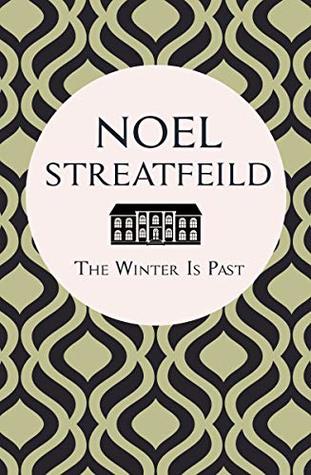
The Winter is Past by Noel Streatfeild

Noel Streatfeild is an author I loved as a child but I’ve never tried any of her adult books until now. There are plenty to choose from but I decided on her 1940 novel The Winter is Past (although here in the UK, winter is currently very much with us – we’ve had snow, ice and freezing temperatures all week, where I am!). It occurred to me after I started reading that I should probably have saved this book for next year’s 1940 Club – it’s worth keeping this one in mind if you’re wondering what to read for that event.

Anyway, The Winter is Past begins by introducing us to the Laurence family, who have lived at Levet, a beautiful English country house, since the 18th century. The current head of the family, Bill Laurence, has brought his new wife, Sara, home to Levet for the first time, but it immediately becomes clear that she’s not going to fit in. Nannie, who nursed several generations of Laurence children and is still an important part of the household, disapproves of Sara’s background as an actress – and when Bill’s upper-class mother Lydia comes to stay, Sara feels even more out of place. After suffering a miscarriage, she decides that her marriage is not working and that she needs to get away for a while, but with the outbreak of World War II she is forced to stay at Levet and make the best of things.

Another family whose lives have been thrown into turmoil by the war are the Vidlers. While Mr Vidler stays at home in London, his wife and their three young children – Rosie, Tommy and baby Herbert – are evacuated and taken in by the Laurences. Life at Levet comes as a culture shock for the working-class Vidlers, but they do their best to adapt, with varying success! When the cold weather arrives and the house is cut off from the village by snow, this disparate group of people will have to work together to get through the winter.

I loved this book; it’s very character-driven but with just enough plot to keep the story moving forward. I always find it fascinating to read books set during the war that were actually written before the war was over – it puts a very different perspective on things, when neither the characters nor the author have any idea how long it will last or how bad things are going to get. What little plot there is deals with the events of the winter of 1939-40 and although the book ends with another five years of war still to come, there’s already a sense that the lives of the characters have changed irrevocably and the way of life each of them has always known is disappearing forever.

My favourite characters were Mr and Mrs Vidler who, despite not leading a privileged life like the Laurences, possess things that money can’t buy – love, happiness and contentment – and rather than feeling inferior to Sara, Lydia and the others, look on them with sympathy and pity. The children, in the countryside for the first time, have more mixed emotions; they aren’t too pleased about the regular baths and formal mealtimes, but Tommy is captivated by the thought of making things grow in the garden and Rosie is amazed to discover that real ducks don’t wear sailor suits like Donald! It’s not surprising that Streatfeild writes about children so convincingly, considering she’s better known as a children’s author, but her adult characters are well developed too, even if some of them are difficult to like. She does come close to stereotyping with the maid Irene who has what we would probably call learning difficulties today, but that’s my only criticism and she does make up for it by giving Irene a heart of gold.

This was the perfect book to read in December, with snow on the ground outside, and I’m looking forward to reading more of Streatfeild’s adult novels next year. If you’ve read any of them let me know which ones you would recommend!

Childhood Memories: Books and Ballet

I have never had much interest in watching ballet, I’ve never attended a ballet class in my life – and yet I used to love reading books about ballet dancers. For my second Childhood Memories post (you can see the first one here) I thought I’d take a look at some of the children’s ballet stories that I remember reading.

One of my favourite ballet series was the Drina series by Jean Estoril. Jean Estoril was a pseudonym of Mabel Esther Allan, a British author of children’s books. The Drina series consisted of 11 books following the dancing career of Drina Adams. The only ones I owned – and I still have them – are Drina Dances in Italy, Drina Dances Again, Drina Goes on Tour and Drina, Ballerina, but I remember borrowing the others from the library.

In the first book, Ballet for Drina, Drina starts attending ballet classes much to the disapproval of her grandmother. She can’t understand why her grandmother doesn’t want her to dance – until it is revealed that Drina’s name is really Andrina Adamo and she is the daughter of the famous ballerina Elizabeth Ivory who was killed in a plane crash following a performance. Drina’s grandmother blames ballet for her daughter’s death and has vowed that her granddaughter would never be allowed to dance. Over the course of the series, we see how Drina overcame obstacles, coped with the jealousy of other girls and dealt with some devastating disappointments to eventually, in the final book, become a prima ballerina. I think part of the reason I liked these books was that they showed fame, celebrity and the ballet world in a realistic light, rather than portraying it as glamorous or romantic.

Another great book by Jean Estoril was The Ballet Twins. This one was about the Darke twins, quiet Doria and confident Debbie, who compete against each other for a scholarship at a London ballet school.

It’s sad that these books now seem to be out of print, but I suppose they would be very dated now and maybe not what kids would want to read anymore (although, as they were published in the 1950s and 60s, they were already pretty old-fashioned by the time I was reading them).

Probably one of the most famous authors of ballet stories was Noel Streatfeild. Her 1936 novel Ballet Shoes, the story of Pauline, Petrova and Posy Fossil, is a children’s classic (and one of those books that can be enjoyed by adults too) but another of her books that I loved was Ballet Shoes for Anna. The book was about a little girl called Anna who lives in Turkey. Her grandfather is a ballet instructor and is teaching Anna to dance. When an earthquake destroys the family home, she and her brothers Francesco and Gussie are sent to England to live with an aunt and uncle. The rest of the book looks at the problems the three children face in settling into their new home in 1970s England and their attempts to earn money so that Anna can continue to learn to dance.

Mary Noel Streatfeild was born in Sussex, England in 1895, the daughter of an Anglican Bishop. Apart from the books I’ve mentioned above, she wrote many other children’s books including White Boots, A Vicarage Family and Thursday’s Child, and several books for adults.

Did anyone else enjoy reading ballet books – whether or not you actually like ballet?