My Year in Novellas – #NovNov25

Novellas in November 2025 (hosted by Cathy of 746 Books and Rebecca of Bookish Beck) officially started yesterday and we’re invited to begin by posting a “My Year in Novellas” retrospective looking at any novellas we have read since last year’s NovNov. When I looked back over the year, I was surprised to see how few novellas I’d actually read in the past twelve months – only seven. I’ve listed them below with links to my reviews.

For the purposes of this event, anything under 200 pages can be classed as a novella.

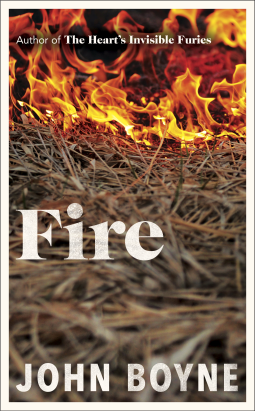
Fire by John Boyne (163 pages) – This is the third novel in Boyne’s Elements Quartet and is narrated by a surgeon who works with burn victims. I’m hoping to read the final book, Air, this month.

Mischief by Charlotte Armstrong (144 pages) – A tense and suspenseful noir thriller about a psychopathic babysitter.

The Ghost of Madison Avenue by Nancy Bilyeau (120 pages) – Perfect for Christmas, this is a ghost story set in and around the Morgan Library on New York’s Madison Avenue.

Woman in Blue by Douglas Bruton (144 pages) – I loved this book about a man who finds himself drawn to Vermeer’s Woman in Blue Reading a Letter and the story of the 17th century woman depicted in the painting.

Ice by Anna Kavan (194 pages) – A strange and fascinating dystopian story in which the narrator pursues a pale, white-haired girl around a world rapidly becoming engulfed by ice.

Clear by Carys Davies (160 pages) – A beautifully written novella set in Scotland during the Highland Clearances.

The Stepdaughter by Caroline Blackwood (128 pages) – A dark psychological thriller about a woman who develops an obsessive hatred for her young stepdaughter.

~

Do you like reading novellas? Have you read any good ones during the last year?

Fire by John Boyne – #NovNov24

This is the third book in John Boyne’s Elements quartet and it’s the darkest and most powerful so far. Each book can be read as a standalone story, but if you’ve read the previous two – Water and Earth – you’ll see some links between the characters and plots. I would still recommend reading them in order if possible, although it’s not essential.

Fire, like the other books, is novella-length – in this case 163 pages – but as usual, Boyne manages to pack a huge amount into those pages, more than you would often find in a much longer novel. Our narrator this time is Freya Petrus, a renowned surgeon who works with burns and skin grafts. She’s only in her thirties but has already established herself as one of the best in her field. What Freya gets up to in her private life, however, is much less admirable…in fact, it’s horrible. To understand what has made her the person she is – both the good side and the bad – we have to go back to Freya’s childhood and witness the traumatic experiences that shaped her future.

It’s difficult to really discuss the issues a book like this raises without spoiling things, so I’ll just say that what Freya experiences as a child leaves her badly damaged and, in her mind, justifies the harm she does to other people as an adult. I did have some sympathy for the young Freya, but that was surpassed by the loathing I felt for the older Freya. John Boyne is never afraid to tackle unpleasant and controversial subjects in his books, but the things Freya does are particularly shocking and I found it a very uncomfortable book to read. It’s also fascinating and completely gripping, so I do recommend it as long as you’re prepared!

As with the themes of water and earth in the previous two books, the element of fire plays a part in this one in several different ways: not only does Freya work with victims of fire, it could be said that she’s also playing with fire in her personal life. Other important themes running through the story include the question of nature versus nurture and which has the biggest role in forming our character, the level of responsibility each of us has to do what we know is right, and the different expectations society has of men and women. It’s a book that leaves you with a lot to think about after reaching the final page.

Although each book in this quartet does work on its own, a minor character from each one becomes the main protagonist of the next. It seems that Aaron, who works with Freya at the hospital, is going to be the star of the final book, Air. It will be published in May 2025 and I’m looking forward to seeing how Boyne brings the series to an end.

Thanks to Doubleday for providing a copy of this book for review via NetGalley.

I’m counting this book towards Novellas in November, hosted by Cathy of 746 Books and Rebecca of Bookish Beck

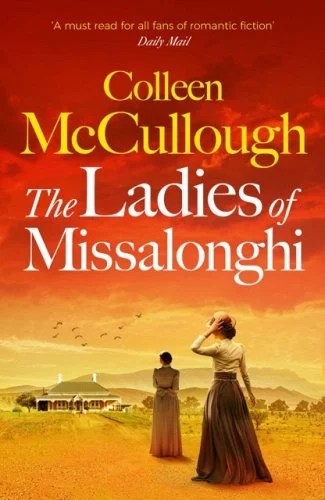
The Ladies of Missalonghi by Colleen McCullough

I acquired a copy of this book when it was published in a new edition in 2015 following Colleen McCullough’s death that year. For some reason, despite loving The Thorn Birds (which I read long before I started blogging so have no review to link to here), I had never read any of her other books and was looking forward to this one. Then I read that there had been accusations of plagiarism when the book was originally published in 1987 due to it apparently being so similar to LM Montgomery’s 1926 novel, The Blue Castle, and that put me off for a while. However, I was looking for something to read for Aus Reading Month (hosted by Brona of This Reading Life and thought I would give it a try. I was unsure whether I could also count it towards Novellas in November as there were 224 pages in my edition (more than the upper limit of 200 for a novella) but several of those pages turned out to be an excerpt from another McCullough book, so I think it counts!

The Ladies of Missalonghi is set in the early 1900s in the small town of Byron in Australia’s Blue Mountains. For generations the Hurlingford family, descendants of the town’s founder, the first Sir William Hurlingford, have held all the power in Byron, owning most of the land and running almost all of the businesses. Only the male Hurlingfords are able to inherit financially, so any unmarried or widowed women find themselves impoverished and relying on the charity of their relatives. Thirty-three-year-old Missy Wright is one of these women; she has never married and lives with her widowed mother, Drusilla Wright (formerly Hurlingford), and spinster aunt, Octavia, in a house known as Missalonghi after the Greek town where the poet Lord Byron died in 1824.

Plain and dark-haired in a clan of tall, blonde Hurlingfords and always dressed in brown to save money, it is now looking likely that Missy will remain single, but she has never given up hope of one day owning a red dress and escaping from her humdrum existence. The romance novels provided by her librarian friend Una are her ‘only solace and sole luxury’ – until one day a stranger arrives in Byron. His name is John Smith and he has bought land in the valley nearby. Has Missy found a way to escape at last?

The Ladies of Missalonghi is in many ways a typical romance novel but it’s an enjoyable one and has a few elements that I found particularly interesting. First, there’s the portrayal of the fate of unmarried women in the years just before World War I, women like Missy, Drusilla and Octavia who lack financial independence and have limited options for improving their position in life. The women of Missalonghi have been treated badly by the men they are forced to rely on for support and scorned by the wealthier, more privileged Hurlingford women. Missy is determined to see these people get their comeuppance, but I won’t tell you how she goes about it as that’s part of the fun of the story!

There’s also a supernatural element that I wasn’t expecting – quite a subtle one, but it’s there and I’m not really sure that it was necessary, particularly as it only emerges at the end and there weren’t any clues to suggest that it was going to happen. On the other hand, it fits with the whole fairy-tale feel of the plot (with Missy as Cinderella). It was actually the romantic thread of the novel that I found least interesting as there didn’t appear to be any chemistry between hero and heroine and their relationship seemed to be based on lies and deceit.

As for the plagiarism issue, I have never read The Blue Castle so can’t comment. McCullough denied the allegations, saying the similarities were unintentional – she had read the book as a child and the details must have stayed with her subconsciously. Whether that’s the truth or not, I can’t see why an already successful author would do something like that deliberately, knowing she would be found out. I’ll have to read The Blue Castle one day to see what I think.

Blue Postcards by Douglas Bruton – #NovNov22

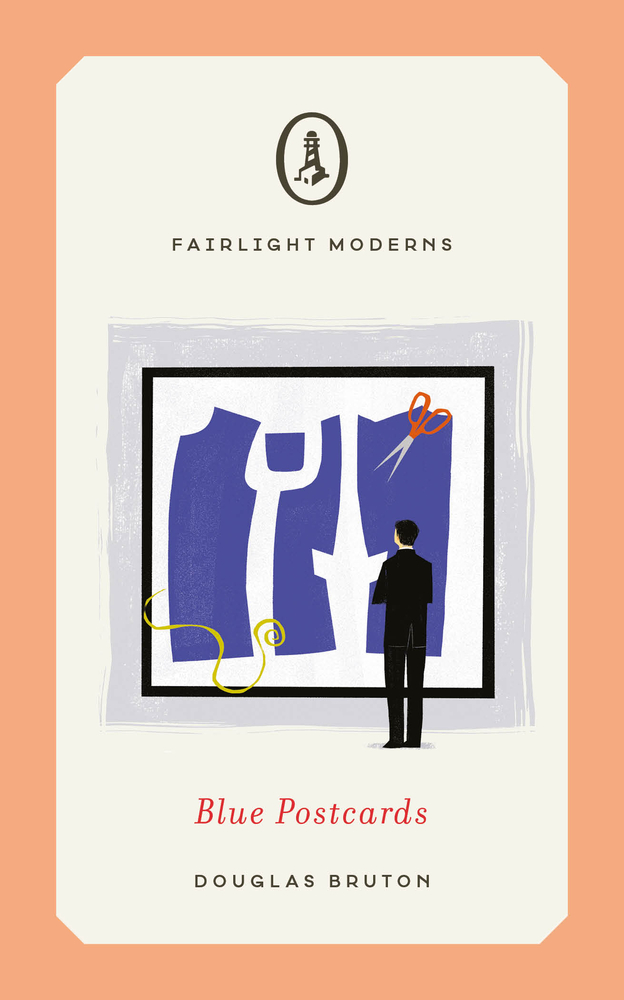
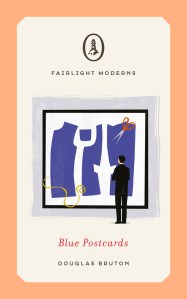
This little book published by Fairlight Moderns came to my attention when it was longlisted for the Walter Scott Prize earlier this year. I wasn’t sure it would be my sort of book but it sounded intriguing and at only 160 pages I knew it would be perfect for Novellas in November.

The book opens in the present day with our unnamed narrator buying a postcard from a Parisian market stall beside the Eiffel Tower. The postcard is completely blue on one side and date stamped 1957. The young woman who sells it to him has no idea of its significance, but the narrator knows exactly what it is: an invitation to an exhibition of the French artist Yves Klein’s monochrome paintings which was held in that year. He takes the card away with him but is drawn back to the stall again and again hoping to find more blue postcards and slowly a relationship begins to develop between the narrator and Michelle, the postcard seller.

Two other narratives are woven into the story. In one, we follow the career of Yves Klein, who becomes famous as the creator of International Klein Blue (IKB), an intense shade of aquamarine. In the other we meet Henri, a Jewish tailor – the only one left on what was once called the Street of Tailors. Henri also has a connection with blue: he sews a blue thread, in a shade known as ‘tekhelet’ in Hebrew, into the leg of every suit he makes in the belief that it will bring good luck to the wearer. One day, Yves Klein visits the tailor to order a suit and so the three separate parts of the novel fit together like the pieces of a jigsaw puzzle.

There was something to interest me in each of the three storylines. In the modern day one it was the unreliability of the narrator who admits that some of the things he is telling us didn’t necessarily happen and that memories can change over the years. The most compelling parts of Henri’s story involve his memories of the 1930s when he and his family were victims of the Night of Broken Windows. And I was struck by the descriptions of Klein’s monochrome exhibition where he displayed eleven identical blue (IKB) squares, placed at different angles and priced differently because he argued that the experience of viewing each one was different. I knew nothing about Klein before reading this book and his art is not really the kind I like, but it was good to learn a little bit about him.

What makes this book unusual, however, is the structure – and as I suspected, it wasn’t entirely successful with me! There are five chapters and each chapter is made up of one hundred numbered paragraphs, some only one or two sentences long but all what you could describe as ‘postcard-sized’. The three narratives alternate rapidly throughout the book, so we have one or two paragraphs telling the narrator’s story then one or two telling Henri’s or Yves Klein’s. I found it easy enough to follow but it does feel fragmented and meant I didn’t have time to become invested in one story before switching back to another.

Bruton has also set himself the challenge of including the word ‘blue’ at least once in every single paragraph, so we have characters with blue eyes, clothes with blue ink stains, mussels with blue shells, memories lost in the blue mists of time, and so on. Add to this the narrator’s obsession with finding blue postcards, Klein’s obsession with creating blue artworks and Henri’s obsession with blue threads and I started to feel overwhelmed with blue. There’s no doubt that it’s all very cleverly done and can’t have been an easy book to write, but I personally prefer books that allow me to become fully absorbed in the story without any distractions. I wasn’t the ideal reader for this book, but I knew that before I started and wanted to try it anyway, so I don’t have any complaints!

Have you read anything by Douglas Bruton – or any of the other books in the Fairlight Moderns collection?
I’m counting this book towards Novellas in November hosted by 746 Books and Bookish Beck.

Book #59 read for the Historical Fiction Reading Challenge 2022.

Maureen Fry and the Angel of the North by Rachel Joyce – #NovNov22

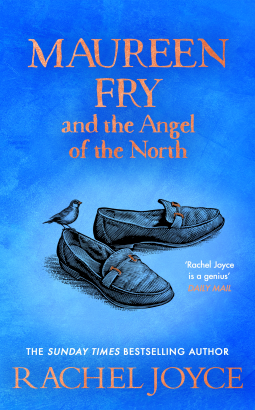
Almost ten years ago I read Rachel Joyce’s first novel, The Unlikely Pilgrimage of Harold Fry, in which a man sets out to walk almost the entire length of England, from his home in Devon to a hospice in Berwick-upon-Tweed, to visit an old friend who has been diagnosed with cancer. A second book followed – The Love Song of Miss Queenie Hennessy, written from the friend’s perspective – but I didn’t read that one. Maureen Fry and the Angel of the North is the final part of the trilogy and I wondered whether I would struggle with it because of not having read the middle book first, but luckily that wasn’t the case.

At only 133 pages, Maureen Fry is a short, quick read but contains an entire journey, both physical and psychological. This time, though, it’s not Harold who is making the journey, but his wife, Maureen. It’s been several years since Queenie Hennessy’s death but the garden she created in Embleton on the Northumberland coast has become a tourist attraction. Hearing that the garden contains a memorial to her own son, David, who committed suicide, Maureen decides to go and see it for herself. It’s something she wants to do alone so, leaving Harold behind, she prepares to head north – not on foot like her husband, but by car.

I found the title of the book intriguing because the obvious reference is to the Angel of the North, Antony Gormley’s sculpture of the same name that stands on a hill overlooking the A1 in Gateshead, just south of Newcastle upon Tyne. I was at Newcastle College on the day it was erected in 1998 and remember watching from the tenth-floor window! Maureen Fry does see the Angel as she drives past, but it’s only mentioned briefly and there are several other possible meanings of the title (although I won’t tell you who or what the other Angels of the North could be). The US version doesn’t refer to angels in the title at all and is simply Maureen, just in case anyone thinks they are two different books!

Maureen’s journey is very different from Harold’s, not just because she chooses to drive instead of walk but also because she has a very different personality. While her husband was easy to like, she is not. She’s rude, unpleasant and unlike Harold, who made new friends during his pilgrimage, Maureen seems to make only enemies. It took me a long time to warm to her at all, but eventually I began to understand the reasons for her behaviour. For such a short book, there’s a lot of emotion within its pages as Maureen begins to face up to the grief she’s been trying to suppress for so many years.

If you’re new to this trilogy, I would definitely recommend reading Harold’s story before Maureen’s. I didn’t feel that I’d missed anything essential by not having read Queenie’s, but I would like to go back and read it now anyway – as well as all the other Rachel Joyce books I still haven’t read!

Thanks to Doubleday for providing a copy of this book for review via NetGalley.

I’m counting this book towards Novellas in November hosted by 746 Books and Bookish Beck.