Before I started blogging I used to keep a list of the books I read in an A-Z notebook – the title, the author and a rating out of 5, but no other information. I did this from the mid-1990s to around the year 2000, but sadly kept no records after that until October 2009 when I started my blog.
I still have the notebook and a few years ago I began writing a series of blog posts highlighting some of the books listed under each letter, but only got as far as E before getting distracted and forgetting to do the rest. I did enjoy working on those posts, so I have decided to continue and try to get all the way to Z this time – and yes, I do have a book listed under Z!
So, without further ado, here is a selection of the books that appeared on the ‘F’ and ‘G’ pages of my notebook. I originally gave the books ratings out of 5 and the additional symbol * means that I particularly loved the book while X means I didn’t finish it. Although I’ve included my original ratings here, these do not necessarily reflect what I would feel about the books if I read them again today!
Books beginning with F and G:
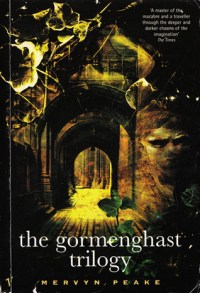 The Gormenghast Trilogy by Mervyn Peake 5/5*
I remember buying this book after watching the BBC adaptation in 2000. My edition includes all three novels in the trilogy – I didn’t like the third one, Titus Alone, but loved the first two, Titus Groan and Gormenghast.
The Far Pavilions by M.M. Kaye 5/5*
This wonderful novel set in India is one of my favourite historical fiction novels. I loved it the first time I read it and when I re-read it in 2010 I was pleased to find that it was still as good as I remembered.
Gone with the Wind by Margaret Mitchell 5/5*
I have read Gone with the Wind several times and don’t know if this particular entry refers to my first read or a later re-read. It’s another favourite, though, so it would get 5/5 from me every time.
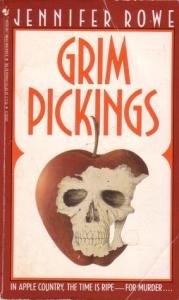 Grim Pickings by Jennifer Rowe 5/5
This was a great Agatha Christie-style mystery novel set in Australia and revolving around a murder that takes place in an old woman’s orchard where her family have gathered to pick apples. I think it was part of a series, but I never read any of the others.
The Ghost of Thomas Kempe by Penelope Lively 3/5
This is one of Penelope Lively’s children’s books. I can remember what the front cover of my copy looked like (and I think I still have it somewhere) but the story has faded from my mind. I would like to read it again as I think I might appreciate it more now than I did the first time.
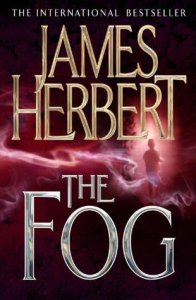 The Fog by James Herbert 3/5
I very rarely read horror novels these days but I used to read a lot of them. I enjoyed this one, about a mysterious fog that spreads across Britain, altering the minds of everyone who comes into contact with it.
Freezing by Penelope Evans 3/5
I have no memories at all of reading this book. According to Goodreads, it’s a crime novel about a photographer who works in a mortuary and tries to find the identity of a drowning victim who is brought into the morgue one day. It sounds a bit gruesome but I must have enjoyed it enough to give it a 3/5 rating.
First Impression by Margot Dalton 3/5
I can’t remember this one either. It’s another crime novel, this time about a detective trying to solve a missing child case.
 The Ghost Road by Pat Barker 2/5
If you’d asked me whether I’d read anything by Pat Barker I would have said no, but obviously I did read this one. I think I’ll have to read it again as I can’t remember anything about it and I suspect it deserves more than 2/5! It’s the third in the Regeneration trilogy and I don’t have any record of reading the previous two, so maybe that was the problem.
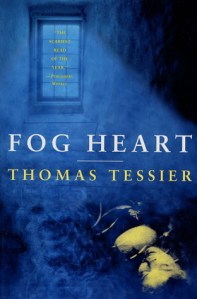
Fog Heart by Thomas Tessier 2/5
The story of two couples who are drawn together when they attend a séance and meet a young medium called Oona. I do vaguely remember reading this book, but I wasn’t very impressed by it.
The Ghosts of Candleford by Mike Jeffries 2/5
Neither the title nor the author sound familiar to me but Amazon tells me that this is a ‘classic tale of the supernatural’. Seeing how many books I’ve read and then completely forgotten about has confirmed for me (if I needed to have it confirmed) that starting a book blog was an excellent idea!
Have you read any of these books? Can you shed any light on the more obscure ones?
I’ll be back soon with another selection, but if you missed my earlier Remember These? posts you can see them here.

 She Reads Novels