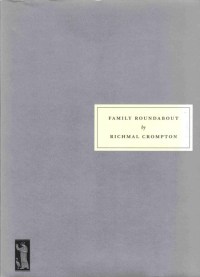
Family Roundabout by Richmal Crompton

Family Roundabout Like many people, I read some of Richmal Crompton’s Just William books as a child but have never investigated any of her adult fiction. I don’t think I was even aware that she had written books for adults until just a few years ago when I discovered Persephone Books. This is the first Persephone I’ve read for a while and it has reminded me of all the reasons why I love reading the books they publish.

Family Roundabout is set in a small town in England in the 1920s and 30s and tells the story of two families, the Fowlers and the Willoughbys, each consisting of a widowed mother with five adult children. The families are initially drawn together when Helen Fowler marries Max Willoughby, and as the years go by their lives become more and more entwined as various other family members form friendships, fall in love or become rivals. Some of these family members include Anice Fowler, quieter and less confident than Helen, whose envy of her sister could destroy her chance of happiness; Oliver Willoughby, reluctant to go into the family business but lacking the courage and the spirit to do something different; Cynthia Willoughby and Judy Fowler, whose friendship becomes strained after they have the opportunity to meet their favourite author, Arnold Palmer; and Peter Fowler, unhappily married to the spiteful, manipulative Belle.

Each of these characters has his or her own storyline and there are other Fowler and Willoughby children too – and later, grandchildren – so as you can imagine, there’s a lot happening in this novel. At the centre of the story, though, are the two people around whom all the others revolve: Mrs Fowler and Mrs Willoughby.

Mrs Fowler was once Millicent, a strong, independent person with opinions of her own, but after her marriage she became Milly, obliging, submissive and gentle. Millicent hasn’t disappeared entirely, but Milly is now the dominant side of her personality. She is always there for her children when they need her, but takes quite a passive approach to parenting, rarely interfering and allowing them to choose their own path in life. Mrs Willoughby, on the other hand, is practical, efficient and likes to control every aspect of her childrens’ lives. Even after they marry and leave home, she continues to make decisions for them and tell them what to do. The author never judges these two different styles of mothering and it is left to the reader to decide which, if either, is the most successful parent.
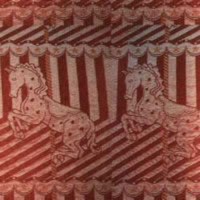
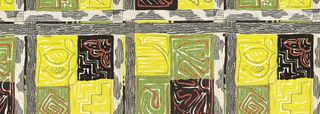
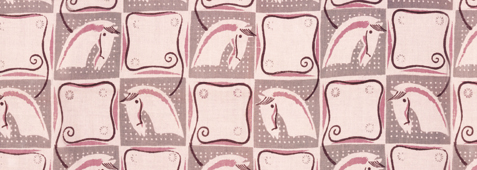
Family Roundabout endpapers

Family Roundabout endpapers

Family Roundabout is a very character-driven novel and fortunately almost every character in the story is well drawn and interesting. There were some that I didn’t like (Belle has to be one of the most horrible, vile people I’ve come across in fiction for quite a long time) but I enjoyed following all of their stories through to the end of the book. I loved the portrayal of the self-absorbed author, Arnold Palmer, and I thought the child characters were very well written too, which is maybe not surprising from a writer who wrote so many successful children’s books!

There’s a lot of unhappiness in this novel, a lot of bitterness and jealousy, but there are also some funny scenes and some amusing bits of dialogue, which means it doesn’t become too dark. I’m not sure I would rank this among my very favourite Persephones but I did really like it. It’s a shame more of Richmal Crompton’s adult novels aren’t still in print, as I would definitely be interested in reading them having enjoyed this one so much.
Princes in the Land by Joanna Cannan

This is one Persephone book I had never heard anything about, so I picked it up and started reading without having any idea what to expect. I didn’t know who Joanna Cannan was until I read the biographical information on the cover and saw that she was the mother of Christine, Josephine and Diana Pullein-Thompson, three authors who were famous for their horse and pony stories. I remember reading some of the Pullein-Thompsons’ books as a child, so this made me more curious about reading Princes in the Land.

This novel has very little plot but like most Persephone books it raises a lot of interesting issues including marriage, parent/child relationships and class differences. The book itself is well-written and I liked the setting and the time period, but unfortunately this is the first Persephone I’ve read that I didn’t enjoy much at all.

Princes in the Land, published in 1938, is the story of Patricia Crispin and her experiences of being a wife and mother. We first meet Patricia as a child, shortly after her father has been killed in the Boer War. Patricia and her sister Angela are being taken by their mother to live with their grandfather, Lord Waveney, at his mansion in the countryside. While Angela is the quieter and better behaved of the two girls, Lord Waveney takes a special liking to the red-haired, freckled Patricia, who is more courageous and shares his love of horses.

Several years pass and Patricia marries Hugh Lindsay, a student from a poor background, much to the disgust of her mother who wanted Patricia to marry someone of her own class. Patricia and Hugh have three children, August, Giles and Nicola – and as they grow older they begin to disappoint Patricia as much as she had disappointed her own mother.

The biggest problem I had with this book was the characters. I don’t always need to like the characters to be able to enjoy a book, but in this case I think it would have made a big difference if there had been just one person I had been able to identify with and care about. Patricia and her mother both seemed to be complete snobs. Patricia’s attitude towards her daughter-in-law, Gwen, is particularly nasty and based purely on the fact that she thinks Gwen’s family are ‘common’. I don’t mind reading about snobbish characters if they are written with a touch of humour or satire, as in Jane Austen novels for example, but that wasn’t the case here. Patricia seems to think her attitude is perfectly acceptable and I felt that we, as the readers, were expected to agree with her.

The portrayals of marriage and parenthood were very cynical. The sad thing is that I really liked Patricia when she was a child at the very beginning of the book but as the years went by she changed into a person even she herself didn’t appear to be comfortable with. It’s tragic that despite devoting her life to her children, they barely seemed to know or understand each other at all. None of them really did anything bad and were children who Patricia could have been proud of, but because they failed to meet her expectations she ended up feeling disappointed in them and dissatisfied with her own life.

I’m sure a lot of people would enjoy reading Princes in the Land much more than I did, so please don’t let me put you off reading it. It was an interesting book, worthy of being a Persephone title and I can’t fault the writing either, but the amount of snobbery and class-obsession was just too much for me.

The Blank Wall by Elisabeth Sanxay Holding

Every time I pick up a Persephone book I’m amazed by the diversity of the books they publish. The Blank Wall, written by the American author Elisabeth Sanxay Holding and originally published in 1947, is completely different to the others I’ve read, in terms of both plot and overall feel.

The Blank Wall is a suspense novel set during World War II. Lucia Holley is living with her two teenage children and her father in their lakeside home, while her husband, Tom, is serving in the navy somewhere in the Pacific. Her daughter, Bee, has been having an affair with an older man who Lucia considers to be entirely unsuitable. Things quickly start to spiral out of control and Lucia finds herself involved in murder, blackmail and a series of other crimes, all of which she attempts to conceal from her family. But as she desperately tries to protect her loved ones and avoid a scandal, could Lucia actually be putting herself and others in danger?

With the story being told from Lucia’s perspective, we are given lots of insights into her thought processes as she tries to cope with the disruption to her previously peaceful life. I could really feel Lucia’s fear and panic as everything seemed to be closing in around her. I didn’t always understand her actions and there were times when I felt frustrated with her because some of her decisions were clearly silly and irrational, but it was an interesting study into the way a 1940s woman of Lucia’s class and background might have reacted. It was easy to see why Lucia felt under so much pressure. She was doing her best to take care of her family during wartime and provide meals for them despite rationing and shortages, as well as trying to solve their personal problems and keep them safe – while continuing to send letters to her husband assuring him that everything at home was fine.

The pages of The Blank Wall are filled with tension and suspense. The plot is exciting and fast-paced and I could never guess what might happen next. But apart from the thrilling plot, the other strength of this book is the skilful way Holding portrays the relationships between Lucia and the other characters, particularly with her daughter Bee, the housekeeper Sybil and one of the blackmailers, Martin Donnelly, with whom she starts to form a surprising friendship. And I haven’t read many stories of the American Home Front during the war, so this was another interesting aspect of the book for me. A great story and one of my favourite Persephones so far.

Alas, Poor Lady by Rachel Ferguson

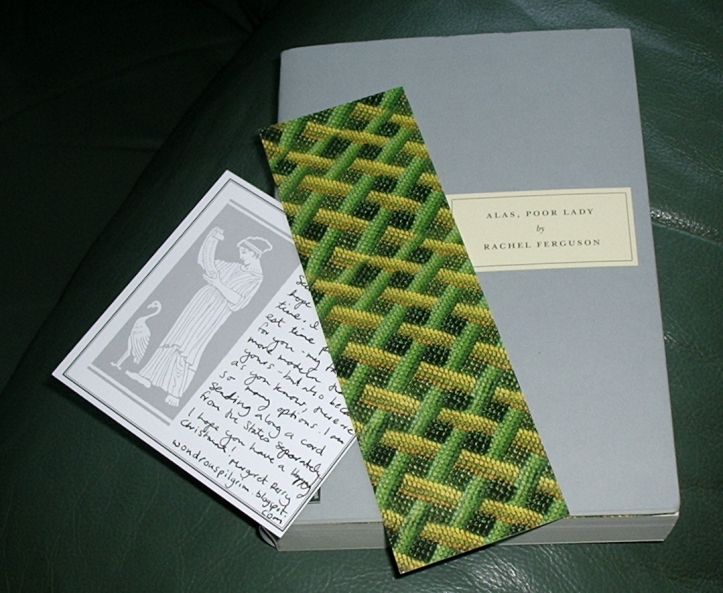
This is the book that I received for Christmas from my Persephone Secret Santa, Margaret of Ten Thousand Places. Choosing a book for another person is never easy, but of all the titles published by Persephone Margaret managed to select one that was perfect for me. Thank you, Margaret!

Alas, Poor Lady tells the story of one London family, the Scrimgeours, over a period of more than sixty years, from the Victorian era through to the 1930s. Captain and Mrs Scrimgeour have eight children – seven are girls and only one, the youngest, is a boy – and we get to know all of them, some better than others. We watch as they grow up and try to find their place in society – a society designed to cater only for men and, to a lesser extent, for married women. For a woman who stayed single (whether by choice or not) her options in life were very limited.

Three of the Scrimgeour girls marry and leave home early in the story, though they do reappear from time to time. Of the other four, Mary is the eldest sister still living at home and is portrayed as the stereotypical ‘spinster’, a quiet, sensible woman who can usually be found reading a book and who has never really been expected to get married. Agatha decides to follow a different route after it starts to look likely that she, like Mary, is also going to remain single – but will this really lead to happiness? What Queenie really wants is to get a job, but after considering several possible career paths is forced to come to a disappointing conclusion. And finally there’s Grace, the youngest sister, who through no fault of her own finds herself facing poverty and in the uncomfortable position of becoming a burden to her family.

Although the focus of the book is on the seven girls, it’s interesting to see how their brother, Charlie, is also under pressure to conform to society’s expectations of how a boy should behave. In some ways, he doesn’t really have any more freedom to be himself than his sisters do. His father is furious with him when he discovers him playing with Grace’s doll, for example, instead of his own toy soldiers.

Another thing I liked was the amount of information we are given on everyday life in the 19th and early 20th centuries. Although the Captain keeps insisting he’s ‘not a rich man’ and worrying about money, the Scrimgeours are evidently a very wealthy family with a large house and servants. It was interesting to see how their way of life changed over the years as a result of poor financial decisions and changing economics.

I loved this book but I know it won’t appeal to everyone. It’s slow and detailed, doesn’t have a lot of plot, and it did seem to take me a long time to read it. And yet without anything really ‘happening’ there’s still so much going on in this book that this post could easily have been twice as long as it is.

So, for anyone with an interest in feminism and the differing roles of men and women in society, I can’t recommend Alas, Poor Lady highly enough. Although my favourite Persephone so far is still Little Boy Lost (largely due to the emotional impact it had on me) this one is now a close second.

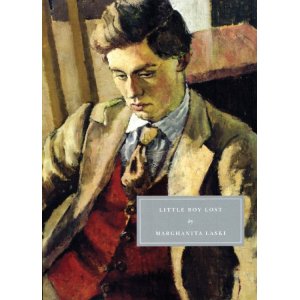
Persephone Reading Weekend: Little Boy Lost by Marghanita Laski

Persephone Reading Weekend is hosted by Claire and Verity. For those of you who are new to Persephone and wondering what this is all about, they’re a publisher dedicated to printing “mainly neglected fiction and non-fiction by women, for women and about women” and Claire and Verity have organised a weekend of reviews, giveaways and other Persephone-related fun. I’m glad I’m able to participate for the first time, as I hadn’t discovered Persephone Books in time for last year’s event. Since then I’ve read four Persephones – this one, Little Boy Lost, is my fifth. And I’m pleased to say that it has just become my favourite so far.

I was originally planning to read Alas, Poor Lady by Rachel Ferguson which I received from my Persephone Secret Santa at Christmas, but due to the length of the book I realised I wasn’t going to be able to read it in time to post about it this weekend. Although I’m still hoping to get to Alas, Poor Lady within the next few weeks (and looking forward to it as I’ve heard some good things about it), I decided that my book for the Reading Weekend would have to be the only other unread Persephone I own, Marghanita Laski’s Little Boy Lost.

And now I feel bad that Little Boy Lost was only my second choice. I can’t believe I’ve let this book sit on my shelf unopened for more than six months; if I’d realised I was going to love it this much I would have read it immediately.

Little Boy Lost is the second book I’ve read by Marghanita Laski – the first was The Victorian Chaise-Longue. However, I found the two books entirely different. Although I did enjoy The Victorian Chaise-Longue, this one was far more emotional and a more gripping, compelling read.

It’s Christmas Day, 1943, when Hilary Wainwright first learns that his son has been lost. He had seen baby John only once – a brief glimpse of a little red face with dark hair poking out of a bundle of blankets. Then, while Hilary was away, his wife, Lisa, was killed by the Gestapo in Paris and their little boy disappeared almost without trace. When the war is over, Hilary goes back to France and with the help of his friend, Pierre, he begins to follow a trail which he hopes will lead him to his lost son.

Laski does an excellent job of portraying the conflicting emotions Hilary experiences, torn between longing to be reunited with his son and worrying that if he does find him he might not want him. All through the book I was guessing what might happen – it wasn’t really obvious what the outcome would be and I could think of several different possibilities, some good and some bad.

The descriptions of post-war France are so vivid: the bomb-damaged buildings, the poverty, the food shortages – unless you were rich enough to take advantage of the black market, of course. And I was shocked by the descriptions of the conditions in the orphanages. As well as there not being enough to eat and drink, and a complete lack of any toys or games, it was chilling to think of children with tuberculosis living alongside the healthy ones.

Although I was trying to avoid hearing too much about this book before I read it, I knew it was supposed to become very nerve-wracking and suspenseful towards the end. Well, I can tell you that this is definitely true! There are so many great books that are let down by a weak ending, but this is certainly not one of them. The tension throughout the final few chapters was nearly unbearable, so much so that I was almost afraid to reach the end. And I imagine most readers, like I did, will have tears in their eyes when they reach the very last sentence.

Nicholas Lezard of The Guardian, who is quoted on the back cover, says it best: “If you like a novel that expertly puts you through the wringer, this is the one.”

My Persephone Secret Santa Revealed!

Today is the day when Persephone Secret Santa participants reveal the identity of their Santa and the gift they received! Persephone Books have been a wonderful new discovery for me in 2010. I’ve read four so far and loved them all, so I couldn’t resist signing up for this year’s Secret Santa.

My Santa was Margaret of Ten Thousand Places. I was delighted to find that the book she sent me was Alas, Poor Lady by Rachel Ferguson. Margaret included a message with the book and mentioned that it had been a difficult decision – well, Margaret, I would have been happy with any of the Persephones I haven’t already read, but I think you’ve chosen one that will be perfect for me! I can’t wait to start reading it.

Thank you to Margaret for being my Santa and thanks also to Claire at Paperback Reader for hosting this! I’m looking forward to visiting everyone else’s blogs to find out what they received. For a list of all the Persephone Secret Santa participants see this post at Claire’s blog.

After the Sunday Papers #8: Persephones and Jane Austen

I had a nice surprise this week when I discovered part of my review of Good Evening, Mrs Craven: The Wartime Stories of Mollie Panter-Downes had been quoted in the Readers’ Comments section of the Persephone Biannually Autumn and Winter 2010 magazine.

I’ve enjoyed all four of the Persephones I’ve read so far, and would appreciate any recommendations for which ones I should read next.

The Persephones I’ve already read are:

The Victorian Chaise-longue by Marghanita Laski
Good Evening, Mrs Craven: The Wartime Stories of Mollie Panter-Downes
Miss Ranskill Comes Home by Barbara Euphan Todd
Miss Pettigrew Lives For a Day by Winifred Watson

Have you read any Persephone books? Which books or authors would you recommend?

Jane Austen

I came across this article yesterday about Jane Austen. Apparently Austen’s manuscripts show that she made spelling mistakes, had trouble with the ‘i before e’ rule and wrote in a regional accent. Although I’m not a big Jane Austen fan or an expert on her background, I think the article is a bit harsh considering the standard of education that was available to girls in those days and also the fact that written English didn’t necessarily follow the same rules then as it does today. What do you think?

Currently reading

I’m still working my way through the stories in The Haunted Hotel & Other Stories by Wilkie Collins which as you might expect, is proving to be a perfect Halloween read! This will be my seventh book for the RIP challenge, which means the only book on my original challenge list that I haven’t read yet is Frankenstein. I don’t think I’ll have time to fit that one in before the end of the month, so I’ll have to either read it after Halloween or leave it until next year.

I’m also reading a book that I requested from Netgalley, called The Dressmaker of Khair Khana by Gayle Tzemach Lemmon. It’s the true story of a woman living in Taliban-era Afghanistan who started her own business to support herself and her younger sisters, and is one of the most inspirational stories I’ve ever read.

What are you reading this week?