After the Sunday Papers #5

Last month was a great reading month for me – I read ten books, which I know is not many for a lot of other bloggers, but for me it’s more than I usually manage to read. And as well as reading those ten books, I was also slowly working my way through Middlemarch by George Eliot, which I finished last weekend. Considering this was my third attempt at reading it, I felt a real sense of achievement when I reached the final page! As I’ve finished it a few weeks ahead of schedule for Ana’s readalong, I won’t post my thoughts on the book just yet, but will wait until later in the month. Who else has been reading Middlemarch for the readalong? Are you enjoying it?

Another readalong I’ve signed up for is Bleak House by Charles Dickens, which is being hosted by Amanda of The Zen Leaf. Bleak House, like Middlemarch, is a book that I started reading once before but stopped because I wasn’t in the right mood for it. I can be a very moody reader sometimes! Hopefully this time I’m going to enjoy it. If you’d like to participate too, see Amanda’s post to sign up.

This week I’ve been reading The Red Queen by Philippa Gregory which I was sent by Simon & Schuster UK for their Red Queen blog tour. The Red Queen is the second book in Philippa Gregory’s new Wars of the Roses series, which was a fascinating time in English history. I would welcome any recommendations of good non-fiction books about this period as I’d really like to learn more about it.

I’ll be posting my review of The Red Queen soon, but in the meantime why not enter this competition to win a signed copy of the UK hardback – it’s open worldwide until September 30th.

I also received two more books for review this week, which is exciting for me as I don’t usually get very many.

After You by Julie Buxbaum is the third book I’ve received from Transworld for their Summer Reading Challenge (the first two that I’ve read and reviewed were Second Hand Heart and If I Stay). I also had a nice surprise when Rosy Thornton contacted me to offer me a copy of her new novel, The Tapestry of Love. I’m looking forward to reading both of these books.

What will you be reading this week?

New Book Arrivals

I haven’t bought any new books for a while as I’ve been running out of shelf space (as usual!) and have been trying to read some of the books that I already own or borrowed from the library, but here are a few that I’ve acquired in the last couple of weeks.

The Red Queen by Philippa Gregory – I received this from Simon & Schuster for their upcoming Red Queen blog tour (16th-20th August). They also sent me the paperback version of the previous book in the trilogy, The White Queen.

Remarkable Creatures by Tracy Chevalier – I received this book as a thank you gift from Harper Collins for participating in a readers’ panel survey. I have yet to read anything by Tracy Chevalier so I’m looking forward to it.

Second Hand Heart by Catherine Ryan Hyde – I’m taking part in the Transworld Summer Reading Challenge, where bloggers can choose four titles to be sent for review during the summer. This is the first book I’ve received for the challenge – the other three I’ve requested are After You by Julie Buxbaum, If I Stay by Gayle Forman and Prep by Curtis Sittenfeld. (I think there’s still time to sign up at the Between the Lines blog – but it’s EU residents only.)

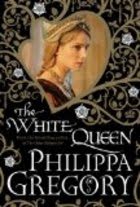
Review: The White Queen by Philippa Gregory

Philippa Gregory is best known for her Tudor court novels, but with The White Queen she moves further back in time to the Plantagenets and the Wars of the Roses.

Elizabeth Woodville is twenty seven when she meets and falls in love with King Edward IV. Following a private wedding, Elizabeth becomes Queen of England and finds herself caught up in the ongoing battles between the House of Lancaster and the House of York. Amidst all the politics, intrigue and betrayal, Elizabeth’s concern is for the future of her children – in particular her two royal sons who will become the famous ‘Princes in the Tower’, a mystery which remains unsolved to this day.

The book is written in the first person present tense which I found slightly irritating, though not enough to stop me from enjoying the book. The use of present tense does help the reader to feel as if they are experiencing events along with Elizabeth, so it works in that sense, but my personal preference is definitely for past tense. There are a few passages where the viewpoint temporarily changes to the third person in order to describe battles which Elizabeth doesn’t witness but which are an important part of the storyline. I often find battle scenes boring, but these are well written and go into just the right amount of detail.

I found the story itself quite suspenseful and exciting – it probably helped that although I read a lot of historical fiction novels, I haven’t read many about the War of the Roses, so only had a vague idea of what was going to happen. Of course, this meant that I wasn’t sure exactly which parts of the book were based on fact and which parts were the invention of the author. In her note at the end of the book, Gregory mentions that there’s not much information available about the period, therefore there are some areas where she felt free to use her imagination.

If you’re not very familiar with the historical background, you’ll need to concentrate to be able to keep track of all the battles, changes of allegiances and numerous claimants to the throne. The family tree provided at the front of the book is not very helpful – it’s incomplete and really needed to show at least one more generation, as it ends before some of the important characters in the story were even born.

I found it difficult to warm to the character of Elizabeth but could feel sympathy for her, especially towards the end of the book. Richard III was also portrayed quite sympathetically – nothing like the evil hunchback in Shakespeare’s play! I would have liked to have seen his relationship with Elizabeth more thoroughly explored in the book – there was no real explanation for why she distrusts him so much, other than that she’s had dreams and premonitions that something bad will happen to her sons in the Tower. On the subject of the Princes in the Tower, the book explores an interesting theory, which may or may not be true – it would be nice to think that it was.

Interspersed with the main story is the tale of Melusina, the water goddess, from whom Elizabeth and the female members of her family are said to have descended and from whom they claim to have inherited magical powers.
Magic and mythology are recurring themes throughout the book. Elizabeth and her mother Jacquetta’s witchcraft skills are used as an explanation for several key historical events – for example, they whistle up storms to defeat their enemies at sea. This aspect of the story became quite repetitive and just didn’t appeal to me much. Sometimes it felt as if there were references to Melusina, water, rivers, the sea etc on almost every page!

The book ends abruptly, but that’s not surprising since The White Queen is the first in a trilogy called The Cousins’ War and will be followed by The Red Queen and The White Princess which will focus on Margaret Beaufort and Elizabeth of York respectively.

I would recommend The White Queen if, like me, you don’t have much knowledge of the Wars of the Roses and are looking for an enjoyable and relatively easy to understand introduction to the period. For those of you with a lot of background knowledge, I think there should still be enough new ideas to keep you interested.

Recommended

Genre: Historical Fiction/Pages: 417/Publisher: Simon & Schuster/Year: 2009/Source: My own copy bought new
New Book Arrivals – 27th December 2009

Some books that I received for Christmas. What did Santa bring you this year?

In 1865 Charles Dickens, the world’s most famous writer, narrowly escapes death in the Staplehurst Rail Disaster. He will never be the same again. A public hero for rescuing survivors, he slowly descends into madness as he hunts the individual he believes to be responsible for the carnage: a spectral figure known only as Drood.
His best friend, Wilkie Collins, is enlisted for the pursuit. Together they venture into Undertown, the shadowy, lawless web of crypts and catacombs beneath London. Here Drood is rumoured to hold sway over a legion of brainwashed followers. But as Wilkie spirals ever further into opium addiction and jealousy of the most successful novelist, he must face a terrifying possibility: is Charles Dickens really capable of murder?

Macabre and melodramtic, set in haunted castles or fantastic landscapes, Gothic tales became fashionable in the late eighteenth century with the publication of Horace Walpole’s The Castle of Otranto (1764). Crammed with catastrophe, terror, and ghostly interventions, the novel was an immediate success, and influenced numerous followers. These include William Beckford’s Vathek (1786), which alternates grotesque comedy with scenes of exotic magnificence in the story of the ruthless Caliph Vathek’s journey to damation. The Monk (1796), by Matthew Lewis, is a violent tale of ambition, murder, and incest, set in the sinister monastery of the Capuchins in Madrid. Frankenstein (1818, 1831) is Mary Shelley’s disturbing and perennially popular tale of young student who learns the secret of giving life to a creature made from human relics, with horrific consequences. This collection illustrates the range and the attraction of the Gothic novel.

The first in a stunning new series, The Cousins War, is set amid the tumult and intrigue of The War of the Roses. Internationally bestselling author Philippa Gregory brings this family drama to colourful life through its women, beginning with the story of Elizabeth Woodville, the White Queen The White Queen tells the story of a common woman who ascends to royalty by virtue of her beauty, a woman who rises to the demands of her position and fights tenaciously for the success of her family, a woman whose two sons become the central figures in a mystery that has confounded historians for centuries: the Princes in the Tower whose fate remains unknown to this day. From her uniquely qualified perspective, Philippa Gregory explores the most famous unsolved mystery, informed by impeccable research and framed by her inimitable storytelling skills.

[Synopsis for above books taken from Amazon.co.uk]