My commonplace book: January 2016

commonplace book
Definition:
noun
a notebook in which quotations, poems, remarks, etc, that catch the owner’s attention are entered

Collins English Dictionary

~

A summary of this month’s reading, in words and pictures.

~

I hated the mountains and the hills, the rivers and the rain. I hated the sunsets of whatever colour, I hated its beauty and its magic and the secret I would never know. I hated its indifference and the cruelty which was part of its loveliness. Above all I hated her. For she belonged to the magic and the loveliness. She had left me thirsty and all my life would be thirst and longing for what I had lost before I found it.

Wide Sargasso Sea by Jean Rhys (1966)

~
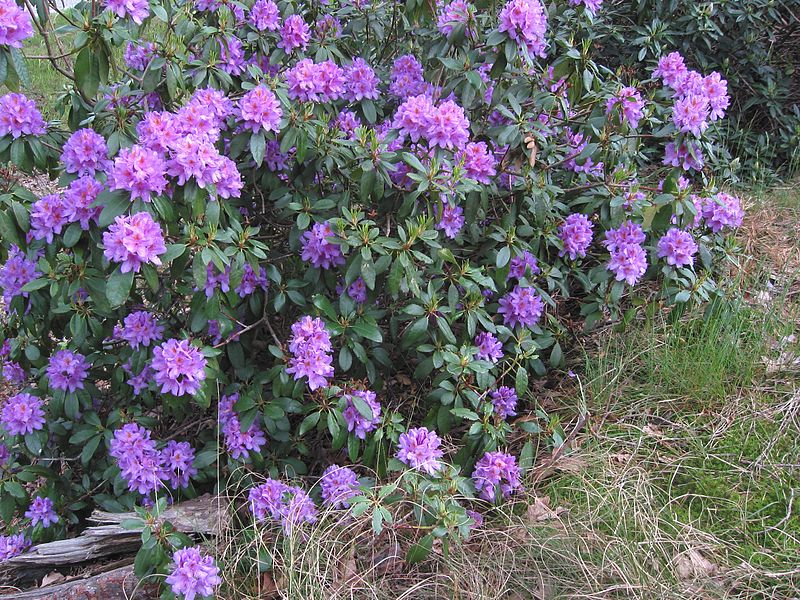
Roger had learned from Mr. Gray that this particular kind of rhododendron was called Ponticum, so the secret hiding-place was called Ponticum House. It was used for all sorts of activities and gradually it was furnished with odds and ends of furniture.

Amberwell by D.E. Stevenson (1955)

~

There was the rub: that Julia, who could get intimate with a trapeze artist after five minutes’ conversation – who was intimate with a salesman after buying a pair of shoes – had talked for an hour to her own daughter, about the girl’s own father and lover, without the least intimacy at all.

“I’m a fool,” thought Julia, again. “It’s just because she’s such a perfect lady. And what I need is a good sleep.”

The Nutmeg Tree by Margery Sharp (1937)

~

So fine was the morning except for a streak of wind here and there that the sea and sky looked all one fabric, as if sails were stuck high up in the sky, or the clouds had dropped down into the sea. A steamer far out at sea had drawn in the air a great scroll of smoke which stayed there curving and circling decoratively, as if the air were a fine gauze which held things and kept them softly in its mesh, only gently swaying them this way and that.

To the Lighthouse by Virginia Woolf (1927)

~
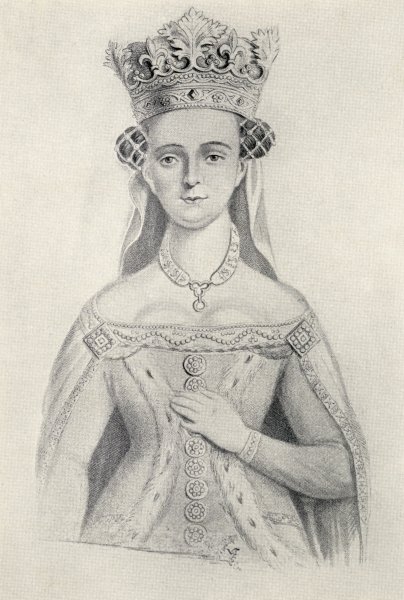
Come, Joanna. I can wait no longer.

There it was, Henry’s declaration, as clear as my reflection in my mirror. Neither, I decided, could I wait.

I sent for my uncle of Burgundy. I had an urgent negotiation to undertake.

The Queen’s Choice by Anne O’Brien (2016)

~

Meantime, all around me is violence and robbery, coarse delight and savage pain, reckless joke and hopeless death. Is it any wonder that I cannot sink with these, that I cannot so forget my soul, as to live the life of brutes, and die the death more horrible because it dreams of waking? There is none to lead me forward, there is none to teach me right; young as I am, I live beneath a curse that lasts for ever.

Lorna Doone by R.D. Blackmore (1869)

~

“It is the women who lay clothes to dry on the rooftops of Troy,” I continued. “It is the fishermen who catch the silver fish in the bay,” I gestured out over the plain towards the sea, sparkling blue in the sunlight, “and sell them on the stalls of the marketplace. It is the princes who live in the palaces on the windy heights of the city, and the slaves who draw water from the wells. This, my king – this is Troy. And if we act now, we may still be able to save our city before it is too late.”

For the Most Beautiful by Emily Hauser (2016)

~

The desolation struck me like a blow, fresh and painful, as if all this destruction had been newly made yesterday, and as if this were my first sight of it. It was grief, I think, nothing more or less. I knew it was absurd. But I had noticed this reaction in others as well as in myself: that we mourned for our ravaged city as if for a mother.

The Ashes of London by Andrew Taylor (2016) – Review to follow

~

“And you cannot move at all in Time, you cannot get away from the present moment.”

“My dear sir, that is just where you are wrong. That is just where the whole world has gone wrong. We are always getting away from the present moment. Our mental existences, which are immaterial and have no dimensions, are passing along the Time-Dimension with a uniform velocity from the cradle to the grave. Just as we should travel down if we began our existence fifty miles above the earth’s surface.”

The Time Machine by H.G. Wells (1895)

~

Favourite books this month: Lorna Doone and Amberwell
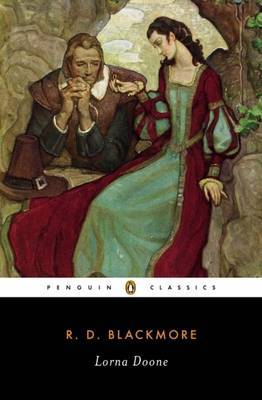
Lorna Doone by R.D. Blackmore

A clan of murderous outlaws, a dashing highwayman, stolen jewels, family feuds, political intrigue, lots of beautiful scenery and a tender love story: R.D. Blackmore’s 1869 classic, Lorna Doone: A Romance of Exmoor, has all of these things and more. Set in the south west of England in the seventeenth century, it tells the story of John Ridd, a yeoman farmer, and his love for the beautiful Lorna Doone.

Lorna Doone John is twelve years old when his father is attacked and killed by a gang of Doones, a once noble family who fell out of favour at court and fled to an isolated Exmoor valley where they have since been leading wild and lawless lives. Being a child, there is no immediate action John can take, so he puts his desire for revenge aside and settles back into life at Plover’s Barrows farm with his mother and two younger sisters, Annie and Lizzie.

At fourteen, John has his first encounter with the eight-year-old Lorna after climbing a hill behind a steep waterfall and unexpectedly finding himself in the Doone Valley. Several years later they meet again as adults and fall in love, but there are many obstacles which must be overcome before they can have any chance of happiness. First there are John’s own feelings towards the Doones, and the fact that as granddaughter of Sir Ensor Doone, head of the family, Lorna’s social status is much higher than that of a humble farmer like John. To complicate things further, the brutal and violent Carver Doone intends to marry Lorna himself and will let nothing stand in his way.

I could tell from the beginning that I was going to enjoy Lorna Doone. It’s just the sort of classic I love! I suppose this could technically be classed as a re-read as I did own an abridged version of the book as a child, but I can barely remember reading it and huge chunks of the original must have been missing anyway (the full, unabridged version has more than 700 pages). I can only regret that it has taken me so long to decide to try it again as an adult.

Lorna Doone takes place during the final years of the reign of Charles II, the Monmouth Rebellion of 1685 and the Bloody Assizes which followed. If you don’t know much about this period of history it might be worth briefly reading up on it first, to gain an understanding of the novel’s historical context, but don’t worry – it’s easy enough to follow the story of John and Lorna even without this knowledge. As our narrator, John is the character we get to know best, following him as he grows from a child into a man. His narrative voice is honest, down-to-earth and often humorous. Lorna, though, is a typical Victorian heroine – beautiful, delicate, gentle, passive, and with a tendency to faint and swoon. I didn’t dislike her, but I preferred John’s two sisters: Annie, who has a romance of her own with the highwayman Tom Faggus (who is based on a real person, and whose horse, Winnie, is a great character in her own right), and the intelligent, sharp-tongued Lizzie.

There are lots of other characters, of course, all of whom play an important role in the story. These include Reuben Huckaback and his granddaughter, Ruth, who wants John to marry her; Lorna’s maid Gwenny Carfax, daughter of a Cornish miner; Counsellor Doone, the clever, scheming father of Carver; and Jeremy Stickles, the King’s messenger, who provides a link with London and the court. I should warn you that some of the characters speak in a strong dialect (for example, “there be a dale of faighting avore thee. Best wai to begin gude taime laike. Wull the geatman latt me in, to zee as thee hast vair plai, lad?”) but this is restricted mainly to one or two of the Ridds’ servants – as in many Victorian novels, dialect is used as an indication of class.

Blackmore devotes a lot of time to telling us about daily life at Plover’s Barrows and the things that are important to John and to his family, such as bringing in the harvest, fishing for loaches in the river and surviving a bad winter. I couldn’t help being reminded of Thomas Hardy – another author with a lot of affection for the countryside and country life. Doing a bit of research online, I was interested to discover that Hardy had read Lorna Doone in 1875 and wrote a letter to Blackmore, mentioning “the kindred sentiment between us in so many things”. Lorna Doone is set in Somerset and Devon and there are lots of vivid descriptions of the beautiful landscapes. I particularly loved reading about John Ridd’s adventures in the secluded, hidden valley of the Doones; every time he enters it in search of Lorna, whether through the waterfall or the forbidding Doone Gate, it’s almost as if the reader is being pulled into another world.

I thoroughly enjoyed reading Lorna Doone and now I’m curious as to why it seems to be the only one of Blackmore’s many novels that has stood the test of time and is still in print. His others are available as ebooks and on Project Gutenberg, but before I investigate further I would love to know if any of you have read them and if so, did you find them worth reading?