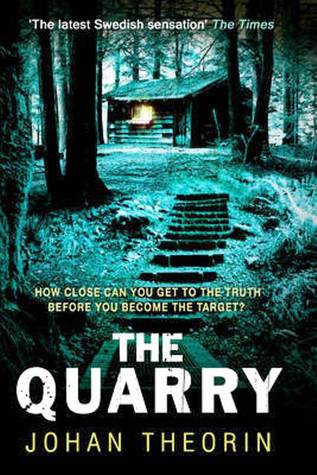
The Quarry by Johan Theorin

This is the third in Johan Theorin’s Öland Quartet, a series of four crime novels set on the Swedish island of Öland. Each book in the series is set during a different season, with the changes in weather and landscape affecting the mood and atmosphere of the story. I loved the first two books, Echoes from the Dead and The Darkest Room, so I was looking forward to my third visit to Öland. I couldn’t wait to meet my favourite character, Gerlof Davidsson, again and to find out what life on the island was like during the spring months.

In The Quarry, Gerlof is now eighty-three years old and, deciding he doesn’t want to spend the remainder of his life in the residential care home he’s been living in, he moves out and returns to his old cottage in the village of Stenvik. Once back in his own home, he finds some of his late wife’s old diaries written while he was away at sea many years earlier. What he discovers in the diaries could be connected to the story of Vendela Larsson, who has recently moved into a luxury house nearby with her husband, Max. Vendela grew up on the island listening to her father’s tales of myths and legends, and returning to Öland as an adult she finds herself wondering whether the elves and trolls she believed in as a child might really exist.

Meanwhile, Gerlof and Vendela also have another new neighbour: Per Mörner, a divorced father, who has inherited his uncle’s cottage beside an abandoned quarry. Per is looking forward to spending the Easter holidays there with his two children, but he has to change his plans when his daughter becomes seriously ill and his father, Jerry, is almost killed in an arson attempt. Per has barely spoken to Jerry for years but feels obliged to help him, and when he begins to investigate he becomes drawn into his father’s sordid past.

“If you like Stieg Larsson, try a much better Swedish writer” it says on the back cover of this book. I can’t comment on that as I’ve never read Stieg Larsson and am not an expert on Swedish crime fiction, but I would certainly be happy to recommend Theorin’s Öland novels. They are all standalone stories and with the exception of Gerlof, they have different characters so can be read in any order, though I would suggest leaving The Quarry until you’ve read the previous two as I found this one the weakest book of the three.

I still love Gerlof and enjoyed being reacquainted with him. I can only hope that I’m as independent, alert and intelligent as he is when I’m in my eighties! I also liked Per, who was doing his best to deal with his various problems including his daughter Nilla’s illness and his difficult relationship with Jerry. And as usual, the descriptions of the island of Öland are beautifully written. This book is set in the spring, as the last of the winter snows are melting away, so the story is not quite as dark as the first two but there’s still a feeling of loneliness and isolation. The translator, Marlaine Delargy, deserves a word of praise for not losing any of the atmosphere or sense of place.

So why didn’t I enjoy this book as much as the others in the series? The reason, I think, was that Vendela’s story, filled with folklore and magical stories of battles between elves and trolls, didn’t really work very well with the other main storyline. Although I was interested in the fates of both Vendela and Per, I thought their stories could have been the subjects of separate books rather than being combined in the same novel and because of this, I found The Quarry less satisfying than Echoes from the Dead and The Darkest Room (the best of the three, in my opinion). I was disappointed after loving the first two so much, but that won’t stop me reading more Johan Theorin books in the future.
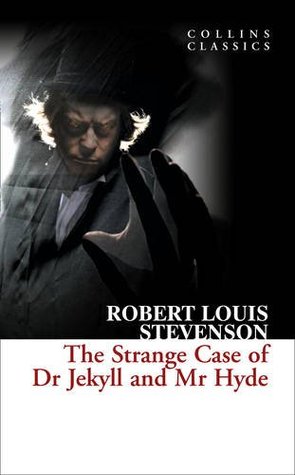
The Strange Case of Dr Jekyll and Mr Hyde by Robert Louis Stevenson

The problem with reading The Strange Case of Dr Jekyll and Mr Hyde in the 21st century is that most of us probably already know what the story involves. Even without having read it or seen any of the film versions, everyone knows what is meant by a ‘Jekyll and Hyde personality’. And this completely takes away the suspense and air of mystery that the story relies on so heavily. I’m sure the original Victorian readership would have found the connection between Dr Jekyll and Mr Hyde much more shocking! So is there still any point in reading it? Yes, I thought there was, because although I knew what the ultimate revelation would be, I didn’t know all the details of the plot or how the conclusion would be reached.

We first see Dr Henry Jekyll and Edward Hyde through the eyes of Jekyll’s friend and lawyer, Mr Utterson, who becomes concerned when he discovers that Jekyll has made a new will leaving everything to Mr Hyde. All Mr Utterson knows about Hyde is that he’s a sinister and brutal man responsible for some cruel and unprovoked acts of violence. The first half of the book follows the lawyer’s attempts to learn more about Hyde and his relationship with Jekyll. It’s only as we approach the end of the story that we hear from Dr Jekyll himself, in the form of a letter addressed to Mr Utterson, and the truth is finally revealed.

The story is cleverly structured so that if you had no idea what was coming, you would be kept wondering, knowing only as much as Mr Utterson knows, and it’s disappointing that for most modern readers the surprise has been spoiled. The part of the story I found the most interesting was the final chapter, after the secret has been uncovered and Jekyll gives his own explanation of what happened and his views on the good and the evil aspects of human nature. We can really feel his desperation as his own dark side grows stronger and things begin to spiral out of his control.

The edition I read contained just the novella The Strange Case of Dr Jekyll and Mr Hyde; other editions include a selection of other Stevenson short stories. Jekyll and Hyde on its own was only 88 pages long and if I’d realised how short it was I would have made time to read it earlier. This was one of my choices for RIP VII, and I would recommend it to other RIP participants who would like to read an important piece of classic Victorian fiction without committing to a full-length novel. I can’t say that I loved it and it’s not something I would want to read again, but I’m glad I’ve read it once and can see why it has become a part of popular culture.

R.I.P. VII is here!


It’s September tomorrow and summer is coming to an end (not that we’ve had much of a summer here in the UK this year). But as the nights start to get darker it means it’s time for R.I.P. (R.eaders I.mbibing P.eril), one of my favourite reading events! As always, R.I.P. VII is hosted by Carl at Stainless Steel Droppings and runs throughout the months of September and October. The idea is to read books that could be classified as one of the following:

Mystery
Suspense
Thriller
Dark Fantasy
Gothic
Horror
Supernatural
Or anything sufficiently moody that shares a kinship with the above.

There are a few different levels of participation to choose from. I’m planning to participate in Peril the First, which means reading four books.

I’m listing below a selection of books I would like to read that fit the above categories. I certainly don’t expect to have time to read all of these before the end of October, but I wanted to give myself plenty of options. It’s also possible that I’ll change my mind and decide to read some books that I haven’t mentioned. I’m very bad at sticking to lists!

Frankenstein by Mary Shelley – This has been on my R.I.P. list for the last two years and I still haven’t read it!

The House by the Churchyard by Joseph Sheridan Le Fanu – I’ve read Uncle Silas and want to try another Le Fanu book. I might be tempted to read Carmilla instead as it’s much shorter.

The Seance by John Harwood – This was recommended to me after I read and loved John Harwood’s other novel, The Ghost Writer.

The Haunting of Hill House by Shirley Jackson – I’m hoping I’ll enjoy this as much as We Have Always Lived in the Castle.

The Strange Case of Dr. Jekyll and Mr. Hyde by Robert Louis Stevenson – It’s on my Classics Club list along with the Mary Shelley and Sheridan Le Fanu books above, so this is a good opportunity to read all three.

The Quarry by Johan Theorin – Another one that was on my list last year.

Blood Harvest by S.J. Bolton – This is the only book by S.J. Bolton that I still haven’t read.

Dragonwyck by Anya Seton – I love Anya Seton and have been wanting to read this for years!

The Woman in Black by Susan Hill – Another book I’ve been meaning to read for a long time.

A Monstrous Regiment of Women by Laurie R. King – I read the first book in the Mary Russell series in January and loved it, but still haven’t had time to read the second one.

Bleeding Heart Square by Andrew Taylor – I read The American Boy and The Anatomy of Ghosts in 2011 and enjoyed them both, so I’m looking forward to this one.

The Curse of the Pharaohs by Elizabeth Peters – Another series I started and haven’t continued with.

The Romance of the Forest by Ann Radcliffe – I’ve read three of Radcliffe’s other gothic novels, so I’d like to try this one too.

Who else is taking part in R.I.P. this year? See Carl’s post for more information and to sign up.