 This is a great new collection of short stories inspired by British folklore. I was drawn to it because it included several authors whose work I’ve previously enjoyed, but I was pleased to find that the stories by authors who were new to me were just as strong. The book has also given me the opportunity to learn about lots of creatures from British myth that I’d never come across before; only one or two of them were familiar to me.
I’ll start with the three stories by authors I hadn’t tried before. I particularly enjoyed Jenn Ashworth’s Old Trash, set in the Pendle area of Lancashire where a mother has taken her troubled teenage daughter camping for the weekend, hoping to keep her away from the bad influence of an older boyfriend. Ashworth does a wonderful job of creating a creepy atmosphere as darkness falls over the hills and Rachael and Mae listen to tales of the gytrash, a huge black dog thought to be an omen of death. Abir Mukherjee’s The Doctor’s Wife is another highlight, following a doctor and his wife who move to a small village in the Highlands of Scotland. Once there, the doctor becomes obsessed with the fate of his predecessor and a mysterious woman dressed in red. This story combines a British setting with elements of Hindu mythology, which is fascinating and adds some diversity to the book.
Sunyi Dean’s Eynhallow Free didn’t work for me quite as well as the others, which I think is due to the story being written in second person (addressing the reader directly as ‘you’, putting us in the position of the protagonist, a style I never really get on with). I did love the Orkney setting, though; it’s a very eerie story, incorporating figures from Orkney folklore such as the Goodman of Thorodale and the Finfolk. There’s one more story also set in Scotland: These Things Happen by Dan Jones. I’ve read some of Jones’ history books, but this is my first experience of his fiction. I disliked the main character which put me off the story a little bit, but I was fascinated by the descriptions of the Cat Sith, the large black cat of Scottish mythology that walks around on its hind legs.
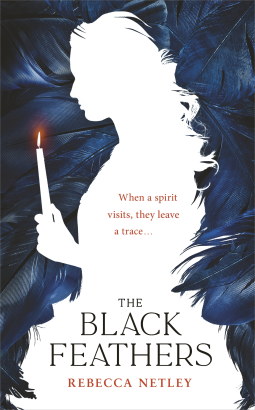
Welsh folklore is represented by the Fad Felen, or yellow plague, which appears in Rosie Andrews’ story, The Yellow Death. The story is set at the end of the First World War and the Fad Felen can be seen as a metaphor for the yellow of mustard gas. This is one of only two stories in the book with historical settings. The other is Rebecca Netley’s Mr Mischief, in which ten-year-old Bessie moves to a big house on the Yorkshire moors with her Uncle Kit who has a job as gamekeeper. Here she learns about a mysterious being known only as Mr Mischief and the lengths the superstitious locals go to in order to keep him happy.
I think my favourite story in the book was probably Boneless by Janice Hallett, about a writer investigating reports of a giant slug in Derbyshire. Written in Hallett’s usual style incorporating emails, articles, texts etc, it explores issues such as climate and habitat change and how animals are forced to adapt and evolve. The ending is great – I hadn’t expected the story to go in that direction at all. I also liked The Beast of Bodmin by Jane Johnson, which is set, like a lot of Johnson’s work, in Cornwall. Gina moves into a cottage on the edge of Bodmin Moor, hoping to make a new start in life, and almost immediately her black cat, Roxy, goes missing.
The collection is completed by Stuart Turton’s Deaths in the Family. It follows the story of Ben and his family, who gather together for Christmas every year, barricading themselves indoors while an army of grotesque and murderous Redcaps amasses outside. I wasn’t sure what to make of this story as it was so strange and felt different in tone from the others in the book, but it was certainly entertaining!
Nine stories in this collection, then, and although I inevitably enjoyed some more than others, there wasn’t a single bad one here. I’m looking forward to exploring more of Ashworth, Mukherjee and Dean’s work now, so if you can recommend anything please let me know.
Thanks to Raven Books for providing a copy of this book for review via NetGalley.
 She Reads Novels