I always try to finish reviewing the current year’s reads before the new year begins (although I don’t always manage it), so today I’m catching up by posting some brief thoughts on three books read in November and December.
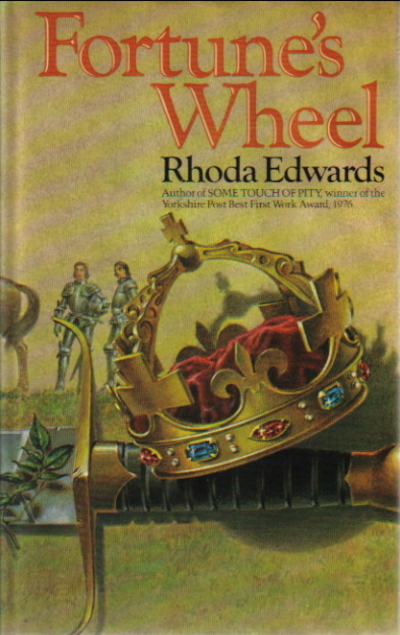
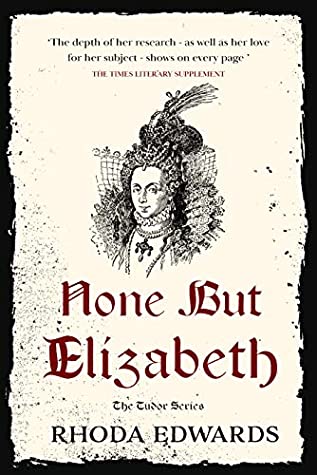 I added None But Elizabeth to my TBR a few years ago after reading Rhoda Edwards’ two novels about Richard III, Some Touch of Pity and Fortune’s Wheel, both of which I enjoyed. This one, first published in 1982, is a fictional retelling of the life of Elizabeth I. The book is written in a straightforward, linear style as we follow Elizabeth from childhood to old age.
There are some things Edwards does very well – the depiction of Elizabeth’s feelings for Robert Dudley, the man she loves but never marries; Elizabeth’s internal conflict over how to deal with the threat of Mary, Queen of Scots; the symbolism used to mark the passing of time; the way in which Elizabethan poetry is woven into the text – but as someone who has read about Elizabeth many times before, there was nothing new or different here. I would recommend reading Margaret Irwin’s Young Bess or Margaret George’s Elizabeth I rather than this one.
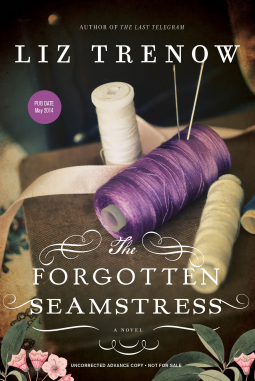 The Forgotten Seamstress by Liz Trenow is a multiple time period novel in which our present day narrator, an aspiring interior designer, finds a beautiful quilt in her mother’s attic with a message embroidered into the lining. She sets out to learn more about the quilt and discovers a connection with a young woman called Maria who spent most of her life in a mental hospital claiming to be a former lover of the Prince of Wales (the future King Edward VIII). As Maria’s story unfolds, in the form of taped interviews recorded by a student in the 1970s, we find out whether she was telling the truth and, if so, what secrets are hidden in the quilt’s design.
I wasn’t expecting too much from this book, but I enjoyed it much more than I thought I would – and for once, I found the modern day storyline as compelling as the historical one. On one level it’s almost a mystery novel, with the narrator hunting for clues to the quilt’s origins, tracking down people who may have known Maria and piecing fragments of information together to try to discover the truth. However, it also provides some insights into social issues such as living conditions in mental institutions, psychiatric treatment in the early 20th century and the later policy of ‘care in the community’. Some parts of the story were too predictable, but it was an interesting read overall and I will probably look for more of Liz Trenow’s books.
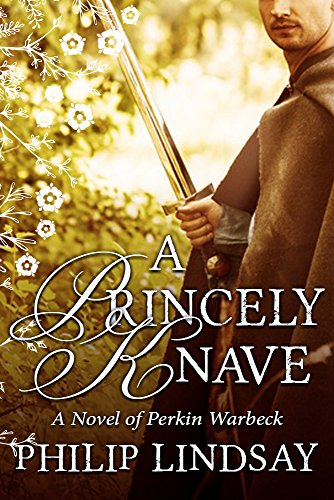 A Princely Knave was the oldest remaining book on my NetGalley shelf (from 2016, I’m ashamed to say). After receiving a copy, I read some negative reviews that put me off it, but in November I finally decided to give it a try. The book was originally published in 1956 as They Have Their Dreams and tells the story of Perkin Warbeck, a pretender to the English throne. Warbeck claimed to be Richard of York, one of the two ‘Princes in the Tower’ – the sons of Edward IV who disappeared from the Tower of London, believed to have been murdered. The novel begins with Warbeck landing in Cornwall in 1497, hoping to lead an army to overthrow Henry VII and take his place on the throne.
Philip Lindsay uses flowery and often antiquated language, a style which was common in older historical novels but feels very dated today. However, I’ve read one or two of his other books so was prepared for this. The biggest problem I had with this particular book was that, apart from Warbeck himself, the characters feel underdeveloped – the group of men who accompany Warbeck in his rebellion are almost indistinguishable and the only significant female character, Warbeck’s wife Katherine Gordon, also lacks depth. Lindsay does explore some fascinating ideas, though; for example, he suggests that even Warbeck himself doesn’t know who he really is – having been told by some that he has royal blood and by others that he is the son of Flemish merchants, he has become unsure of his real identity. I thought it was worth reading, but I probably wouldn’t recommend it unless you’re as interested in this period as I am.
 She Reads Novels