Linden Rise by Richmal Crompton – #1952Club

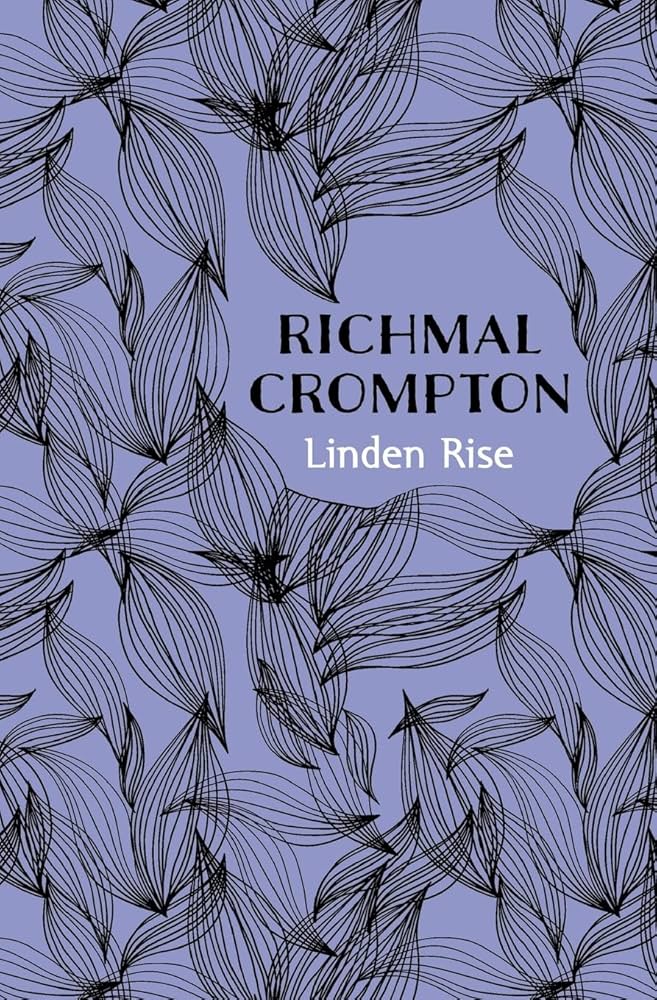
My first book for this week’s 1952 Club (hosted by Karen of Kaggsy’s Bookish Ramblings and Simon of Stuck in a Book) is Richmal Crompton’s Linden Rise. Crompton is much better known for her Just William series for children, but she also wrote a large number of adult novels of which this is one. I’ve previously read two others, Family Roundabout and The Old Man’s Birthday, both of which I enjoyed, so I hoped for a similar experience with this one.

The novel begins in 1892 with fifteen-year-old Tilly Pound arriving at Linden Rise, a cottage in the village of Priors Green. The Culverton family from London have taken the cottage for the summer and Tilly has been employed as housemaid – her first job. Despite their money and comfortable, privileged lives, the Culvertons are not a happy family: Mr Culverton is having an affair with another woman and his wife is fully aware of it, leading to a tense and unloving marriage. Edmund, the eldest child, is Tilly’s age, a serious, humourless boy, very unlike his carefree younger brother, Richard. There are also two girls – pretty, selfish Althea, and the youngest, Vere, who is considered sullen and miserable and is largely ignored by the rest of the family.

As Tilly settles into her new role, the Culvertons come to rely on her more than they know, and when they return to Linden Rise permanently several years later, she comes back to work for them again, this time as head housekeeper and cook. A lot has changed in the intervening years and Tilly isn’t impressed with the direction in which some of the family members’ lives have gone, so she decides to do what she can to put things right.

As you would expect from an author more famous for her children’s stories, Crompton’s child characters are very well drawn and I think that’s why I enjoyed the first part of this book more than the later sections. She knows the sort of conversations children have, the things that are important to them, the eyes through which they look at the world, and how unthinkingly cruel they can sometimes be. Once the children have all grown into young adults and the focus is mainly on their romantic relationships, I felt that the book seemed to lose its charm a little bit. I did love Tilly, though, who remains very much the same throughout the book – reliable, practical and never afraid to speak her mind.

Linden Rise has a lot to say about parenting, a theme that is also an important part of Family Roundabout. Mr Culverton, preoccupied with the other woman in his life, is largely an absent father who barely appears in the novel. Mrs Culverton also shows little interest in the raising of her children, engaging a governess, Miss Maple (another character I loved), for their first summer at Linden Rise. Mrs Culverton makes it clear that she only feels pride in two of her children – ironically, the two most unpleasant ones, Edmund and Althea – while the other two, Richard and Vere, frustrate her with their refusal to conform and behave as she expects them to. I felt so sorry for Vere in particular; Richard at least has a happy nature and doesn’t really care what people think of him, but Vere struggles with feelings of rejection and abandonment even as an adult.

Despite the serious topics the novel covers, there’s also some humour – and a happy ending, at least for some of the characters! I didn’t enjoy this book quite as much as the others I’ve read by Crompton, but I did like it and I’m glad I chose to read it for 1952 Club.

~
Some 1952 books previously read and reviewed on my blog:

East of Eden by John Steinbeck
They Do It with Mirrors by Agatha Christie
The Merry Mistress by Philip Lindsay
Excellent Women by Barbara Pym
The Birds & Other Stories by Daphne du Maurier
The Old Man’s Birthday by Richmal Crompton

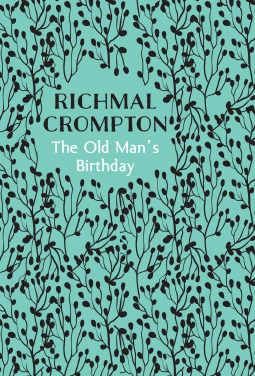
The Old Mans Birthday Richmal Crompton is best known for her Just William stories for children, but she has also written a large number of books for adults. I read one of them – Family Roundabout – last year and enjoyed it, so I was pleased to see that Bello have been republishing several more of her adult novels, including this one, The Old Man’s Birthday.

Matthew Royston, the old man of the title, is preparing to celebrate his ninety-fifth birthday with a family party to which he has invited all of his children, grandchildren and great-grandchildren. Nobody has been left out – not even Matthew’s grandson, Stephen, who has become estranged from the rest of the family because he is living with a woman who is not his wife. Not a problem in modern society, of course, but scandalous in the 1930s! Matthew is determined that Stephen’s partner, Beatrice, will be made to feel welcome, so in the hours leading up to the party he takes her from house to house to introduce her to the Roystons.

The whole novel takes place over the course of that one day, beginning with Matthew waking up on the morning he turns ninety-five and finishing with his birthday meal. In between, we meet each member of the Royston family – and as Matthew has five children and some of those have children and grandchildren of their own, there are a lot of characters to get to know! My advice to anyone planning to read this book is to draw a family tree as each person is introduced; it didn’t occur to me to do that until I was halfway through the novel, but it definitely would have made things much easier.

This is not a book with a lot of plot, but I hadn’t expected that it would be. The strength of the novel is in the characterisation; Crompton gives so much depth to every family member that on reaching the end of the book I was disappointed that I had to leave them all behind. I would like to tell you about all of them, but as I don’t want to spoil too much of the story for future readers I’ll just highlight two or three that I found particularly memorable. First there’s Enid, Matthew’s unmarried granddaughter, who runs the village hockey team. She’s probably not a person I would like in real life (despite the hero worship she inspires among the younger women at the hockey club) but she’s one of the strongest characters in the novel and I eventually found that behind her loud, overbearing exterior lies a shy and insecure woman whom she doesn’t want anyone to see.

Secondly, there’s Matthew’s son Richard, an elderly bachelor who has spent years running away from responsibilities and burying himself in his books. An unexpected friendship formed with one of his nieces on the day of the old man’s party could change Richard’s life for the better. And finally, there’s Pippa, one of Matthew’s great-granddaughters. Sixteen-year-old Pippa has always felt like a poor relation compared to her cousins, Pen and Daphne, so when she is given the opportunity to fulfil an ambition she’s determined to make the family proud of her. These three characters – and all of the others – are well-drawn and convincing, and considering that the novel only covers one day in their lives, we also see a surprising amount of character development.

I loved The Old Man’s Birthday, if I haven’t already made that clear! One slight criticism would be that I found the ending very easy to predict – but having said that, it was the perfect way to end the story, so I didn’t mind the predictability too much. I enjoyed celebrating Matthew’s special day with the Royston family and now I’m looking forward to reading more of Richmal Crompton’s books.

I received a copy of this book for review via NetGalley.

Family Roundabout by Richmal Crompton

Family Roundabout Like many people, I read some of Richmal Crompton’s Just William books as a child but have never investigated any of her adult fiction. I don’t think I was even aware that she had written books for adults until just a few years ago when I discovered Persephone Books. This is the first Persephone I’ve read for a while and it has reminded me of all the reasons why I love reading the books they publish.

Family Roundabout is set in a small town in England in the 1920s and 30s and tells the story of two families, the Fowlers and the Willoughbys, each consisting of a widowed mother with five adult children. The families are initially drawn together when Helen Fowler marries Max Willoughby, and as the years go by their lives become more and more entwined as various other family members form friendships, fall in love or become rivals. Some of these family members include Anice Fowler, quieter and less confident than Helen, whose envy of her sister could destroy her chance of happiness; Oliver Willoughby, reluctant to go into the family business but lacking the courage and the spirit to do something different; Cynthia Willoughby and Judy Fowler, whose friendship becomes strained after they have the opportunity to meet their favourite author, Arnold Palmer; and Peter Fowler, unhappily married to the spiteful, manipulative Belle.

Each of these characters has his or her own storyline and there are other Fowler and Willoughby children too – and later, grandchildren – so as you can imagine, there’s a lot happening in this novel. At the centre of the story, though, are the two people around whom all the others revolve: Mrs Fowler and Mrs Willoughby.

Mrs Fowler was once Millicent, a strong, independent person with opinions of her own, but after her marriage she became Milly, obliging, submissive and gentle. Millicent hasn’t disappeared entirely, but Milly is now the dominant side of her personality. She is always there for her children when they need her, but takes quite a passive approach to parenting, rarely interfering and allowing them to choose their own path in life. Mrs Willoughby, on the other hand, is practical, efficient and likes to control every aspect of her childrens’ lives. Even after they marry and leave home, she continues to make decisions for them and tell them what to do. The author never judges these two different styles of mothering and it is left to the reader to decide which, if either, is the most successful parent.

Family Roundabout endpapers

Family Roundabout endpapers

Family Roundabout is a very character-driven novel and fortunately almost every character in the story is well drawn and interesting. There were some that I didn’t like (Belle has to be one of the most horrible, vile people I’ve come across in fiction for quite a long time) but I enjoyed following all of their stories through to the end of the book. I loved the portrayal of the self-absorbed author, Arnold Palmer, and I thought the child characters were very well written too, which is maybe not surprising from a writer who wrote so many successful children’s books!

There’s a lot of unhappiness in this novel, a lot of bitterness and jealousy, but there are also some funny scenes and some amusing bits of dialogue, which means it doesn’t become too dark. I’m not sure I would rank this among my very favourite Persephones but I did really like it. It’s a shame more of Richmal Crompton’s adult novels aren’t still in print, as I would definitely be interested in reading them having enjoyed this one so much.