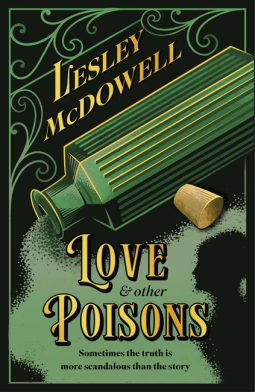
Love and Other Poisons by Lesley McDowell

I wasn’t sure whether to read this new novel by Lesley McDowell as I didn’t get on very well with her last one, Clairmont. Although I liked her writing, I struggled with the structure, the way it would jump from one timeline to another and the lack of context to explain characters’ backgrounds and relationships. I like to give authors a second chance, though, and this book, based on a true crime, did sound intriguing…

In 1857, Madeleine Smith is put on trial in Glasgow for the murder of her lover, Emile L’Angelier. After listening to witnesses and examining the evidence, the jury, still unable to decide whether she is guilty, give a verdict of ‘Not Proven’ and Madeleine is set free. Seventy years later, Harry Townsend, an aspiring filmmaker, believes he has tracked down the woman who used to be Madeleine Smith, now living in New York as a respectable elderly widow, Mrs Sheehy. Harry wants to interview her about Emile’s murder, but when Mrs Sheehy refuses to cooperate, Harry is forced to question whether he has got the right person after all.

We move back and forth between 1857 and 1927 throughout the book, but I found it much easier to follow the plot and understand what was going on than I did with Clairmont, which was a relief! The first few sections were interesting as they set the scene and introduced the characters, but then we settled into the 1857 period and the story of Madeleine’s relationship with Emile and my attention began to waver. There’s a lot of focus on their sexual encounters, some of which are described quite explicitly (I understood why later on), and I started to get impatient waiting for the murder to happen. It does happen eventually, of course, and I was glad I stuck with the book as I found the aftermath of the murder and Madeleine’s trial much more compelling to read about.

Although I did have some sympathy for Madeleine’s position – Emile had become very manipulative and controlling, threatening her with blackmail – I never really warmed to her as a character and I felt that she could have handled the situation differently. I also didn’t like the way she implicated not just the maid Christina, who arranged meetings and passed letters between Madeleine and Emile, but also her own twelve-year-old sister, Janet. None of the other characters in the book were very likeable either; the way Harry Townsend treated the older Madeleine was horrible and I hoped he would never get to make his film! There’s a twist in that particular storyline which I hadn’t guessed, but which seems to fit well with the historical facts.

I’ve never read about the Madeleine Smith case before, although it seems to be well documented, and I wonder whether my perception of this book would have been different if I already knew some of the details before I started to read. Anyway, it was all new to me and I was fascinated by the author’s note at the end of the book where she explained the origins of the novel – the idea was suggested to her by fellow author Emma Tennant who had wanted to work on it as a joint project before her death – and how she chose to interpret some of the historical evidence. She discusses her theory regarding the murder method and weapon (this is where the strong sexual content earlier in the novel suddenly made sense), and how she tried to piece together the clues we have regarding Madeleine’s later life after the trial.

I enjoyed this book more than I thought I would, having seen a lot of very mixed early reviews – but at the same time, I do understand some of the criticisms. Still, I found it interesting to learn about a true crime I was previously unaware of and which has inspired a large number of other novels, plays and adaptations.

Thanks to Headline/Wildfire for providing a copy of this book for review via NetGalley.
Book 11/20 for 20 Books of Summer 2025.

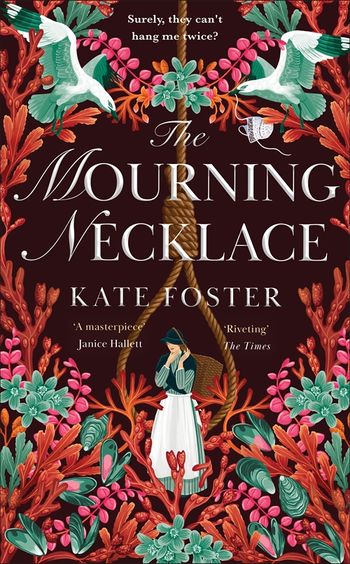
The Mourning Necklace by Kate Foster

Some people become famous for their remarkable lives and others for their remarkable deaths. Maggie Dickson is one of the latter – although technically, it wasn’t really a death at all! Known as ‘Half-Hangit Maggie’, Maggie Dickson was sentenced to death in 1724 and hanged in Edinburgh’s Grassmarket. As her family gather in a nearby tavern, they are shocked to look up and see Maggie herself standing at the door. Other than a rope burn around her neck, she seems unharmed by her ordeal and determined to make the most of the second chance she’s been given. But while everyone has questions for her – how did she survive and how did it feel to be so close to death? – there’s only one question that matters now to Maggie: will they try to hang her again?

Maggie Dickson was a real person and the story of her survival is a true one, still remembered three hundred years later; Maggie Dickson’s Pub in Edinburgh is named after her and she is often featured in Edinburgh walking tours. In The Mourning Necklace, Kate Foster builds a fictional story around this amazing woman and her near-death experience, using her imagination to fill in the gaps around the historical facts.

The year before she receives her death sentence, Maggie is living with her parents and younger sister, Joan, in Fisherrow, a small fishing community in Musselburgh, Scotland. The Dickson family have made their living from fish for generations, but Maggie doesn’t see a future for herself as a fishwife and wants something different out of life. Her marriage to Patrick Spencer, a perfume trader, seems to offer the opportunities she’s looking for, but when things don’t go according to plan, she takes control of her own fate and sets out alone for London. However, she gets no further than Kelso in the Scottish Borders before she is forced to make a series of decisions that will lead her back to Edinburgh and the gallows.

I enjoyed Kate Foster’s last novel, The King’s Witches, but I thought this one was much better and I connected with Maggie Dickson in a way that I didn’t with the women in the other book. There’s also a strong cast of supporting characters, including Joan, whose actions as a sister disappoint Maggie over and over again; Mrs Rose, who betrays Maggie for reasons of her own but at the same time is one of the few people to offer her friendship; and the wicked Dr McTavish, one of the book’s villains. All of these people have key parts to play in Maggie’s story, which is divided into three sections: the events leading up to her arrest, the hanging itself, and the path her life follows after she escapes death.

Maggie’s crime is something that will surprise a lot of modern readers as, although she unknowingly broke the laws of the time, today we wouldn’t really consider her to have committed a crime at all (at least not if Kate Foster’s interpretation is close to the truth). At first I assumed that as the death sentence was usually given as ‘hanged by the neck until dead’, it would be decided that Maggie had not served the sentence and would be hanged again. However, it wasn’t as straightforward as that because it seems that the sentence at that time was simply ‘hanged by the neck’ and the additional words were added later to avoid ambiguity in cases like hers.

This is a fascinating novel, with some great descriptions of 18th century Musselburgh, Edinburgh and Kelso. We also learn a little bit about the tea smuggling which was widespread down the east coast of Scotland and England due to high taxes on imported tea. I loved it and must find time to go back and read Kate Foster’s first book, The Maiden.

Thanks to Pan Macmillan/Mantle for providing a copy of this book for review via NetGalley.
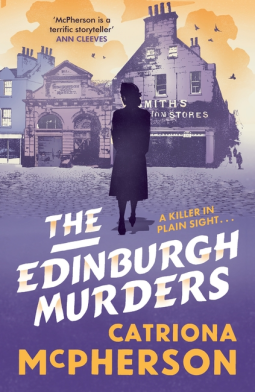
The Edinburgh Murders by Catriona McPherson

This is the second book in Catriona McPherson’s new mystery series set in 1940s Edinburgh, but if you haven’t read the first one (In Place of Fear) it shouldn’t be a problem as both books also work as standalone novels. Those of you who have read In Place of Fear will remember that it introduced us to Helen Crowther, a welfare officer (formally a ‘medical almoner’) in the newly formed National Health Service. This second novel again follows Helen as she carries out her duties for the NHS and becomes embroiled in another mystery.

The novel opens with Helen taking a patient to the public bath house on Caledonian Crescent. As she helps the woman to wash herself, they become aware of a disturbance in one of the men’s cubicles. A man has been found boiled to death in a bath of scalding hot water – but how? Why would he continue to lie there as the water got hotter and hotter? And how could it have reached such a high temperature anyway? Even more worrying for Helen is the fact that she has spotted her father, Mack, at the baths, but when she speaks to him at home later, he tries to deny that he was there. As the bodies of more men are found around Edinburgh, all killed in equally unusual, gruesome ways, Helen becomes convinced that her father knows more about the deaths than he’s admitting to.

When I reviewed In Place of Fear, I mentioned that the mystery only formed a small part of the book, with more focus being on the historical element and the work of an almoner in the NHS. This book is the opposite – the mystery is much stronger, with the first murder discovered in the opening chapter and several more following soon after. The murders are carried out using imaginative methods and are obviously linked in some way, so Helen needs to decide exactly what the link is in order to identify the killer. It’s quite a dark book, but although the descriptions of the murders are unpleasant, they’re not too gory or graphic.

As with the first novel, there’s a great sense of time and place, bringing the atmosphere of Edinburgh’s Fountainbridge area to life. McPherson uses a lot of dialect and there’s a glossary at the front for those readers who need help with the Scottish words and phrases. I found that there was less time spent describing Helen’s welfare work, though, which was one of the things I thought was particularly interesting in the first novel. Still, I enjoyed meeting her again, as well as the other recurring characters such as the two doctors she works for and her younger sister, known as Teenie. There’s also the beginnings of a possible romance for Helen with her friend Billy, who works at the morgue and helps her investigate the mystery and I’ll look forward to seeing how this develops in the next book.

I still haven’t read any of Catriona McPherson’s other novels, although she seems to have written a lot of them! I should probably investigate while I’m waiting for a third Helen Crowther book.

Thanks to Hodder & Stoughton for providing a copy of this book for review via NetGalley.

Clear by Carys Davies – #ReadingWales25

Clear is a book I hadn’t really considered reading until it appeared on the Walter Scott Prize longlist in February and I was pleased that I was still able to get a copy through NetGalley. Carys Davies is also a Welsh author, which is perfect for Reading Wales Month ’25, hosted this year by Karen at BookerTalk.

Clear is a beautifully written novella set in 1843 and telling the story of a friendship that forms between two men who should be enemies. John Ferguson is one of many evangelical ministers who have broken away from their church to form the Free Church of Scotland. Having given up his job and his home to establish this new church, John is struggling financially and, out of desperation, accepts an offer of work from a landowner who wants him to travel to a remote Scottish island and evict the last remaining tenant from the land. Forced evictions like these, known as Clearances, have been happening all over the Scottish Highlands as landlords remove the people living on their estates so that they can use the land for other purposes such as sheep farming. It’s a traumatic and often cruel process and not something John is looking forward to being part of.

The man John will have to evict is Ivar, who has lived alone on his island in the far north of Scotland since the deaths of his remaining family members. It’s an isolated life, but Ivar is content and has his horse, Pegi, for company. One day, he finds a man unconscious on the beach under the cliffs and takes him to his home to nurse him back to health. This is John Ferguson, who has met with an accident soon after arriving on the island. Ivar finds a picture of John’s wife, Mary, in his belongings and becomes infatuated with her, the first woman he’s seen for a long time – but as the injured man begins to recover, Ivar switches his affections to John himself. He has no idea why John is there, however, and because the two men speak different languages, he’s unable to ask.

Language forms an important part of the novel. Ivar speaks only Norn, a now extinct language once spoken in Shetland and Orkney, and John speaks English with a small amount of Scots. Over the course of the book, we see how two men unable to communicate in words are still able to bond and connect until eventually they do begin to learn each other’s language. In her author’s note Davies explains how the novel was inspired by Jakob Jakobsen’s Etymological Dictionary of the Norn Language in Shetland and she scatters Norn words throughout the book with a glossary at the back. Norn appears to have been a fascinating language; John is surprised to discover how descriptive it is and how many different words there are for mist, fog, wind and other types of weather.

Some parts of the novel are written from the perspective of Mary, John’s wife, who becomes concerned about the work her husband has been sent to do – she’s heard that the evictions can be unpleasant and violent – and decides to follow him to the island. I enjoyed reading Mary’s story and thought her sections of the book perfectly complemented Ivar and John’s. Mary’s thread of the novel comes together with the others near the end, and although I’m not going to tell you how the book ends I can say that it wasn’t what I expected but I was quite happy with it!

Carys Davies’ writing is beautiful and also very readable and I found this a quick, absorbing read. For such a short book, there’s a lot packed inside it. It reminded me a lot of Claire Keegan’s novella Small Things Like These, so if you enjoyed one book I would recommend trying the other.

Thanks to Granta Publications for providing a copy of this book for review via NetGalley.
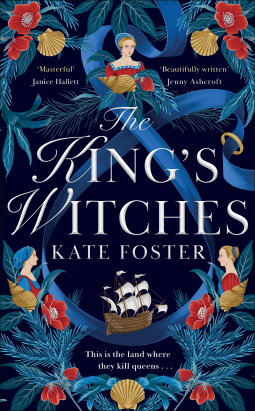
The King’s Witches by Kate Foster

Historical novels based on real-life witch trials seem to be very popular at the moment; I can think of several I’ve read just in the last two or three years. The King’s Witches is another and takes the slightly different approach of telling the story not only of the so-called witches, but also of the woman married to the man behind the witch hunts, King James VI of Scotland.

The novel opens in Denmark in 1589, where Anna, daughter of King Frederick II, is preparing for the arrival of the Scottish ambassador who will escort her across the sea to her new life in Scotland. Anna is betrothed to James VI and before leaving Denmark, they undergo a handfasting ceremony by proxy, with the Earl Marischal standing in for James. Setting sail for Scotland a few days later, Anna’s ship is hit by violent storms and is forced to turn back several times. Witches are blamed for summoning the winds in an attempt to stop the new queen from reaching her destination and by the time Anna eventually arrives in Scotland the fear of witchcraft is becoming widespread.

In the town of North Berwick, another young woman, Jura, is working as a maid in the Kincaid household. Jura has inherited her mother’s skills as a healer and knowledge of herbs and charms, but when the whispers of witchcraft grow louder – and the unwanted attentions of her master become more difficult to avoid – she is forced to flee to Edinburgh. However, escaping both the witch hunts and the Kincaids is not going to be easy…

The King’s Witches is narrated by both Anna and Jura, as well as a third woman, Kirsten, who is Anna’s lady-in-waiting and accompanies her on the journey from Denmark. Kirsten has been to Scotland before, but is very secretive regarding what happened during her previous visit and we will have to wait until later in the book for her full story to emerge. Kirsten and Jura are both fictional characters, but Anna (usually known as Anne of Denmark) was obviously a real person. However, Kate Foster doesn’t stick entirely to historical fact; for example, the real Anna was only fourteen years old when she married James VI, but Foster makes her slightly older at seventeen. She also uses the Celtic tradition of handfasting, which expires after a year, to introduce the idea that Anna was ‘on trial’ and the marriage would only go ahead if she managed to please James. I didn’t feel that this – or the fictional lover Foster creates for Anna – was really necessary or added much to the book and I would have preferred Anna’s story to follow the facts, considering we already had two other entirely fictional viewpoint characters.

The witchcraft aspect of the book is interesting, particularly the connection between the North Berwick witch trials, in which Jura is involved, and previous trials in Germany and Denmark which inspired James VI to take similar action. The storms that delay Anna’s voyage to Scotland in the novel really happened and really were blamed on witches. The King’s paranoia increases until he decides that the town of North Berwick (not to be confused with Berwick-upon-Tweed, by the way) is a nest of witches plotting to kill him, possibly in league with the Earl of Bothwell, and eventually more than 70 people are implicated. Foster explores all of this not just from the perspective of Jura, who is directly affected as a suspected witch, but also Anna from her position close to the King, and Kirsten, who provides a sort of bridge between the two worlds.

Even with the addition of the Anna and James angle, this book felt a bit too similar to other books I’ve read about historical witches, but obviously that won’t be a problem if you haven’t read as many of them as I have! I did still find it enjoyable and will have to look for Kate Foster’s first book, The Maiden, which I haven’t read.

Thanks to Mantle for providing a copy of this book for review via NetGalley.
This is book 15/20 of my 20 Books of Summer 2024.

Book 33/50 for the Historical Fiction Reading Challenge 2024

Thomasina by Paul Gallico – #ReadingtheMeow2024

When I saw that Mallika of Literary Potpourri was hosting her second Reading the Meow event this week – a celebration of cats in books – I knew exactly what I wanted to read. The Disney film The Three Lives of Thomasina was a favourite of mine as a child, but it never occurred to me to read the book on which it was based until I noticed that Lory of Entering the Enchanted Castle had read it for last year’s Reading the Meow so onto the list it went!

Published in 1957, Paul Gallico’s Thomasina is set in the fictional Scottish town of Inveranoch. Having lost his wife a few years earlier, veterinarian Andrew MacDhui has moved to the town from Glasgow and opened a surgery there, where he treats the pets of the townspeople, as well as looking after the health of the livestock on the surrounding farms. When the novel begins, MacDhui has only been living in Inveranoch for eighteen months and has already gained a reputation as a cold, bitter man who is good at his job but not mentally suited for it:

The gossips allowed that Andrew MacDhui was an honest, forthright and fair-dealing man, but, and this was the opinion of the strictly religiously inclined, a queer one to be dealing with God’s dumb creatures, since he appeared to have no love for animals, very little for man, and neither the inclination nor the time for God.

Since his wife’s death it seems that MacDhui has given what little love he still possesses to his seven-year-old daughter, Mary Ruadh, who is devoted to her ginger cat, Thomasina. When Thomasina becomes ill with a suspected meningeal infection, Mary takes her next door to her father’s surgery and begs him to save her pet’s life. Not pleased at being interrupted at his work and distracted by a difficult operation on a blind man’s dog, MacDhui tells her that Thomasina can’t be cured and orders his assistant to put the cat to sleep. Heartbroken, Mary vows never to speak to her father again and seems to really mean what she says. As the days go by and Mary’s silence continues, a desperate MacDhui pays a visit to Lori, a young woman who lives alone in the forest and is said to be a witch. Can Lori help repair the relationship between father and daughter or has too much damage been done?

Although I was already familiar with the plot, I found that this novel had far more depth than the Disney version and also a stronger religious element. There’s a lot of focus on MacDhui’s internal struggles as he tries to confront the loss of faith that has been with him since his wife died and on the efforts of Lori and the minister, Angus Peddie, to restore his belief in God and the power of love. Lori, a gentle, compassionate woman who tries to heal injured wild animals that others see as worthless, is a lovely character and reminded me a lot of Froniga in The White Witch by Elizabeth Goudge. However, I didn’t find the book overly sentimental because it’s balanced by the darker themes of loss and grief, as well as animal cruelty and its consequences for those who perpetrate it.

I’m sure younger readers will enjoy the chapters written from Thomasina’s own perspective, where she gives amusing descriptions of life in the MacDhui household, but I never really felt that I was reading a ‘children’s book’ and I think there’s enough here for readers of all ages to enjoy. Finally, without wanting to spoil too much, if you think Thomasina’s fate sounds too sad, I can assure you that her story is a happier one than you might expect.

This is book 3/20 of my 20 Books of Summer 2024.

Rosabelle Shaw by D.E. Stevenson – #1937Club

My third and final book for 1937 Club, hosted by Stuck in a Book and Kaggsy’s Bookish Ramblings, is Rosabelle Shaw (also published as The Story of Rosabelle Shaw) an early novel by D.E. Stevenson. Wikipedia describes Stevenson as an author of ‘light romantic novels’, but I have read several of her books and although some of them fit that description, others (such as her dystopian novel, The Empty World) do not. This is another that is not a typical Stevenson novel and I found it suprisingly dark.

The novel begins in 1890s Edinburgh with Fanny Dinwiddie, a pretty, lively young woman, who catches the eye of John Shaw, a farmer visiting the city on business. For John, it’s love at first sight and it’s not long before he is heading back to Shaws, his farm near the Scottish coast, with Fanny as his wife. It takes Fanny a while to adjust to her new home – she has left behind her father and beloved sister, Alison, and she misses the social life of Edinburgh – but eventually she begins to settle in and make friends and soon a daughter, Rosabelle, is born. At this point, I was expecting a gentle, domestic novel about the life of a farmer’s wife on a Scottish farm…but I was wrong.

When Rosabelle is three years old, a ship is lured onto the rocks near Shaws farm during a storm. John thinks he knows who is responsible for causing the wreck and is filled with guilt for not doing more to stop it, but is able to make amends by rescuing and informally adopting the only survivor of the disaster, a small child with whom Fanny immediately forms a bond. Nobody knows the little boy’s name or the identities of his real parents, so John and Fanny raise him with their own children and name him Jay. From the moment Jay enters their lives, tensions begin to form in the Shaw household. Unlike Rosabelle and her real brother and sister, Jay is a deceitful, jealous and manipulative child determined to get his own way. John struggles to like the boy, while for Fanny he can do no wrong, causing the first real disagreements of their married life.

Moving forward several years, we meet the Shaw children again as young adults. Rosabelle has begun to look at Jay in a different light, captivated by his good looks and charisma, and begins to fall in love, much to the dismay of her neighbour Tom, who was hoping to marry Rosabelle himself. But there could still be a chance for Tom after all, because Jay is about to bring shame on the Shaw family and betray their kindness and generosity, breaking the hearts of both Rosabelle and Fanny.

I found Rosabelle Shaw quite enjoyable, but it seems to have had mainly negative reviews, maybe because the melodramatic, almost Gothic feel isn’t what you would expect from Stevenson. A lot of people have also complained about the racism, which I noticed as well – it’s definitely implied that because Jay arrived on a foreign ship and is possibly Spanish, he is naturally sly and untrustworthy, unlike the good, honourable Scottish characters. The book reminded me very much of Wuthering Heights, with Jay being similar to Heathcliff, who is also of unknown parentage and nationality and causes nothing but trouble for the Earnshaw family (Rosabelle is obviously in the role of Catherine Earnshaw, who falls in love with her adopted brother).

The book takes on a slightly different tone towards the end when, in 1914, war breaks out and brings big changes to our characters’ lives. From this point, the focus of the book shifts away from Jay to concentrate on the war and how it affects the family at Shaws. I thought it was a fascinating novel, but it won’t appeal to everyone and there are probably better places to start if you’re new to Stevenson. For me, though, it was another good choice for 1937 Club!